


Are you exploring support options for a loved one with autism and feeling overwhelmed? It’s easy to get lost in a sea of therapies, wondering what each one truly involves and how to find a professional who is both skilled and genuinely compassionate. This is where understanding the role of occupational therapy autism treatment can bring much-needed clarity and hope. At its heart, it is a supportive partnership designed to empower individuals to build skills, grow in confidence, and truly thrive in their everyday lives.
In this compassionate guide, we will gently walk you through what occupational therapy looks like for children and adults with autism. We’ll explore how it helps with specific daily challenges, from sensory regulation to social skills, and provide a clear, practical pathway for accessing dedicated support through your NDIS plan. Our goal is to replace confusion with confidence, giving you a sense of direction and peace of mind on your journey.
Key Takeaways
- Learn how occupational therapy focuses on meaningful daily activities to help individuals with autism build confidence and independence in their own way.
- Discover the practical, life-changing skills that compassionate occupational therapy autism treatment can help develop, from managing sensory needs to improving social communication.
- Understand that OT provides tailored support across the entire lifespan, adapting its approach to empower children, teenagers, and adults with autism.
- Find a clear, actionable pathway for accessing support in Australia, including tips on finding the right provider and navigating funding options like the NDIS.
What is Occupational Therapy for Autism? A Gentle Introduction
When you first hear the term ‘occupational therapy’, it’s easy to think of jobs and workplaces. But for a child, their ‘occupations’ are the meaningful activities that fill their day: playing with friends, learning at school, getting dressed, or enjoying a family meal. At its heart, occupational therapy autism treatment is a supportive partnership designed to help children participate in these daily moments with confidence and joy.
It’s not about changing who your child is; it’s about empowering them with the skills and strategies to navigate their world with dignity and greater independence. This person-centred approach always starts with understanding your child’s unique strengths, challenges, and goals.
The Role of an Occupational Therapist (OT)
Think of an OT as a supportive partner and a creative problem-solver for your family. They take a holistic view, looking not just at your child but at their whole environment-at home, at school, and in the community. An OT is a skilled professional who works with you to identify barriers and create practical strategies to support your child’s sensory needs, social interactions, and motor skills, helping to make daily life feel calmer and more manageable.
How OT Differs from Other Autism Therapies
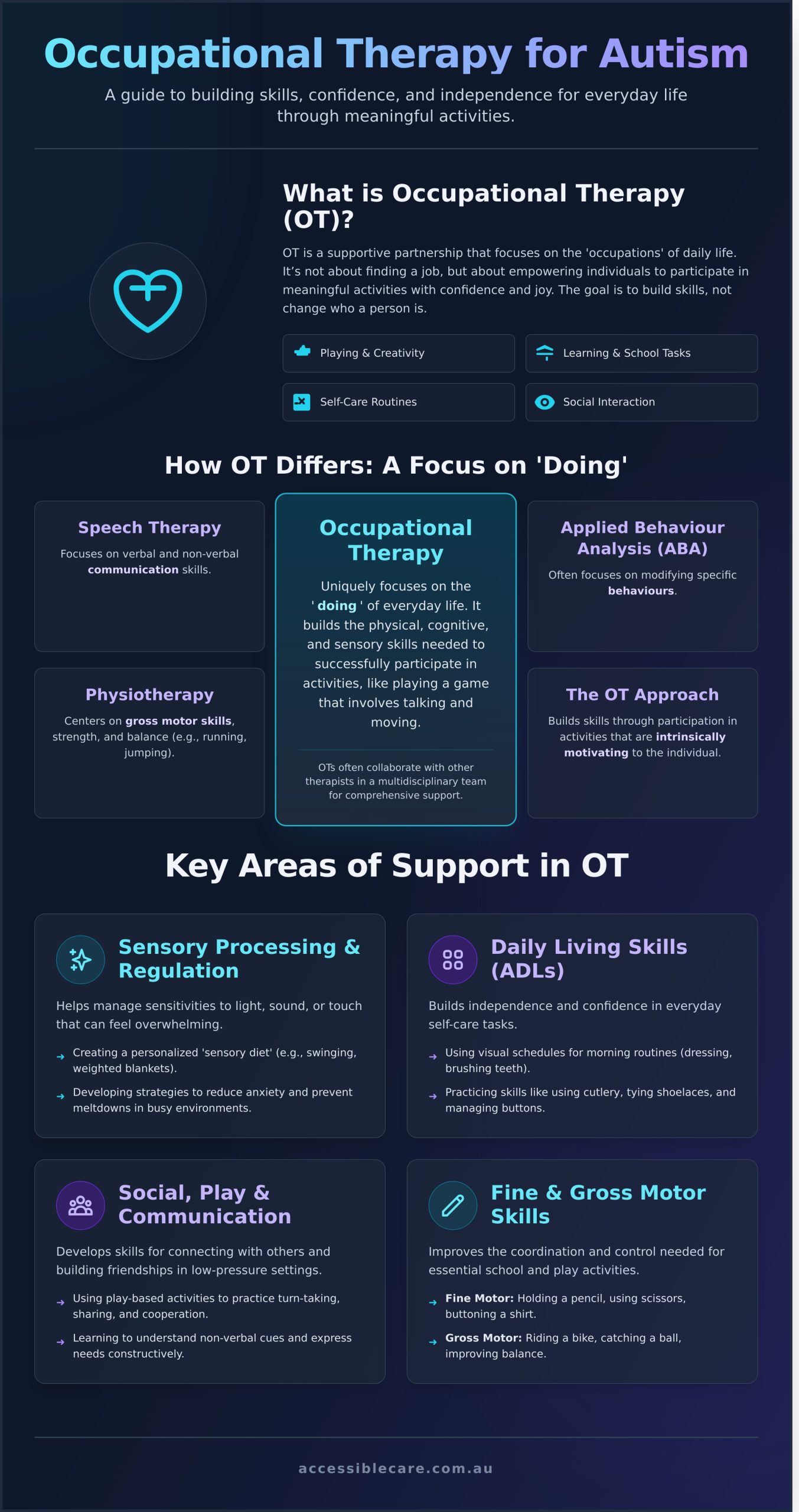
Navigating the world of autism therapies can feel overwhelming, and it’s helpful to understand how they fit together. While each therapy is valuable, occupational therapy has a unique focus on the ‘doing’ of everyday life. It’s a practical, hands-on approach that builds essential life skills.
- Speech Therapy focuses on communication-both verbal and non-verbal-while OT focuses on the physical and cognitive skills needed to perform an activity, like successfully participating in a group game that involves talking.
- Applied Behaviour Analysis (ABA) often focuses on modifying specific behaviours, whereas OT builds skills through participation in meaningful activities that are intrinsically motivating to the child.
- Physiotherapy centres on gross motor skills, strength, and body mechanics (like running or balancing), while OT often targets the fine motor and coordination skills needed for tasks like writing, buttoning a shirt, or using cutlery.
These dedicated professionals rarely work in isolation. They are often part of a compassionate, multidisciplinary team, collaborating to provide comprehensive support that honours your child’s individual needs. Your choice, your life, your way.
Key Areas of Support: How OT Empowers People with Autism
Occupational Therapy (OT) is not about finding a job; it’s about supporting the ‘occupations’ of daily life. For a child, this means playing, learning, and growing. A compassionate and effective occupational therapy autism treatment plan focuses on developing practical skills that build a foundation for greater independence, confidence, and well-being. By breaking down challenges into manageable steps, OT empowers children to navigate their world with more ease and joy.
Sensory Processing and Emotional Regulation
For many autistic children, the world can feel overwhelming. Sights may be too bright, sounds too loud, or touch uncomfortable. OT helps children understand and manage these sensory sensitivities. A therapist might create a personalised ‘sensory diet’-a routine of calming activities like swinging or using a weighted blanket-to help a child stay focused and regulated throughout the day. This support is key to reducing anxiety and preventing meltdowns in challenging environments like a busy classroom or shopping centre.
Developing Daily Living Skills (ADLs)
Gaining independence in everyday tasks is a powerful confidence booster. OT provides tailored support for Activities of Daily Living (ADLs), turning morning routines and mealtimes into positive experiences. This could involve:
- Creating a visual schedule for getting dressed and brushing teeth.
- Practicing how to use cutlery or tolerate new food textures.
- Learning to tie shoelaces or manage buttons and zippers.
These small victories pave the way for a future of self-reliance and dignity.
Building Social, Play, and Communication Skills
Connecting with others is a fundamental human need. Occupational therapists use play-based activities to help children develop vital social skills in a fun, low-pressure setting. They create opportunities to practice turn-taking, sharing, and understanding non-verbal cues like facial expressions. By learning how to express their needs and emotions constructively, children are better equipped to build meaningful friendships and participate more fully in their community.
Improving Fine and Gross Motor Skills
From holding a pencil to riding a bike, motor skills are essential for learning and play. As a core part of occupational therapy autism treatment, therapists design engaging activities to build both fine motor skills (small muscle movements) and gross motor skills (large muscle movements). This hands-on support is crucial, and studies Evaluating the Benefits of Occupational Therapy show these interventions lead to significant improvements. Whether it’s through craft activities that strengthen hand muscles or obstacle courses that improve balance, OT helps build the physical confidence every child deserves.
What to Expect: A Look Inside an OT for Autism Session
Stepping into therapy for the first time can feel like a big step, filled with questions and uncertainty. We want to demystify the process and reassure you that our approach is built on compassion, collaboration, and care. From your first phone call to every session that follows, our goal is to create a supportive space where your family feels heard, understood, and empowered.
The Initial Assessment: Listening to Your Story
Everything begins with a conversation. We don’t start with a clipboard and a checklist; we start by listening to you. This first meeting is a chance for you to share your family’s story, your goals, your strengths, and the challenges you face. Our therapists observe and interact with your child in a natural, low-pressure environment, often through play. Together, we create a personalised therapy plan that respects your child’s unique personality and your family’s priorities.
Therapy in Action: Play-Based and Goal-Oriented
For a child, our sessions look and feel like structured, purposeful play. While they are having fun swinging, building with blocks, or engaging in creative arts, they are also developing crucial skills. These play-based activities are the heart of effective occupational therapy autism treatment, designed to build motor skills, sensory processing, and social interaction in a joyful way. Each activity is carefully tailored, a principle explored in this Guide to Occupational Therapy for Autism. We celebrate every small victory, building confidence step-by-step.
Support Beyond the Session
Our commitment to your family’s well-being extends far beyond our clinic doors. A vital part of our occupational therapy autism treatment is empowering you with the tools to continue progress at home and in the community. This includes:
- Providing practical strategies and activities for you to use in your daily routines.
- Collaborating closely with your child’s school, teachers, and other support providers.
- Offering guidance on modifying your home environment to better support your child’s sensory and functional needs.
We are your partners on this journey, providing consistent and holistic support. See how our compassionate therapists can help your family.
Tailored OT Support Across the Lifespan
A common misconception is that occupational therapy is only for young children. The truth is, autism is a lifelong journey, and the support needed to thrive evolves with each new chapter. A truly person-centred approach means that support adapts, empowering individuals with dignity and respect at every age and stage of life.
Effective occupational therapy autism treatment is not a one-size-fits-all solution; it is a dynamic partnership that grows with you or your loved one.
Early Intervention for Young Children
In the early years, our focus is on building a strong foundation for future learning and connection. A compassionate OT works with young children to develop essential skills in a gentle, play-based environment. This support empowers both the child and their family, providing parents with practical strategies to use at home. Key areas include:
- Developing motor skills and sensory regulation.
- Building foundational play and social interaction skills.
- Preparing for the structure and demands of kindergarten and school.
Supporting School-Aged Children and Teenagers
The school years bring new academic and social challenges. OT provides tailored support to help children and teenagers navigate this complex world with greater confidence. We partner with participants to develop practical skills for the classroom and beyond, focusing on building independence and managing the increasing demands of homework, friendships, and emotional regulation.
Empowering Adults with Autism
As individuals transition into adulthood, the goal of occupational therapy shifts towards fostering independence and a fulfilling life. We believe in empowering adults to achieve their personal goals, whether that involves living independently, succeeding in the workplace, or pursuing hobbies. Support is tailored to real-world needs, such as:
- Building skills for independent living like cooking, cleaning, and budgeting.
- Developing strategies for success in higher education or employment.
- Managing sensory sensitivities in community settings like shopping centres or public transport.
- Fostering skills to build meaningful relationships and engage in the community.
At every stage, our dedicated team is here to listen and understand your unique goals. To learn how we can tailor support for your journey, please get in touch with our caring team.
Getting Started with Occupational Therapy for Autism
Taking the first step towards finding the right support for your child can feel like a significant challenge, but you don’t have to navigate it alone. We understand that you want the very best for your family. This guide provides a clear, gentle pathway to accessing high-quality occupational therapy autism treatment, helping you move forward with confidence and clarity.
Funding Occupational Therapy Through Your NDIS Plan
For many Australian families, the National Disability Insurance Scheme (NDIS) is the primary way to fund therapeutic supports. Occupational therapy is typically funded under the ‘Capacity Building’ category in your child’s NDIS plan. Understanding your plan can be complex, but our compassionate team is here to help. We can walk you through your funding, explain how it can be used for OT services, and ensure you are making the most of your available supports. We also provide comprehensive assessments and reports to assist with NDIS plan applications and reviews, ensuring your child’s needs are clearly communicated.
Choosing the Right Therapist for Your Child
The connection between your child and their therapist is the foundation of successful therapy. Finding the right person is about more than just qualifications; it’s about finding a partner you can trust on this journey. When searching for a provider, we encourage you to consider:
- Experience and Understanding: Look for a therapist with proven experience and a genuine, neurodiversity-affirming approach to supporting autistic children.
- The Therapeutic Relationship: Does the therapist connect well with your child? A trusting and comfortable relationship is essential for progress.
- Family-Centred Approach: Ask how they involve you and your family in the goal-setting and therapy process. True partnership leads to the best outcomes.
Your First Steps with Accessible Care
We believe that accessing support should be a simple and positive experience. If you have questions about our approach to occupational therapy autism treatment or simply want to know more, our caring team is here to listen. We welcome families in Melbourne and Adelaide to reach out for a conversation with no pressure or obligation. At every stage, we are guided by our commitment to you: Your choice, your life, your way.
Ready to take the next step? Contact our friendly team today to learn how we can support your child’s journey to thrive.
Taking the Next Step with Compassionate Autism Support
As we’ve explored, occupational therapy is a deeply personal and practical journey, offering tailored strategies to build skills, confidence, and independence for people with autism. From developing sensory regulation techniques to mastering daily routines, this holistic approach makes occupational therapy autism treatment a powerful tool for empowering individuals to navigate their world with greater ease and self-assurance.
If you’re ready to explore how this support can benefit you or your loved one, our team is here to listen. As a registered NDIS provider with experienced therapists in Melbourne and Adelaide, Accessible Care is dedicated to a person-centred and family-focused approach. We believe in creating a supportive partnership to help you achieve your goals.
Talk to our compassionate team about autism support today.
Every step towards greater independence is a victory, and we are here to support you on your unique journey.
Frequently Asked Questions
How do I know if my child needs occupational therapy for autism?
If your child faces challenges with daily activities like dressing or eating, has difficulty with motor skills like handwriting, or seems overwhelmed by sensory input like noise or touch, they may benefit from support. An occupational therapy autism treatment plan is designed to address these specific areas. A consultation with a compassionate therapist can help determine if OT is the right choice to support your child’s unique journey and help them thrive.
What is a ‘sensory diet’ and how does it help with autism?
A ‘sensory diet’ is not about food. It is a carefully personalised plan of activities designed to meet your child’s unique sensory needs throughout the day. This might include activities like swinging for movement, playing with therapy putty for touch, or using weighted blankets for calming pressure. This tailored approach helps a child regulate their nervous system, improving their ability to focus, manage emotions, and engage more comfortably with the world around them.
Can occupational therapy help reduce meltdowns and challenging behaviours?
Yes, absolutely. Meltdowns are often a response to feeling overwhelmed, whether by sensory input, frustration, or communication difficulties. Our therapists work with care and respect to identify these triggers. By providing your child with tools for emotional regulation, sensory processing strategies, and alternative ways to communicate their needs, OT empowers them to manage big feelings, which can significantly reduce the frequency and intensity of meltdowns.
How long will my child or I need to see an occupational therapist?
The duration of therapy is truly person-centred and depends on your child’s individual goals and needs. Some children may benefit from a short-term block of sessions to master a specific skill, while others may require longer-term support for ongoing development. We believe in partnership, so progress is reviewed with you regularly to ensure the support plan continues to be the right fit, always respecting your choice and your family’s journey.
Is occupational therapy for autism only for children?
While early intervention is common, occupational therapy for autism provides vital support for people of all ages. For teenagers and adults, therapy can focus on advanced life skills like budgeting, navigating public transport, succeeding in employment or further education, and building community connections. Our approach to occupational therapy autism treatment is always tailored to the participant’s age, personal goals, and desire for greater independence at every stage of life.
How is progress measured in occupational therapy?
Progress is measured against the meaningful, participant-led goals we establish together at the start of therapy. Our skilled therapists use a combination of professional observation, standardised assessments, and-most importantly-feedback from you and your child. We celebrate every achievement, whether it’s a small step in building confidence or mastering a complex daily task. Your definition of success is what guides our compassionate approach to care.
Can OT help my non-verbal child with autism?
Yes, occupational therapy can be incredibly beneficial. Our therapists help non-verbal children find effective ways to communicate and connect with others. This can involve using tools like picture communication systems, simple sign language, or assistive technology. We also focus on developing the underlying motor and sensory skills that support interaction, empowering your child to express their needs and personality with dignity and respect.

