


What if the path to greater independence wasn’t about reducing clinical care, but about ensuring that care is delivered with the highest level of skill, compassion, and respect for your choices? It’s completely understandable to feel overwhelmed when navigating complex care. You might worry about the training of support staff or feel that your personal goals are being lost in a sea of clinical routines. This fear of medical errors and confusion over funding is a heavy weight to carry.
This guide is here to lift that weight. We will unlock a deeper understanding of high intensity supports NDIS, showing you exactly what clinical skills to look for in a provider and how to confidently secure the right funding for a life of dignity and independence. Together, we’ll explore the official skill requirements, map out your transition to high-intensity funding, and empower you to find a care partner who values your choices as much as your safety.
Key Takeaways
- Understand the critical difference between standard support and high-intensity care to ensure your complex needs are met with the right level of skill.
- Learn how to identify a qualified provider for high intensity supports ndis by understanding the 8 core clinical skills required for safe and dignified care.
- Discover how to check your plan for the correct funding and learn which reports from GPs and specialists are essential for your next plan review.
- See how a team-based approach, involving therapists and nurses, creates a safer and more effective care plan tailored to your goals for independence.
What are High Intensity Supports in the NDIS?
Navigating your NDIS plan can feel complex, especially when you encounter terms like “High Intensity Daily Personal Activities” (HIDPA). Put simply, these are specialised supports for participants with significant and ongoing health needs. Within the framework of the National Disability Insurance Scheme (NDIS), this classification helps ensure you receive care from someone with the right skills to support you safely and effectively. It’s about matching your unique needs with a higher level of professional expertise.
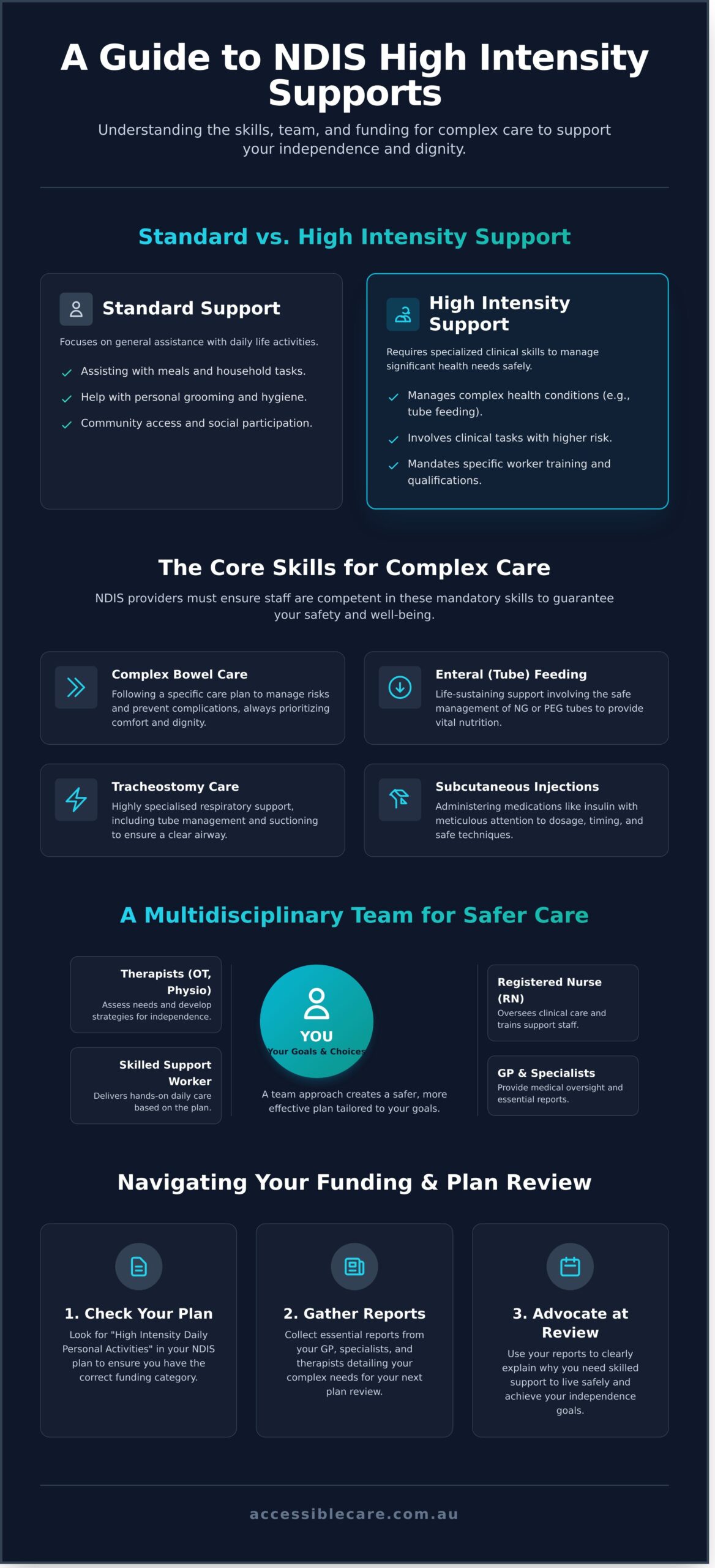
The key difference between “standard” and “high intensity” support isn’t the amount of time spent, but the level of risk and skill involved. Standard support might involve assisting with meals, household tasks, or personal grooming. High intensity support, however, involves tasks that are more clinical. In essence, High Intensity Supports are specialized care requiring specific worker training to manage complex health needs safely. The NDIS classifies these supports differently because performing them incorrectly could cause serious harm. This is why the NDIS Quality and Safeguards Commission mandates specific qualifications and ongoing training for workers delivering these services, ensuring your wellbeing is always the top priority.
The Threshold: When does care become High Intensity?
The shift from standard to high intensity care occurs when support moves from general assistance to tasks that require clinical knowledge. This is often driven by “complex health needs,” such as managing a chronic condition or recovering from a serious injury. Common triggers for receiving high intensity supports ndis funding include the need for complex bowel care, enteral (feeding tube) support, tracheostomy management, or administering subcutaneous injections. The use of specialised medical equipment is another clear indicator.
Dignity in Care: Beyond the Clinical Label
Even when your care needs are complex, your right to choice and control remains central. The principle of “Your choice, your life, your way” is just as important in high-intensity settings. A truly compassionate support worker understands that your home is not a hospital ward. They are trained to perform clinical tasks with precision while respecting your personal space, routines, and family life. Person-centred planning ensures that your care plan is built around your goals, not just your medical needs.
Ultimately, high intensity support is about enabling you to live safely and confidently in the place you feel most comfortable: your own home. It requires a provider who not only meets the strict NDIS standards for skilled care but also listens to what matters most to you. It’s a partnership built on trust, expertise, and a deep respect for your independence and dignity.
The 8 Core High Intensity Support Skill Descriptors
To ensure your safety and wellbeing, the NDIS Quality and Safeguards Commission is setting clear, mandatory skill requirements for providers. These standards ensure that every support worker delivering complex care has proven, up-to-date expertise. Understanding what these skills involve is the first step in feeling confident about your support team. For a complete overview of how this funding works, Hireup’s Guide to High Intensity Supports offers excellent clarity on the different support categories.
These skills are not just about clinical tasks; they are about delivering care with dignity, compassion, and precision. They represent a promise of safety and reliability. The core descriptors for high intensity supports NDIS participants often require include:
- Complex Bowel Care: This involves more than just routine assistance. It requires a support worker skilled in following a specific care plan to manage risks, prevent complications, and always ensure the participant’s comfort and dignity are prioritised.
- Enteral (Tube) Feeding and Management: For participants who cannot eat or drink orally, this support is life-sustaining. It covers the management of nasogastric (NG) or percutaneous endoscopic gastrostomy (PEG) tubes, ensuring correct feeding protocols are followed to provide vital nutrition safely.
- Tracheostomy Care: This is highly specialised respiratory support. A skilled worker must know how to manage the tracheostomy tube, perform suctioning, and respond immediately to any signs of distress or blockages, ensuring a clear airway is always maintained.
- Subcutaneous Injections: Precision is everything. This support involves administering medication like insulin or blood thinners under the skin. It demands meticulous attention to dosage, timing, and safe injection techniques as prescribed by a health professional.
Respiratory and Urinary Support
Maintaining clear airways and preventing infections are fundamental to good health. This group of supports includes ventilator management, where your team must be trained to operate the equipment and respond to alarms. It also covers complex urinary catheter care, focusing on strict hygiene protocols to prevent infections. Proactive pressure care and wound management are also vital, using strategies to protect skin integrity and promote healing, helping you stay comfortable and healthy at home.
Diabetes and Seizure Management
These supports require a calm, skilled, and rapid response. High-intensity diabetes management involves more than just a simple check; it means competently administering insulin and monitoring glucose levels according to a detailed plan. For severe dysphagia, support workers must collaborate closely with speech pathologists to implement safe swallowing and mealtime plans. Epilepsy and seizure support requires a worker who can act quickly, follow seizure management protocols precisely, and document events clearly to inform ongoing care.
Finding a provider whose team is genuinely competent in these complex areas is essential for your peace of mind. Ensuring your support workers are not just trained but also compassionate makes all the difference. If you’re looking for a team that listens and cares, you can learn more about our person-centred high intensity support options.
The Multidisciplinary Approach: Integrating Therapy and Nursing
Delivering exceptional high-intensity support isn’t the job of one person. It requires a dedicated and skilled team working together with a single focus: your wellbeing and safety. At Accessible Care, we call this the “Team Around the Participant.” This collaborative approach brings together clinical experts and dedicated support workers to create a circle of care that is robust, responsive, and designed to help you thrive at home, significantly reducing the risk of preventable hospital readmissions.
This entire process begins with a thorough understanding of your unique needs. A comprehensive Functional Capacity Assessment is the foundation for complex care planning, providing the detailed insights needed to build your support team.
By integrating the clinical expertise of allied health professionals with the practical, daily support from our nursing and care teams, we ensure every aspect of your plan is safe, effective, and aligned with your personal goals. This is what makes person-centred high intensity supports NDIS truly successful.
Speech Pathology and Dysphagia Support
For many participants, mealtimes can present significant risks. A Speech Language Pathologist (SLP) is a critical member of the team when managing dysphagia (swallowing difficulties). Their detailed assessment results in a Mealtime Management Plan that our support workers follow precisely. This includes training our compassionate carers in:
- Safe Swallowing Techniques: Specific strategies, such as the chin-tuck method, to reduce the risk of choking or aspiration.
- Texture-Modified Diets: Preparing foods and thickening fluids to exact specifications, following the International Dysphagia Diet Standardisation Initiative (IDDSI) framework, from Level 4 (Pureed) to Level 7 (Regular).
- Communication Support: Integrating Augmentative and Alternative Communication (AAC) devices into daily routines, ensuring you can express your needs and choices clearly at all times.
Occupational Therapy for Complex Environments
An Occupational Therapist (OT) ensures your home environment empowers you, rather than limits you. Their role is to assess and recommend solutions that enhance safety, comfort, and independence. OTs are instrumental in prescribing specialised equipment, such as ceiling hoists or pressure-care mattresses, and planning home modifications that make daily life easier and safer.
For participants with paraplegia, an OT can introduce life-changing assistive technology. This might include environmental control units that allow you to operate lights, televisions, and doors with voice commands or a simple switch, giving you greater control over your own space. A core part of their work is also delivering manual handling training. This ensures every transfer is performed safely and with dignity, protecting both you and your support worker from injury, in line with Safe Work Australia’s national standards.
Navigating Funding and Plan Reviews for Complex Care
Understanding and securing the right funding for complex care can feel like a daunting task, but you are not alone in this journey. It’s a process that ensures your support plan truly reflects your needs, providing peace of mind and promoting your safety and well-being. The key is to clearly and consistently demonstrate the necessity for specialised care.
First, check your current NDIS plan under your Core Supports budget. Funding for complex care is often listed under categories like “Assistance with Daily Personal Activities,” but it will be allocated at a higher rate. If you’re unsure, your Support Coordinator can help you interpret the line items. The most powerful tool you have is evidence. Your application for funding needs to be supported by comprehensive reports from your GP, medical specialists, and allied health professionals. These documents should detail not just your diagnosis, but the specific, high-risk tasks required for your daily support and why they demand a higher level of skill and training.
If your care needs have increased, you don’t have to wait for your annual plan review. A significant change in your circumstances is a valid reason to request a review sooner. When preparing, it’s helpful to understand the NDIS Pricing Arrangements and Price Limits. The NDIA sets higher price limits for high intensity supports ndis to cover the costs of providers using more experienced or specifically qualified staff. For the 2023-24 period, these rates can be significantly higher than standard supports, ensuring your budget is sufficient to pay for the quality care you deserve.
Step-by-Step: Securing High Intensity Funding
To prove the need for complex care, start by requesting a Functional Capacity Assessment from an Occupational Therapist. This report provides an objective evaluation of your support needs. Work closely with your Support Coordinator; they are experts at articulating risk and necessity in a way the NDIA understands. Together, you can submit a “Change of Circumstances” form (S48) to formally request a plan reassessment based on this new, compelling evidence.
Plan Management and Compliance
Your chosen provider must meet strict NDIS Practice Standards, particularly the module for High-Intensity Daily Personal Activities. These standards, which are continually refined with a focus on quality improvements leading into 2026, ensure staff are properly trained and competent. Meticulous documentation from your provider is not just a box-ticking exercise; this reporting is vital evidence that justifies your funding level at your next plan review, demonstrating the ongoing need for specialised support.
Navigating the requirements for high intensity supports ndis is a critical step toward living safely and with dignity. It’s about matching your unique needs with the right level of professional care. Our compassionate Support Coordinators are here to listen and help you build the strongest possible case for your funding. Talk to our team about preparing for your NDIS plan review today.
Accessible Care: Your Partner in Complex Support in Melbourne & Adelaide
Choosing a support provider is about finding a team you can trust with your health and wellbeing. At Accessible Care, we are more than just a provider; we are a dedicated partner for NDIS participants and their families across the Melbourne and Adelaide communities. We understand that true care goes beyond a checklist. It’s built on a foundation of clinical excellence, genuine compassion, and a deep respect for your independence at home.
What truly sets us apart is our integrated care model. Our teams are led by experienced Registered Nurses and allied health therapists who work together to oversee every support plan. This means our skilled support workers don’t just meet the minimum NDIS requirements; they receive ongoing, nurse-led training in specific complex tasks, from managing PEG feeds to assisting with urinary catheters. This commitment ensures the care you receive is not only safe and professional but also delivered with confidence and heart.
Local Expertise in Victoria and South Australia
Our roots run deep in the communities we serve. In Melbourne, we build strong communication pathways with major health networks like Austin Health and Monash Health to support smooth transitions from hospital to home. In Adelaide, our community nursing team brings high-level clinical care directly to your doorstep, from the coast to the hills. We are deeply invested in the local NDIS communities of Victoria and South Australia, offering reliable and familiar support.
This local presence means we understand the specific challenges and resources within your area. Our approach to providing high intensity supports ndis participants need is grounded in this community connection. When a support worker notices a change in your health, our local clinical nurse can respond promptly, providing an immediate assessment and liaising with your GP or specialist. This proactive, collaborative system provides invaluable peace of mind for you and your loved ones, ensuring your complex needs are always managed by a team that’s close by and ready to help.
Start Your Journey with Accessible Care
Beginning with us is a simple, respectful process. Your journey starts with a holistic assessment where we listen to you, your family, and your allied health team. We want to understand your personal goals and what a good life looks like for you. From there, we tailor a support plan that truly reflects our promise: “Your choice, your life, your way.” Ready to experience a higher standard of care? Get in touch with our compassionate team today.
Partnering for Your Independence in 2026 and Beyond
Navigating complex care can feel overwhelming, but you’re not alone. Understanding what makes up high-quality high intensity supports NDIS is the first step towards empowerment. It’s knowing that skilled care involves specific competencies, like the 8 core skill descriptors, and requires a collaborative, multidisciplinary approach from therapists and nurses to truly be effective.
In Melbourne and Adelaide, Accessible Care is here to be your trusted partner. As a registered NDIS provider, our experienced team of Speech Pathologists, Occupational Therapists, and clinical nurses delivers truly person-centred care. We don’t just see a plan; we see you, and we listen with compassion to help you achieve your goals.
It’s your choice, your life, your way. Empower your independence with Accessible Care. Contact us for a complex care consultation. Your journey towards a life defined by dignity and choice starts today, and we’re here to walk it with you.
Frequently Asked Questions About High Intensity NDIS Supports
What is the difference between standard and high intensity support?
The key difference lies in the level of skill and training required to provide the support safely. Standard supports cover daily activities like meal preparation or community access. High intensity supports involve more complex, often clinical, care needs that pose a higher risk if not performed correctly. This includes tasks like complex wound care, PEG feeding, or ventilator management, which require specific qualifications and ongoing supervision.
Who is qualified to provide high intensity NDIS supports?
Only support workers who have received specific training and been assessed as competent for each high-intensity task are qualified. NDIS providers delivering these services must be certified under the “High Intensity Daily Personal Activities” registration group. This ensures they have systems in place to train, supervise, and regularly assess their staff’s skills, putting your health and safety first. A Certificate III in Individual Support is a common baseline qualification, but task-specific training is mandatory.
Does NDIS pay more for high intensity support workers?
Yes, the NDIS sets higher price limits for high intensity supports to reflect the advanced skills and responsibilities required. According to the 2023-24 NDIS Price Guide, the weekday hourly rate for High Intensity Support (Level 2) is capped at approximately $72.22, compared to the standard support rate of around $65.47. This ensures providers can invest in the necessary specialised training and supervision for their dedicated care teams.
Can I get high intensity support if I am self-managed?
Absolutely. If you are self-managing your NDIS plan, you have the choice and flexibility to hire your own support workers. However, you also hold the responsibility to ensure they are properly trained, qualified, and competent to deliver your high-intensity supports safely. It’s crucial to verify their qualifications and keep records of their training to meet your NDIS obligations and safeguard your wellbeing.
What are the NDIS High Intensity Support Skills Descriptors?
The NDIS High Intensity Support Skills Descriptors are official documents from the NDIS Quality and Safeguards Commission. They provide a clear framework for providers, outlining the specific knowledge and skills a support worker must have to perform certain complex tasks. These descriptors cover areas like Complex Bowel Care, Tracheostomy Management, and Enteral Feeding, ensuring a consistent and safe standard of care is delivered across Australia.
How do I know if I need a Functional Capacity Assessment for complex care?
A Functional Capacity Assessment (FCA) is often recommended if your support needs have become more complex or if your current plan isn’t meeting your needs. An Allied Health professional, like an Occupational Therapist, conducts the FCA. They provide an expert report that gives the NDIS clear evidence of your functional capacity and the specific, high-level supports required, which is vital for securing the right funding in your plan.
Is community nursing included in high intensity supports?
Yes, community nursing is a crucial part of high intensity supports for participants with complex medical needs. These services are delivered by a qualified Registered or Enrolled Nurse and cover clinical tasks that a support worker cannot perform. This can include managing medication, catheter care, or complex wound dressing. This support is funded under the “Community Nursing Care” category in your NDIS plan to ensure your clinical needs are met with professional expertise.
What happens if my support worker is not trained in a specific high-intensity task?
A support worker must never perform a high-intensity task without the specific training and competency assessment for that task. Doing so is a major safety risk and a breach of NDIS Practice Standards. If you find a worker is not trained, you should immediately stop the task and contact your provider. The provider is responsible for scheduling a different, qualified worker or arranging immediate training and sign-off for your regular worker.

