

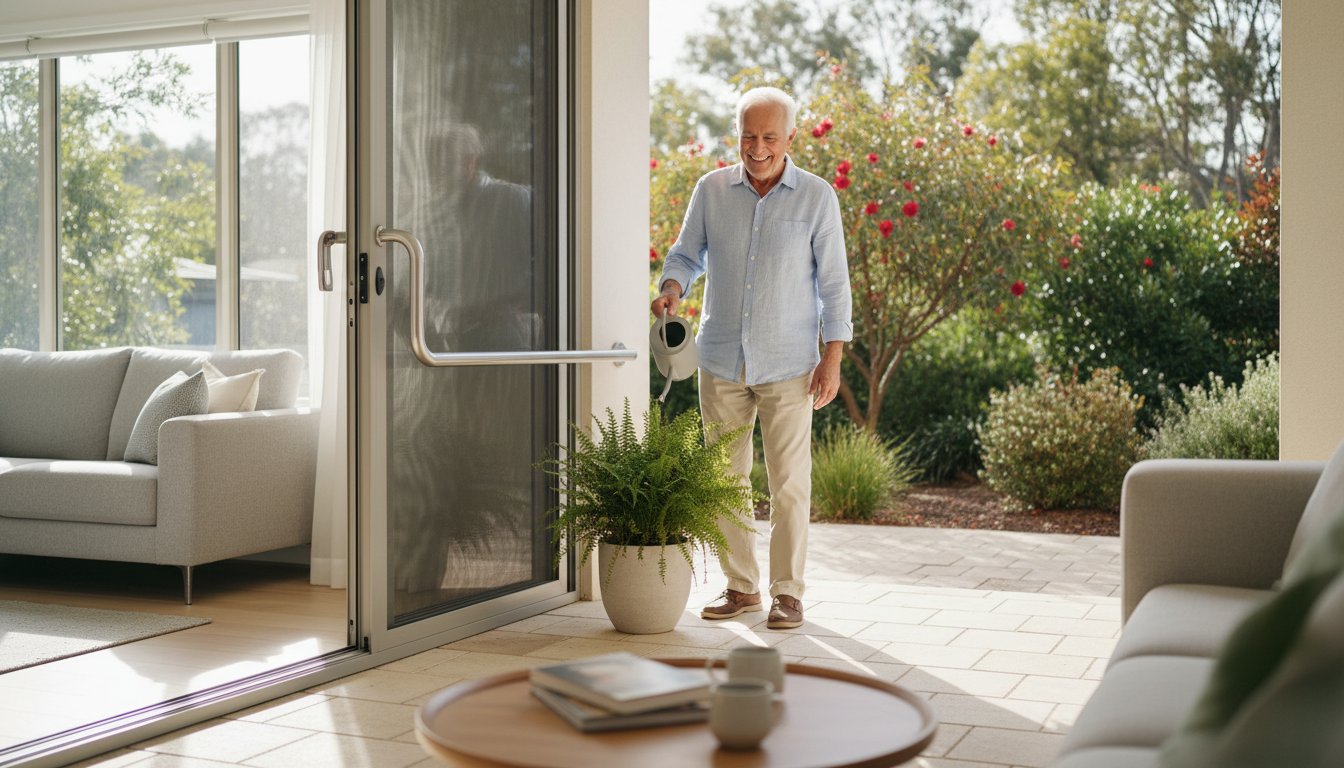
Last Tuesday, 72 year old Margaret sat in her Brisbane lounge room, looking at her garden with a sense of hesitation. For Margaret, the two small steps to the patio had become a mountain she feared to climb, while her daughter spent every work meeting worrying about a potential fall. This is where occupational therapy for seniors at home changes the narrative. It’s about more than just safety; it’s about returning to the daily rituals that make life meaningful and keeping the home a place of joy rather than a place of risk.
You already know that your parents want to stay in their own space, but the stress of managing NDIS portals or My Aged Care can leave you feeling drained. It’s okay to feel overwhelmed by the complex systems. This guide will show you how professional in-home support empowers seniors to live safely and independently on their own terms. We’ll explore a clear roadmap for securing funding and equipment, helping you move from a place of worry to a place of confidence.
Key Takeaways
- Discover how the “science of doing” empowers you to maintain your independence and continue living safely and confidently in the home you love.
- Explore practical strategies for falls prevention and energy conservation that make daily routines easier and more manageable for those with chronic conditions.
- Understand how to navigate Australian funding options, including the transition between NDIS and My Aged Care packages for occupational therapy for seniors at home.
- Learn what to expect during a professional in-home assessment, where your personal goals and daily routines are the primary focus of the conversation.
- See how a compassionate, multidisciplinary team supports your right to live life your way with tailored care that respects your dignity and choices.
What is Occupational Therapy for Seniors at Home?
Occupational therapy isn’t just a clinical service; it’s the “science of doing” for your everyday life. When we talk about occupational therapy for seniors at home, we’re talking about empowering you to keep doing the things you love in the place you feel most comfortable. It focuses on your ability to participate in daily activities that bring meaning to your day. To understand the full scope of this profession, you can explore What is Occupational Therapy and how it has evolved into a vital part of modern healthcare.
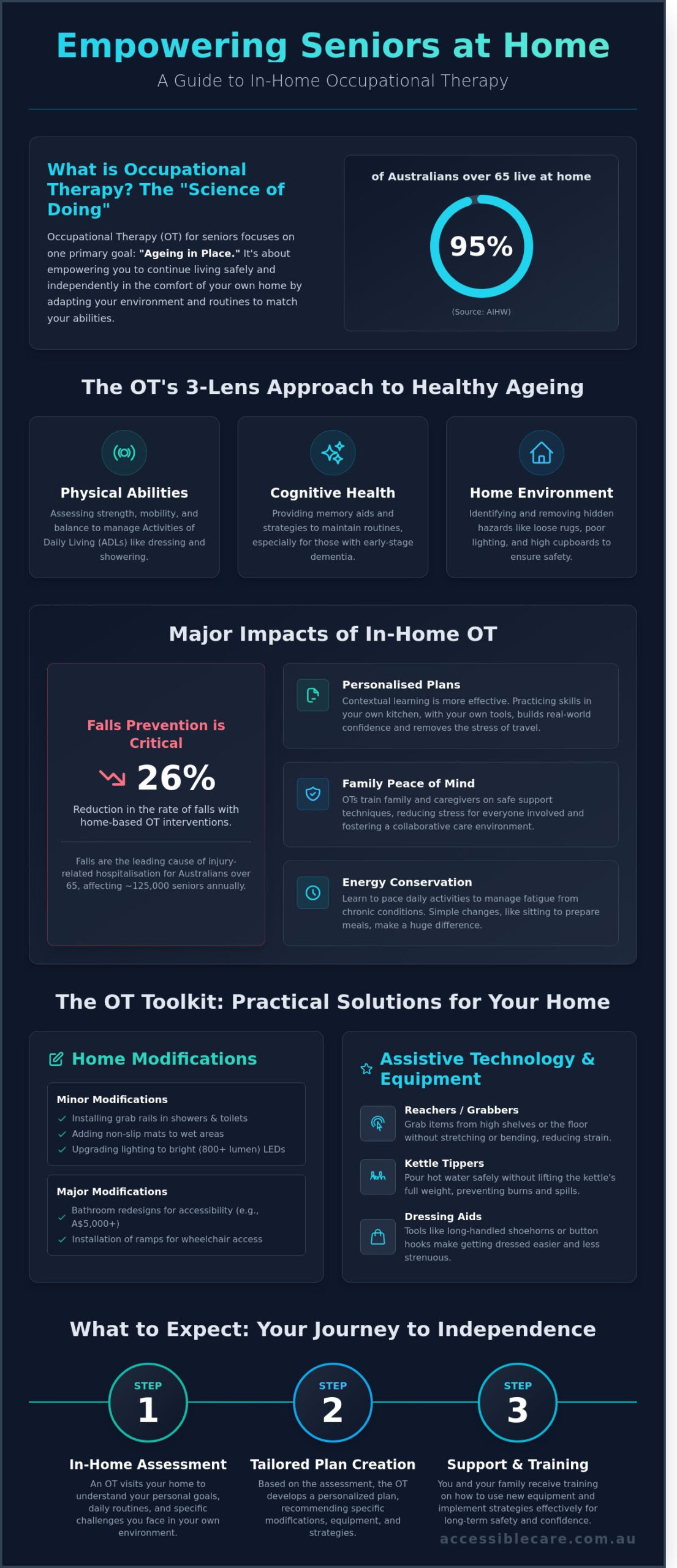
The primary goal is “ageing in place.” This means having the support to live in your own home safely and independently for as long as possible. According to the Australian Institute of Health and Welfare (AIHW), 95% of Australians aged 65 and over live in households rather than residential care. While general aged care provides essential help with chores, specialized OT focuses on rehabilitation and adaptation. It’s about finding solutions so you don’t have to rely on others for every task.
The Role of an OT in Healthy Ageing
An OT looks at your life through three lenses: your physical abilities, your cognitive health, and your home environment. They focus heavily on “Activities of Daily Living” (ADLs). These are the essential tasks like dressing, showering, or preparing a cup of tea. By 2022 data, nearly 4 million Australians lived with a disability, and OTs help bridge the gap between a person’s capability and their environment. They also prioritize your mental wellbeing. If you love gardening but find it difficult to bend down, an OT finds ways for you to continue that hobby. This keeps your spirits high and your mind engaged.
Why “At Home” Matters
Practicing skills in a clinic is one thing, but doing them in your own kitchen is another. This is called contextual learning. It’s more effective because you’re using your own kettle, your own chairs, and your own hallways. Occupational therapy for seniors at home also removes the exhaustion of traveling to appointments. In Australia, transport can be a major barrier for those over 75. Being in your space allows an OT to spot “hidden” hazards that a clinic visit would miss. They might find:
- Loose rugs in the hallway that increase fall risks.
- Poor lighting in the bathroom that leads to trips.
- High cupboards in the kitchen that cause physical strain.
Research shows that home-based interventions can reduce the rate of falls by 26%. This provides you and your family with true peace of mind and the confidence to move freely in your own space.
How In-Home OT Supports Independence and Safety
Occupational therapy for seniors at home focuses on what you can do, rather than what you can’t. Falls remain the leading cause of injury-related hospitalisations for Australians over 65, with roughly 125,000 seniors admitted to hospital each year due to a fall. An OT helps you stay safe by conducting a thorough home safety and fall prevention assessment. They look at your environment and your physical abilities to create a plan that keeps you on your feet and confident in your own space.
Energy conservation is another vital part of the process. If you’re living with fatigue or chronic conditions like heart disease, an OT teaches you how to pace your day. This might mean sitting while preparing vegetables or using a trolley to move laundry. For those experiencing early-stage dementia, OTs provide cognitive cues and memory aids that help maintain a sense of routine. We also focus on training your loved ones. When your family understands how to support your movements safely, it reduces stress for everyone involved.
Home Modifications for Safer Living
Staying in the home you love often requires small but meaningful changes. Minor modifications include installing grab rails in the shower, adding non-slip mats, or upgrading to 800-lumen LED lighting to improve visibility. Major projects might involve A$5,000 bathroom redesigns or ramp installations. Your therapist’s role is to assess your needs and provide the clinical justification required for funding through programs like the NDIS or My Aged Care. This ensures every change is tailored to your specific physical requirements.
While these modifications focus on individual homes, larger-scale projects like new retirement villages or accessible apartment complexes involve even more detailed planning. This often includes a formal traffic impact assessment for development application to ensure the site is safe and accessible for residents and visitors.
Assistive Technology and Equipment
The right tools make daily tasks feel manageable again. Your therapist might prescribe mobility aids like specialized wheelchairs or walkers tailored to your height. They also introduce clever daily living tools that protect your joints and save your strength. Occupational therapy for seniors at home often includes training on how to use these items effectively:
- Reachers: These help you grab items from high shelves without stretching.
- Kettle tippers: These prevent burns by allowing you to pour water without lifting the weight of the kettle.
- Dressing aids: Long-handled shoehorns and button hooks make morning routines much easier.
Smart home technology, such as personal alarms or automated pill dispensers, adds an extra layer of security. If you’re curious about how these tools can help, you can explore our tailored support options to see what fits your lifestyle. Our goal is to ensure you feel empowered and secure every single day.
Navigating Funding: NDIS vs. Aged Care Packages
Understanding how to pay for occupational therapy for seniors at home is the first step toward regaining your independence. In Australia, the funding system is divided primarily by age. If you are under 65 years old, you will likely access support through the National Disability Insurance Scheme (NDIS). Once you reach 65, or 50 for Aboriginal and Torres Strait Islander people, your primary gateway for support shifts to My Aged Care. Both systems aim to keep you safe and comfortable in your own environment, but the application processes differ significantly.
Researching occupational therapy for seniors helps you understand how these services maintain your dignity while living at home. Beyond government packages, you can also access OT services through private health insurance or Medicare. Under a Chronic Disease Management plan, your GP can authorize up to 5 rebated sessions per calendar year. While these don’t always cover the full cost, they provide a vital starting point for immediate care.
Accessing OT through the NDIS
For NDIS participants, the journey often begins with a Functional Capacity Assessment (FCA). This detailed report, completed by an occupational therapist, outlines exactly how your disability affects your daily life. We use these assessments to advocate for the funding you need. Your OT goals must align with your NDIS plan outcomes, such as improving community participation or increasing personal safety. Accessible Care is a registered NDIS provider in Melbourne and Adelaide, dedicated to helping you use your budget effectively to achieve your personal milestones.
My Aged Care and Home Care Packages
If you are over 65, you’ll start with an assessment by the Regional Assessment Service (RAS) or an Aged Care Assessment Team (ACAT). These professionals determine if you qualify for the Commonwealth Home Support Programme (CHSP) for entry-level help or a Home Care Package (HCP) for more complex needs. You can use your package funds for essential equipment like shower chairs or major home modifications like ramps. Data from 2023 indicates that seniors who seek early intervention through these packages maintain their physical function 25% longer than those who wait for a crisis to occur. Your choice, your life, your way remains our focus as we help you manage these funds.
- CHSP: Best for one-off home assessments or small grab-rail installations.
- HCP Levels 1-4: Provides ongoing funding for regular OT visits and complex assistive technology.
- Private Pay: No waiting lists and no government assessment required.
What to Expect During Your First In-Home Assessment
The first visit is the foundation of your journey toward greater independence. It’s a time for us to listen to your story and understand what matters most to you. We believe in “Your choice, your life, your way,” so we start by discussing your daily challenges and the activities you’d like to perform more easily. This conversation ensures our occupational therapy for seniors at home is tailored specifically to your lifestyle and personal goals.
Your therapist will observe how you move within your own space. This isn’t a test; it’s a way to see how your environment supports or hinders your movement. We might look at how you navigate the kitchen to make a cup of tea or how you get in and out of your favourite chair. We also conduct a room-by-room environmental audit. We look for specific safety risks, such as loose rugs or dim lighting in hallways, which contribute to the fact that 1 in 3 Australians over the age of 65 experience a fall each year.
Preparing for the Visit
You don’t need to do this alone. We encourage family members or carers to be present to share their insights and ask questions. Please have your medical history and a list of current medications ready for review. A typical first assessment takes 60-90 minutes and focuses on your comfort. This ensures we have enough time to build a professional, supportive relationship without feeling rushed or overwhelmed.
The Outcome: Your Personalized Therapy Plan
Following the assessment, we’ll develop a collaborative plan that balances immediate safety with your long-term aspirations. If you need a shower chair or a threshold ramp, we’ll prioritise those modifications first. Small changes, often costing between A$150 and A$500, can make a massive difference in preventing hospital admissions. We also schedule follow-up visits to practice new skills or trial specialised equipment that supports your occupational therapy for seniors at home. Our team stays in close contact with your GP and other health professionals to ensure your care is seamless and coordinated.
Ready to reclaim your independence and feel safer in your own home? Book your home assessment with Accessible Care and let’s start building your personalised plan together.
Why Accessible Care is Your Partner in Independent Living
We believe your home is your sanctuary. Our core philosophy, “Your choice, your life, your way,” guides every interaction we have with our participants. We don’t simply provide a service; we build a supportive partnership that empowers you to remain the director of your own story. By choosing occupational therapy for seniors at home, you’re opting for a path that prioritises your autonomy and respects your established routines.
Our team brings a wealth of collective knowledge to your doorstep. We offer a multidisciplinary approach that integrates Occupational Therapy, Speech Therapy, and Nursing care. This holistic model means your support is seamless. If our therapists identify a need for specialised equipment or nursing care during a home visit, we coordinate those services internally. This saves you the stress of managing multiple providers and ensures your care plan is consistent and clear.
Compassionate Care in Melbourne and Adelaide
We’re deeply rooted in the Melbourne and Adelaide communities. Our clinicians have over 10 years of experience navigating the Australian NDIS and Aged Care landscapes, ensuring you receive every bit of support you’re entitled to. We’ve helped more than 500 local families find peace of mind by creating safer, more accessible living environments. Our approach is built on dignity and active listening. We take the time to understand your history and your hurdles because effective occupational therapy for seniors at home is never a one-size-fits-all solution.
Take the First Step Toward Independence
Starting the journey toward better mobility and safety shouldn’t be a source of stress. We’ve refined our matching process to ensure you’re paired with a therapist who genuinely understands your goals and matches your personality. This clinical match is vital for building the trust needed for long-term success. Whether you’re looking for minor home modifications or comprehensive daily living support, our team is ready to listen.
You don’t have to navigate these changes alone. We’re here to provide the gentle, professional guidance you need to stay in the home you love. Contact our compassionate team today to discuss your needs and take a proactive step toward a more confident, independent lifestyle.
Take the First Step Toward Safer Independent Living
Maintaining your dignity and freedom at home is a priority that starts with the right environment. By choosing professional occupational therapy for seniors at home, you’re investing in a tailored plan that prioritizes your safety and daily comfort. Our experienced multidisciplinary team helps you navigate funding options, including NDIS and Aged Care Packages, so you can focus on living life your way. As a Registered NDIS Provider serving local communities across Melbourne and Adelaide, we’re here to ensure your home remains your sanctuary.
Don’t let small hurdles become major obstacles to your independence. You deserve a partner who listens to your goals and provides practical, compassionate solutions. Ready to transform your daily routine? Book a Compassionate In-Home OT Assessment today and let’s start this journey together. Your future of confident, independent living is just one conversation away.
Frequently Asked Questions
Is occupational therapy for seniors covered by the NDIS?
Yes, occupational therapy for seniors at home is covered by the NDIS if the participant is under 65 and the service relates to their disability goals. The current NDIS price limit for these services is A$193.99 per hour in most Australian states. If you’re over 65, you can typically access similar support through My Aged Care or your Home Care Package funding.
How much does in-home occupational therapy cost in Australia?
The cost for occupational therapy for seniors at home usually ranges between A$180 and A$250 per session. Most private providers align their fees with the NDIS standard rate of A$193.99 to ensure fair pricing. You might also be eligible for a Medicare rebate of A$58.30 per session for up to five visits each year under a Chronic Disease Management plan.
Do I need a GP referral for an occupational therapist to visit my home?
You don’t need a GP referral to book a private occupational therapist to visit your home. You can contact a provider directly to start your journey toward safer living today. However, a referral is necessary if you want to claim Medicare rebates or access specific government funded programs. We’re here to help you navigate these requirements so you receive every bit of support you deserve.
What is the difference between a physiotherapist and an occupational therapist?
Physiotherapists focus on your physical strength and how your body moves; occupational therapists focus on your ability to perform daily activities. A physio might help you walk further after an injury. An OT looks at how you safely use your kitchen or get dressed. They provide the practical tools and home modifications that empower you to live the life you choose with dignity.
Can an OT help if my parent is starting to show signs of dementia?
Yes, an occupational therapist provides essential support for seniors showing early signs of dementia by creating safer environments. They use memory aids and simplified routines to reduce confusion and anxiety in the home. Research indicates that these tailored home interventions can reduce caregiver stress by 25 percent. It’s about finding gentle ways to maintain your loved one’s independence for as long as possible.
How long is the waiting list for an OT assessment in Melbourne or Adelaide?
Waiting lists for a private OT assessment in Melbourne or Adelaide currently sit between two and six weeks. If you’re waiting for a public health assessment or a specific NDIS provider, the wait can sometimes reach nine months. We recommend reaching out early to secure your spot. This proactive approach helps prevent accidents and ensures your home is ready for your changing needs.
Will the OT force us to make expensive changes to the house?
Your OT will never force you to make changes you don’t want or can’t afford. They offer a variety of options, from simple A$150 grab rails to more complex structural modifications. Their role is to listen to your concerns and provide expert advice on what’s truly necessary for your safety. You’re always in control of your home; it’s your choice, your life, and your way.
Can an occupational therapist help with mental health and social isolation?
Occupational therapists are highly skilled at addressing social isolation by helping you reconnect with your community and hobbies. They might suggest transport solutions or adaptive technology that makes it easier to video call your grandchildren. By focusing on the activities that bring you joy, they help improve your mental wellbeing. Staying connected is a vital part of living a full and happy life at home.

