

Imagine sitting in a waiting room with your heart racing, wondering if your child will have a meltdown during their appointment or if a professional will simply slap a label on them. You want the best for your little one, but the path to getting support often feels like a maze of clinical jargon and rigid NDIS forms. It’s exhausting to feel like you’re constantly defending your child’s behaviour when you know they’re just trying their best to navigate a world that wasn’t quite built for them. You aren’t alone in this feeling. Many Australian parents tell us that the fear of judgment is the biggest hurdle to seeking help.
We believe every child deserves to be seen for their unique strengths, not just their challenges. A comprehensive ot assessment for kids is the first step toward that clarity. It’s a compassionate, person-centred process designed to identify exactly where your child shines and where they need a little extra help to thrive. This guide will show you what to expect during a paediatric assessment, how we simplify NDIS reporting, and the practical strategies we provide to support your child’s independence at home and school. Your journey toward a clearer roadmap starts right here.
Key Takeaways
- Learn how a professional ot assessment for kids identifies your child’s unique strengths and helps overcome barriers to participation at home and school.
- Discover what to expect during a warm, play-based session designed to make your child feel safe, seen, and supported throughout the evaluation.
- Understand the physical and sensory milestones being explored, from fine motor coordination to the daily living skills that foster greater independence.
- Find out how clinical observations are translated into compassionate NDIS reports that act as a clear roadmap for your child’s future funding and care.
- Explore how a multidisciplinary approach in Melbourne and Adelaide ensures your family receives tailored support that respects your choice and your way.
What is an OT Assessment for Kids and Why Does it Matter?
An ot assessment for kids is more than just a series of clinical tests; it’s a holistic look at how your child interacts with their world. Think of it as a compassionate roadmap that helps us understand your child’s unique way of moving, feeling, and participating in life. While a medical doctor might provide a diagnosis to explain a condition, an Occupational Therapist looks at the “doing.” They want to see how your child manages the everyday tasks that make up their childhood. This focus on function helps families move from simply understanding a label to building practical skills for daily life.
To understand the foundation of this practice, you can explore What is Occupational Therapy? to see how it supports people across all ages. For children, the focus is on building the skills needed for independence. Early intervention is vital. Research from various Australian developmental studies indicates that addressing functional delays before a child starts primary school can significantly improve their long-term social participation. By identifying barriers now, we provide the right support before small challenges become bigger obstacles. In the Australian healthcare landscape, these assessments are often the essential first step in accessing NDIS support, ensuring your child receives the tailored funding they deserve.
The Role of a Paediatric Occupational Therapist
A paediatric OT is an expert in the “occupations” of childhood. For a child, this isn’t a job; it’s play, learning, and self-care. These professionals bridge the gap between clinical theory and your living room. They don’t just see a child who can’t hold a pencil; they see a child who wants to express their creativity at school. This person-centred approach ensures that every goal is tailored to your family’s specific needs and your child’s personal interests. They act as a supportive partner, empowering your child to reach their milestones with dignity and confidence.
Signs Your Child Might Benefit from an Assessment
You know your child best, and your intuition is often the first indicator that something needs attention. An ot assessment for kids might be helpful if you notice specific struggles that persist over time. These signs are often subtle but can impact a child’s confidence. Common indicators include:
- Difficulty with fine motor tasks like using scissors, zipping a school jacket, or manipulating buttons.
- Sensory processing issues, such as being overwhelmed by the noise in a busy Australian shopping centre or showing extreme sensitivity to clothing textures.
- Challenges with social play, such as struggling to share or having difficulty following three-step instructions at school.
- Frequent “clumsiness” or appearing to have a weaker grip compared to peers of the same age.
- Difficulty staying seated or focused during meal times or classroom activities.
If you’ve noticed these patterns, an assessment provides the clarity needed to help your child thrive. It’s about looking past the struggle and finding the strength within.
What to Expect During the OT Assessment Session
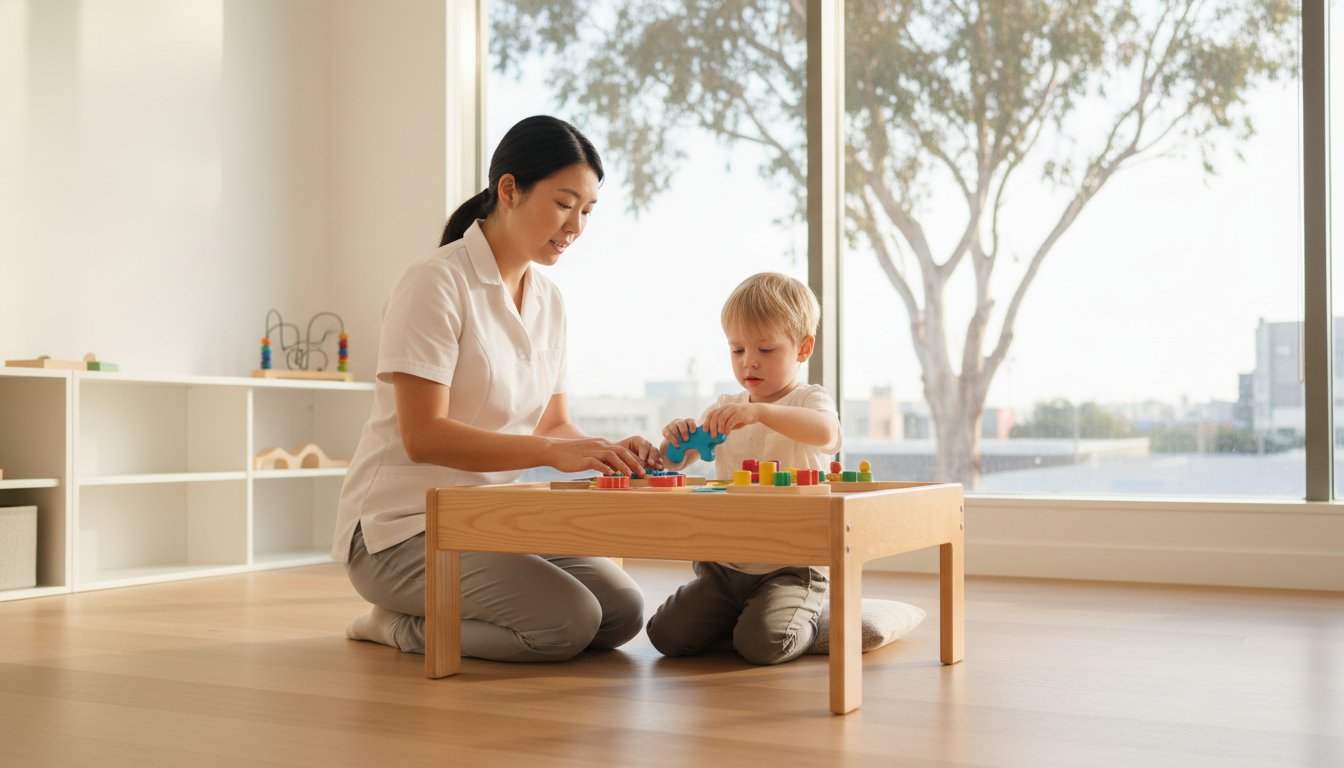
Walking into a session for an ot assessment for kids shouldn’t feel like walking into a clinical examination. Instead, our therapists focus on creating a space where your little one feels safe and seen, using play as the primary tool for discovery. We usually begin with a warm conversation with you. This initial consultation allows us to understand your family’s unique history and the specific goals you have for your child’s independence. It’s a time for us to listen to your concerns and celebrate your child’s strengths.
During the typical 60 to 90 minute session, the therapist observes how your child moves, interacts, and solves problems. These observations are paired with structured activities that often look like simple games to a child but provide deep clinical insights for the therapist. To understand the full scope of these sessions, many parents find it helpful to read about what to expect in an OT evaluation, which details how fine motor skills and sensory processing are gently screened through play.
Preparing Your Child for the Big Day
Helping your child feel comfortable starts with the language you use at home. Rather than calling it a test or a doctor’s visit, try describing it as “going to play with a new friend who has really cool toys.” This simple shift reduces anxiety and sets a positive tone. You can also help by bringing along items that provide comfort and practical support:
- Familiar snacks and a water bottle to keep energy levels steady.
- A favourite toy or “security” item if they feel overwhelmed.
- Comfortable clothing that allows them to jump, crawl, and move freely.
Your own calm presence is the most powerful tool. When you stay relaxed, your child feels they’re in a safe environment, allowing their true personality and abilities to shine through during the ot assessment for kids.
The Assessment Environment: Clinic vs. Home
Choosing the right setting for an assessment depends on your child’s specific needs. Clinic-based assessments offer access to a wide range of specialised equipment and standardised tools, which can be essential for high-accuracy results. However, we also recognise that children often behave differently in familiar surroundings. This is why our team at Accessible Care offers flexible options across Melbourne and Adelaide. We can conduct observations at home or school to see how your child manages real-world challenges, like sitting at their own desk or navigating their backyard. This person-centred approach ensures the support plan we develop fits perfectly into your daily life.
Key Areas Explored: Motor Skills, Sensory Processing, and Daily Living
An ot assessment for kids isn’t just a checklist; it’s a holistic look at how your child moves, thinks, and feels. We observe your child through the lens of their daily “occupations,” which include playing, learning, and looking after themselves. Our goal is to see where they shine and where they might need a little extra support to feel confident. By understanding these foundations, we can create a plan that respects your child’s unique pace.
- Fine Motor Skills: We look at hand-eye coordination and tool manipulation. This includes how your child manages a pencil grip or uses scissors. These small movements are the building blocks for writing and drawing during the six hours they spend at school each day.
- Gross Motor Skills: This involves larger movements like balance and core strength. A strong core is vital for sitting upright at a desk; it prevents the fatigue that often leads to a loss of focus.
- Sensory Processing: We explore how your child interprets sight, sound, touch, and movement. Some children feel overwhelmed by bright lights or loud noises, while others might seek out constant movement to feel grounded.
- Self-Care and Independence: We assess “activities of daily living,” such as dressing, eating, and managing personal hygiene. Gaining independence in these areas builds immense self-esteem and eases the morning routine for the whole family.
Standardised Testing Tools We Use
We use recognised tools like the BOT-2 or Beery VMI to gather objective data. These aren’t “pass or fail” tests. Instead, they provide a clear baseline to measure future progress over months or years. For understanding how your child manages at home, the Vineland-3 is excellent for assessing adaptive behaviour. It helps us see how they apply their skills in real-world settings, ensuring our support remains practical and person-centred.
Social-Emotional and Cognitive Skills
A child’s ability to learn is closely tied to executive functioning. This involves planning, organising, and finishing tasks without getting overwhelmed. We also look at social interaction, such as understanding cues, sharing, and emotional regulation. There’s a vital link between speech pathology and OT when it comes to social development. While a speech pathologist focuses on the “how” of communication, an OT helps with the “doing” and the sensory regulation needed to stay engaged with peers. During an ot assessment for kids, we ensure these cognitive and social layers are fully explored to support your child’s community participation.
Navigating the Results: NDIS Reports and Your Child’s Roadmap
Receiving the results of an ot assessment for kids is a significant milestone in your family’s journey. This document is much more than a collection of clinical observations; it’s a compassionate translation of your child’s strengths and the hurdles they face. We focus on creating a report that’s easy to read and deeply respectful, ensuring you feel seen and heard throughout the process. Our goal is to turn complex data into a clear, actionable roadmap that guides your next steps with confidence.
A key part of this roadmap involves setting “SMART” objectives. These goals are Specific, Measurable, Achievable, Relevant, and Timely. Most importantly, they’re built around your child’s interests. If your child dreams of climbing the spider web at the local park or wants to dress themselves for school, those personal victories become our primary targets. By grounding therapy in what matters to your child, we ensure the plan feels like a support system rather than a chore.
Understanding the NDIS Reporting Process
When we write these reports, we’re building the “evidence of disability” that the NDIA requires for plan reviews. We carefully document how your child’s needs impact their daily life to identify “reasonable and necessary” supports. This terminology is crucial for securing the right level of funding in your NDIS plan. We look at the whole picture, from sensory processing to fine motor skills, to ensure no detail is missed.
A Functional Capacity Assessment (FCA) provides the NDIA with a professional justification for the specific therapy hours and support levels required to meet your child’s developmental needs. This assessment acts as a vital piece of evidence, showing exactly why certain interventions are essential for your child’s independence and safety.
Empowering Parents as Partners
We believe you are the expert on your own child. We’ll sit down together to review the report, making sure it accurately reflects your child’s personality and your family’s daily reality. This collaborative approach ensures that the therapy plan isn’t just something done “to” your child, but something created “with” your family. It’s about your choice, your life, and your way.
This report also serves as a powerful tool for advocacy. You can take these findings to school meetings to help teachers understand how to make classroom adjustments. Whether it’s recommending a quiet corner for sensory breaks or specific tools for writing, the ot assessment for kids gives you the data you need to champion your child’s needs in every environment. We’re here to help you move from the initial assessment into a tailored therapy plan that brings peace of mind and real progress.
Ready to start building your child’s roadmap to independence? Get in touch with our compassionate team today to learn how we can support your family.
Compassionate OT Support in Melbourne and Adelaide
Choosing the right provider for your child’s developmental journey is a significant step. At Accessible Care, we’ve built a reputation across Victoria and South Australia as a trusted partner for families navigating the NDIS. We believe that a successful ot assessment for kids starts with a simple, powerful act: listening. Our therapists don’t just see a set of symptoms or a diagnosis. They see your child’s unique personality and your family’s specific goals. We focus on building a relationship first, ensuring your child feels comfortable before any formal evaluation begins.
Our multidisciplinary approach sets us apart. We don’t work in silos. By integrating occupational therapy with speech therapy and behaviour support, we provide a wrap-around service that addresses every aspect of your child’s growth. This means your OT and speech pathologist actually talk to each other, creating a consistent plan that moves your child toward independence faster. Our team consists of dedicated professionals who focus on dignity and respect in every interaction. We’re here to provide solutions that bring your family peace of mind and an improved quality of life.
Our Local Impact in Melbourne and Adelaide
We understand the local landscape because we live and work here. In Melbourne, our therapists have a deep understanding of the Victorian school system and community resources. This local knowledge is vital when we help transition your child’s OT goals into a classroom environment. Whether you’re in the heart of Melbourne or the suburbs of Adelaide, our dedicated paediatric spaces offer a calm, sensory-friendly atmosphere for every session.
We’re committed to reaching NDIS participants wherever they are. This includes both metro centres and regional communities where access to specialised care can often be limited. We’ve designed our clinics to be more than just medical offices; they’re vibrant spaces where children feel empowered to explore and learn. Our clinicians stay updated with the latest NDIS Practice Standards, ensuring your funding is used effectively to achieve real-world outcomes for your child’s daily life.
Ready to Help Your Child Shine?
We know that the paperwork and processes involved in disability support can feel overwhelming. That’s why we’ve refined our intake process to be as smooth as possible. There’s no complex jargon or high-pressure situations. We focus on getting you the support you need without the added stress. It’s about your choice, your life, and your way. We take the time to explain every step, so you’re never left wondering what comes next.
Your child has incredible potential, and we’re here to help them unlock it. From the very first ot assessment for kids to the day they master a new skill, you can trust that they’re in safe, caring, and professional hands. We’re ready to start this journey with you today and provide the tailored support your family deserves.
Book an OT assessment for your child today and take the first step toward a brighter, more independent future.
Empowering Your Child’s Journey Toward Independence
Understanding your child’s unique developmental needs is the first step toward meaningful growth and confidence. An ot assessment for kids isn’t a simple pass or fail test. It’s a comprehensive look at how your child interacts with their world, from fine motor skills to sensory processing. This assessment provides the essential data needed to create a tailored roadmap for their future, ensuring every intervention respects their dignity and individual personality. It’s about finding the right tools so they can participate fully in school, play, and home life.
As a Registered NDIS Provider, Accessible Care offers person-centred support through our experienced paediatric multidisciplinary team in Melbourne and Adelaide. With over 610,000 Australians supported by the NDIS as of 2023, we understand the importance of delivering professional reports that help you navigate the system effectively. Our team prioritises listening to your concerns because you know your child best. We’re here to turn those insights into actionable steps that improve daily living and long-term well-being.
Empower your child’s independence—book a compassionate OT assessment today
Taking this step is a powerful way to advocate for your child’s future. We look forward to partnering with your family to help your little one thrive in their own unique way.
Frequently Asked Questions
How long does an OT assessment for kids typically take?
An ot assessment for kids typically takes between 60 and 90 minutes for the initial face-to-face session. This gives our therapists enough time to observe your child’s play, motor skills, and sensory responses in a relaxed environment. While the physical meeting is short, the therapist spends another 3 to 5 hours analyzing data and writing a comprehensive report. This ensures every detail of your child’s unique needs is captured accurately.
Does my child need a formal diagnosis before getting an OT assessment?
Your child does not need a formal medical diagnosis to receive an occupational therapy assessment. Many families seek support based on observations of developmental delays or sensory challenges at home. We focus on your child’s functional abilities and how they interact with their world. Starting early allows us to identify specific areas where they can build independence, regardless of whether a label exists yet.
Can I use NDIS funding for an occupational therapy assessment?
You can use NDIS funding for an assessment if your child has an active plan with “Improved Daily Living” or “Capacity Building” budget categories. As a registered provider, we ensure the assessment meets NDIS requirements for evidence-based reporting. This helps you use your funding effectively to support your child’s goals. We always listen to your concerns to make sure the process aligns perfectly with your NDIS plan.
What happens if my child is shy or has a “meltdown” during the assessment?
Please don’t worry if your child feels overwhelmed or has a meltdown during our time together. Our therapists are skilled at working with children who feel anxious or shy. These moments provide valuable, real-world information about how your child processes stress and sensory input. We prioritize your child’s comfort and will pause or adjust the session to ensure they feel safe and respected throughout the process.
How soon after the assessment will I receive the written report?
You will generally receive the completed written report within 10 to 15 business days after the final assessment session. This timeframe allows our team to carefully review all observations and standardized test results. We want to provide you with a high-quality document that clearly outlines practical recommendations and strategies. This report becomes a vital tool for school planning and your upcoming NDIS reviews.
Is an OT assessment the same as a Functional Capacity Assessment (FCA)?
An ot assessment for kids often focuses on specific skill development, while a Functional Capacity Assessment (FCA) is a broader look at daily life. An FCA specifically measures a participant’s ability to perform activities across several life domains like self-care and social interaction. While both use similar tools, the FCA is primarily used by the NDIS to determine the specific level of support and funding a person requires.
What is the difference between an OT assessment and a school screening?
A school screening is a brief check to see if a child’s skills are age-appropriate for the classroom. In contrast, a private OT assessment is a deep, clinical evaluation lasting 90 minutes or more. It uses standardized tools to identify the underlying causes of specific challenges. While a screening might flag a general concern, the full assessment provides the detailed roadmap and therapeutic goals needed for real progress.
How often should my child have a follow-up assessment?
Most children benefit from a formal review assessment every 12 months to track progress and update their goals. This frequency aligns with NDIS plan reviews and school year transitions. If your child experiences a major life change or a sudden plateau in development, we might suggest an earlier check-in. Regular reviews ensure that the support remains tailored to your child’s evolving needs and personal choices.

