

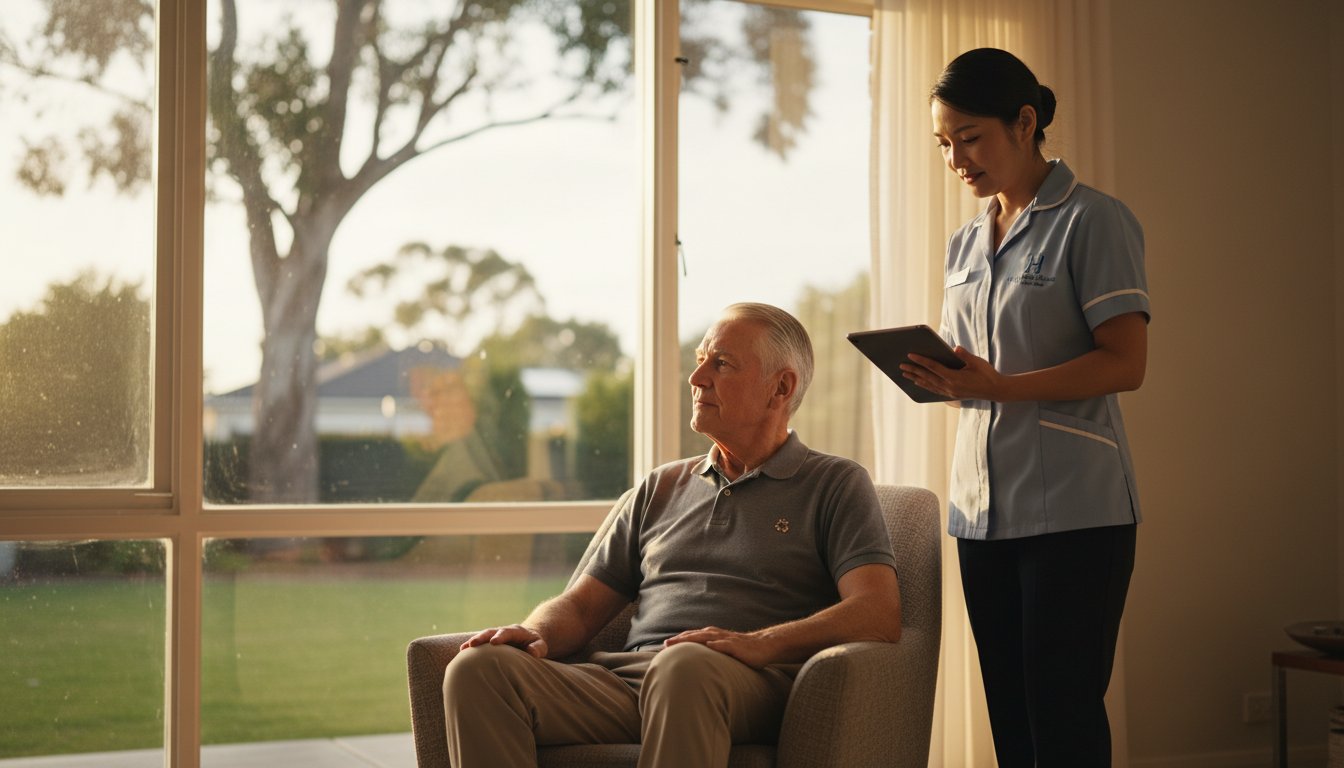
Real strength isn’t about doing everything yourself; it’s about building a tactical partnership that ensures you never have to leave the home you love. For many former service members, the thought of needing help feels like a loss of control, especially when faced with complex paperwork or physical health challenges. You’ve spent your life protecting others, and it’s only natural to want to maintain your independence and dignity on your own terms. Accessing professional community nursing care for veterans is designed to do exactly that, providing expert clinical support right where you are most comfortable.
We understand that the DVA system can feel overwhelming, and the strain on family carers is often a silent struggle. This guide will show you how to access high-quality, government-funded care without the stress of bureaucracy. We’ll walk you through the updated 2026 DVA standards, including the current $161.50 assessment fee and the referral process that brings skilled nurses to your door. You’ll discover how tailored medical management allows you to stay safe at home, ensuring your health is managed by experts while you focus on living life your way.
Key Takeaways
- Learn how to navigate the 2026 DVA eligibility requirements for Gold and White Card holders to access fully funded support at no cost to you.
- Discover how professional community nursing care for veterans delivers clinical excellence, including complex wound care and medication management, within your own home.
- Understand the simple referral process through your GP or hospital discharge planner that connects you with compassionate, skilled nursing experts.
- Explore how the “Your choice, your life, your way” philosophy ensures your privacy and dignity are protected while meeting the latest national quality standards.
- Find out how expert medical oversight provides peace of mind for your family by reducing the physical and emotional strain on home carers.
What is Community Nursing Care for Veterans?
The DVA Community Nursing Program is a dedicated support system designed to bring professional healthcare directly into your living room. In 2026, the program continues its focus on providing clinically required nursing and personal care to eligible veterans and war widows at no cost. This represents a significant shift from the traditional history of veteran care homes where residents often had to move away from their families to receive support. Today, the focus is on hospital-in-the-home models. This means you receive high-standard care from Registered Nurses (RNs) and Enrolled Nurses (ENs) without the stress of a clinical ward. Unlike standard aged care packages that often focus on general domestic help, community nursing care for veterans is led by clinical necessity. It ensures that complex health needs are managed by qualified medical professionals who understand the unique sacrifices you’ve made for your country.
Clinical Nursing vs. Personal Care
Understanding the difference between clinical and personal support helps you see the full picture of your health. Clinical nursing involves technical tasks that require a nurse’s expertise. This includes managing complex wounds, administering injections, or monitoring chronic conditions like diabetes. On the other hand, personal care focuses on your daily comfort and dignity. Our team assists with showering, dressing, and mobility to ensure you feel your best every day. These services aren’t separate; they work together. When a nurse manages your medication and a support worker helps you move safely, your overall wellbeing improves. It’s a person-centred approach that treats you as an individual, not just a set of symptoms.
The Goal of Veteran Home Care
The primary objective is simple: keeping you independent for as long as possible. Research consistently shows that aging in place leads to better mental health and faster recovery times. By bringing community nursing care for veterans into your home, we help reduce the risk of early admission to residential care facilities. This isn’t just about safety. It’s about your quality of life. Staying at home means you keep your garden, your pets, and your local connections. We act as facilitators who help you achieve your goals. This ensures you remain the commander of your own life while we handle the medical details in the background. Our role is to provide a supportive partnership that protects your choice and your way of living.
Eligibility: How to Access DVA Community Nursing Support
Getting the support you deserve shouldn’t feel like another battle. Accessing community nursing care for veterans is a structured process designed to ensure you receive exactly what you need. If you hold a DVA Gold Card, you’re eligible for any clinically required nursing care at home. For those with a White Card, the DVA covers nursing services specifically related to conditions they’ve accepted as being service-linked. While the Australian program is tailored to our local community, looking at international models like the DVA Community Nursing Home program shows a global commitment to veteran wellbeing through clinical excellence. The core requirement for any veteran is an ‘assessed clinical need.’ This means a medical professional must confirm that nursing intervention is necessary to manage your health safely at home.
You don’t have to guess if you’re eligible. The gatekeeper for this program is your General Practitioner or a hospital discharge planner. They provide the initial referral that sets everything in motion. Once this referral is made, a DVA-approved provider will visit your home to conduct a comprehensive assessment. As of 1 January 2026, the DVA has set a verified fee of $161.50 for these initial assessments to ensure providers can spend the time necessary to understand your unique situation. This assessment isn’t just a checkbox; it’s a conversation where your goals and preferences take centre stage. If you’re unsure where to start, our team can help you understand how to begin your journey with DVA support.
The 5-Step Process to Getting Started
- Step 1: Consult your GP. Ask for a referral to the DVA Community Nursing Program based on your clinical needs.
- Step 2: Choose your provider. You have the right to select an approved provider like Accessible Care who aligns with your values.
- Step 3: Home Assessment. A Registered Nurse visits you to evaluate your health, mobility, and safety.
- Step 4: Create your Care Plan. We build a personalised strategy that outlines your visits and health goals.
- Step 5: Regular Care Begins. Your scheduled nursing visits start, providing consistent and professional support.
What to Tell Your GP
When you visit your doctor, be specific about the challenges you face at home. Mention any recent hospitalisations or falls, as these are clear indicators that extra support is needed. Don’t play down your symptoms; explain exactly how your condition impacts your daily life, such as difficulty managing complex wound dressings or confusion with new medications. Specifically ask for a referral for ‘Community Nursing’ rather than general home help. This ensures your GP uses the correct DVA pathways to get your clinical care approved quickly.
Clinical and Personal Services: What Your Care Plan Includes
Your care plan isn’t a generic checklist. It’s a living document tailored to your specific health goals and daily routine. When you begin receiving community nursing care for veterans, the focus is on providing clinical excellence that integrates seamlessly into your life. One of the most vital aspects is medication management. Our nurses ensure that you’re taking the right doses at the right times, which significantly reduces the risk of adverse reactions or hospital readmissions. This professional oversight gives you and your family the confidence that your health is being monitored by experts who truly care.
We provide a wide range of clinical services designed to manage complex conditions. For those recovering from surgery or managing chronic issues, our wound care specialists use advanced techniques to promote healing and prevent infection. We also offer dedicated chronic disease management for conditions like Diabetes, Heart Disease, and Respiratory issues. As highlighted by international standards for DVA Community Nursing Support, these services are essential for maintaining stability and preventing health crises. We also handle continence management and catheter care with the utmost dignity, ensuring your privacy is always respected.
High-Intensity Nursing Supports
Some health journeys require specialized, high-level clinical skills. Our team is experienced in delivering high-intensity care for complex conditions such as Motor Neurone Disease (MND). This includes managing ventilation and tracheostomy care within the home environment, ensuring you have access to life-sustaining support without needing to stay in a hospital. If you’re navigating these complex needs, you can learn more about high intensity supports ndis and how they provide a safety net for those with significant health challenges. We also provide compassionate palliative care, focusing on symptom management and emotional comfort during end-of-life stages.
Personal Care and Daily Living
True health is about more than just medical stability; it’s about how you feel every day. We provide gentle assistance with showering, grooming, and dressing, always following your preferences and routine. Our mobility support helps you move around your home with confidence, which is a key factor in preventing falls and maintaining your independence. We also recognize the vital role of family carers. By providing professional support, we help reduce the physical and emotional strain on your loved ones. This prevents burnout and allows your family to focus on their relationship with you, knowing that your clinical needs are in capable, compassionate hands.
Transitioning to In-Home Care: Maintaining Dignity and Choice
Deciding to welcome a healthcare professional into your private space is a significant emotional step. We often hear from veterans who worry that accepting community nursing care for veterans means surrendering their privacy or losing their independence. It’s a valid concern. Your home is your sanctuary, and it should always feel that way. Our approach flips the traditional medical model on its head. Instead of being a passive patient, you’re a “participant” and the active leader of your own journey. We operate under a simple but powerful philosophy: Your choice, your life, your way. This means you set the boundaries. You decide when we visit, how we enter your home, and how we deliver your care.
Setting clear expectations from the very first day creates a foundation of mutual respect. You aren’t just receiving a service; you’re forming a tactical partnership designed to protect your lifestyle. If you prefer your nurse to arrive at a specific time to avoid disrupting your morning routine, just say so. If there are parts of your home you’d like to keep private, those boundaries are strictly honoured. By leading the conversation, you ensure that the support fits into your life rather than forcing your life to fit around a clinical schedule. If you’re ready to discuss a plan that respects your space, you can contact our compassionate team today.
Choosing the Right Nursing Provider
Not all providers are the same. When you’re looking for support in Melbourne or Adelaide, it’s essential to find a partner who truly listens. You need a team that respects your service history and understands the unique culture of the veteran community. Our staff are chosen for their clinical skill and their dedication to person-centred care. They aren’t just there to tick boxes; they’re there to support your individual goals. Local knowledge matters because it helps us connect you with other community resources and ensures we’re always nearby when you need us most.
Empowering Independence Through Therapy
Nursing is most effective when it’s part of a broader, multidisciplinary team. While your nurse manages your clinical health, other specialists work to improve your physical environment and functional skills. For instance, you might wonder what is occupational therapy and how it fits into your plan. An Occupational Therapist can suggest home modifications or tools that make daily tasks easier, working alongside your nurse to ensure you stay safe. This collaborative approach means all your health professionals are talking to each other, creating a seamless safety net that empowers you to remain independent in the home you love.
Why Accessible Care is the Right Partner for Your Veteran Support
Choosing a provider is about more than finding a nurse; it’s about finding a team that listens. At Accessible Care, we bring a deep understanding of both DVA Community Nursing and NDIS frameworks to our participants in Melbourne and Adelaide. This dual expertise is rare. It allows us to provide a level of support that is both clinically rigorous and deeply personal. Our staff are dedicated locals who see you as a person with a history, not just a clinical case. We conduct holistic assessments that look beyond your immediate medical needs. We want to understand how we can best support your independence and keep you connected to your community.
Our team understands that the needs of a veteran in Melbourne might differ from someone in Adelaide. That’s why our local staff are so vital. They know your local area and the specific resources available to you. When we talk about holistic assessments, we mean we look at your social connections, your home safety, and your mental wellbeing alongside your clinical requirements. This thorough approach ensures that no detail of your care is overlooked. We’re here to ensure your transition into home support is handled with the dignity you’ve earned through your service.
Our Multidisciplinary Approach
We believe that community nursing care for veterans works best when it’s part of a connected system. Our nurses don’t work in isolation. They coordinate seamlessly with our Occupational Therapists and Speech Pathologists to ensure every aspect of your wellbeing is covered. For example, you can learn how speech pathology supports veterans with neurological conditions, helping with both communication and safe swallowing. We don’t just send a nurse and leave; we maintain a constant dialogue with your doctor. This ensures your care plan stays updated as your needs change, providing a level of medical oversight that brings real peace of mind to your family.
Start Your Journey with Accessible Care
The DVA system has specific requirements, but you don’t have to navigate them alone. We’re experts at helping you manage the paperwork and the assessment process, making the transition as smooth as possible. We’re a provider who truly listens to your goals, your preferences, and your way of living. We stay true to our core promise: Your choice, your life, your way. If you’re ready to build a partnership based on respect and clinical excellence, contact us today to discuss your veteran home care needs. We’re here to help you live the life you choose in the home you love.
Secure Your Independence and Wellbeing at Home
You’ve spent your life serving others, and now it’s time to ensure your own health is managed with the respect you deserve. Accessing community nursing care for veterans is the most effective way to stay in the home you love while receiving professional clinical support. By understanding your DVA eligibility and building a personalized care plan, you can maintain your dignity without the stress of managing a complex medical system alone. As a registered NDIS and DVA provider, Accessible Care offers an experienced multidisciplinary therapy team that focuses entirely on your unique goals.
We’re proud to serve the Melbourne and Adelaide communities with person-centred care that prioritizes your comfort and safety. Our approach is built on the belief of “Your choice, your life, your way,” ensuring we’re a partner who truly listens to your needs. You don’t have to wait for a health crisis to seek support. Get in touch with our compassionate team to start your home care journey and see how professional support empowers your daily life. We’re ready to help you live safely, comfortably, and independently in the community you call home.
Frequently Asked Questions
Is community nursing care for veterans free?
Yes, the program is fully funded by the Australian Government through the Department of Veterans’ Affairs. If you’re an eligible Gold Card or White Card holder, there is no cost to you for these clinical services. This ensures you receive professional community nursing care for veterans without any financial worry. It’s a vital part of the DVA’s commitment to honouring your service by providing the medical support you need in your own home.
Can I choose my own community nursing provider?
You have the right to choose any DVA-contracted provider that aligns with your personal values and goals. It’s important to pick a partner who truly listens to you and respects your privacy. We believe in “Your choice, your life, your way,” which means you remain in control of who enters your home. You can switch providers at any time if your current one isn’t meeting your expectations for compassionate, professional care.
Do I need a new referral for nursing care every year?
Most referrals for nursing care remain valid for 12 months from the date they’re issued by your GP or hospital discharge planner. Your doctor will review your clinical needs annually to ensure the level of support is still appropriate for your health goals. If your condition changes significantly before the year ends, your nurse will coordinate with your GP to update your referral and care plan immediately to reflect those new requirements.
What happens if my care needs increase over time?
Your care plan is a flexible document that adapts as your health journey evolves. If your needs increase, your nurse will conduct a new clinical assessment to justify additional services to the DVA. We focus on proactive management to keep you safe at home. This might involve increasing the frequency of visits or adding specialized supports like complex wound management or high-intensity clinical care to manage new symptoms.
Can I receive community nursing if I already have a Home Care Package?
You can receive both types of support, provided the services aren’t duplicated. Typically, a Home Care Package handles your domestic assistance and social support, while community nursing care for veterans focuses strictly on your clinical and medical requirements. This combination provides a comprehensive safety net. It allows you to receive expert medical oversight while also getting the practical help you need with daily chores and community access.
How often will a nurse visit my home?
The frequency of visits depends entirely on your assessed clinical need and your personal preferences. Some participants require daily visits for complex medication management; others might only see a nurse once a week for a health check or wound review. Your specific schedule is determined during your initial assessment. We always work around your routine to ensure our care is supportive and helpful rather than intrusive to your daily life.
What is the difference between DVA community nursing and NDIS nursing?
The primary difference lies in the funding body and the specific eligibility criteria. DVA nursing is specifically for veterans and war widows with a Gold or White Card, focusing on clinical needs related to their service. NDIS nursing is for individuals with a permanent and significant disability. While both provide high-quality clinical support at home, the reporting requirements and assessment processes follow different national standards and government frameworks.
Can my family be involved in my Nursing Care Plan?
We encourage your family and carers to be as involved in the process as you’d like them to be. A person-centred approach means we listen to the voices of everyone who supports you. We can include your loved ones in care meetings and provide them with the information they need to feel confident in your health management. This partnership reduces the emotional strain on family members while ensuring your independence remains the top priority.

