


What if your NDIS plan felt less like a stack of confusing paperwork and more like a clear roadmap to the life you actually want to live? It’s natural to feel overwhelmed by the changing rules and legislative updates arriving in 2026. You might worry about how to prove your needs are reasonable or fear that funding for vital Speech and Occupational Therapy won’t be enough to meet your needs. Understanding what makes a good ndis plan is the first step toward moving from a place of stress to a position of true empowerment.
We believe your plan should reflect your real-life aspirations, not just a list of clinical requirements. You deserve to feel heard and respected throughout this entire process. This guide will show you the essential elements of a high-quality plan that prioritizes your autonomy and helps you achieve your personal goals. We’ll explore how to articulate your needs clearly so your funding aligns with your vision for the future. By focusing on clarity and connection, you can gain a sense of control over your support journey and find the peace of mind you’ve been looking for.
Key Takeaways
- Learn how to define what makes a good ndis plan by centering it on your personal autonomy and life goals rather than just a budget.
- Understand the difference between Core Supports and Capacity Building to ensure you have sufficient funding for essential therapies like Speech and Occupational Therapy.
- Discover why professional clinical evidence, including Functional Capacity Assessments, is the foundation for justifying the support you need.
- Get practical tips for your 2026 planning meeting, such as drafting a Participant Statement and gathering therapist reports at least four weeks in advance.
- Explore how a multidisciplinary approach provides the expert documentation required to secure a plan that truly supports your independence.
Defining a ‘Good’ NDIS Plan: Beyond the Budget
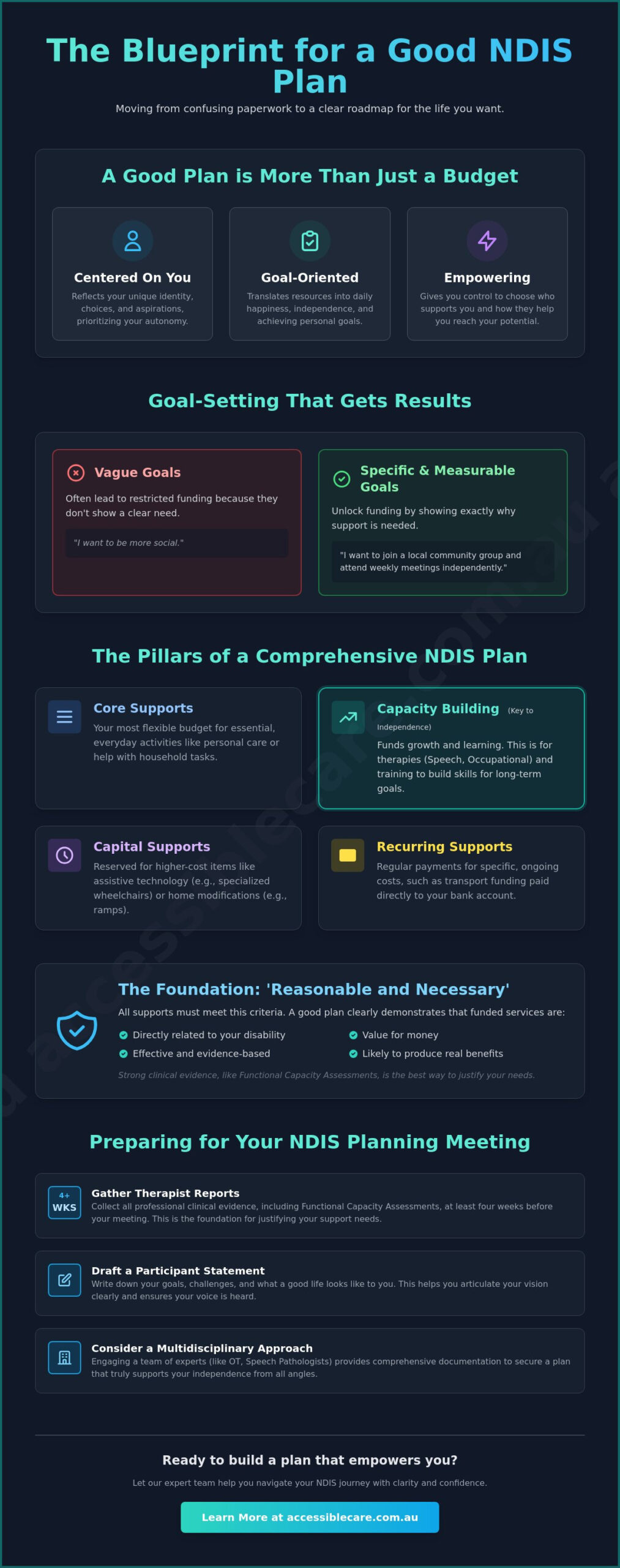
Many people believe that a high funding total is the only measure of success. While having enough resources is vital, it isn’t the only thing that matters. A truly supportive plan is built around your unique identity, your choices, and your right to live life on your own terms. Understanding what makes a good ndis plan involves looking past the numbers to see how those resources translate into your daily happiness and independence. It’s about ensuring you have the power to choose who supports you and how they help you reach your potential. A quality plan honors your voice and places you at the center of every decision.
When your plan is well-crafted, it acts as a bridge to your community. It shouldn’t just provide for your basic needs; it should actively help you build daily living skills and foster social connections. Whether your dream is to find meaningful work, join a local sports club, or simply manage your household with more confidence, your plan must be flexible enough to grow with you. It should prioritize your autonomy, giving you the freedom to direct your own support journey with peace of mind.
The ‘Reasonable and Necessary’ Framework
To get your supports approved, they must fit the “reasonable and necessary” criteria within the National Disability Insurance Scheme. This framework ensures that every dollar spent is effective and directly related to your disability. As we move through 2026, the NDIA is applying a stricter focus on these rules to ensure the scheme remains sustainable. A good plan clearly demonstrates that a service, such as Occupational Therapy or Positive Behaviour Support, is value for money and likely to produce real benefits for your specific situation. It isn’t just about proving you need help. It’s about showing that the support is beneficial, evidence-based, and the most appropriate way to meet your needs.
Goal-Setting That Gets Results
The way you write your goals can change your entire experience. Vague goals often lead to restricted funding because they don’t provide a clear picture of your needs. Instead of saying you want to “be more social,” a good plan might state that you want to “join a local community group and attend weekly meetings independently.” This level of detail helps the NDIA see exactly why you require support workers or transport assistance. When considering what makes a good ndis plan, you should aim for a mix of short-term milestones and long-term aspirations. These specific, measurable goals act as the key that unlocks your funding, ensuring you have access to the right therapies and supports to achieve lasting independence.
The Three Pillars of a Comprehensive NDIS Plan
Understanding how your funding is organized is a vital part of what makes a good ndis plan. Rather than one large pool of money, your budget is divided into specific categories designed to support different areas of your life. These categories work together to ensure you have the help you need today while building the skills you’ll need for tomorrow. The official guide to creating your NDIS plan provides a technical overview, but we believe it’s more helpful to see these categories as pillars of your independence.
- Core Supports: This is the most flexible part of your budget. It covers the essential help you need for everyday activities, like personal care or assistance with household tasks.
- Capacity Building: This pillar is all about growth and learning. It funds the therapies and training that help you build independence and reach your long-term goals.
- Capital Supports: This category is reserved for higher-cost items. It includes assistive technology, such as specialized wheelchairs, or home modifications like ramps and rails.
- Recurring: These are regular payments for specific, ongoing disability-related costs, such as transport funding that is paid directly into your bank account.
Capacity Building: The Key to Independence
Capacity Building is often the heart of a transformative plan. It’s the bridge that connects where you are now to where you want to be. This is the category where you’ll find funding for essential services like Speech Pathology and Occupational Therapy. These funds aren’t just for clinical sessions; they’re for gaining the confidence to communicate at work, learning to manage your own schedule, or developing the social skills to join a community group. When you link these therapy outcomes to your broader aspirations, you create a powerful case for the support you deserve. It’s about investing in your future self.
Core Supports and Daily Living
While Capacity Building looks forward, Core Supports provide the stable foundation you need right now. A beautiful feature of this pillar is its flexibility. In most cases, you can move funds between categories like “Assistance with Daily Life” and “Assistance with Social and Community Participation” as your needs change. This allows you to prioritize what matters most each week. Core supports are also where you’ll access community nursing and support work. By ensuring your daily needs are met with dignity and care, you’re free to focus your energy on your therapy goals. If you’re feeling unsure about how to balance these different funding types, the team at Accessible Care can help you understand how to use your budget effectively.
Why Clinical Evidence is the Foundation of a Good Plan
While your personal story is the heart of your journey, clinical evidence is the language the NDIA speaks. It’s the formal “why” behind every support you request. Professional reports don’t just list your challenges; they provide the clinical justification that your needs are genuine and that the requested funding is reasonable. One of the most important factors in what makes a good ndis plan is the quality of the professional evidence you provide during your meeting. When your plan is backed by robust data, it becomes much harder for the NDIA to reduce your funding or reject essential services.
A high-quality plan is almost always preceded by a thorough Functional Capacity Assessment. This assessment is a comprehensive look at how your disability impacts your daily life across different environments. It provides a clear, evidence-based roadmap for the planner. By having this document ready, you move away from vague requests and toward specific, justified needs. This proactive approach gives you a sense of control and ensures your plan is built on a foundation of professional truth.
The Role of Occupational Therapy Assessments
Occupational Therapy (OT) assessments are incredibly powerful tools for advocacy. An OT looks at your life holistically, identifying exactly where gaps in your independence exist. These reports are often the primary evidence used to secure funding for home modifications or complex assistive technology. If you need a specialized bed or a ramp for your home, the OT report provides the clinical proof that these items are necessary for your safety and autonomy. An Occupational Therapy report serves as a vital bridge that translates your daily challenges into clear, actionable evidence that the NDIA can use to fund your goals.
Speech Pathology and Communication Evidence
Communication is a fundamental human right, yet proving the need for speech support can sometimes feel difficult. Detailed reporting from a Speech Pathologist is essential for securing funding for Augmentative and Alternative Communication (AAC) devices or ongoing therapy. These reports use standardized cognitive and language assessments to support your “Capacity Building” requests. They show the NDIA exactly how improved communication will lead to better social and economic participation. Furthermore, professional evidence is often the deciding factor when securing high intensity supports for individuals with complex needs. Having this documentation ready ensures that your voice, and your right to be heard, is protected within your plan.
Preparing for Your NDIS Planning Meeting in 2026
Preparation is the ultimate act of self-advocacy before your NDIS meeting. With the 2026 legislative changes and the new planning framework rolling out, being organized is more important than ever. When you feel ready, you can advocate for yourself with clarity and calm. A significant part of what makes a good ndis plan is how well you can articulate your daily reality and your future dreams to the planner. It’s about turning your research into a clear vision for your life.
Start by gathering your therapist reports and medical assessments at least 4 to 6 weeks before your meeting date. This gives you time to read through them and ensure they accurately reflect your current needs. You should also take a moment to identify your informal supports, such as family and friends who help you out of love, versus your formal supports, which are the paid providers who deliver professional services. The NDIA needs to see this balance to understand where the gaps in your support network lie. When the planner understands your full ecosystem of care, they can better identify where professional intervention is required.
Think about your best-case scenario for independence. If all barriers were removed, what would your life look like? Would you be working? Would you be living in your own home? Preparing to discuss this vision helps the planner see the person behind the paperwork. It shifts the conversation from a list of deficits to a roadmap of potential and community involvement.
The Participant Statement: Your Voice
The Participant Statement is your chance to speak directly to the NDIA. It’s not just a list of what’s wrong; it’s a story of what’s possible. Focus on what you can do now and what you want to achieve with the right support. By highlighting the specific barriers you face without funding, you make a compelling case for your autonomy. Ensure your statement reflects your desire for self-determination and a life lived on your own terms. This document is the heart of your plan and ensures your voice remains the loudest throughout the process.
Choosing Your Management Type
You have three main choices for managing your funding, and each offers a different level of control. Plan Management offers a beautiful balance, giving you the flexibility to use non-registered providers while a professional handles the invoicing and administration. Self-management provides maximum control for those who feel comfortable with the paperwork and want to direct every cent of their budget. Finally, NDIA Management is the simplest option, where the agency handles everything, though you are limited to using only registered providers. If you need help deciding which path is right for your goals, you can contact our team for support.
How Accessible Care Supports Your NDIS Journey
Choosing the right partner to walk beside you is a crucial part of what makes a good ndis plan. At Accessible Care, we understand that your journey is unique, personal, and deeply important. We provide a compassionate, multidisciplinary approach to therapy and support across Melbourne and Adelaide. Our team focuses on your specific needs, ensuring you feel empowered and respected at every turn. We don’t just see a participant; we see an individual with dreams and the right to achieve them.
Our team of Speech Language Pathologists and Occupational Therapists brings deep technical expertise to your corner. They understand the specific language needed for 2026 reporting requirements. By delivering high-quality evidence, they help ensure your plan remains robust and supportive. This collaborative environment ensures that your Occupational Therapy goals complement your Speech Pathology progress. It’s a unified strategy for your independence. We take the stress out of the clinical side so you can focus on living your life.
We focus on your autonomy above all else. You are the expert in your own life, and we are the facilitators who help you reach your destination. Our support is person-centric, meaning we adapt to you, not the other way around. This approach is fundamental to what makes a good ndis plan because it ensures the supports actually work in your real-world environment. Whether you are in Melbourne or Adelaide, you can expect the same level of nurturing, professional care from our dedicated staff.
A Partner in Your Independence
We believe in listening first. Your goals are the compass for everything we do. Our holistic assessments are designed to identify your strengths and the areas where you want to grow. By looking at your life as a whole, we can help you achieve better plan outcomes and more meaningful progress. The benefit of having Speech, OT, and Positive Behaviour Support under one roof is that your care is never fragmented. We communicate with each other so you don’t have to repeat your story a dozen times. We are committed to supporting your unique objectives with honor and mutual regard.
Next Steps: Let’s Build Your Future Together
Once your plan is approved, the real work begins. We help you translate those goals into actionable therapy sessions that fit into your daily routine. If you’re feeling confused about how to start, we can help you navigate the complex care system with ease. Our team is here to provide the peace of mind that comes from knowing you have a reliable caregiver in your corner. Ready to shine? Reach out to our friendly team today to discuss your current or future plan and discover how we can help you build the future you deserve.
Your Path to a More Empowered Future
You now have a clearer vision of what makes a good ndis plan and how to advocate for the support you deserve. By focusing on measurable goals and backing your requests with professional clinical evidence, you’ve taken the first step toward a more secure future. Your plan should always honor your voice and prioritize your right to choose your own path. We’re here to ensure that the process feels less like a hurdle and more like a partnership built on trust and understanding.
As a Registered NDIS Provider, Accessible Care offers an experienced multidisciplinary team dedicated to serving families in Melbourne and Adelaide. We’re ready to listen to your story and help you translate your NDIS goals into real-world outcomes. You don’t have to navigate this complex system alone. We’ll provide the expert guidance and compassionate care needed to help you thrive.
Book a compassionate consultation with Accessible Care today.
Your journey toward independence is important, and we’re honored to support you every step of the way. Stay focused on your dreams; we’ll help with the rest.
Frequently Asked Questions
What is the most important part of an NDIS plan?
Your Participant Statement and your personal goals are the most vital parts of your document. They provide the context for everything else and tell the NDIA who you are and what you want to achieve. A strong statement ensures the person behind the paperwork is seen and heard. This personal narrative is a key element of what makes a good ndis plan because it justifies why specific supports are needed for your unique life.
How do I know if my NDIS plan goals are good enough?
Good goals are specific, measurable, and directly linked to your disability-related needs. Instead of vague aspirations, focus on concrete outcomes like “I want to use a communication device to order my own coffee” or “I want to attend a weekly swimming class independently.” If your goals clearly explain the “what” and the “why,” they’re much more likely to be supported by the NDIA. It’s about showing how a support leads to real-world independence.
Can I change my NDIS plan if I’m not happy with it?
Yes, you can request changes to your plan if your circumstances change or if the current supports aren’t meeting your needs. You don’t have to wait for your scheduled review date to ask for a plan variation. If a significant life event occurs or your support needs increase, you can request a full plan reassessment. It’s your right to have a plan that accurately reflects your actual life situation and supports your autonomy.
What does ‘reasonable and necessary’ actually mean in 2026?
In 2026, ‘reasonable and necessary’ means your supports must be evidence-based, cost-effective, and directly related to your permanent disability. The NDIA now looks more closely at whether a support is likely to be effective and beneficial for you. It also considers whether the support is something that should be provided by other government services or informal networks like family. Clear clinical evidence is essential to meet these criteria and is a core part of what makes a good ndis plan.
How much funding will I get in my NDIS plan?
The amount of funding you receive is based entirely on your individual support needs and the goals you’ve set. There’s no “standard” amount, as every plan is customized to the person’s specific situation. While the government’s 2026 reforms aim to manage the overall scheme cost, your funding should still be sufficient to cover your reasonable and necessary supports. Professional assessments from therapists help ensure your funding levels are accurate and fair for your needs.
Do I need a new Functional Capacity Assessment for every plan review?
You don’t always need a new Functional Capacity Assessment for every review, but it’s highly recommended if your needs have changed significantly. A fresh assessment provides up-to-date evidence of your current daily living skills and challenges. It’s often the best way to advocate for increased funding or new types of support like Speech or Occupational Therapy. Having current data ensures your plan remains relevant and truly supportive of your self-determination.
What is the difference between a plan variation and a plan reassessment?
A plan variation is used for minor adjustments, such as changing how your funds are managed or correcting a small error. A plan reassessment is a more comprehensive process where your entire plan is reviewed and a new one is created. Reassessments usually happen at the end of a plan period or when your life circumstances change in a major way. Understanding these differences helps you stay in control of your support journey and ensures your budget stays flexible.
How can a Support Coordinator help me with my plan?
A Support Coordinator helps you understand the technical jargon in your plan and connects you with the right service providers. They act as a bridge between the NDIA and the supports you use every day. By helping you manage your budget and navigate complex systems, they ensure you get the most out of your funding. Their goal is to build your confidence and capacity so you can eventually manage your supports with more independence and peace of mind.

