


What if the most technical part of your daily routine became the very thing that protected your loved one’s independence? For many of the 610,000 Australians supported by the NDIS, receiving specialized clinical care at home is vital for their autonomy. It’s natural to feel a wave of anxiety or a fear of making a clinical mistake when needles are involved. This is a heavy responsibility, especially with the NDIS High Intensity Support Skills Descriptors that were fully implemented by February 2026. Our specialized subcutaneous injection training for carers is designed to bridge the gap between strict clinical requirements and compassionate, home-based care.
You deserve to feel confident and steady every time you provide support. We promise to help you gain the clinical skills and peace of mind needed to handle injections safely and professionally. By focusing on both technical precision and the emotional well-being of the participant, you can ensure their quality of life remains the priority. This guide previews the essential steps of the injection process, explains how to stay compliant with the latest standards, and offers practical tips for maintaining a gentle, reassuring environment at home.
Key Takeaways
- Learn how specialized training protects the autonomy of your loved ones by allowing them to receive essential clinical care in the comfort of home.
- Understand the NDIS High Intensity Support Skills Descriptors to ensure every action you take is safe, compliant, and professional.
- Gain a clear, step-by-step understanding of clinical techniques, from proper hand hygiene to checking the “Six Rights” of medication.
- Access subcutaneous injection training for carers that addresses emotional barriers, helping you and the participant feel calm and supported during every procedure.
- Discover how expert guidance from Registered Nurses can transform a technical task into a compassionate act of care tailored to your specific needs.
What is Subcutaneous Injection Training for Carers?
At its heart, subcutaneous injection training for carers is about providing the tools to deliver clinical care with a gentle, personal touch. This specialized training empowers non-nursing carers to safely administer medication just beneath the surface of the skin. It bridges the gap between professional nursing and daily support, ensuring that individuals with complex health needs can enjoy the comfort and familiarity of their own homes. Without this skill, many participants would face frequent hospital visits or the need for residential care, which can often feel clinical and detached from their personal lives.
The transition from providing general support to offering high-intensity medical assistance is a significant step. It requires a shift in mindset from being a companion to becoming a vital part of a participant’s clinical care team. Carers often find themselves managing life-sustaining medications. For instance, insulin for diabetes management is common, as are anticoagulants to prevent blood clots or specific therapies for chronic pain. Each injection is more than just a procedure; it’s a moment of trust and connection that supports a person’s ongoing health and dignity.
The Difference Between Subcutaneous and Intramuscular Injections
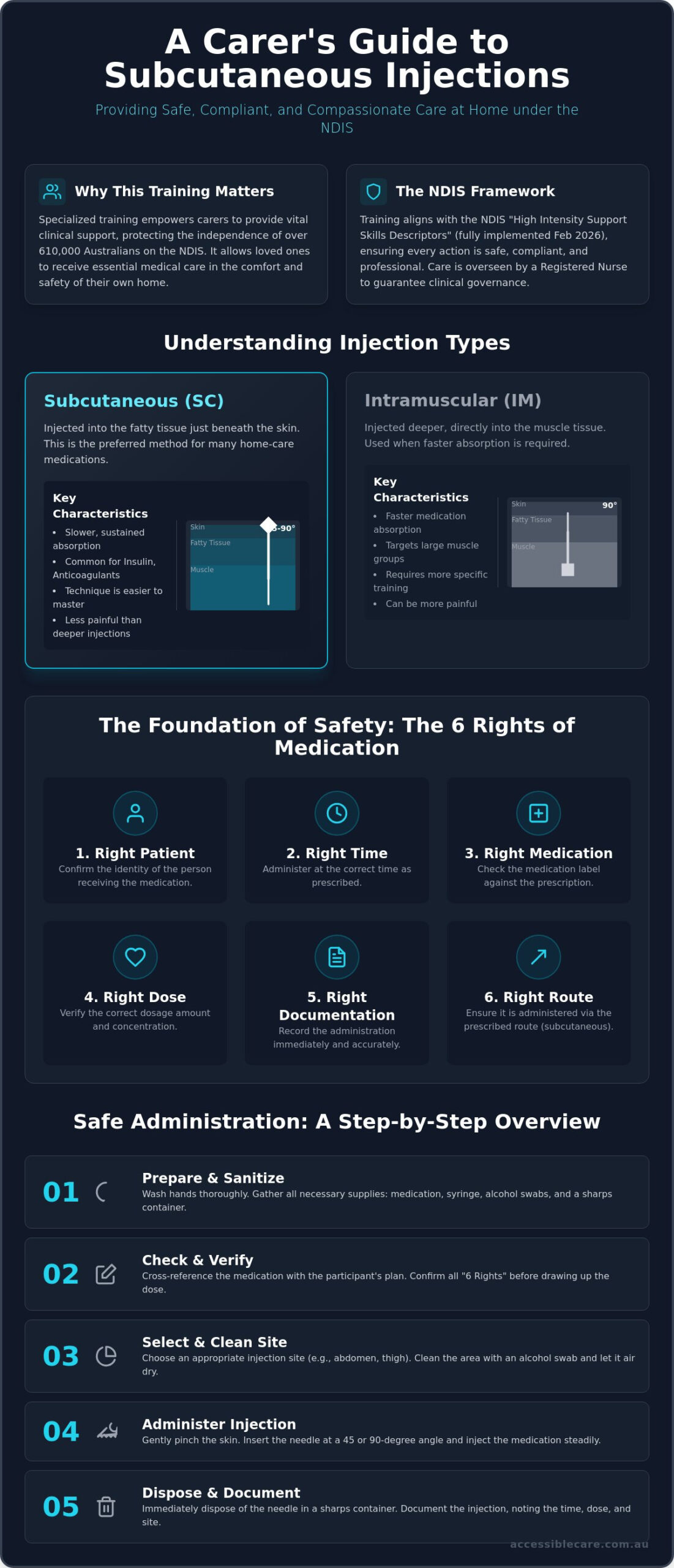
Understanding the nuances of Subcutaneous administration is essential for safety and comfort. Unlike intramuscular injections that go deep into the muscle, a subcutaneous injection targets the fatty tissue. The subcutaneous layer is the fatty tissue found between the skin and the muscle. This method is often preferred for home care because the body absorbs the medication more slowly and the technique is generally easier to master. Common sites for these injections include the abdomen, the front of the thigh, and the back of the upper arm, depending on what is most comfortable for the participant and their specific medical requirements.
Who Needs This Training in the NDIS Landscape?
This training isn’t just for professionals; it’s for anyone committed to the well-being of someone with complex needs. Support workers often seek out subcutaneous injection training for carers to expand their scope of practice and provide more comprehensive care. Similarly, family members find that gaining these skills offers them immense peace of mind and control over their loved one’s daily routine. This specialized knowledge is a cornerstone of high intensity supports NDIS, where the focus is on maintaining high standards of safety while honoring the participant’s autonomy. By mastering these skills, you become a facilitator of independence, helping those you care for live their lives on their own terms.
Understanding the NDIS High Intensity Support Framework
Accessing subcutaneous injection training for carers is often a key part of a participant’s journey toward independence. Because this is a specialized clinical skill, it’s typically funded through the “Capacity Building” section of an NDIS plan. This means the NDIS recognizes that learning these skills adds long-term value to a participant’s life. It allows them to stay in their own home, surrounded by family, rather than moving into a clinical facility. It’s a practical investment in their quality of life and your confidence as a caregiver.
The Role of the Registered Nurse (RN) in Your Training
Clinical governance is the backbone of safe care. An RN must assess your competency before you begin administering injections independently. This isn’t a one-off “tick the box” exercise. It’s a relationship of ongoing supervision and professional trust. Research has shown that teaching family caregivers to administer injections requires a supportive, step-by-step approach to reduce anxiety and build true competence. By working closely with an RN, you ensure that your training directly supports your specific NDIS plan goals, making the process feel relevant and personal.
Documentation and Record-Keeping Responsibilities
Good care is documented care. Maintaining a Medication Administration Record (MAR) is a vital responsibility that protects everyone involved. You’ll need to record the exact dosage, the time, the injection site, and how the participant reacted to the medication. This creates a clear history that health professionals can review to ensure the treatment is working as intended. In Victoria and South Australia, these records are a legal requirement for support workers. Professional subcutaneous injection training for carers ensures you understand these legal obligations fully, so you can focus on the person in front of you. If you feel overwhelmed by these requirements, our Community Nursing team can guide you through every step with patience and expertise.
Mastering the Technique: A Step-by-Step for Safe Administration
Moving from theory to practice is where your confidence truly begins to grow. Mastering the physical act of an injection is a journey of both the hands and the heart. Before any equipment is touched, your focus should be on the environment. A calm, well-lit space isn’t just a clinical requirement; it’s a way to honor the participant’s comfort and reduce any shared anxiety. When you approach the task with a steady hand and a reassuring voice, the procedure becomes a seamless part of the day rather than a stressful event.
Preparation is the foundation of safety. This begins with thorough hand hygiene and a meticulous check of the ‘Six Rights’ of medication. Comprehensive subcutaneous injection training for carers emphasizes that these checks are your best defense against clinical errors. The Six Rights include the right patient, the right drug, the right dose, the right route, the right time, and the right documentation. By moving through this checklist methodically, you create a safe space for the person in your care and ensure the medication is delivered exactly as intended.
The ‘Pinch and Poke’ method is a reliable technique for ensuring the medication reaches the correct depth. You’ll learn to gently pinch a fold of skin to lift the fatty tissue away from the underlying muscle. Holding the needle at a 45 to 90-degree angle, depending on the participant’s body type and the needle length, allows for a smooth entry. Once the injection is complete, the focus shifts to post-care. This involves the immediate, safe disposal of the needle into a yellow sharps container and a gentle observation of the site for any immediate reactions or discomfort.
Infection Control and Safety Protocols
Maintaining a sterile environment is a non-negotiable part of high-intensity support. Using yellow biohazard containers correctly ensures that used needles never pose a risk to you, the participant, or the household. You must also remain vigilant for signs of infection in the days following an injection. Look for persistent redness, unusual swelling, or heat radiating from the injection site. Early detection allows for a quick, supportive response that keeps the participant safe and comfortable in their home.
Managing Adverse Reactions and Emergencies
While rare, knowing how to handle an emergency is what makes you a truly competent and reliable carer. It’s important to distinguish between localized irritation, like a small bruise or slight itchiness, and a serious allergic reaction like anaphylaxis. If you notice difficulty breathing, swelling of the face, or a rapid drop in blood pressure, you must call 000 immediately. Having a ‘Don’t Panic’ checklist nearby can help you stay grounded. Your calm demeanor is the most powerful tool you have to keep the participant feeling safe while help is on the way.
Overcoming the Emotional Barrier: Confidence for Carers
While the clinical steps are clear, the emotional reality of using a needle can feel like a much higher hurdle. It’s okay to feel nervous. Many people find that naming the fear out loud is the first step toward managing it effectively for both the carer and the participant. Anxiety about needles, often called needle phobia, is a common experience that shouldn’t be ignored or dismissed. This is why subcutaneous injection training for carers isn’t just about the physical technique; it’s about building the emotional resilience to provide care with a steady heart and a gentle hand.
Trust is the most important tool in your kit. Building this trust happens through consistent, honest communication. Even if you’ve performed the procedure a hundred times, explain what you’re doing every single time. Tell the participant when you’re about to clean the site or when the small “poke” is coming. This transparency reduces the element of surprise and helps the participant feel like a partner in their own care rather than a passive recipient. When you communicate clearly, you transform a technical task into a shared moment of respect and understanding.
Stepping into this role marks your transition from a support worker to a complex care provider. This shift brings a new level of responsibility, but it also brings a deeper sense of purpose. Professional training helps reduce the “anticipatory anxiety” that often leads to burnout in complex roles. By knowing exactly what to do, you remove the guesswork that causes stress. You aren’t just giving an injection; you’re providing a life-sustaining service that keeps your loved one or participant safe and comfortable in their own home.
Empowering Participant Autonomy During Care
Autonomy is vital for anyone receiving high-intensity support. Whenever it’s clinically safe, let the participant lead the way. This might mean letting them choose the injection site or the time of day within the prescribed window. If a participant refuses an injection, handle it with compassion and patience rather than force. Respecting their right to say “no” is a cornerstone of dignity in community nursing. These small choices give power back to the individual, making the clinical process feel much more human.
Self-Care for the Caregiver
You can’t pour from an empty cup. Recognizing the weight of medical responsibility is the first step toward healthy caregiving. It’s important to seek out peer support or clinical debriefing when you feel the pressure mounting. You aren’t expected to carry the clinical load alone. At Accessible Care, we prioritize the mental wellbeing of our support network because we know that a supported carer provides the best care. If you’re feeling overwhelmed or need a refresher, don’t hesitate to reach out for professional clinical support to help you regain your confidence and balance.
How Accessible Care Supports Your Clinical Training Journey
Choosing to learn a new clinical skill is a brave and generous act. We believe that training shouldn’t feel like a transaction or a generic classroom exercise. Instead, we offer personalized, in-home training sessions that are specifically tailored to the unique needs of the participant you support. By learning in the actual environment where care is delivered, you gain a level of practical confidence that a textbook simply can’t provide. Our goal is to ensure you feel steady, capable, and fully prepared to provide the highest quality of support.
Our Registered Nurses in Melbourne and Adelaide provide the expert guidance you need to succeed. They don’t just teach the steps; they mentor you through the entire process. This mentorship is part of a broader, multidisciplinary approach. We integrate our nursing expertise with the insights of our Occupational Therapists and Speech Pathologists to ensure every aspect of a participant’s wellbeing is considered. This holistic view means that your subcutaneous injection training for carers is part of a comprehensive care plan designed to improve overall quality of life.
We’re committed to a long-term partnership with you. We don’t just provide a one-off session and walk away. Our team remains available for ongoing support, competency reviews, and any questions that may arise as you settle into your new role. This continuous connection ensures that your skills remain sharp and your confidence stays high. You’re never alone in this journey; we’re with you every step of the way to ensure both you and the participant feel safe and supported.
Our High Intensity Support Services in Melbourne & Adelaide
Transitioning from a hospital setting to home-based independence can be a vulnerable time for many families. Our services are designed to bridge this gap, providing a seamless pathway to safely managing complex needs at home. Beyond subcutaneous injection training for carers, our team is equipped to assist with complex bowel care, wound management, and other high-intensity tasks. We strictly adhere to the NDIS Practice Standards, ensuring that every service we provide meets the highest benchmarks for safety, dignity, and professional excellence.
Take the Next Step Toward Confident Care
Ready to begin? Requesting clinical training is a straightforward process through your NDIS plan. Most participants find that this training is easily covered under their Capacity Building budget, as it directly supports their goals for independence and health. You can start by booking a consultation with our community nursing team to discuss your specific situation. We’ll listen to your concerns, assess your needs, and create a training plan that feels right for you. Contact Accessible Care for a compassionate training consultation today and take the first step toward becoming a more confident, empowered caregiver.
Empowering Your Future in Complex Care
Mastering a clinical skill is a powerful way to honor the autonomy of those you support. By understanding the NDIS framework and the precise techniques involved, you move beyond simple assistance into the role of a vital clinical partner. We’ve explored how subcutaneous injection training for carers can replace anxiety with confidence, turning a technical procedure into a moment of connection and trust. You don’t have to carry this medical responsibility alone.
As a Registered NDIS Provider, our specialised High Intensity Nursing Team is here to guide you. We offer personalised in-home training across Melbourne and Adelaide, ensuring your learning is relevant and respectful to your specific situation. This journey is about more than just safety; it’s about providing a quality of life that allows your loved ones to thrive in their own space. Clinical competence is a vehicle for compassion, and we’re here to help you drive it.
Empower your care journey with Accessible Care’s clinical training and discover the peace of mind that comes with professional expertise. Your dedication makes a world of difference, and we’re honored to stand beside you as you provide this essential support.
Frequently Asked Questions
Is it legal for a non-nurse to give a subcutaneous injection?
Yes, it is legal and common for non-nursing carers to administer these injections as long as they have received appropriate training. Under the NDIS framework, this is considered a delegated clinical task. A Registered Nurse must first assess your skills and sign off on your competency. This ensures that you are following the correct safety protocols and that the participant’s health is always the priority.
How long does subcutaneous injection training take for an NDIS carer?
Most initial training sessions take between two to four hours to complete. This includes both the theoretical knowledge and the practical hands-on practice with a Registered Nurse. However, your journey doesn’t end there. You’ll need to demonstrate your skills in real-time with the participant until the nurse is confident in your ability to practice independently. It’s a methodical process designed to build genuine confidence.
What happens if I accidentally hit a blood vessel during an injection?
While it’s rare to hit a major blood vessel in the fatty tissue, you might occasionally see a small amount of blood or a bruise. If this happens, don’t panic. Simply apply gentle pressure with a clean cotton ball or gauze until the bleeding stops. During your subcutaneous injection training for carers, you’ll learn exactly how to monitor the site and when a reaction might require more clinical attention.
Can this training be used for insulin and other medications?
Yes, the training is designed to be versatile and covers a wide range of common subcutaneous medications. This includes insulin for diabetes management, blood thinners, and various pain relief therapies. Because every participant is unique, our training is always tailored to the specific medication and dosage prescribed by their treating doctor. This ensures the care provided is both safe and effective for their specific health needs.
Do I need to be re-certified every year for high intensity supports?
Yes, an annual competency update is required to remain compliant with NDIS standards. The High Intensity Support Skills Descriptors emphasize that these are high-risk tasks that need regular review. This yearly check-in is a wonderful opportunity to refresh your technique, ask new questions, and ensure you’re still providing the most compassionate and safe care possible. It keeps your skills sharp and your confidence high.
What should I do if the participant is afraid of needles?
Acknowledge their fear and use a calm, reassuring voice to explain every step before it happens. You might find that using distraction techniques or choosing a comfortable, familiar environment helps reduce their anxiety. Always honor their autonomy and never rush the process. Building a predictable routine can often turn a scary experience into a manageable part of their daily support, fostering a sense of safety.
How do I dispose of used needles safely at home in Australia?
You must always use a puncture-proof yellow sharps container for needle disposal. These containers are specifically designed to keep you and the household safe from accidental needle sticks. Once the container is full, it should be sealed and taken to an authorized disposal point, such as a local pharmacy or a community sharps collection bin. Never place loose needles in your regular household recycling or general waste bins.

