


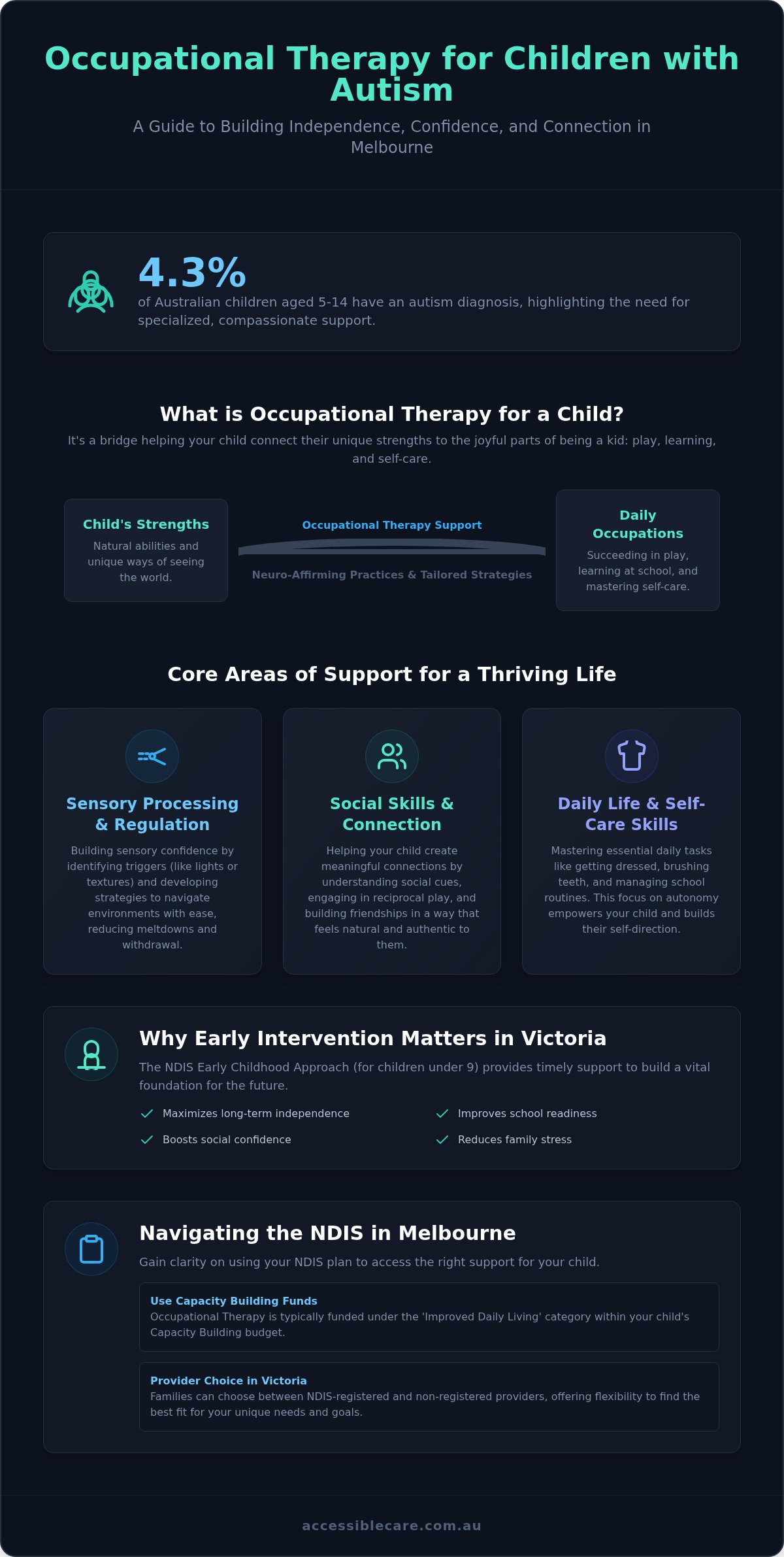
Imagine standing in a busy Melbourne supermarket when your child suddenly becomes overwhelmed by the flickering lights or the hum of the fridge. You see the struggle in their eyes, and you feel the weight of the world on your shoulders as you try to help them find calm. It’s a common experience for many families, especially since 4.3% of Australian children aged 5 to 14 have an autism diagnosis. Finding the right occupational therapy for kids with autism melbourne shouldn’t feel like another hurdle in an already busy life. You deserve a partner who listens to your child’s unique story and sees their potential beyond the sensory meltdowns or social hurdles.
We know that the NDIS process can feel like a maze of paperwork and long waitlists that keep your child from the support they need right now. This guide is here to help you breathe a little easier. You’ll discover how specialized therapy empowers your child to build independence, gain sensory confidence, and create meaningful social connections. We’ll walk you through what success looks like for your family, how to manage sensory needs at home, and how to navigate the NDIS funding process in Victoria with clarity and peace of mind.
Key Takeaways
- Understand how neuro-affirming occupational therapy focuses on your child’s strengths to help them thrive in play, learning, and daily self-care.
- Learn how specialized occupational therapy for kids with autism melbourne builds sensory confidence and social skills, helping your child navigate their environment with ease.
- Gain clarity on using NDIS Capacity Building funding to access support and understand the differences between registered and non-registered providers in Victoria.
- Discover what to expect during a holistic assessment, starting with a team that truly listens to your family’s unique story and goals.
- Explore the benefits of a multidisciplinary approach where OTs, speech therapists, and behavior support practitioners work together for your child’s independence.
Understanding Occupational Therapy for Kids with Autism in Melbourne
For a child, “occupations” aren’t jobs or careers. They are the essential, joyful parts of being a kid: playing with friends, learning at school, and mastering daily tasks like brushing teeth or getting dressed. When you seek out occupational therapy for kids with autism melbourne, you’re looking for a science-based approach that helps your child succeed in these vital areas. Our focus is on play, learning, and self-care, ensuring your child feels capable in their own skin. We don’t see autism as something to “fix.” Instead, we use neuro-affirming practices that honor your child’s unique way of seeing the world while giving them the tools to navigate it with confidence.
In 2026, Melbourne families are increasingly looking for holistic support that goes beyond traditional clinical settings. You want therapy that understands the specific challenges of Victorian life, from the sensory hum of a busy suburban shopping centre to the social expectations of a local primary school. The ultimate goal of our partnership is autonomy. We want your child to develop the self-direction they need to make their own choices and lead a life full of meaning and connection. This isn’t about compliance; it’s about empowerment.
What is Occupational Therapy for Autism?
Think of occupational therapy as a bridge. On one side are your child’s current strengths and natural abilities. On the other side are the daily activities they want or need to do. Sometimes, that bridge needs a bit of extra support to make the crossing easier. We provide that support through a compassionate lens, focusing on the Management of Autism by tailoring strategies to your child’s specific sensory profile. This gentle approach is rooted in our broader philosophy of care, which you can explore further in our guide on What is Occupational Therapy?. We’re here to walk alongside you, ensuring therapy feels like a supportive partnership rather than a clinical process.
Why Early Intervention Matters in Victoria
In Melbourne, the NDIS emphasizes the Early Childhood Approach to ensure families get help as soon as developmental needs are identified. This early support builds a vital foundation for school readiness and social confidence. As of August 2026, the NDIS Early Childhood Approach specifically targets children younger than 9 years of age to provide timely, evidence-based support that maximizes long-term independence. Starting early allows your child to develop sensory regulation and motor skills before they face the complex social environment of a classroom. It helps reduce family stress by giving you clear strategies to manage meltdowns and transitions before they become overwhelming. When we act early, we open up a world of possibilities for your child’s future.
Core Areas of Support: Sensory, Social, and Daily Life Skills
Supporting a child with autism involves looking at the whole picture of their daily life. When families seek out occupational therapy for kids with autism melbourne, they’re often looking for a way to bridge the gap between their child’s natural abilities and the demands of the world around them. This support covers everything from how a child feels in their environment to how they interact with peers at a local park. Every child has a unique rhythm. Our role is to understand that rhythm and provide the right support at the right time. By focusing on sensory regulation, motor skills, and social confidence, we help children build a foundation for a more independent life.
Sensory Processing and Regulation
Melbourne is a vibrant city, but it can be loud, bright, and unpredictable. A trip to a busy suburban shopping centre or a playground in the inner suburbs can feel like a sensory storm for some children. Our therapists act as detectives to find exactly what triggers a meltdown or causes a child to withdraw. Is it the hum of the air conditioner? Is it the specific texture of a school uniform? By identifying these triggers, we can create a “sensory diet.” This isn’t about food. It’s a personalized plan of activities that help your child stay calm and focused. We help you implement these strategies at home in a way that feels natural and gentle, ensuring therapy doesn’t become another source of stress for your family.
Beyond sensory needs, we focus on the practicalities of Occupational Therapy for Autism, which includes Activities of Daily Living (ADLs). These are the small wins that lead to big independence. Think about the pride a child feels when they can dress themselves, use cutlery, or manage their own hygiene. We also work on fine and gross motor skills. Whether it’s strengthening hands for better handwriting at school or improving balance for playground games, these physical skills build confidence. Many Melbourne clinics also use the “Zones of Regulation.” This framework helps children identify their emotions and find ways to return to a “green zone” of calm readiness.
Building Social and Communication Confidence
Socializing can sometimes feel like a foreign language. Through play-based therapy, we help children decode social cues and practice the art of turn-taking. This isn’t about forcing a child to act “typical.” It’s about giving them the tools to connect with others on their own terms. Since communication is so closely tied to social interaction, we often work alongside our Speech Pathology team to provide a seamless experience. This collaborative approach ensures your child feels prepared for the social dynamics of Melbourne schools and community groups. If you’re feeling overwhelmed by where to start, our compassionate team is here to listen and help you find the best path forward.
Navigating the NDIS for Autism OT in Melbourne
Accessing the right support shouldn’t feel like a full-time job. We hear from many Melbourne families that the NDIS feels like a maze of acronyms and shifting rules. It’s a common feeling, but you don’t have to walk this path alone. When you’re looking for occupational therapy for kids with autism melbourne, the NDIS is actually your most powerful tool for securing long-term funding. As a registered NDIS provider in Victoria, we’ve seen how the right plan can transform a family’s daily life by providing the financial means to access expert care. We’re here to help you turn that confusion into a clear roadmap for your child’s future.
In Victoria, you’ll encounter both registered and non-registered providers. Choosing a registered provider means you’re working with a team that meets the highest standards of safety and quality set by the NDIS Commission. This is especially important for agency-managed plans, where you can only use registered providers. If you’re self-managed or plan-managed, you have more flexibility, but the peace of mind that comes with a registered partner is often a top priority for families seeking reliable, professional support. Our team understands the local Victorian context and is dedicated to making the integration of your plan as smooth as possible.
Using Your NDIS Plan for OT
Most occupational therapy services fall under the “Capacity Building” category of your child’s plan, specifically within the “Improved Daily Living” budget. This funding is designed to help your child learn new skills and become more independent over time. Whether your plan is self-managed, plan-managed, or agency-managed, we can help you understand how to allocate these funds effectively to meet your family’s specific goals. For a deeper look at how these categories work and how to maximize your support, you can read our NDIS Guide.
The Role of Functional Capacity Assessments
A Functional Capacity Assessment (FCA) is often called the “gold standard” for NDIS evidence. This detailed report provides a clear, objective picture of what your child can do and where they need extra help. It’s a vital tool for plan reviews, helping the NDIA understand why specific funding is necessary to support your child’s autonomy. In our practice, Occupational Therapy for Autism involves looking at the whole child through a compassionate lens. A comprehensive FCA typically requires 10 hours of dedicated clinical time, including face-to-face observation and detailed report writing, to ensure the resulting plan truly reflects your child’s unique needs and aspirations.
What to Expect: From Assessment to Therapy Goals
Starting the journey into occupational therapy for kids with autism melbourne often begins with a mix of hope and uncertainty. You might wonder if the sessions will be stressful or if your child will feel pressured. We believe the process should feel like a warm welcome into a supportive community. It isn’t just about a therapist and a child; it’s about a collaborative journey where your family’s voice is heard and valued at every turn.
Our process follows five clear steps to ensure your child receives the most effective, personalized care:
- The Initial Consultation: We start by listening. You know your child better than anyone, and your story is the most important piece of the puzzle.
- Holistic Assessment: We look beyond challenges. We identify your child’s natural strengths and interests, using them as the foundation for growth.
- Goal Setting: Together, we create SMART goals (Specific, Measurable, Achievable, Relevant, and Timely). These goals prioritize your child’s autonomy and the skills that matter most to your family.
- Ongoing Therapy: Sessions are play-based and gentle. We create a safe environment where your child feels comfortable taking new steps.
- Review and Adaptation: Children grow and change quickly. We regularly review our approach to ensure therapy evolves alongside your child’s development.
A Gentle Approach to Assessment
We understand that the word “assessment” can feel clinical and intimidating. Our goal is to make this experience low-stress and even engaging for your child. We use trusted, standardized tools such as the PEDI-CAT or SPM-2 to gather objective data, but we always balance this with clinical observation and your personal insights. You are the expert on your child. Your observations about how they play at home or interact with siblings are just as vital as any formal test result. This combined approach ensures the results are accurate and truly reflective of your child’s daily life.
Community and In-Home Therapy Options
Sometimes, the best place for therapy isn’t a clinic; it’s the “natural environment” where your child spends most of their time. We support families across Melbourne suburbs through community-based work, coming to your home or your child’s school. This allows us to see challenges in real-time and provide strategies that work in the actual space where they are needed. For families requiring more specialized assistance, we also provide High Intensity Supports for children with complex needs. If you’re ready to start this journey with a team that prioritizes your child’s autonomy, reach out to our compassionate team today.
Finding the Right Partner: Accessible Care’s Compassionate Approach
Choosing a partner for your child’s development is a deeply personal decision. You’re looking for more than just a provider; you’re looking for a team that honors your child’s autonomy and sees their unique potential. At Accessible Care, our philosophy is built on the idea of empowering independence through a supportive partnership. We believe that occupational therapy for kids with autism melbourne should be as unique as the children we serve. We don’t just work with your child; we work with your entire family to ensure the strategies we develop fit into your real life. Our goal is to provide comfort, peace of mind, and a clear path forward.
The Benefit of a Multidisciplinary Team
We’ve found that the best outcomes happen when different experts work together. By bringing together Occupational Therapists, Speech Pathologists, and Positive Behaviour Support practitioners, we ensure that every aspect of your child’s development is supported by a single, cohesive team. This multidisciplinary approach means your child doesn’t have to adjust to different styles or conflicting advice. Instead, they experience a consistent, “whole-of-person” focus that addresses their sensory, communication, and social needs simultaneously. It’s about looking at the person, not just the process.
This collaboration is especially important when it’s time to manage challenging behaviours. Our Positive Behaviour Support (PBS) team works closely with our OTs to address these situations with dignity and respect. We look for the underlying sensory or communication needs that might be causing distress. By understanding the “why” behind a behaviour, we can provide solutions that empower your child rather than just asking them to comply. It’s a gentle, respectful way to build a calmer home environment for everyone while fostering your child’s self-determination.
Ready to Support Your Child in Melbourne?
We know that the NDIS journey can feel overwhelming, but we’re here to simplify the process for you. From your first phone call to your child’s ongoing sessions, we act as a reliable guide. We handle the clinical complexities and paperwork so you can focus on what matters most: celebrating your child’s wins and watching them grow. Your child has incredible potential, and we’re honored to help them discover it. We invite you to have a low-pressure conversation with us about your child’s needs and how we can help them build a more independent future.
If you’re ready to start this journey with a team that truly listens, we’re here for you. We can discuss your child’s NDIS plan and how our multidisciplinary approach can meet your specific family goals. Reach out today to see how we can support your child’s journey toward sensory confidence and social connection in a way that respects their unique perspective.
Contact Accessible Care for Melbourne Paediatric OT
Empowering Your Child’s Journey Toward Independence
Finding the right support is a significant step toward a brighter future for your child. We’ve explored how specialized occupational therapy for kids with autism melbourne builds the sensory confidence and social skills needed to navigate daily life with ease. Your family doesn’t have to walk this path alone. You can find peace of mind through a partnership that values your child’s unique perspective. A multidisciplinary team is ready to support every aspect of growth, from communication to daily self-care.
As a Registered NDIS Provider, Accessible Care is dedicated to providing high-quality, person-centric support. Our experienced paediatric multidisciplinary team focuses on autonomy and self-direction. We ensure your child leads the way in their own development. We’re here to listen and understand. We’ll partner with you to create a life full of connection and joy. If you’re ready to take the next step, you can Book a Compassionate OT Consultation for Your Child today. Your child has incredible potential, and we’re honored to help them reach it.
Frequently Asked Questions
How do I know if my child needs occupational therapy for autism?
Your child might benefit from support if they struggle with sensory processing, motor skills, or daily routines like dressing and eating. You may notice they’re easily overwhelmed by loud noises or have difficulty staying focused on a single task. These challenges often impact their ability to play and learn alongside their peers.
An assessment helps identify the specific areas where your child needs a bridge between their current abilities and their environment. We look at how your child interacts with the world to provide gentle strategies that build their confidence. If you’re seeing these struggles at home or school, it’s a good time to have a conversation about support.
Can I use NDIS funding for autism OT in Melbourne?
Yes, you can use your NDIS plan to fund occupational therapy for kids with autism melbourne. This support is typically covered under the Capacity Building budget, specifically within the Improved Daily Living category. This funding is designed to help your child develop the skills they need for a more independent life.
As a registered NDIS provider, we’re experienced in helping families navigate the funding process in Victoria. We’ll help you understand how to allocate your budget effectively to meet your child’s unique goals. Our team ensures the integration of your plan is smooth and stress-free.
What is the difference between OT and Speech Therapy for autism?
Occupational therapy focuses on the “occupations” of childhood, such as play, self-care, and sensory regulation. Speech therapy targets communication, language development, and swallowing. While they’re different disciplines, they often overlap in areas like social skills and interaction.
Our multidisciplinary team works together to ensure your child receives holistic care. By coordinating these services, we create a consistent approach that respects your child’s autonomy. This collaboration helps your child build a wider range of skills through a single, supportive partnership.
How long are the therapy sessions and how often should my child attend?
Therapy sessions usually last between 45 and 60 minutes. This timeframe allows our therapists to engage your child in play-based activities without causing fatigue or sensory overload. We want every session to be a positive and productive experience for your child.
The frequency of attendance depends on your child’s specific needs and the goals we set together. Most families find that weekly or fortnightly sessions provide the consistency needed to see meaningful progress. We’ll regularly review this schedule to ensure it continues to support your child’s growth and your family’s needs.
Do you offer in-home occupational therapy in Melbourne suburbs?
We provide community-based support across many Melbourne suburbs, including therapy in your home or your child’s school. Seeing your child in their natural environment allows us to identify real-world triggers and challenges. It also makes it easier to implement practical strategies that work in their daily life.
In-home sessions can reduce the stress of travel and help your child feel more comfortable and secure. This approach ensures that the skills they learn are directly applicable to the places where they spend the most time. It’s all part of our commitment to making therapy accessible and effective for your family.
What happens during a Functional Capacity Assessment for a child?
During a Functional Capacity Assessment, a therapist observes your child’s ability to perform everyday tasks and interacts with your family. We use a combination of standardized tools and clinical observation to understand your child’s strengths and support needs. The process is designed to be low-stress and engaging for your child.
The resulting report provides a clear picture of your child’s current abilities and the support they require to achieve their goals. This document is vital for NDIS plan reviews, as it helps the NDIA understand your child’s unique situation. We focus on providing an accurate, compassionate evidence base for your child’s future funding.
How do we set therapy goals for a non-verbal child with autism?
We set goals by focusing on functional communication and sensory regulation that respect your child’s autonomy. For a non-verbal child, this might involve using assistive technology, gestures, or visual aids to express their needs. We look for the ways your child already communicates and build on those natural strengths.
Every goal is designed to help your child gain more control over their daily life and environment. We work closely with you to identify the wins that will make the biggest difference at home and in the community. Our focus remains on empowering your child to lead a life full of self-direction and connection.
Is there a waitlist for paediatric OT at Accessible Care in Melbourne?
Waitlist times can vary depending on your specific location in Melbourne and the type of support your child needs. We understand that early intervention is important, and we strive to provide support as quickly as possible. We’re always honest about our current availability when you reach out.
If there is a wait, we can often provide resources or guidance on how to prepare for your first session. We’re dedicated to helping Melbourne families find the right path forward, even if it takes a little time to get started. Contact our team for the most up-to-date information on our intake process.

