


The person delivering your support doesn’t decide your NDIS funding. An NDIS provider is an individual or organisation that delivers supports and services to participants in Australia. The NDIA approves plans and makes funding decisions. To know what to look for in an NDIS provider, start by understanding who does what.
It’s understandable to focus on whether a provider offers the support you need. A good fit also depends on how they communicate, whether their experience matches your needs, and how clearly they explain services and costs.
This article explains how to assess communication with families and carers, staff experience, service fit, pricing transparency and provider roles. You’ll also learn how to consider registration and service agreements, so you can choose support that reflects the participant’s goals and preferences.
Key Takeaways
- Look for communication that keeps the participant involved and includes family or carers when the participant consents.
- Assess whether staff experience, training and approach suit the person’s support needs, preferences and goals.
- Check that the supports offered fit the participant’s plan and can adapt as their needs or goals change.
- Read the service agreement carefully so the services, costs and responsibilities are clear before support begins.
- Understand the distinction between a provider delivering supports and the NDIA approving plans and deciding funding.
1. Communication with families and carers
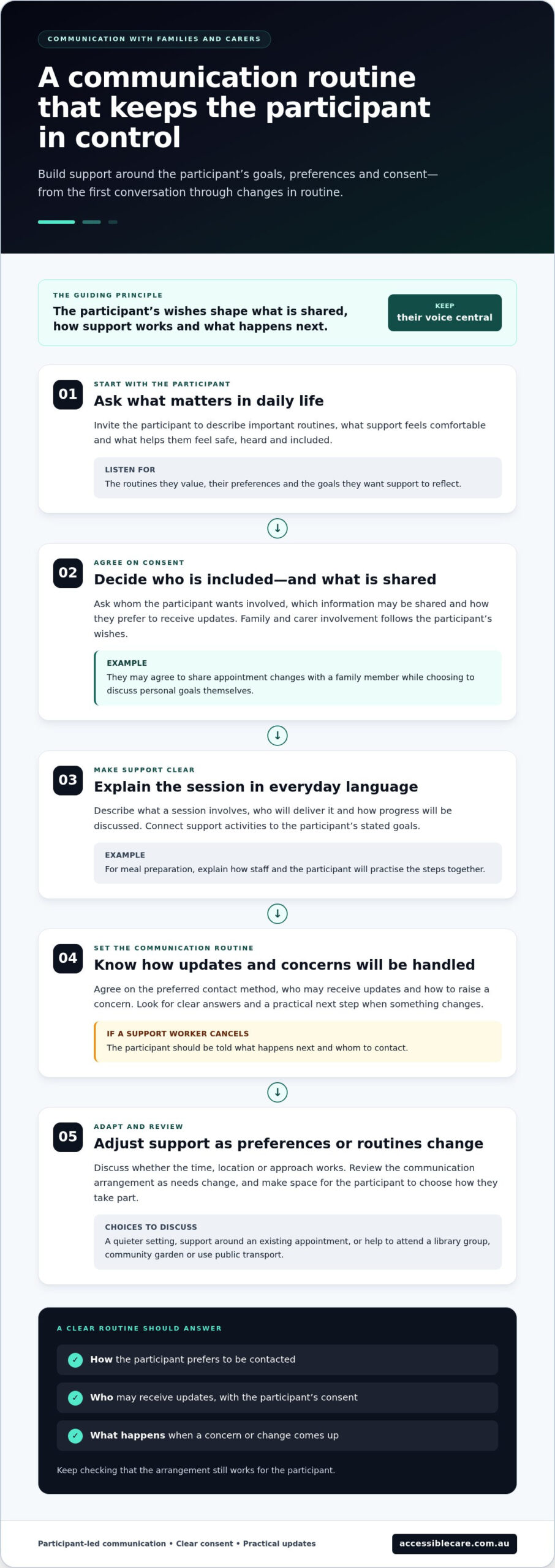
Good communication helps participants shape support around their goals and daily routines. An NDIS provider should create an environment where each participant feels safe, heard and included. In an initial conversation, staff can ask which routines matter, what support feels comfortable and who should receive updates. This gives the participant a clear voice from the start.
Family and carer involvement should follow the participant’s wishes. Ask whom they want included, what information can be shared and how they would like updates sent. For example, they might consent to a family member receiving appointment changes but prefer to discuss personal goals themselves. Clear consent protects privacy while keeping chosen supporters informed.
Transparency also means explaining support in everyday language. A provider should describe what a session involves, who will deliver it and how progress will be discussed. If a participant is working on preparing meals, staff might explain how they’ll practise the steps together. Regular updates can then connect support activities with the participant’s stated goals.
Responsive communication matters when plans or routines change. Notice whether questions receive clear answers and whether concerns lead to a practical next step. For instance, if a support worker cancels, the participant should be told what happens next and whom to contact. A clear process helps the participant and their family understand changes without chasing several people.
Flexibility is another part of good communication. Ask how the provider can adapt the time, location or approach to fit the participant’s life. A person may find a quiet setting more comfortable than a busy one, or need support arranged around an existing appointment, such as a visit to Golden Bay Chiropractic Works for chiropractic care. Discussing preferences early helps make support more workable.
Community participation can also show how well a provider listens. The participant might want to attend a local library group, visit a community garden or practise using public transport. Discuss what they want to do, what support would help and how they prefer to take part. The aim is to support their choices, not decide activities on their behalf.
Before support begins, agree on a simple communication routine. Identify the participant’s preferred contact method, who may receive updates and how to raise a concern. Review whether the arrangement works as needs change. These practical steps help participants, families and carers stay informed while keeping the participant’s preferences at the centre.
2. Disability support experience and expertise
Relevant experience means more than time spent in disability support. Staff should understand the participant’s specific needs and explain how their skills apply. Ask about experience in the area where support is needed, such as communication, daily routines or behaviour support. A practical example should show how staff listen, involve the participant and adapt their approach to individual preferences.
Ask what training and qualifications support workers bring to their role, and how they continue developing their skills. Individuals providing NDIS services are required to have an NDIS Worker Check. For other training, focus on what relates to the person’s support needs. Someone assisting with community activities, for example, may need different practical skills from someone supporting personal routines.
Consistency can help a participant build familiarity and trust. Ask how the provider aims to keep support workers consistent and what happens when a regular worker is unavailable. Providers can plan for disrupted supports, such as a cancelled shift. A clear backup approach helps participants understand what support is arranged and whether it suits their preferences.
Person-centred planning involves the participant in decisions about their support. A useful plan reflects what matters to them, not only the tasks others think they need. For example, a participant might want to practise preparing lunch independently. The plan can describe the assistance they choose, the skills they want to build and how staff will respect their pace.
Personalised support also considers physical, emotional, cultural and psychological safety. Ask how staff will take the participant’s identity, routines and preferences into account. A person might feel more comfortable with support in a familiar setting or prefer to approach a task in smaller steps. These details help show whether a plan is genuinely tailored to the individual.
Experience should support progress, not lock the participant into an outdated plan. NDIS providers should regularly review goals and progress, then adapt support as needs change. Ask how the participant can give feedback and how that feedback informs decisions. For example, if an activity feels too demanding, the provider can discuss a different pace or approach with the participant.
Before choosing, discuss a real situation the participant may encounter and invite staff to explain how they would respond. Their answer can help you assess relevant experience, problem-solving and respect for choice. Look for a considered approach that includes the participant in decisions. A good fit is support shaped around the person, delivered by workers whose skills match the needs involved.
3. Matching services to individual needs and goals
Choose an NDIS provider whose supports fit the participant’s location, needs and plan management type. Check whether they deliver support where the participant lives, offer the service needed and suit the plan’s management arrangements. In Australia, agency-managed participants must use registered providers for most services; self-managed and plan-managed participants can choose registered or unregistered providers—for example, incorporating community health and wellness practices like Bella Family Chiropractic for family and paediatric care alongside their routine supports.
Start with the participant’s goals, then identify which support could help. A goal of preparing meals independently may call for practical support with planning, shopping or cooking. A goal of communicating more confidently may call for a different service. The provider’s role should connect clearly to the participant’s chosen outcome, rather than simply matching a service label.
Read the relevant parts of the NDIS plan and note the support needs and goals they describe. Then compare those needs with the provider’s services and proposed approach. For example, if the participant wants to build confidence travelling to appointments, ask how support would help them practise skills and make choices. Keep the participant involved in the discussion.
A good service fit also respects preferences and identity. A participant may prefer support at home, in a familiar community setting or through a particular communication approach. Family structure, cultural needs and daily routines can shape what feels suitable. Discuss these factors with the provider and notice whether they tailor the support plan around the participant.
Location affects how support fits into everyday life. Consider the places the participant wants to access, such as a local library, workplace or community activity. Talk through transport, timing and the assistance that would help them take part. The aim is to support the person’s choices while building skills and independence where that matches their goals.
Plan management also affects provider choice. Agency-managed participants generally need registered providers for most supports, while self-managed or plan-managed participants can choose unregistered providers. The NDIS provider finder can help people find registered providers and learn about service agreements and service bookings. Use it alongside a review of whether the provider’s services match the participant’s plan.
Before deciding, meet the provider and discuss a specific goal, such as attending a weekly activity or managing a daily routine. Ask how they would shape support around the participant’s preferences and adapt it if needs change. Notice whether they invite the participant to lead decisions. A good match makes support relevant to the person’s life, not just available on paper.
4. Pricing transparency and service agreements
Before agreeing to support, understand what the service costs and what you’ll receive. Ask for a clear explanation of each charge, how it relates to the planned support and how invoices will describe the services delivered. For example, if support includes help with a community activity, clarify what that service includes. Compare the explanation with the participant’s needs and funding arrangements.
The price depends on the case and is given after a quote request; factors include support type, duration, timing, location and staffing needs. Ask the provider to explain how these factors shape the quote. If a proposed service changes, request an updated explanation before agreeing. This makes it easier to understand the expected cost without relying on an unclear estimate.
A service agreement should be easy to understand. Read it with the participant and identify the supports being agreed, how they’ll be delivered and each party’s responsibilities. For example, check that an agreement for regular support describes the intended activities and how appointments are arranged. Clear wording helps everyone understand the arrangement before it begins.
Look for clear explanations of what happens when circumstances change. Ask how the provider will communicate changes to a session or discuss a different approach when the participant’s needs shift. The agreement should make these processes understandable. If a phrase is confusing, ask for a plain-language explanation and include the participant in the discussion.
Check that the agreement reflects the participant’s choices and living arrangements. A person receiving support at home may need different arrangements from someone attending activities in the community. Review where support takes place, what it involves and how agreed changes will be recorded. This connects the written terms with the participant’s day-to-day support.
Plan management also matters when reviewing charges. Agency-managed participants must use registered providers for most services, while plan-managed and self-managed participants can choose unregistered providers. The participant’s management type affects provider choice, so make sure the proposed support arrangement fits their plan. Keep the agreement and related cost information together for easy reference.
Before signing, match each agreed support to its description, cost explanation and delivery arrangements. Check that the participant knows whom to contact about an invoice or a question about the agreement. A clear service agreement supports informed decisions, helps avoid confusion and gives the participant a useful reference as support continues.
5. NDIS provider roles
An NDIS provider is a person or organisation that delivers supports and services to participants. The provider’s role is different from the NDIA’s: the NDIA approves participant plans and decides funding. The NDIS Quality and Safeguards Commission regulates and monitors providers, and handles complaints about support quality and safety.
Registration is relevant to both safety and provider choice. Registered providers undergo checks intended to assess safety, quality and compliance, and are audited regularly. Participants can search the NDIS provider register and select the status “Approved” to find currently registered providers. Registration offers useful information, but suitability still depends on the support, the participant’s goals and their plan management type.
Warning signs include unclear explanations, disregard for a participant’s choices and poor handling of concerns. Be cautious if a provider cannot explain its safeguarding or incident management processes, or does not address conflicts of interest clearly. These behaviours make it harder to understand how support decisions are made and risks are managed.
To review complaints, feedback and compliance, search online for the provider’s name and read feedback from participants or trusted sources. Check the NDIS register for current registration status, and note whether the provider’s listed services fit the support you’re considering. Reviews can offer useful perspectives, but look for specific examples of communication, consistency and service quality.
If you’re unhappy with a provider, explain the issue and describe the change or resolution you’re seeking. You can also complain to the NDIS Quality and Safeguards Commission about the quality or safety of NDIS supports. The Commission handles complaints for all NDIS participants.
Participants can choose their providers, subject to their plan management arrangements. Agency-managed participants must use registered providers for most services, while self-managed or plan-managed participants can choose unregistered providers. If the relationship no longer suits the participant, review the service agreement and consider a provider whose support better fits their needs and goals.
Understanding these roles helps you direct questions to the right organisation. Ask the provider about service delivery and safeguards; contact the NDIA about plan approval or funding decisions. For registration concerns, the NDIS Quality and Safeguards Commission lists 1800 035 544 for enquiries. Clear role boundaries make the next step easier to identify.
If you’re considering support that aligns with your goals, explore NDIS support options and consider how they fit your needs.
Accessible Care: NDIS Support Services
Accessible Care is a registered NDIS provider offering support aligned with people’s needs and goals. Its NDIS Support Services can be a next step when you’re looking for support shaped around everyday life and personal priorities.
For specific goals, Speech Therapy can support communication needs, while Occupational Therapy focuses on participation in daily activities. Positive Behaviour Support may be relevant when support needs relate to behaviour. Each service offers a different kind of support, so consider which best matches the participant’s goals and plan.
Accessible Care’s services help individuals build skills, take part in daily life and work towards greater independence. Contact Accessible Care to discuss the participant’s support needs and goals.
Take the Next Step Towards Support That Fits
Choosing an NDIS provider is not just a service decision. It’s a chance to shape support around the person’s priorities and the life they want to lead. If you’re weighing what to look for in an NDIS provider, consider whether the relationship gives the participant room to express preferences, ask questions and make choices as circumstances change.
A useful next step is to write down the goals that matter most right now. These might relate to communication, daily activities or building confidence with support. Accessible Care offers NDIS Support Services, Speech Therapy and Occupational Therapy to address different needs and goals. A conversation can help you explore which type of support may suit the participant’s priorities.
You don’t need to have every detail worked out before taking that step. Start with what the person wants to work towards and what matters in their daily life. Contact Accessible Care today to discuss support options and take a considered step forward.
Frequently Asked Questions
What Is an NDIS Provider?
An NDIS provider is a person or organisation that delivers supports or services to NDIS participants in Australia. For example, a provider might deliver support work or speech therapy. The provider delivers the agreed service; the NDIA approves participant plans and makes funding decisions. Keeping those roles separate can help you direct questions to the right place, such as asking the provider about service delivery and the NDIA about funding decisions.
What Is the Difference Between Registered and Unregistered Providers?
Registered providers have completed NDIS registration and undergo regular audits that check service quality and safety. Self-managed and plan-managed participants can choose registered or unregistered providers. Agency-managed participants must use registered providers for most services. When comparing options, first identify the participant’s plan management type, then consider whether registration is required for the support and whether the provider suits the person’s needs.
What should I look for when choosing an NDIS provider in Australia?
Start with the participant’s goals, location and plan management type, then assess whether the provider’s services and approach are a good fit. To decide what to look for in an NDIS provider, compare how each option would support a real goal, such as attending a community activity. Consider staff experience, clear costs, service agreement terms and how the participant can share feedback.
How can I check whether an NDIS provider is registered and what services are they approved to deliver?
Search the NDIS provider register and select the registration status “Approved” to find currently registered providers. Review the provider’s registration details alongside the service you’re considering, then compare both with the participant’s needs. If a provider describes several supports, check each one rather than assuming registration for one type covers every service. Note the service name and relevant registration information when comparing options.
What questions should I ask an NDIS provider before signing a service agreement?
Ask what the support involves, who will deliver it, how appointments are arranged and how changes are handled. Clarify how the provider communicates cancellations, records delivered services and responds to concerns. If a family member will be involved, discuss what information the participant consents to share. Ask for any unclear terms to be explained in plain language before the participant agrees to the arrangement.
What should an NDIS service agreement include, and can I change or end it?
A service agreement should clearly describe the supports, delivery arrangements, costs and responsibilities. It should also explain how changes or ending the arrangement are handled. Read the terms before signing and discuss proposed changes with the provider so both parties understand the updated arrangement. For example, if support shifts from tasks at home to community participation, clarify how the service description and related costs will be revised.
How do NDIS provider prices compare with the current NDIS Pricing Arrangements and Price Limits?
Compare the provider’s written quote with the current NDIS Pricing Arrangements and Price Limits for the relevant support item and delivery conditions. Check that the item, charging unit and service description align, then ask the provider to explain any differences in writing. Consider what the quote covers, including the agreed support and delivery arrangements. A clear breakdown makes it easier to understand the proposed charges before agreeing.
How do I compare NDIS providers on qualifications, experience, availability and service quality?
Use the same criteria for each provider, then record answers side by side. For example, note relevant staff qualifications, experience with the participant’s support needs, available appointment times and how service quality is reviewed. Look for specific examples rather than general claims: a provider might explain how staff adapt support when a participant’s routine changes. Participant feedback and trusted referrals can add useful perspectives to your comparison.

