


Speaking up about an NDIS provider shouldn’t put your funding at risk. Knowing how to give feedback to your NDIS provider can help you explain what needs to change. NDIS funding decisions are based on your individual needs and goals, not whether you’re satisfied with a particular provider. A provider also can’t reduce or refuse services because you’ve complained.
It’s understandable to worry about raising an issue, especially when you rely on support in your daily life. You deserve to have your concerns heard and handled respectfully. Specific examples can help you explain what happened and what outcome would help.
This guide explains how to share feedback directly with a provider, when you can contact the NDIS Quality and Safeguards Commission, and what to include in a complaint. You’ll also learn what to do if the response doesn’t resolve your concern and how complaints relate to your NDIS funding, so you can choose a next step that feels right for you.
Key Takeaways
- Make feedback easier to act on by describing what happened, how it affected you and what change you’d like.
- Choose a way to raise concerns that suits the issue, from a conversation with a support worker to a formal complaint.
- You can contact the NDIS Quality and Safeguards Commission directly, including anonymously, if you want to report a concern.
- Keep a record of what you raised and any response or agreed next steps, so you can follow up clearly.
Can I lose my NDIS funding if I complain about a provider?
No. NDIS funding decisions are based on your individual needs and goals, not your satisfaction with a particular provider. A provider cannot reduce or refuse NDIS services because you made a complaint.
If your NDIS provider is unregistered, you can give feedback directly or complain to the NDIS Quality and Safeguards Commission about a service concern. You can contact the Commission directly without first raising the issue with the provider.
- Decide whether you want feedback or a formal complaint. Feedback can suggest a change, such as asking a support worker to explain tasks more clearly. A formal complaint identifies a problem you want investigated or resolved, such as repeated missed shifts or disrespectful conduct.
- Describe the issue clearly. For a support worker conduct complaint, note what happened, when it happened, who was involved and how it affected you. State the outcome you want, such as a discussion with the worker or a change to how support is delivered.
- Use the provider’s complaints process. Providers covered by the NDIS Practice Standards must offer accessible ways to give feedback and make complaints, then respond fairly and promptly. Ask for the provider’s complaints contact and explain your preferred way to communicate.
- Keep a record of the response. Write down when you raised the concern, what the provider said and any actions agreed. Providers must deal with concerns quickly and effectively, and assist you to report an issue to the Commission when needed.
- Escalate concerns about quality and safeguards. The NDIS Quality and Safeguards Commission is an independent Commonwealth agency overseeing the safety and quality of NDIS services. It prioritises harm or serious risk, provider negligence, ongoing non-compliance and human rights violations. An advocate can support you if you feel unheard.
Giving respectful, specific feedback directly to a support worker
Choose a calm way to raise the issue and focus on one practical change. A specific example helps the worker understand what matters to you.
-
Describe Feedback About a Support Service
Explain which support service concerns you and describe what happened. For example, say, “I need more time to understand the instructions during support work,” rather than, “You’re not helpful.” For speech therapy or positive behaviour support, name the activity or interaction and explain how it affects your goals. Avoid guessing at intent. Focus on what you experienced and what change would help.
- Ask for a specific next step. Suggest an action, such as agreeing on your preferred communication style before the next visit. Give the worker time to respond and clarify what you mean. If you receive support through Re.Connect Support Services, identify the service and the person responsible so your feedback is clear.
-
Use an Advocate or Interpreter
Invite an advocate or interpreter if you want help expressing your views or understanding the discussion. Explain your communication preferences beforehand, including whether you want the person to speak for you or simply support you to share your own words. Supported decision-making keeps you involved in choices about your disability support. Another person’s preferences should not replace yours.
- Agree how support will continue. If the conversation leads you to change workers or providers, discuss the transition before ending current arrangements. List the supports you rely on, any scheduled visits and the information a new worker needs. Agree who will communicate changes so essential support services are not disrupted while arrangements are made.
- Record the agreed action. After the conversation, note the date, concern and next step, then ask the worker to confirm any change. For example, record that instructions will be shared in writing before an appointment. This gives you a clear way to follow up if the adjustment doesn’t happen.
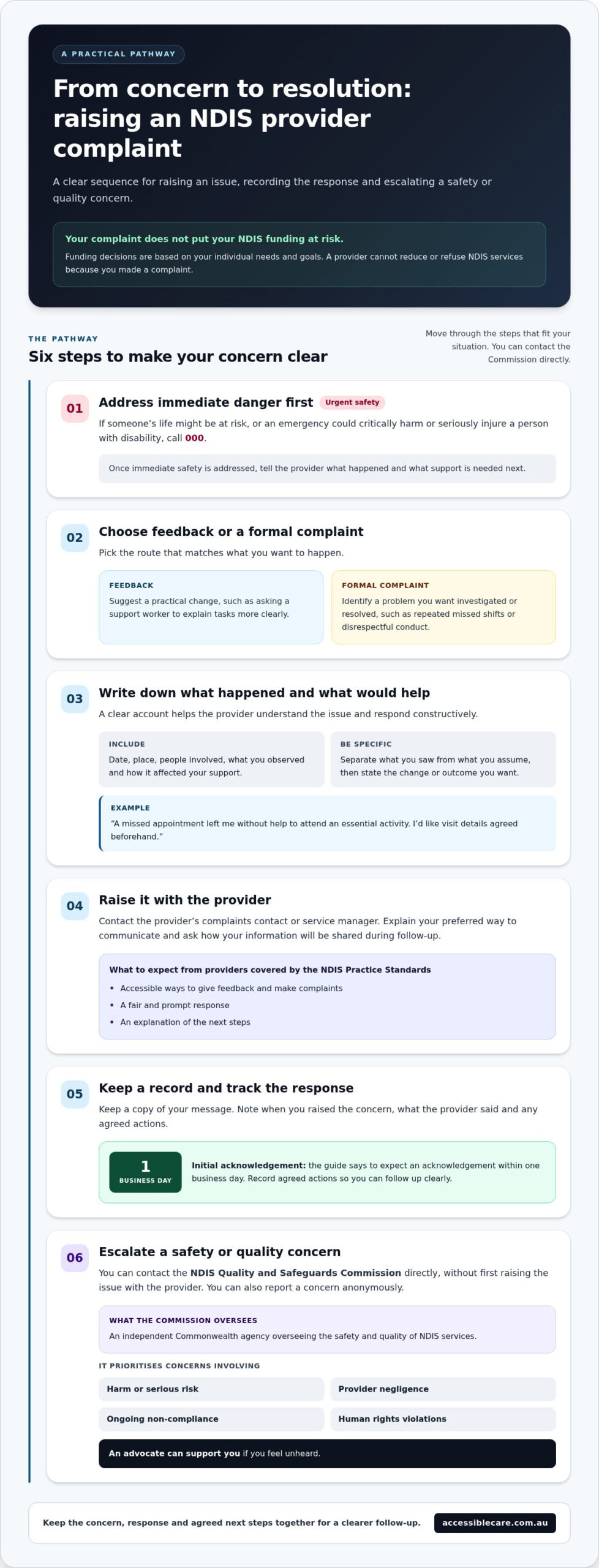
Raising concerns directly with an NDIS provider
Raise the issue with the provider’s complaints contact or service manager. A clear account helps them understand what happened and respond constructively.
- Act first if someone may be in danger. In Australia, call 000, according to Triple Zero (000), if someone’s life might be at risk or an emergency could critically harm or seriously injure a person with disability. Once immediate safety is addressed, tell the provider what occurred and what support is needed next.
- Describe the concern and its impact. Record the date, place, people involved and what you observed. Explain how it affected your NDIS support, such as a missed appointment that left you without help to attend an essential activity. Separate what you saw from what you assume, then state the change you want.
- Choose a practical outcome. Tell the provider what would help resolve the concern. For example, if a support worker repeatedly arrives without confirming the plan, ask for visit details to be agreed beforehand. For an ongoing service problem, write to the service manager so the pattern and the action you want are clear.
- Ask how your information will be handled. Tell the provider if you’re concerned about who will see your complaint, and ask how details will be shared during follow-up. Don’t assume staff involved in responding won’t see the concern. Providers must deal with complaints quickly and effectively, and should explain the next steps.
- Track the response and follow up. Keep a copy of your message and note any agreed actions. The guide says to expect an initial acknowledgement within one business day; check your service agreement for the provider’s specific response timeframe. Simple complaints may be resolved within one to two weeks. If the response doesn’t address the serious concern, ask the provider what remains unresolved and consider escalating it.
Contacting the NDIS Quality and Safeguards Commission
- Contact the independent Commission for guidance. The NDIS Quality and Safeguards Commission oversees the safety and quality of NDIS services. It can explain your rights and provide information about resolving an issue with a provider or another organisation, but it cannot provide individual dispute resolution.
- Choose how to make your report. Call 1800 035 544, free from landlines, or report the concern online or by letter to the Commission’s Penrith, NSW mailing address. The Contact Centre is open 9am to 5pm in Australian states and territories except Western Australia, where it is open 7:30am to 3:30pm.
- Prepare a clear account before sharing details. Write down what happened, when it happened, which provider or worker was involved, and what outcome you hope for. Include relevant messages or records, and explain whether you have already raised the issue with the provider. This helps the Commission understand your concern.
- Decide whether to report anonymously. You can report without giving your name. Anonymous reports don’t include your name or contact details, but the Commission can’t send you updates or outcomes. If you want follow-up, provide contact details and explain your preferred way to communicate.
- Plan for accessible communication and follow-up. If you have hearing or speech difficulties, call the Commission’s TTY service on 133 677. More complex complaint investigations may take several weeks, with regular updates. The Commission aims to complete 50% of complaints within 90 business days.
- Keep the next step focused on your support needs. The Commission can share information, while your provider remains responsible for responding to its complaint. If you’re considering changes to your support arrangements, explore NDIS support options that reflect your goals and preferences.
Accessible Care: NDIS Support Services
Accessible Care provides NDIS support for people seeking services aligned with their needs and goals. If your feedback has highlighted a need for different or additional support, its speech therapy, occupational therapy and positive behaviour support may be relevant to your goals.
For example, you might explore speech therapy to work on communication or occupational therapy to build everyday skills. Positive behaviour support may suit someone seeking help with behaviour-related needs. Discuss what matters to you and how support can help you work towards greater independence.
Accessible Care is a registered NDIS provider in Melbourne and Adelaide. Contact Accessible Care to discuss your support needs and possible next steps.
Take your next step with confidence
Speaking up can help shape support around what matters to you. As your needs or goals change, take time to notice what is working, what feels difficult and what you would like to be different. This reflection can help make your next conversation clearer and keep your choices at the centre.
Knowing how to give feedback to your NDIS provider is one way to take an active role in your supports. You can explain what matters to you, ask for changes and decide what action feels right. If you’re considering support that better fits your goals, Accessible Care can help you explore your options and discuss your needs.
Contact Accessible Care for support and take the next step at your own pace.
Frequently Asked Questions
What should I do if my support worker isn’t the right fit?
Tell the provider what isn’t working and what would help you feel comfortable receiving support. For example, explain whether the issue relates to communication, routines or the type of assistance provided. You can ask about changing workers or adjusting how support is delivered. Before changing providers, consider what information and arrangements would help maintain the supports you rely on.
Can my family give feedback on my behalf?
A family member can help you communicate feedback, especially if you want support explaining your experience or organising your thoughts. Make your preferences clear: you might want them to speak alongside you, take notes or share your views for you. Keep the focus on what you want to happen. The provider may need to understand your wishes and how you want your family involved.
Can someone help me write down what happened and what I want to say?
Yes. An advocate, interpreter or trusted person can help you organise your account and express your preferred outcome. To give feedback to your NDIS provider, prepare a short note describing the situation, its effect on you and the change you’re asking for. Ask the person supporting you to record your words accurately rather than making decisions or adding details for you.
How long should I wait for a provider to respond to my feedback?
Check your service agreement for the provider’s feedback and complaint timeframes, then keep a copy of what you sent and when. If you haven’t received an acknowledgement within the expected period, follow up with the complaints contact or service manager. Explain that you’re checking the message was received and ask when you can expect an update about the next step.
How long will it take to get a response after I leave feedback or make a complaint?
It depends on whether you contacted the provider or the NDIS Quality and Safeguards Commission, and whether the issue needs investigation. A provider acknowledgement is different from a final outcome. The Commission’s completion target is for 50% of complaints within 90 business days; complex investigations may take several weeks. Keep your reference details and preferred contact method handy for follow-up.
What Happens After You Provide Feedback or Make a Complaint?
The provider or Commission reviews the information and may need to clarify details before deciding what action to take. You may be asked for dates, messages or the names of people involved. Keep notes of any follow-up and the outcome offered. If the response doesn’t address your concern, explain what remains unresolved and ask what options are available to take it further.

