

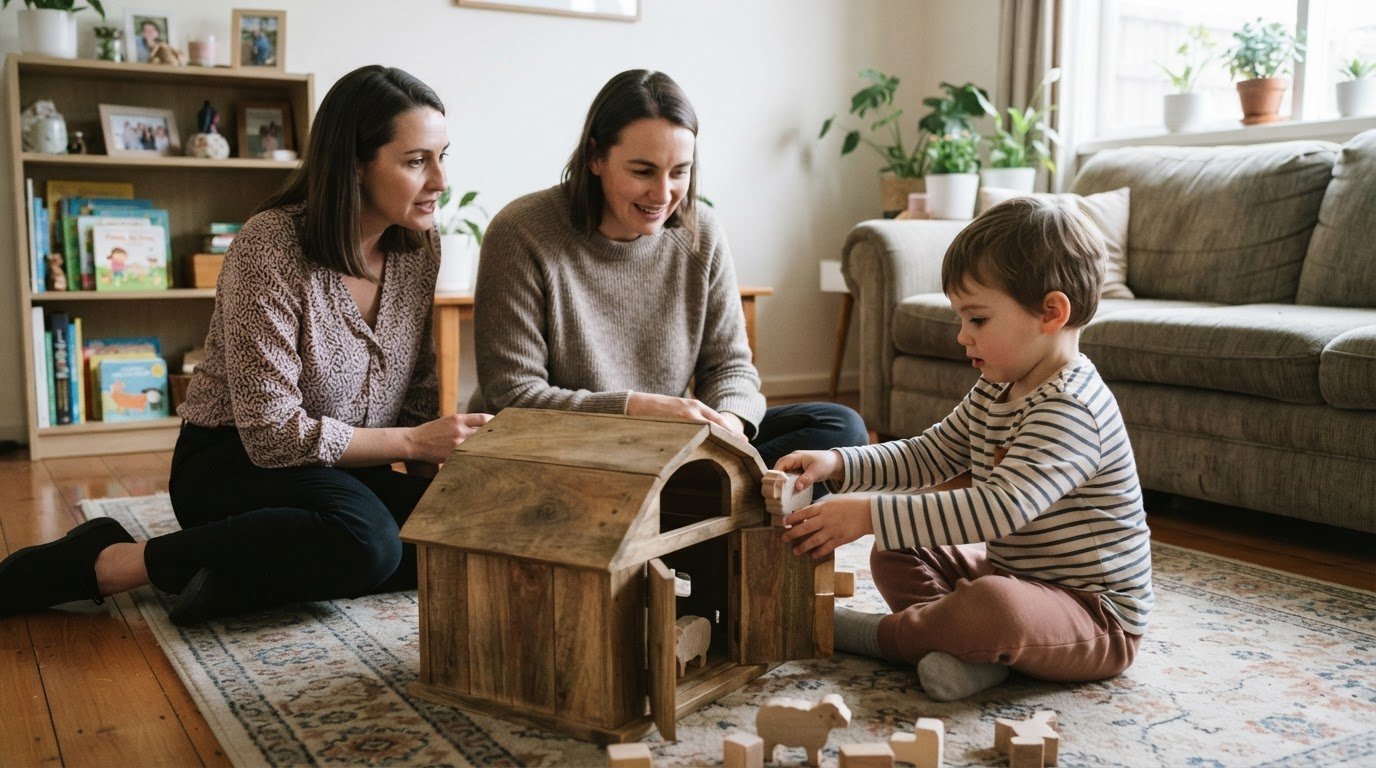
Progress doesn’t happen only in the therapy room. The most useful speech therapy techniques for parents bring practice into everyday moments, such as play, meals and shared books, giving children more chances to communicate. Parent coaching helps you respond to your child’s attempts and build skills into familiar routines, creating hundreds of additional language-learning opportunities each week.
It’s natural to wonder whether you’re doing the right thing or whether your child will catch up without extra support. Small, consistent changes can make everyday interactions more purposeful, while a speech pathologist can suggest strategies suited to your child. This article explains parent coaching, practical techniques to try at home, signs that an assessment may help, and how guidance can support progress.
Key Takeaways
- Notice how your child communicates, including gestures and attempts to connect, and seek an assessment if you have concerns about their speech or understanding.
- Parent coaching can help you practise communication strategies during everyday routines, supporting children with language impairment, autism or developmental delay.
- Follow your child’s focus, use clear and simple language, and emphasise key words to make your interactions easier to learn from.
- Early guidance can help you understand your child’s strengths and needs, while ongoing speech pathology support can adapt strategies as their skills develop.
1. How do I know if my child needs speech therapy or is just a late talker?
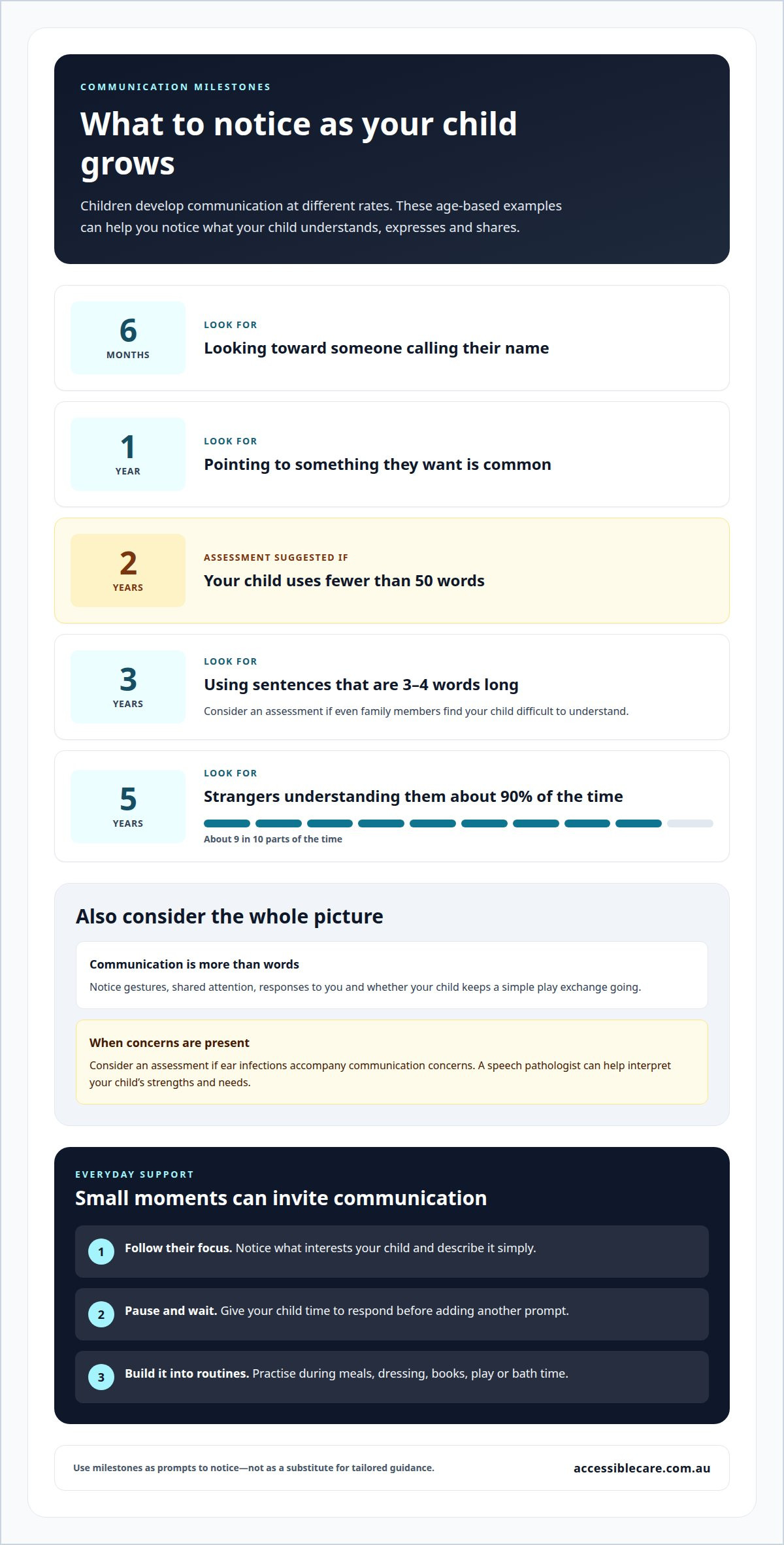
Children develop communication skills at different rates, so look at how your child understands, expresses themselves and connects with others. Around 6 months, a baby should look towards someone calling their name; by 1 year, pointing to something they want is common. A speech evaluation is suggested if a 2-year-old uses fewer than 50 words. At age 3, children should be using 3- to 4-word sentences. By age 5, strangers should understand them about 90% of the time. Consider an assessment if a 3-year-old is difficult for even family members to understand, or if ear infections accompany communication concerns.
Notice what interests your child, then follow their lead. If they reach for a toy car, pause, look at it together and say, “You want the car.” Responding to a gesture, sound or word shows your child that communication works. Give them time to respond before adding another prompt. Model speech naturally, using a clear voice, short sentences and words suited to your child.
Build practice into familiar routines instead of setting aside a formal lesson. At breakfast, name foods your child points to; while dressing, talk about socks and shoes. Shared books, outdoor play and bath time also offer opportunities to practise. Using strategies at home helps children apply new communication skills beyond therapy sessions, with different people and in different settings.
Communication involves more than words. During pretend play, take turns adding an idea, such as feeding a toy bear or putting it to bed. Notice whether your child shares attention, responds to you or keeps a simple play exchange going. Before a session, note examples of what your child says, understands and enjoys. Ask the speech pathologist to explain progress, upcoming sessions and any changes to the therapy plan, so you know which strategies to use in daily routines.
2. Why does parent coaching help children make faster progress?
Parent coaching turns ordinary interactions into opportunities to practise language. Your child might ask for help while getting dressed, name food at breakfast or choose a game. Offer two choices, then wait quietly to give them a reason and time to communicate. These everyday opportunities help children use skills outside therapy sessions, with familiar people and in different settings.
Parent training can support children with language impairment, autism or developmental delay. A review by Megan Roberts and Ann Kaiser examined 18 studies of parent-implemented intervention. Parents learned strategies and used them during interactions with their children. The review linked this approach with gains in expressive language, understanding, vocabulary, grammar and communication frequency. Trained parents were as effective as speech-language pathologists at helping children, and more effective for some language-understanding and grammar outcomes.
Parent coaching complements professional therapy. It does not replace assessment, goal-setting or progress monitoring by a speech pathologist. Families and clinicians can set a SMART goal for home practice: specific, measurable, achievable, relevant and time-bound. For example, a goal might be for your child to use a word, sign or gesture to request a preferred snack during the family’s usual snack routine. The speech pathologist can help tailor the goal to your child’s communication needs.
Techniques should match the child’s age and communication. For a toddler who uses gestures, model a short word and pause; for a child using phrases, expand their words with a simple addition. Avoid turning practice into repeated testing, correcting every attempt or asking a child to copy words when they’re distressed. Respond to their message, model a helpful version and keep the interaction enjoyable. A speech pathologist can help families select strategies and adjust goals as communication develops. For guidance tailored to your child, explore speech therapy support.
3. What is parent coaching in speech therapy?
Parent coaching is a collaborative part of speech and language support. A speech pathologist demonstrates strategies, then helps you practise them during real interactions. The aim is not to turn every moment into a lesson. Instead, you learn to respond in ways that invite communication and keep your child engaged. Strategies can be adapted to your child’s interests, communication style and needs, including autism.
Child-directed speech means joining your child’s focus and describing what they’re doing. Use a clear, warm voice and emphasise one or two meaningful words: “Big bubbles!” as you blow bubbles, or “Teddy’s sleeping” during pretend play. Match your words to the action, then pause to give your child room to respond. While reading, point to a picture your child notices and name it simply. At mealtimes, describe familiar actions such as stirring or pouring.
Modelling, repetition and expansion can encourage your child to talk. If they say one word, such as “dog”, you might respond, “Yes, a fluffy dog.” Once they use two-word sentences, build on their phrase with a small addition. If they say, “Dog running,” you could say, “The dog is running.” This recast offers a natural model of words or grammar, without requiring your child to repeat it.
Coaching lets you try strategies with guidance and ask what to adjust. This practice can build confidence and reduce stress by making the next step clearer. Keep interactions positive: if your child turns away, becomes upset or struggles to stay engaged, pause and reconnect instead of demanding another attempt. During eating or play, follow their cues and respond to gestures, sounds and words. The aim is communication, not perfect performance. A speech pathologist can help you choose models that suit your child’s current skills and daily life.
4. Early intervention and ongoing professional guidance
Early intervention gives families practical support when communication difficulties emerge, rather than waiting for a child to struggle further. For toddlers and preschoolers, a speech pathologist can assess strengths and needs, then recommend activities that fit the child’s development. Support may address understanding, expressive language, speech sounds or other communication goals. A diagnosis of a disorder isn’t required before parents raise concerns and seek guidance.
Parent-implemented intervention helps caregivers practise strategies during daily life, while the speech pathologist continues to assess, plan and monitor progress. Parents are advised to practise speech and language skills at home 2–3 times per day. In reviewed studies, parent-implemented programs lasted an average of 26 hours over many weeks. These figures describe the studies, not a required schedule for every family. A pathologist can help decide which activities suit your child and routine.
Let family priorities shape the intervention. Share the languages spoken at home, cultural practices, your child’s interests and the routines that matter most. For example, practise requesting during a shared meal or model sounds using familiar songs. Agree on goals that feel meaningful and manageable. You should be able to ask questions, offer feedback and discuss adjustments as your child’s communication changes.
Ongoing guidance can help as a toddler becomes a preschooler and new communication demands arise. A speech pathologist may provide a report describing strengths, difficulties and a therapy plan. Ask how goals will be reviewed and which strategies to use between appointments. Interactive tools can support learning, too: a therapist might use pictures, videos, slides or screen sharing to explain an activity. For telehealth, a quiet space and clear view of the child can help the family take part. Explore speech therapy support to discuss guidance for your child and family.
Accessible Care: NDIS Support Services
Accessible Care offers NDIS Support Services, including Speech Therapy, to help families support a child’s communication. Speech Therapy can help you understand your child’s strengths and difficulties, work towards meaningful goals and learn strategies to practise in daily routines. If your child also needs support to participate in everyday activities, Occupational Therapy may be relevant. Positive Behaviour Support is available when behaviour support is part of your family’s needs.
Consider reaching out when communication difficulties affect your child’s ability to express themselves, connect with others or take part in family life. Share your concerns and discuss what support may suit your child and family. For more information, visit accessiblecare.com.au.
Make your next step one that fits your family
You don’t need every answer before seeking guidance. A useful next step is to note what helps your child communicate, what feels difficult and what you’d like them to do more easily. These observations can help shape practical goals around your family’s priorities. The speech therapy techniques for parents that are easiest to sustain are those you can use naturally and consistently in everyday life.
Accessible Care offers NDIS Support Services, Speech Therapy and Occupational Therapy. If you’d like support understanding your child’s communication needs and possible next steps, contact Accessible Care today. A conversation can help you explore support that respects your child’s strengths and your family’s goals.
Every child communicates in their own way. With thoughtful guidance and strategies suited to your routines, you can keep building connection and encourage new ways for your child to express themselves.
Frequently Asked Questions
Why does parent coaching help children make faster progress?
Speech therapy techniques for parents can help you respond to communication attempts as they happen. A speech pathologist can help you spot useful practice opportunities in everyday situations and adapt strategies to your child’s responses. For example, you might pause instead of anticipating a request. Sharing what worked at home also gives you practical observations to discuss during therapy.
How long does it take to see improvement in a child’s language?
Some families notice early changes in engagement, communication attempts or frustration within weeks of regularly using strategies at home. Progress may appear in small ways, such as your child looking towards you more often, trying a new gesture or staying in a shared activity. Keep brief notes about changes you notice to discuss with your speech pathologist.
What if I don’t have time to practise strategies every day?
Use a moment that already happens, rather than adding a separate activity to a busy day. You could name one item while packing a lunchbox or practise a target word during a quick play break. If your child becomes upset, a brief five-minute practice may be preferable to continuing for 15 minutes. Short, calm interactions can fit more easily into family life.
How do I do speech therapy at home with my 2-year-old?
Keep interactions playful and simple. Offer two choices, such as a book or a ball, then wait 5 seconds before helping your child respond with a word, gesture or point. For a child aged at least 2, try a simple two-step direction during play, such as “Get the teddy and put it on the chair.” Follow your child’s cues and acknowledge communication attempts.
How do I know if my child needs speech therapy or is just a late talker?
A speech pathology assessment can clarify what your child understands and how they communicate, without relying on a label such as “late talker”. In Australia, you don’t need a GP referral to see a speech pathologist. Before an appointment, note your questions and examples of communication at home. An assessment may include discussing development and medical history, along with tasks that explore understanding, words and sounds.
What are the most effective speech therapy techniques I can use every day?
Effective speech therapy techniques for parents include modelling a target sound naturally during conversation. Gold Coast Health recommends aiming for 12 to 18 correct models per minute when practising the same speech sound or pattern. Keep the exchange comfortable, and avoid asking your child to repeat every model. A speech pathologist can help select a target that fits your child’s current goals.

