

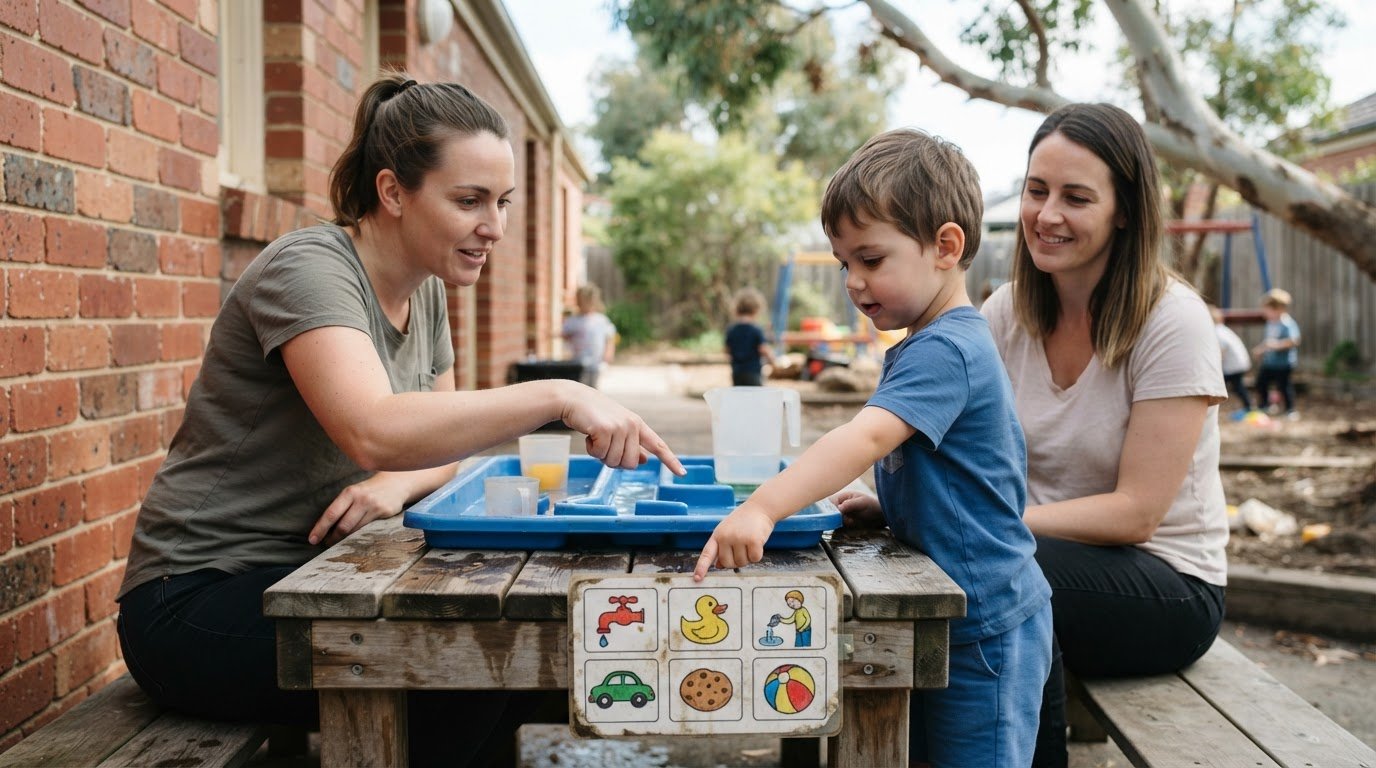
A developmental delay means a child takes longer than expected to learn certain skills, while global developmental delay affects several areas of development. Speech therapy for children with global developmental delay can support communication, including understanding language, expressing needs and taking turns in conversation. The right support focuses on the child’s individual strengths and needs.
It can be worrying when your child communicates differently or develops at their own pace. A delay doesn’t automatically mean a child has a disability. Understanding what it may involve can help you consider the next steps with greater confidence.
This article explains developmental delay, how early intervention may support a child’s development, and what speech and language services are available in Australia. You’ll also learn how speech pathology can address communication needs and work alongside a child’s family and other supports.
Key Takeaways
- See how Augmentative and Alternative Communication, including visuals, signs and devices, can give a child more ways to share messages.
- Learn why a slowdown, stop or loss of skills is a reason to discuss your concerns with a GP or child and family health nurse.
- Understand how speech pathologists assess communication and tailor support to a child’s needs and abilities.
- Explore how developmental differences across several areas can shape a child’s daily experiences and the supports that may help.
What is a developmental delay?
A developmental delay means a child takes longer than expected to learn skills such as speaking, walking or playing with others. Global developmental delay (GDD) describes slower development across several areas, which can include language, communication, thinking, movement, and social and emotional skills. For example, a child may understand familiar routines but find it difficult to express what they need. Developmental delay does not always mean a child has a disability.
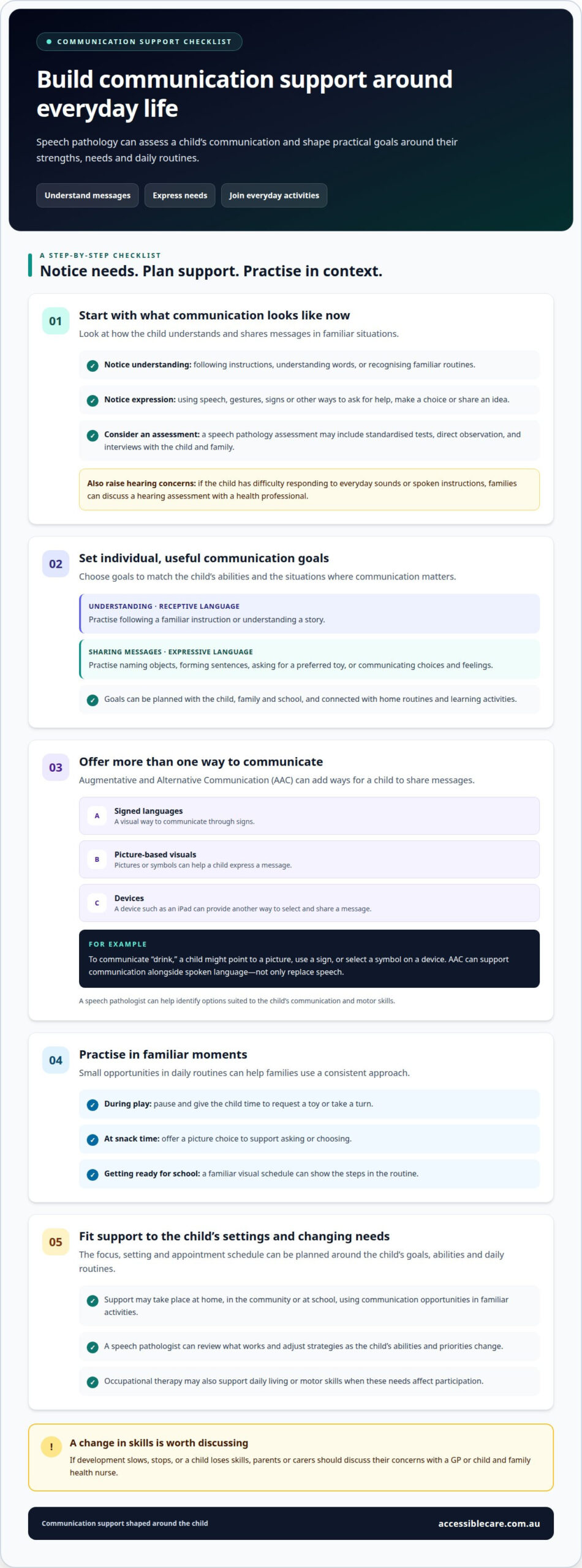
Communication challenges can involve understanding words, following instructions, using speech and language, or taking turns in conversation. Augmentative and Alternative Communication (AAC) gives children additional ways to communicate. It can include signed languages, picture-based visuals, or devices such as an iPad. A child who has difficulty saying “drink” might point to a picture, use a sign, or select a symbol on a device. AAC can support communication alongside spoken language, not only replace speech. A speech pathologist can help identify options suited to a child’s communication and motor skills.
When a child can’t easily share messages or understand others, everyday moments can become harder. Asking for help, joining a game, choosing food, or following a classroom instruction may require extra support. A familiar visual schedule, for example, can show the steps for getting ready for school. Speech therapy for children with global developmental delay may focus on practical goals, such as making choices, expressing discomfort, or responding during play.
There isn’t one fixed frequency for speech therapy appointments. The schedule depends on a child’s communication goals and abilities, and how those goals fit into daily routines. Support may take place at home, in the community, or at school, where a therapist can work on communication in familiar activities. At home, that might mean practising a request during mealtimes; at school, it could involve understanding an instruction or taking a turn with classmates. The setting and focus can be planned around the child’s needs.
Early intervention
Early intervention brings professional support into a child’s development when concerns arise. For families, it can provide a clearer way to understand communication needs and support everyday milestones.
Speech Pathology as Early Intervention
Speech pathology assesses and supports a child’s speech, language and communication. A speech pathologist can formally evaluate a child’s needs and identify skills to build, such as understanding instructions or expressing needs. Parents or carers should speak with a GP or child and family health nurse if development slows, stops, or a child loses skills. Early support can help identify communication needs and guide appropriate goals.
Individualised Treatment and Support
Individualised treatment matches strategies and goals to a child’s needs and abilities. Depending on what the child finds difficult, a plan might focus on understanding everyday language, forming sentences, or communicating choices. Speech and language programs can set goals with the child, family and school, connecting practice with home routines and learning activities. Occupational therapy may also support daily living or motor skills when these needs affect participation. This tailored approach keeps support relevant to the child’s milestones.
Caregiver Involvement in Early Intervention
Caregiver involvement means building communication strategies into familiar moments, with guidance from a speech pathologist. For example, a parent might pause during play to give a child time to request a toy, or offer a picture choice at snack time. These small opportunities help families practise a consistent approach in daily routines. A speech pathologist can discuss what works and adjust strategies as a child’s abilities and priorities change. Early intervention supports both the child and the people who communicate with them.
For families considering tailored communication support, speech therapy for children can help turn everyday goals into focused practice.
Speech and language development services in Australia
Speech pathology can assess communication needs and support a child’s understanding, expression and participation. The focus is on practical skills that matter at home, in learning, and in the community.
Speech and Language Delays in GDD
Children with global developmental delay may find it difficult to articulate words, understand instructions or express thoughts. For example, a child might use gestures rather than words to ask for help, or need extra time to follow a spoken direction. These differences can affect play, learning and everyday routines. Recognising which communication skills are challenging helps families and professionals set useful support goals.
Assessing Speech and Language Development
A speech pathology assessment examines how a child understands and uses communication. It may combine standardised tests, direct observation, and interviews with the child and family. Preschoolers may be assessed with a standardised tool such as the CELF Preschool-3, when appropriate to their needs and abilities. If communication concerns occur alongside difficulty responding to everyday sounds or spoken instructions, families can raise hearing assessment with a health professional.
Receptive and Expressive Language Therapy
Receptive language means understanding words and messages; expressive language means communicating ideas, needs and feelings. Therapy may support receptive skills through activities such as following a familiar instruction or understanding a story. Expressive work might involve naming objects, forming sentences or asking for a preferred toy. A speech pathologist can adapt activities to the child’s abilities and interests, helping communication develop in meaningful situations.
Choosing a Speech Pathologist
Look for a speech pathologist who understands global developmental delay and can tailor assessment and goals to your child. Ask how they involve family and school, and how progress will connect with daily activities. A collaborative approach can also take account of other needs, such as occupational or cognitive development, while keeping communication in focus.
In Australia, paediatric speech therapy costs depend on the child’s needs, assessment and session arrangements; the price is provided after a quote request. If speech concerns also involve difficulty hearing everyday sounds or understanding spoken directions, discuss whether a hearing assessment or additional support may be useful.
Global developmental delay and its implications for children
Global developmental delay describes significant delays in at least two developmental areas. These may include communication, movement, thinking, social skills, or emotional development. The combination differs for each child. One child may need support following spoken instructions and managing everyday routines, while another may also find balance or coordination challenging. Understanding which areas are affected helps families recognise how needs can overlap.
Development does not happen in separate compartments. A child who finds motor skills difficult may struggle to point, hold a book, or join a playground activity. Communication differences can also affect social interaction, such as taking turns, interpreting non-verbal cues, or telling someone they feel uncomfortable. These examples show why a child’s support goals may include more than spoken words alone.
GDD and autism are not interchangeable terms. GDD describes delays across multiple developmental areas, while autism primarily affects social communication and behaviour. A child may have a genetic or health condition alongside GDD, but sometimes no specific cause is identified. A paediatrician can consider a child’s overall development and refer them for support; diagnosis may involve paediatricians, developmental specialists, and psychologists working together.
Some children also need help processing sensory input or responding to sounds, touch, or movement. If a noisy classroom makes it difficult to focus on instructions, changes to the environment may help the child participate. Delays in balance, coordination, or muscle tone can affect play and self-care, such as climbing steps or dressing. Observing these activities in daily settings can show where practical support may be useful.
GDD can shape a child’s learning, relationships, and independence, but it doesn’t define their abilities or interests. A useful next step is to consider which everyday activities feel difficult, what helps the child participate, and which goals matter to them and their family. Discuss your child’s support needs as you consider appropriate help.
Accessible Care: Speech Therapy
Accessible Care offers Speech Therapy for children with communication needs linked to global developmental delay. If your child has difficulty understanding instructions, expressing needs, or joining everyday interactions, therapy can focus on goals that matter at home, school and in the community.
Support can also include Occupational Therapy when daily activities or motor skills are part of a child’s needs. Positive Behaviour Support may help address behaviours that affect participation. Accessible Care’s NDIS Support Services are another option for families seeking disability-related support. The right focus depends on the child’s priorities and where support could make daily activities easier.
Contact Accessible Care to discuss your child’s support needs.
Choose a communication goal to build on
A helpful next step is to identify one communication moment your child would like to manage more independently. It might be sharing a choice, joining a game, or asking for help. A clear, meaningful goal gives families and professionals a shared starting point, while leaving room for the child’s interests and preferences to guide the work.
Speech therapy for children with global developmental delay can focus on communication that supports participation in everyday life. Accessible Care offers Speech Therapy, Occupational Therapy and NDIS Support Services to help families consider support for their child’s communication and daily activities.
If you’re ready to talk through your child’s priorities, contact Accessible Care to discuss support. A conversation can help you explore a suitable next step for your family. Every new skill, choice and connection can be a meaningful part of your child’s path forward.
Frequently Asked Questions
What Do Speech Pathologists Do?
Speech pathologists assess and support communication. For a child, this can include looking at speech sounds, vocabulary, understanding, and interaction. They can identify useful goals and shape activities around a child’s interests. For example, playing with favourite toys can give a child opportunities to communicate choices while the pathologist observes how they express themselves.
What speech and language difficulties are common in children with global developmental delay?
Children with global developmental delay may have difficulty learning words, combining them into sentences, or making speech sounds clearly. Some may find it hard to understand unfamiliar instructions or follow a conversation when the topic changes. Social communication can also be challenging, such as noticing when another person wants a turn. The combination varies, so it’s important to consider a child’s communication strengths and challenges together.
How can speech therapy help children with global developmental delay?
Speech therapy can help a child communicate more effectively in situations that matter to them. Goals might include telling someone an activity is finished, answering a familiar question, or joining a shared game. A speech pathologist can use activities suited to the child’s abilities and interests, then help caregivers and educators use consistent strategies. This makes communication practice relevant across everyday settings.
What age should a child with global developmental delay start speech therapy?
Families can seek advice as soon as they have concerns, rather than waiting for a particular age. Children develop the majority of their speech and language skills between birth and three years, making early support relevant during this period. If skills slow, stop, or are lost, parents or carers should speak with a GP or child and family health nurse about appropriate assessment and support.
How is speech and language assessed for children with global developmental delay in Australia?
A speech pathologist may use formal or informal assessments suited to the child’s abilities. Assessment can combine standardised tests, observation, and interviews with the child and family. The pathologist may consider how the child communicates during play, responds to spoken language, and shares choices. For some preschoolers, a standardised tool such as the CELF Preschool-3 may form part of the assessment.
What speech therapy approaches work best for children with global developmental delay?
No single approach suits every child; therapy is tailored to their communication profile and goals. A speech pathologist may work on understanding language, practising speech sounds, or communicating during play. For example, a turn-taking game can give a child a reason to communicate with another person. Signed language, visuals, or a communication device may also support a child’s messages alongside speech.

