


A diagnosis can bring answers, but it can also leave families unsure what to do next. Support for families with a newly diagnosed disability can include help understanding a person’s needs, finding suitable services and connecting with practical and emotional support.
In Australia, support may involve therapy, parenting guidance, referrals and help understanding the National Disability Insurance Scheme (NDIS). Under its early childhood approach, children younger than 6 with developmental concerns can access support without a diagnosis, while children younger than 9 with disability may also be supported with their families.
It’s understandable to want clear, reliable guidance while you adjust to new information. This article explains what disability and parenting support can involve, how the NDIS may help and where families can find support and referrals. It also covers early intervention options to help you consider what may suit your family’s needs and next steps.
Key Takeaways
- Disability and parenting support can bring together practical guidance, therapy and help for carers as family needs change.
- Understand how the NDIS may support eligible children and families, including through its early childhood approach.
- Find out how disability support and referral organisations can help connect families with relevant services and information.
- Explore early intervention options, including support for young children with developmental concerns before a diagnosis.
What is disability and parenting support?
Disability and parenting support brings together practical, health and emotional help for a person and their family. In Australia, support may come through government programs, health professionals, schools and community organisations. Support for families with a newly diagnosed disability can help parents understand their options and plan around everyday needs.
Family, Professional, and Advocate Support
Family, professional and advocate support means bringing trusted people together around a person’s needs, choices and everyday activities. Parents and carers can share observations with health professionals and get help understanding services. State and territory disability services differ in program names, eligibility and referral pathways; health, education and community supports are also organised locally. An advocate can help a family communicate its priorities when discussing services.
Health Care and Personal Care
Health and personal care includes appointments, treatment, medicines and help with daily routines. A GP can help coordinate health needs, while specialists and therapists may address a particular condition or build skills for everyday tasks. Medicine and appointment costs depend on the care needed and applicable Medicare support. Families can keep a record of prescriptions, appointments and out-of-pocket expenses to support conversations with health professionals about ongoing care.
Health and Wellbeing
Family wellbeing support can include emotional care, practical help and time to maintain activities beyond caring responsibilities. A Medicare mental health treatment plan can allow claims for up to 10 sessions with a mental health professional each calendar year. Parents and carers can discuss stress, sleep or family routines with a GP. Keeping time for education, relationships and enjoyable activities can help families stay connected as care needs change.
Therapy, Assessment, and Financial Support
Therapy and assessment support helps families understand needs, plan care and manage funding options. Families may be able to explore whether Medicare rebates can help with speech-related care. A Chronic Disease Management Plan can provide rebates for five visits with eligible services, including speech and occupational therapy. Wait times depend on the service, location and demand; out-of-pocket costs depend on care and available funding. For support for families with a newly diagnosed disability, it can also help to understand carer payments: Services Australia states Carer Allowance is A$162.60 each fortnight. To receive it, a person’s combined income with their partner must be less than A$250,000 a year. People providing substantial daily care may be able to access financial support.
National Disability Insurance Scheme (NDIS)
After a diagnosis, families can clarify the child’s support needs and explore whether the National Disability Insurance Scheme (NDIS) may help. The NDIS operates across Australia, including rural and remote areas, and supports more than 610,000 Australians.
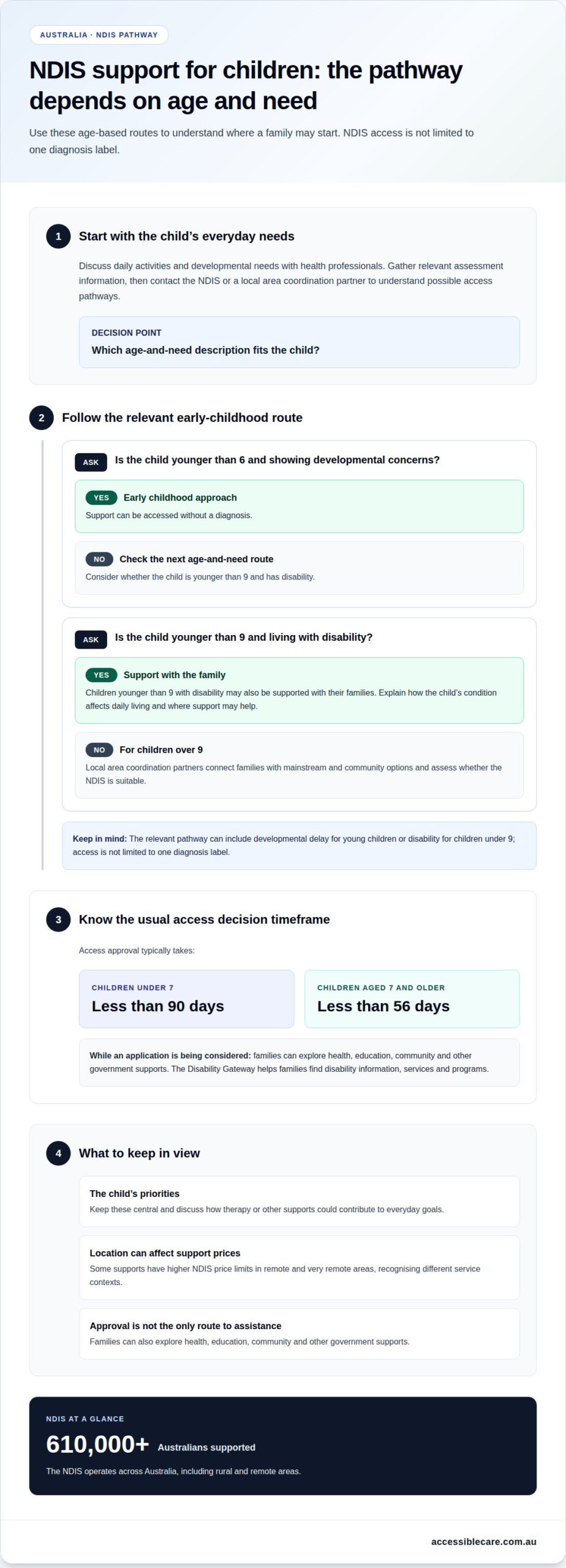
Start by discussing the child’s daily activities and developmental needs with their health professionals. Gather relevant assessment information, then contact the NDIS or a local area coordination partner to understand possible access pathways. For children younger than 6 with developmental concerns, the early childhood approach does not require a diagnosis. Children younger than 9 with disability may also receive support with their families.
NDIS access is not limited to one diagnosis label. The relevant pathway can include developmental delay for young children or disability for children under 9. Families can explain how the child’s condition affects daily living and where support may help. Some supports have higher NDIS price limits in remote and very remote areas, recognising different service contexts.
Access approval typically takes less than 90 days for children under 7 and less than 56 days for children aged 7 and older. While an application is being considered, families can explore health, education, community and other government supports. The Disability Gateway helps families find disability information, services and programs. Children over 9 can access support through local area coordination partners, who connect families with mainstream and community options and assess whether the NDIS is suitable.
Approval can help families plan supports around a child’s needs, but it is not the only route to assistance. If NDIS-funded supports are relevant, NDIS support services can help families explore practical support options. Across each step, keep the child’s priorities central and discuss how therapy or other supports could contribute to their everyday goals.
Disability support and referral organisations
In Australia, referral organisations help families identify services and connect with government, health, education or community support. They can help when a disability affects school participation, daily routines or caring responsibilities. Start by describing the practical help needed, such as communication support, guidance with education or help finding local services. This gives the referral conversation a clear focus.
The Australian Government’s Disability Gateway helps people with disability, families and carers find information, services and support. Its search covers national and state or territory funded programs, as well as other useful information. Families can explore topics such as housing, education, employment and support in their area. A focused search and a list of relevant organisations can make the next conversation more specific.
State and territory services provide local guidance, and pathways differ by location. For example, Queensland provides information about what to do when a parent first learns their child has a disability, as well as support for carers. This can help families understand local options and identify the relevant department or organisation. Schools can also discuss education-related adjustments and student supports.
- For national information: use the Disability Gateway to find services and programs across life areas.
- For Queensland families: look for guidance on first steps and carer support.
- For South Australian families: the NDIS can be contacted on 1800 800 110.
When contacting an organisation, explain what the person wants to do and what makes that activity difficult. For example, describe barriers to joining a school activity or communicating at appointments. Ask which referral pathway applies and what information will help the organisation understand the need. A written list of questions can help parents and carers keep track of conversations.
Support can involve several organisations. A school, health professional and disability service may each address different needs, so keep a simple record of referrals and agreed next steps. This helps everyone focus on the person’s priorities and makes ongoing care conversations clearer.
What early intervention services are available for children with newly diagnosed disabilities in Australia?
Early intervention brings support into a child’s everyday life while they are developing communication, movement and daily living skills. In Australia, the NDIS early childhood approach supports children younger than 9 with disability and their families. Children younger than 6 with developmental delay may also receive support. A diagnosis isn’t required for a child younger than 6 when there are concerns about development.
Support can focus on a child’s participation at home, in early childhood settings and in the community. Speech therapy may help with communication, while occupational therapy can address everyday activities and participation. The right support depends on the child’s strengths, goals and needs. Families and professionals can use observations from home or preschool to describe what the child finds easier or harder.
Medicare may also help with some speech therapy costs. Children and young people under 25 may be eligible for rebates for up to 20 ongoing speech therapy sessions. This pathway is separate from NDIS funding, so families can explore which arrangements fit the child’s circumstances. A health professional can help connect therapy goals with the child’s broader care and development.
Families can also use the Australian Government’s Disability Gateway to find information, services and support. The My Child and Me workshop is designed for parents of children aged 2-12 years. These options may help parents understand developmental needs, consider their own questions and identify relevant support. Since NDIS support has been available across Australia since 2016, families can explore the early childhood approach alongside local community and health services.
To make support more focused, describe the child’s everyday priorities, such as joining play, communicating needs or managing routines. Discuss those goals with the professionals involved, then consider how each therapy or service could contribute. Families looking for NDIS-related assistance can discuss NDIS support options as part of planning the child’s next steps.
Accessible Care
Accessible Care helps families connect a new diagnosis with practical support that reflects the person’s needs and goals. Its NDIS Support Services, Speech Therapy, Occupational Therapy and Positive Behaviour Support can support communication, everyday skills and participation. These services may be useful when families are considering therapy or working out which supports could help.
Support can focus on what matters in daily life, such as expressing needs, building independence or developing meaningful routines. Families are part of the conversation, sharing priorities and helping shape support around the person. A useful next step is to discuss where assistance could make a difference.
If you’d like to discuss support for your family, contact Accessible Care.
Shape the next step around your family
A new diagnosis doesn’t define a person’s future. Start by talking about what matters to them now, what they’d like to do and where extra support could help. Identifying these priorities can make future decisions feel more personal and manageable.
Support for families with a newly diagnosed disability can involve different services as needs evolve. Accessible Care offers NDIS Support Services, Speech Therapy and Occupational Therapy to support goals related to daily life, communication and participation. Families can discuss their priorities and explore which supports align with them.
You don’t need to have every question resolved before starting. A simple first conversation can help clarify what you want to focus on and what a useful next step might look like. Start a conversation with Accessible Care about support for your family.
Keep the person’s voice at the centre and take progress one step at a time.
Frequently Asked Questions
What happens when your son or daughter finishes school?
Finishing school can mark a transition towards adult life, further learning, work or community participation. Start talking early with your young person and their school about interests, strengths and preferred routines. A transition discussion could cover travel to activities, communication needs or building daily living skills. If the young person has an NDIS plan, their goals can guide conversations about relevant supports.
What is included?
Disability support can include different services, depending on the person’s goals and circumstances. A family might need help with communication, daily activities, behaviour support or community participation. Support may also involve referrals and coordination between people already involved, such as family members, school staff and health professionals. Start by identifying an everyday activity the person wants to do with greater confidence or independence.
What support is available in Australia for families after a child is diagnosed with a disability?
Families in Australia can explore health, education, community and government support alongside disability services. The Disability Gateway provides information and helps families find relevant services and programs. A school can discuss learning and participation needs, while health professionals can explain care options related to a child’s condition. Families can also contact state or territory services for local information, as referral pathways and programs differ across Australia.
How can families access the NDIS after a new disability diagnosis, and what are the eligibility rules?
NDIS access depends on the person’s circumstances and the support pathway that applies to their age and needs. For children younger than 6 with developmental concerns, the early childhood approach does not require a diagnosis. Children younger than 9 with disability may also be supported through this approach. Families can discuss the child’s needs with a health professional and contact the NDIS or a local area coordination partner to understand next steps.
What evidence and documents are needed to apply for NDIS support?
Useful application information may include diagnostic or developmental reports, assessments and examples of how the child’s condition affects everyday activities. Health professional reports can explain strengths, support needs and recommended assistance. Families can also note observations from home, childcare or school, such as communication or participation challenges. Organising records around the child’s daily needs makes it easier to explain what support they’re seeking.
Where can families get free disability advocacy, information and support coordination?
The Disability Gateway is a national starting point for finding disability information, services and organisations, including advocacy options. Local area coordination partners can connect families with mainstream and community supports and help assess whether the NDIS may be suitable. These pathways can help families identify who to approach for information or coordination. The Gateway helps locate organisations, but not every service listed is free.

