


Do you find yourself worrying about your child’s constant mouth breathing? Are you searching for a comfortable alternative to a CPAP machine, or concerned about how a tongue thrust might be affecting your smile? If these questions resonate with you, you are not alone, and there is a gentle, effective path forward. Many people are discovering the life-changing benefits of myofunctional therapy, a specialised approach that addresses the root cause of these common concerns.
In this compassionate guide, we’ll gently walk you through what this therapy is in simple, clear terms. We will explore who it can help-from children with breathing difficulties to adults seeking better sleep-and how this evidence-based approach can support your family’s overall wellbeing. Our goal is to empower you with the knowledge and confidence to take the next step, whether that’s seeking an assessment or finding a caring, qualified therapist right here in Melbourne or Adelaide.
Key Takeaways
- Understand the gentle connection between incorrect muscle patterns in the face and mouth and common challenges with breathing, sleep, and speech.
- Discover how myofunctional therapy acts like gentle physical therapy for the mouth, using simple exercises to help restore proper function and support wellbeing.
- Explore the wide-ranging benefits of this supportive approach, which can lead to improved breathing, clearer speech, and a greater sense of wellness.
- Learn what a compassionate, person-centred therapy journey looks like and how to find qualified support from professionals in Australia.
Understanding Orofacial Myofunctional Disorders (OMDs): The ‘Why’ Behind the Therapy
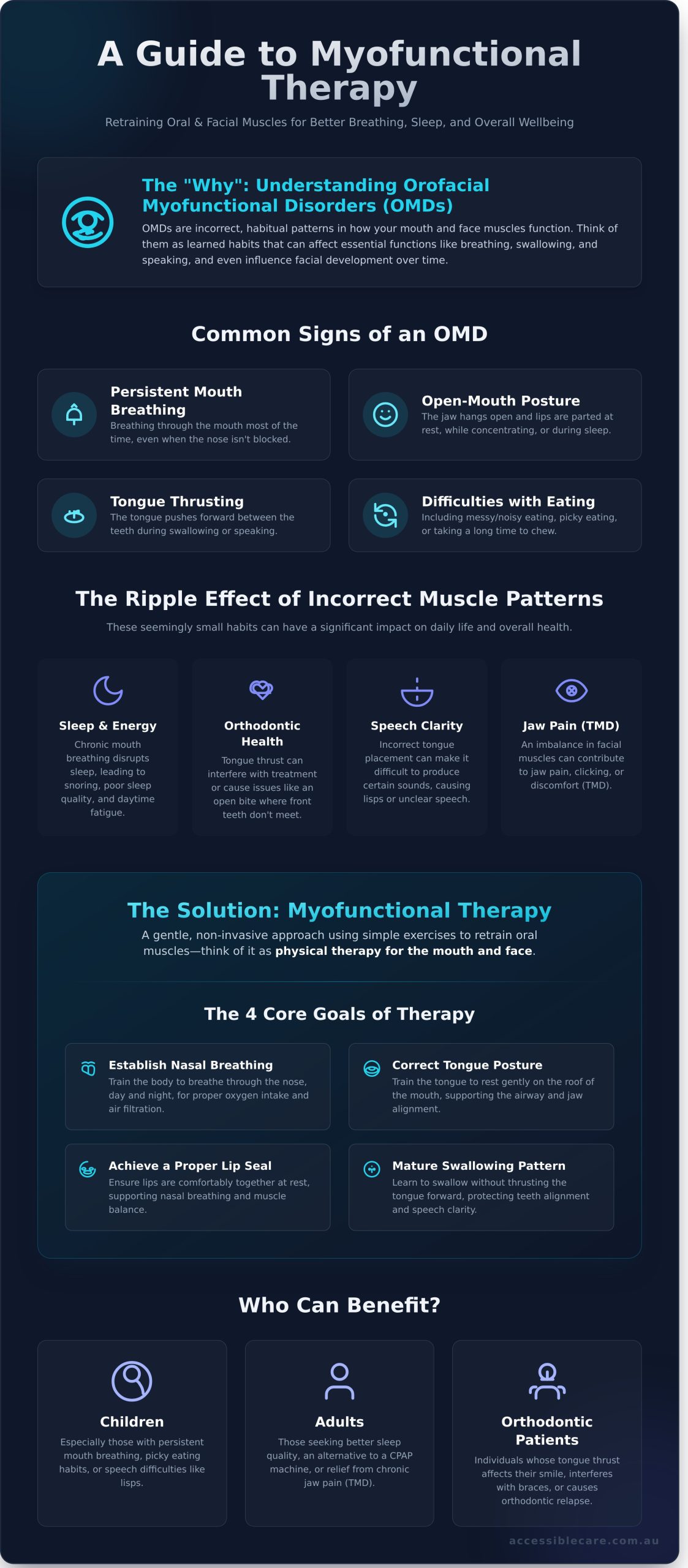
Before we can explore the solutions, it’s important to first understand the ‘why’. Orofacial Myofunctional Disorders, or OMDs, are simply incorrect patterns in how the muscles of your mouth and face work together. Think of them as habits your muscles have learned that may not be serving your health well. The field that studies these patterns, as explained in this overview of What is Orofacial Myology?, shows how these habits can affect essential functions like breathing, swallowing, and speaking, and even influence how your face develops over time.
While often noticed in childhood, OMDs can continue to affect adults, sometimes without them even realising the source of their discomfort. Recognising the root cause of these challenges is the compassionate first step toward finding relief and restoring balance through myofunctional therapy.
Common Signs to Look For
You might be wondering if you or your child are showing signs of an OMD. These gentle indicators are often overlooked, but paying attention to them can make a significant difference. Some common signs to look for include:
- Persistent mouth breathing: Breathing through the mouth most of the time, even when the nose isn’t blocked.
- An open-mouth posture: The jaw hangs open and lips are parted when resting, concentrating, or even sleeping.
- Tongue thrusting: The tongue pushes forward between the teeth during swallowing or speaking.
- Difficulties with eating: This can include messy or noisy eating, picky eating (especially with certain textures), or taking a very long time to chew food properly.
The Impact of Incorrect Muscle Patterns
These seemingly small habits can have a ripple effect on overall health and well-being. When facial and oral muscles don’t work in harmony, it can lead to a range of challenges that impact daily life. Understanding these connections is the first step in seeing how myofunctional therapy can provide targeted support.
- Sleep and Energy: Chronic mouth breathing can disrupt sleep patterns, leading to snoring, poor sleep quality, and daytime fatigue.
- Orthodontic Health: A constant forward pressure from a tongue thrust can interfere with orthodontic treatment or cause issues like an open bite, where the front teeth don’t meet.
- Speech Clarity: Incorrect tongue placement can make it difficult to produce certain sounds, sometimes resulting in lisps or unclear speech.
- Jaw Pain: An imbalance in the facial muscles can contribute to jaw pain, clicking, or discomfort, often associated with Temporomandibular Joint Disorder (TMD).
What is Myofunctional Therapy? A Gentle Explanation
Imagine physical therapy, but specifically designed for the muscles of your mouth, tongue, and face. That, in essence, is what myofunctional therapy is. It’s a gentle, non-invasive approach that uses a series of simple and painless exercises to help retrain these muscles to function correctly. Think of it as creating new, healthy habits for breathing, swallowing, and speaking.
The core of this therapy is neuromuscular re-education-helping your brain and muscles work together in harmony. This supportive process, guided by standards from organisations like the International Association of Orofacial Myology, is never a one-size-fits-all solution. Instead, each therapy program is carefully tailored to your unique needs and personal health goals, empowering you to achieve lasting results.
The Core Goals of Therapy
Myofunctional therapy focuses on establishing four key habits that are foundational to your overall wellbeing. The aim is to help you:
- Establish proper nasal breathing: Learning to breathe through your nose, both day and night, is crucial for oxygen intake, filtration of air, and healthy development.
- Ensure correct tongue posture: We guide you in training your tongue to rest gently on the roof of your mouth, which supports your airway and jaw alignment.
- Achieve a proper lip seal: Your lips should be comfortably together when you are at rest, which supports nasal breathing and facial muscle balance.
- Teach a mature swallowing pattern: This involves swallowing without thrusting the tongue forward, a habit that can affect teeth alignment and speech.
Who Can Benefit from Myofunctional Therapy?
Because it addresses the foundational functions of the mouth and face, this therapy can provide compassionate support to a wide range of people at different stages of life. You may find it incredibly helpful if you are:
- A parent of a child with speech difficulties, a tongue-tie, or persistent habits like thumb sucking or mouth breathing.
- An individual undergoing orthodontic treatment, as it can help ensure more stable, long-term results by correcting underlying muscle patterns.
- An adult experiencing sleep-disordered breathing, such as snoring or mild to moderate sleep apnea, by strengthening airway muscles.
- A person living with jaw pain or dysfunction (TMD), as it helps restore balance to the muscles that control your jaw.
Your Myofunctional Therapy Journey: What to Expect
Starting any new therapy can feel uncertain, but we are here to support you with a process that is always person-centred, compassionate, and gentle. Your journey is a partnership, and our goal is to empower you with the skills and awareness you need to achieve lasting results. We begin by listening, work with you to create a plan that fits your life, and celebrate your progress every step of the way.
The Initial Assessment
Your first appointment is a comprehensive and gentle assessment designed to understand your unique situation. We take the time to listen and build a clear picture of your needs. This process involves:
- A detailed discussion about your concerns, health history, and what you hope to achieve.
- Observing your natural breathing patterns, posture, and how you swallow.
- A gentle evaluation of your facial and oral muscles to assess their current function, strength, and coordination.
The Personalised Therapy Program
Following your assessment, we develop a therapy program tailored specifically for you. Your myofunctional therapy plan consists of a series of simple exercises designed to retrain your muscles. We introduce these exercises gradually, focusing first on building awareness of how your muscles move. The goal is to make these exercises a consistent and easy part of your daily routine, building strength and coordination over time without feeling overwhelmed.
The Role of Your Therapist
Think of your therapist as your dedicated guide, coach, and supporter. They are here to provide clear instructions, demonstrate each exercise, and answer any questions you have. Throughout your journey, they will carefully monitor your progress, offer encouragement, and adjust your personalised plan as needed to ensure you are always moving toward your goals with confidence. Meet our compassionate team of therapists.
The Benefits: How Myofunctional Therapy Supports Your Wellbeing
The positive effects of myofunctional therapy extend far beyond your mouth and jaw. Instead of just managing symptoms, this gentle approach addresses the root cause of many common health concerns. By retraining the muscles of your face and mouth to function correctly, it creates a ripple effect of benefits that can improve your sleep, speech, and overall quality of life. More importantly, it empowers you with the knowledge and tools to maintain these positive changes for years to come.
Improved Breathing and Sleep
One of the most significant benefits is the promotion of proper nasal breathing. When you breathe through your nose, the air is naturally warmed, humidified, and filtered. This simple change can lead to profound improvements, including:
Of course, the quality of the air you breathe is also vital. Environmental factors in your home, such as hidden mould, can contribute to respiratory issues and undermine the benefits of therapy. If you suspect this might be an issue and want to learn about professional solutions, you can click here.
- A reduction in snoring and symptoms of mild obstructive sleep apnea.
- More restful, restorative sleep cycles.
- Increased energy and focus throughout the day.
Support for Speech and Orthodontics
Correct tongue posture is essential for clear speech and stable dental health. Myofunctional therapy provides crucial support in this area by helping to improve speech articulation and clarity. For those who have had braces, it helps stabilise orthodontic results, reducing the risk of teeth shifting back. This creates a healthier environment for long-term facial and dental development.
While myofunctional therapy helps create a stable foundation, other dental treatments may be needed to fully restore a smile. If tooth loss is a concern, for example, it’s helpful to understand all your options, and you can find out more about modern restorative solutions.
Reduced Pain and Discomfort
Living with chronic pain can be draining. By restoring balance to your facial muscles, this therapy can help alleviate the tension and strain that contribute to jaw pain and headaches. It addresses issues related to the temporomandibular joint (TMJ) and promotes healthier, more comfortable chewing and swallowing patterns, bringing welcome relief and restoring function.
If you believe these benefits could support your health goals, our compassionate team is here to listen. Learn more about our person-centred approach by visiting accessiblecare.com.au.
Finding Myofunctional Therapy Support in Australia
Beginning your journey with therapy is a significant step, and finding the right support is essential for success. It’s important to connect with a qualified and experienced therapist who listens to your unique needs and supports your goals with compassion and professional care.
Who Provides Myofunctional Therapy?
In Australia, myofunctional therapy is a highly specialised field. When searching for a provider, you will often find they are skilled professionals who have undertaken specific advanced training. Look for a practitioner who takes a holistic and person-centred approach, focusing on your overall well-being.
- Speech Language Pathologists: Many speech pathologists complete extensive postgraduate training to specialise in orofacial myology.
- Dentists and Dental Hygienists: Some dental professionals also pursue this specialisation to offer a more comprehensive approach to oral health.
Using Your NDIS Plan for Support
If you are an NDIS participant, you may be able to use your funding to access therapeutic support. Myofunctional therapy can often be funded under the ‘Improved Daily Living’ category within your Capacity Building supports. A dedicated therapist will work with you to align your therapy activities directly with your NDIS plan goals, ensuring the support is both effective and relevant to your life. Navigating NDIS funding can feel complex, and our team is here to help you understand your options with clarity and care.
Taking the Next Step with Accessible Care
At Accessible Care, we offer compassionate and professional services in both Melbourne and Adelaide. Our dedicated team is committed to empowering your independence and enhancing your quality of life. We believe in listening first, allowing us to truly understand your situation and create a tailored plan that works for you. Your choice, your life, your way.
If you are ready to explore how we can support you, we invite you to get in touch for a friendly chat about your needs.
Embrace a Healthier Future with Compassionate Support
Understanding how orofacial myofunctional disorders can affect your daily life is the first empowering step towards positive change. As we’ve explored, myofunctional therapy offers a gentle, non-invasive path to retrain the intricate muscles of your face and mouth. This personalised journey isn’t just about exercises; it’s about reclaiming comfort and can lead to profound improvements in everything from breathing and sleeping to your overall sense of wellbeing.
Taking the next step is a personal choice, and you deserve a partner who truly listens and cares. At Accessible Care, our team of highly experienced Speech Language Pathologists is dedicated to a compassionate, person-centred approach to care. As a registered NDIS provider in Australia, we are committed to empowering you with support that is carefully tailored to your unique needs and personal goals.
Ready to learn more? Contact our caring team to discuss your journey. Your path to greater comfort and confidence begins with a simple conversation. We are here to support you, every step of the way.
Frequently Asked Questions About Myofunctional Therapy
What is the difference between myofunctional therapy and speech therapy?
While both therapies can support each other, they have different focuses. Speech therapy primarily addresses the cognitive and mechanical aspects of producing sounds and language. Myofunctional therapy, on the other hand, is like physical therapy for your mouth and face. It focuses on correcting the function of these muscles to improve essential activities like breathing, chewing, and swallowing, which can in turn support clearer speech and overall health.
How long does myofunctional therapy usually take to show results?
Every person’s journey is unique, but many individuals begin to notice positive changes within a few weeks of consistent practice. Significant, lasting results often take several months to a year. Your dedicated therapist will create a tailored plan based on your specific needs and goals. The key to success is consistent daily practice of the exercises, which helps retrain your muscles for long-term improvement and well-being.
Are the exercises difficult or painful to do?
The exercises are designed to be gentle and should never be painful. You might feel a stretch or sense the muscles working, similar to gentle yoga, but there should be no discomfort. Your therapist will guide you through each exercise to ensure you are doing it correctly and comfortably. The goal is to gently retrain and strengthen your muscles, and our compassionate team is here to support you every step of the way.
Can adults benefit from myofunctional therapy, or is it just for children?
Myofunctional therapy offers significant benefits for people of all ages, not just children. Adults often seek this support to address long-standing issues like sleep apnoea, TMJ pain, incorrect swallowing patterns, or even changes in facial structure. It is never too late to retrain your muscles to function correctly. This therapy can be a powerful tool to improve your health, comfort, and overall quality of life at any stage.
What is the typical age for a child to start myofunctional therapy?
While treatment can be effective at any age, children are often ready to begin around age four or five. At this stage, they are typically able to understand instructions and consciously participate in the exercises. For younger children, a “watch and wait” approach or play-based activities may be recommended. Early intervention can help guide proper facial and airway development, preventing more complex issues later on.
How much does myofunctional therapy cost in Australia?
In Australia, the cost of myofunctional therapy can vary depending on the clinic and your location. You can generally expect an initial consultation to cost between A$180 and A$250. Follow-up sessions are typically priced from A$120 to A$180. Some clinics may offer package deals for a full course of therapy, which can provide better value. We recommend contacting providers directly for a detailed quote tailored to your specific needs.

