


As a parent, it can be deeply concerning to watch your child struggle with tasks that seem to come easily to others-whether it’s holding a pencil, managing big emotions, or navigating the playground. It’s natural to feel worried and unsure of where to turn for help. If you’ve found yourself wondering what might be behind these challenges, you are not alone. This is where the gentle and supportive world of occupational therapy for kids can make a profound difference, offering compassionate solutions that are tailored to your child’s unique needs.
The word ‘therapy’ can sound intimidating, but for children, it’s all about learning and growing through play. It’s about building confidence and essential life skills in a way that feels fun and empowering. This guide is here to walk you through everything with care and respect. We will gently demystify what a paediatric OT does, explore how they can help your child thrive in their daily activities, and outline the clear, supportive steps to getting started. Our goal is to replace your worry with clarity and empower you with a hopeful path forward.
Key Takeaways
- Learn how OT views a child’s main ‘jobs’-playing, learning, and growing-and provides gentle support to help them thrive in these areas.
- Recognise everyday challenges, from sensory sensitivities to motor skill difficulties, that may indicate your child could flourish with professional support.
- Discover how occupational therapy for kids transforms play-based activities in a safe, welcoming space into lifelong skills for independence and confidence.
- Find a clear, step-by-step pathway to accessing compassionate OT support for your child in Australia, demystifying the first steps of your journey.
What is Occupational Therapy for Kids? A Playful Path to Independence
When you hear the term ‘occupational therapy,’ it’s easy to picture support for adults returning to work after an injury. But for children, it means something wonderfully different. At its heart, occupational therapy for kids is about helping children participate fully in the ‘occupations’ of childhood. To understand its role, it helps to know What is Occupational Therapy? in a broader sense. For a child, their main jobs aren’t in an office; they are the essential tasks of playing, learning, and growing. It’s a gentle, supportive approach designed to build the skills your child needs to navigate their world with confidence and independence.
Many parents mistakenly believe that OT is only for children with major physical disabilities. In reality, it provides vital support for a wide range of developmental challenges, helping children build a strong foundation for a happy, fulfilling life.
The ‘Occupation’ in Occupational Therapy
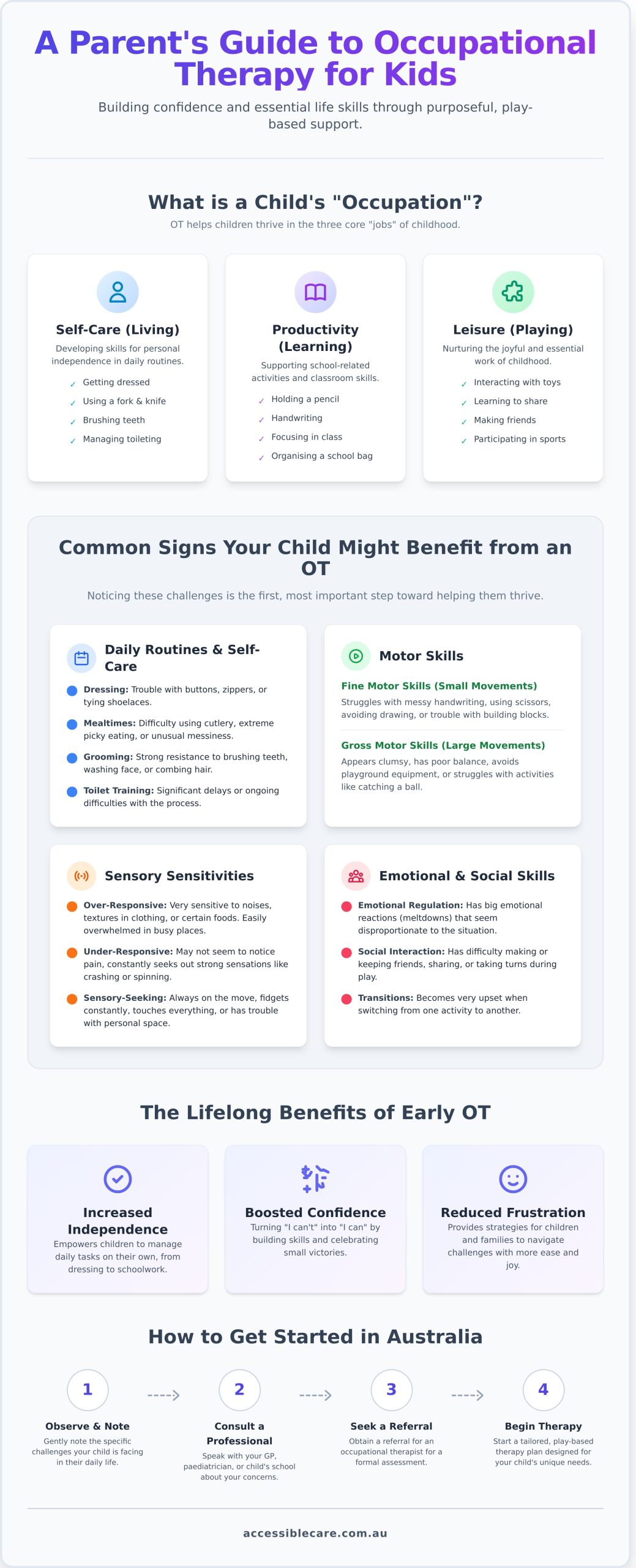
A child’s daily life is filled with important tasks that we call occupations. These activities are the building blocks of their development and can be grouped into three main areas:
- Self-Care (Living): These are the skills for personal independence, like getting dressed, using a fork and knife, brushing teeth, and managing toileting.
- Productivity (Learning): This covers all school-related activities, from holding a pencil and handwriting to focusing in the classroom and organising a school bag.
- Leisure (Playing): This is the joyful work of childhood. It includes interacting with toys, learning to share, making friends, and participating in sports or hobbies.
It’s Not Just About Work, It’s About Joy
One of the most beautiful things about occupational therapy for kids is that it often looks and feels just like playing. Our compassionate therapists use carefully selected, play-based activities to build skills in a fun and engaging way. Each session is structured, purposeful fun, designed to create moments of success. The goal is to reduce frustration, foster a positive sense of self, and help your child find more joy and ease in their everyday activities.
Who Can Benefit from Paediatric OT?
Occupational therapy can provide life-changing support for a broad range of children, not just those with a formal diagnosis. It is a valuable resource for kids experiencing developmental delays, sensory processing difficulties, poor coordination, or challenges with fine motor skills. It also plays a key role in providing tailored support for children with conditions such as Autism Spectrum Disorder (ASD), Attention-Deficit/Hyperactivity Disorder (ADHD), and other learning challenges, empowering them to reach their unique potential.
Common Signs Your Child Might Benefit from an OT
Every child is unique, and they all develop at their own pace. As a parent, you are the expert on your child. If you’ve noticed certain ongoing challenges in their daily life, it’s simply a sign that they may need a little extra support to build their skills and confidence. Noticing these things is the first, most important step toward helping them thrive. Many reputable sources, such as this guide from Nemours KidsHealth, outline common areas where children may face difficulties.
Here are some gentle observations, organised into everyday categories, that might suggest your child could find value in occupational therapy for kids.
Challenges with Daily Routines & Self-Care
Getting through the day involves many small but important tasks. Difficulties in this area might look like consistent struggles with:
- Dressing: Trouble with fiddly buttons, zippers, or learning to tie shoelaces long after their peers.
- Mealtimes: Difficulty using cutlery, being an extremely picky eater with limited food choices, or being unusually messy.
- Grooming: Strongly resisting or getting very upset by activities like brushing teeth, washing their face, or combing hair.
- Toilet Training: Significant delays or ongoing difficulties with the process.
Difficulties with Motor Skills
Motor skills help us interact with the world physically. Challenges can appear in two main areas:
- Fine Motor Skills: This involves small muscle movements. You might notice your child has messy handwriting, struggles to use scissors, avoids drawing and colouring, or has trouble with building blocks.
- Gross Motor Skills: This involves large muscle movements. Your child may seem clumsy, have poor balance, avoid playground equipment, or have difficulty learning to ride a bike or catch a ball.
Sensory Processing & Emotional Regulation
This is about how your child’s brain interprets information from their senses and manages their feelings. You may see:
- Sensory Sensitivity: Being overly sensitive to sounds, touch, or textures. They might complain about clothing tags, loud noises, or certain foods.
- Sensory Seeking: A constant need for movement, such as fidgeting, jumping, or spinning. They might seem to have endless energy.
- Emotional Responses: Having big emotional reactions to small problems, frequent intense tantrums, or finding it very hard to calm down after being upset.
Struggles with Play & School
A child’s “job” is to play and learn. If they are facing underlying challenges, it can show up in these environments. Signs include:
- Social Interaction: Having trouble making or keeping friends, preferring to play alone, or not understanding social cues.
- Play Skills: Not knowing how to play with certain toys or engaging in repetitive play patterns.
- In the Classroom: Difficulty paying attention, following multi-step instructions, or staying organised.
If any of these signs feel familiar, remember that support is available. Exploring occupational therapy for kids is a positive, empowering step towards helping your child build the skills they need for a happy and independent life.
A Gentle Walkthrough: What Happens in a Children’s OT Session?
The thought of starting therapy can feel daunting, but we want to reassure you that the journey is a supportive and positive one. The world of occupational therapy for kids is not one of sterile clinics and clipboards; it’s a place of play, discovery, and connection. From your very first phone call, our goal is to create a partnership with your family, built on trust and a shared desire to see your child thrive. Let’s walk through what you can expect.
The First Step: Your Initial Consultation
Your journey begins with a simple conversation. This first chat is a safe, judgment-free space for you to share your story, your concerns, and your hopes for your child. Our compassionate occupational therapist will listen with empathy, seeking to understand your family’s unique situation. This isn’t a high-pressure meeting; it’s a collaborative discussion to see if we are the right fit to support you and your child on their path to independence.
The Assessment: Discovering Your Child’s Strengths
The next step is a comprehensive assessment, but it often just looks like playtime to your child. Through a mix of fun, engaging activities, standardised assessments, and careful observation, the OT gets a complete picture of your child’s abilities. This evaluation process, a crucial step outlined by child development experts like the American Academy of Pediatrics, focuses on what your child can do. It helps us identify their strengths and pinpoint the specific areas where they need support, allowing us to create a truly personalised therapy plan.
A Typical Session: Learning Through Purposeful Play
This is where the magic happens. A typical OT session is designed to be fun, motivating, and empowering. Each activity, while feeling like a game, has a specific therapeutic purpose. You might see your child:
- Navigating a colourful obstacle course to build balance, coordination, and motor planning skills (gross motor).
- Squeezing and rolling therapy putty to find hidden treasures, strengthening the small muscles in their hands for writing and dressing (fine motor).
- Gently swinging or jumping on a trampoline to help their bodies feel calm, focused, and organised (sensory regulation).
Our skilled therapists are experts at adapting activities in the moment, ensuring your child feels successful and engaged. We celebrate every small victory, building confidence that extends far beyond the therapy room. Our compassionate team is here to answer your questions and support your family every step of the way. Get in touch today.
The Lifelong Benefits of Early Occupational Therapy
Choosing to start your child’s journey with occupational therapy is an investment in their future. While the immediate goals might be learning to hold a pencil or manage big feelings, the true value lies in the lifelong skills and confidence they gain. This supportive process empowers your child, creating positive ripples that extend into every area of their life and benefit the entire family.
Effective occupational therapy for kids helps build a strong foundation for a happy, independent, and fulfilling life.
Building a Foundation for School Success
The classroom can be a challenging environment, but OT provides the tools to help your child thrive. By developing core skills, children can participate more fully and feel more secure at school. This support often leads to:
- Improved schoolwork: Better handwriting and fine motor skills mean less frustration when completing assignments.
- Better focus: Learning sensory regulation strategies helps children manage distractions and pay attention in class.
- Increased participation: Gaining the ability to follow multi-step instructions and work with peers makes group activities more enjoyable.
Nurturing Self-Esteem and Resilience
There is nothing more powerful than a child realising, “I can do it myself!” Every time a child masters a skill they once found difficult-like tying their shoelaces or buttoning their coat-their self-esteem blossoms. Therapy provides a safe space to work through challenges, teaching them how to manage frustration and develop a resilient, can-do attitude that they will carry with them for life.
Improving Social Connections and Friendships
Friendships are vital to a child’s happiness. OT can help bridge the social gap by developing the skills needed for positive interactions. When a child learns to regulate their emotions, they experience fewer conflicts with their peers. They also build the motor skills and confidence needed to join in playground games, take turns, and engage in cooperative play, opening the door to meaningful social connections.
At Accessible Care, we believe in empowering children to reach their full potential. Our compassionate team is here to listen and create a tailored support plan for your child and family. To learn more about our approach to occupational therapy for kids, please get in touch with us.
How to Get Started with Occupational Therapy in Australia
Taking the first step towards getting support for your child can feel like the biggest hurdle, but you are not alone. In Australia, there are clear and supportive pathways to access professional help. Finding the right occupational therapy for kids is about understanding your options and choosing a partner who listens to your family’s needs. Here is a simple guide to help you begin.
Talking to Your GP or Paediatrician
Your family doctor or paediatrician is an excellent starting point. Share the signs and concerns you’ve noticed about your child’s development. They can provide a professional opinion, offer a referral to a trusted occupational therapist, and help you access support through Medicare. For children with chronic conditions, you may be eligible for a Chronic Disease Management Plan (CDMP), which provides a rebate for a set number of allied health sessions per year.
Using Your NDIS Plan for Paediatric OT
If your child has an NDIS plan, occupational therapy is a key support that can be funded. It typically falls under the ‘Improved Daily Living’ category in your child’s NDIS funding. Navigating NDIS plans can sometimes be complex, but you don’t have to do it by yourself. As a dedicated NDIS provider, Accessible Care is here to help you understand and make the most of your child’s funding, ensuring they receive the compassionate care they deserve.
Juggling appointments, therapies, and daily life is demanding. Ensuring other essential parts of your household run smoothly, like your home computer systems, can make a huge difference. For parents who also manage a home office or small business, getting expert IT help from a provider like Aspire Computing can free up critical time and reduce stress, allowing you to focus more on your family.
Choosing the Right Therapist for Your Family
The relationship between your child, your family, and the therapist is central to success. When choosing a provider, look for a team that is not only skilled but also connects with your child on their level. A great partnership is built on trust, communication, and shared goals.
Consider the following:
- Experience: Does the therapist specialise in paediatrics?
- Connection: Do they create a warm, engaging, and fun environment for your child?
- Collaboration: Do they listen to your concerns and involve you in the therapy process?
At Accessible Care, we believe in a person-centred approach that puts your family first. Learn about our dedicated paediatric OTs in Melbourne and Adelaide.
Your Partner in Nurturing Your Child’s Potential
Navigating your child’s development is a journey of love, and understanding the role of support is a key part of it. As we’ve seen, occupational therapy for kids is not just about clinical intervention; it’s a compassionate, play-based path toward building confidence, independence, and essential life skills. From mastering buttons and shoelaces to thriving in the classroom, the right support can make a world of difference.
If you feel your child could benefit from this tailored support, please know you are not alone. At Accessible Care, our experienced paediatric occupational therapists are dedicated to listening to your family’s unique needs. As a registered NDIS provider serving families across Melbourne and Adelaide, we are committed to being your trusted partner. Ready to empower your child on their journey to independence? Speak with our compassionate therapy team today.
Frequently Asked Questions
What is the difference between Occupational Therapy and Physiotherapy for kids?
While both therapies are dedicated to supporting your child’s development, they focus on different goals. Physiotherapy primarily helps with gross motor skills like walking, running, and balance, focusing on your child’s physical movement and strength. Occupational therapy for kids, on the other hand, supports the ‘occupations’ of childhood, such as playing, learning, and self-care. This includes developing fine motor skills, sensory processing, and daily living skills to empower them to participate fully in life.
How long will my child need to see an occupational therapist?
The duration of therapy is a personal journey, tailored completely to your child’s unique needs and goals. There is no one-size-fits-all timeline. Some children may benefit from a short-term block of sessions to master a specific skill, while others may require longer-term support. Our compassionate therapists will work closely with you and your child, regularly reviewing progress and adjusting the plan to ensure it always serves their best interests and empowers their growth.
At what age can a child start occupational therapy?
A child can begin occupational therapy at any age, from infancy through to their teenage years. We believe in the power of early support, as addressing developmental challenges sooner can make a significant positive impact. Whether you have concerns about your newborn’s feeding, your toddler’s play skills, or your school-aged child’s handwriting, our dedicated therapists are here to provide gentle and effective support. It is never too early or too late to seek guidance.
Can occupational therapy help with my child’s challenging behaviours?
Yes, absolutely. Often, challenging behaviours are a child’s way of communicating an unmet need or difficulty. An occupational therapist can help identify the root cause, which could be related to sensory processing issues, emotional regulation difficulties, or frustration with motor tasks. By providing strategies and creating supportive environments, we help your child develop healthier ways to manage their feelings and navigate their world, bringing more calm and connection to your family life.
How can I support my child’s progress at home between sessions?
Your role is essential, and we see you as our most important partner in your child’s journey. Your therapist will provide you with simple, practical, and often fun activities that you can easily integrate into your daily routines. This might include specific games that build motor skills or calming strategies to use before school. This collaborative approach ensures the skills learned in therapy are carried over into everyday life, reinforcing progress and empowering your child consistently.
Is occupational therapy for kids covered by NDIS or private health insurance?
In Australia, funding support is often available. If your child has an NDIS plan, occupational therapy for kids can typically be funded under ‘Improved Daily Living’ in the Capacity Building budget. For those with private health insurance, many ‘extras’ policies provide a rebate for occupational therapy services, but it’s best to check your specific level of cover. We are here to help you understand your options and can provide the necessary documentation for claims.

