

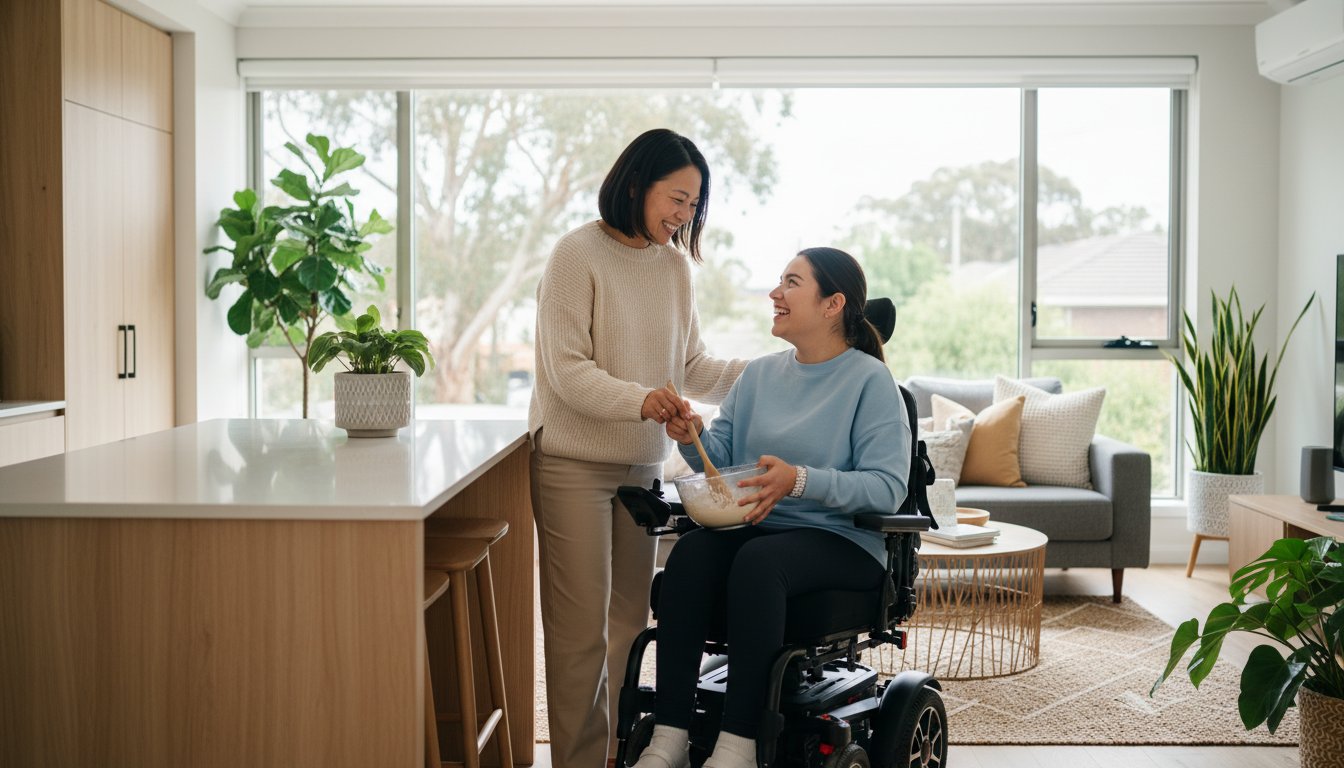
Imagine spending an hour travelling to and from a therapy appointment, only to find the skills learned in a clinic don’t quite fit into your life back home. The journey is tiring, the environment is unfamiliar, and translating exercises into daily routines feels like an extra challenge you just don’t need.
It’s a frustrating and common experience for many NDIS participants and their families. We understand that real progress happens in the real world, not just in a consulting room. This is where receiving compassionate and professional therapy at home can make all the difference. It’s about bringing dedicated support to you, on your terms, in the space where you feel most comfortable and respected.
This guide will show you exactly how mobile therapy transforms your personal environment into a powerful space for growth and independence. We’ll explore how this approach fits into a busy schedule, fosters genuine progress in a natural setting, and how your NDIS funding can make it all possible.
Key Takeaways
- Understand the clinical benefits of learning practical skills in your own familiar environment, making daily progress feel more natural and less stressful.
- Explore how a multidisciplinary approach to therapy at home, from Occupational Therapy to Community Nursing, can be tailored to support your unique goals.
- Gain clarity on how your NDIS plan’s “Improved Daily Living” budget can fund home visits, including what to expect from provider travel rules.
- Learn how choosing in-home support puts you in control, ensuring your care truly reflects the principle of “Your choice, your life, your way.”
What is Therapy at Home and How Does it Work Under the NDIS?
Receiving professional support shouldn’t mean sacrificing the comfort and familiarity of your own home. At its core, therapy at home is about bringing skilled clinical care directly to you. It represents a compassionate shift away from traditional, clinic-centric models towards a more personal and effective approach. Instead of you travelling to an unfamiliar environment, a qualified therapist-like an occupational therapist, physiotherapist, or behaviour support practitioner-comes to your primary residence. This ensures your therapy is delivered in the context of your real life, making it more relevant and impactful.
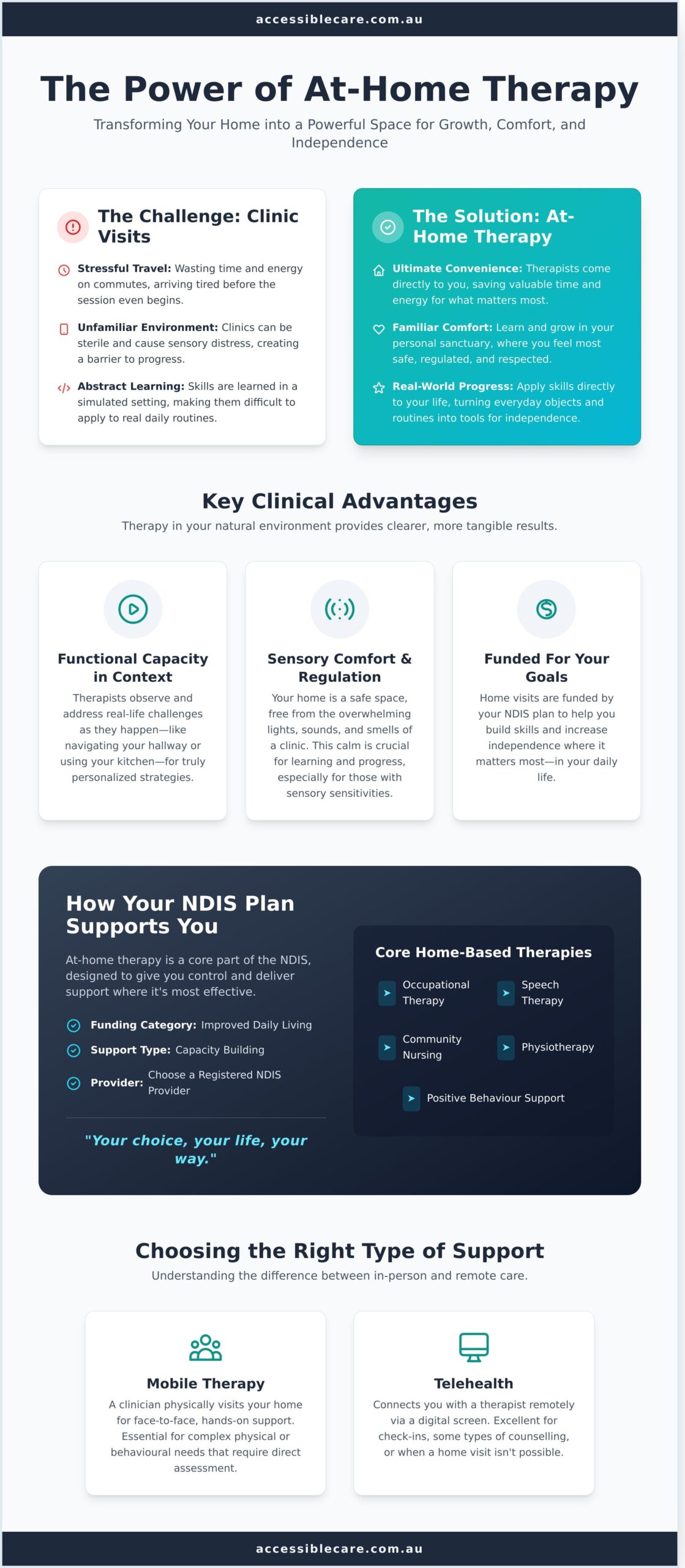
This person-centred philosophy is the heart of Australia’s disability support system. Funding for these essential services typically comes from the ‘Improved Daily Living’ category within a participant’s plan under the National Disability Insurance Scheme (NDIS). The scheme is built on the principle of giving you control over your support, empowering you to choose services that best meet your goals. It’s a perfect reflection of our guiding belief: Your choice, your life, your way.
Mobile Therapy vs. Telehealth: Understanding the Difference
While both offer convenience, it’s important to distinguish between mobile therapy and telehealth. Mobile therapy involves a clinician physically visiting your home in Melbourne or Adelaide for a face-to-face session. This is different from telehealth, which connects you with a therapist remotely via a digital screen. While telehealth can be excellent for check-ins or certain types of counselling, the hands-on nature of a home visit is often essential for participants with complex physical or behavioural needs that require direct, in-person support and assessment.
The Role of Registered NDIS Providers
Choosing a registered NDIS provider like Accessible Care is a crucial step in your journey. It provides peace of mind, ensuring that the services you receive meet the stringent safety and quality standards set by the NDIS Quality and Safeguards Commission. Registered providers are audited and held accountable, so you can trust that your care is compliant and delivered by qualified professionals. These services are funded through your NDIS plan’s Capacity Building supports, which are specifically designed to help you build skills, increase your independence, and achieve your personal goals. The NDIS is designed to be flexible, supporting therapy where it is most effective for you, and for many, that place is right at home.
The Clinical Advantages of Receiving Therapy in Your Natural Environment
A therapy clinic is a controlled space, but life happens outside its walls. True progress is measured not by what you can do in a sterile room, but by how you thrive in the familiar, and sometimes challenging, environment of your own home. Receiving therapy at home moves beyond theory and into real, tangible practice. It’s a compassionate approach that acknowledges your daily reality, reduces unnecessary stress, and provides a clearer path toward achieving your personal goals.
This method offers distinct clinical advantages because it’s built around your life, not the other way around. From the layout of your kitchen to the presence of your loved ones, every element of your home becomes part of a supportive and effective therapeutic process.
Functional Capacity in a Real-World Setting
In a clinic, a therapist might ask you to simulate climbing stairs or reaching for an item on a shelf. At home, these aren’t simulations; they are real-life moments. An Occupational Therapist at home can see the exact height of your countertops, the narrowness of your hallway, or the specific texture of a rug that poses a tripping hazard. This immediate, contextual insight allows for real-time problem-solving and tailored strategies that work for your space.
Home-based therapy turns every doorway and countertop into a tool for independence.
Sensory Comfort and Regulation
Clinical environments can be overwhelming. The fluorescent lighting, unfamiliar smells, and echoing sounds can cause sensory distress, particularly for individuals with autism or sensory processing disorders. This can create a significant barrier to progress. Your home, however, is your sanctuary. It’s a space where you control the lighting, the noise level, and the scents. This sensory comfort is a powerful foundation for effective therapy.
For participants receiving Positive Behaviour Support, a calm and familiar environment is crucial. When a person feels safe and regulated, they are far more receptive to learning new coping mechanisms and communication skills. It’s why children with ASD often show faster progress when sessions happen in their own “safe space,” surrounded by the things that bring them comfort and security.
This person-centred model also naturally involves family. When carers and loved ones are present during sessions, they don’t just hear about new strategies; they see them in action. They become active partners in the therapeutic journey, equipped with the knowledge to provide consistent support. This collaborative approach aligns with the official NDIS therapy support guidelines, which prioritise building a participant’s capacity within their daily life. By including family, we build a stronger, more resilient support network that fosters lasting independence. Understanding how these benefits apply to your unique situation is the first step, and our compassionate team is here to listen and discuss your goals.
Core Home-Based Therapies: Speech, OT, and Community Nursing
Receiving support at home means you have access to a dedicated, multidisciplinary team of professionals who work together to help you achieve your goals. This collaborative approach brings compassionate and skilled care right to your doorstep. We support participants across all stages of life, from helping children develop crucial skills to empowering adults and veterans to live with dignity and independence. Our qualified Allied health providers bring all the necessary portable equipment, ensuring your sessions are just as effective as they would be in a clinic.
One of the most common questions we hear is, “Can you really do everything at home that you do in a clinic?” The answer is yes, and often, we can achieve more. A clinical setting is simulated. Your home is real life. Practising skills in the exact environment where you need to use them makes progress more meaningful and lasting. This is the core advantage of receiving therapy at home.
Speech Pathology and Communication at the Dinner Table
Effective communication is the heart of connection. Our Speech Therapy services focus on real-world scenarios, like managing mealtimes safely and enjoyably. For participants with swallowing difficulties (dysphagia), our therapists can work with you in your own kitchen and at your dinner table to develop strategies. It’s about more than just exercises; it’s about restoring confidence in a fundamental part of daily life. For those using an AAC or communication device, practising in the place where conversations actually happen makes all the difference. We also provide dedicated support for adults with acquired brain injuries, helping them rebuild communication skills within their familiar social and family context.
Occupational Therapy for Independence and Safety
Occupational Therapy (OT) is about empowering you to participate in the activities, or ‘occupations’, that matter most to you. At home, this becomes incredibly practical. Our OTs can help you master fine motor skills through everyday tasks like getting dressed in your own bedroom or preparing a meal in your own kitchen. This approach is far more effective than simulating tasks in a clinic. We can also conduct assistive technology trials and assess the need for home modifications right where they will be used, ensuring solutions like grab rails or shower chairs are perfectly suited to your space and needs. For veterans, we create tailored OT programs designed to maintain independence and uphold dignity in the comfort of their cherished home.
Community Nursing and High Intensity Support
For participants with complex medical needs, our community nursing team provides professional, high-intensity support with the utmost respect and compassion. This can include wound care, medication management, catheter care, and other vital health services. Our nurses don’t work in isolation; they are an integral part of your holistic care team. They collaborate closely with your therapists to ensure your health is managed in a way that supports your therapy goals, creating a seamless and supportive health outcome. Receiving this level of professional care in the privacy of your own home provides a sense of comfort and dignity that is simply unmatched.
Navigating Costs, Funding, and Logistics for Home Visits
Understanding the practical side of arranging therapy at home can feel like a big task, but it doesn’t have to be. With clear information and a supportive partner, you can confidently manage the funding, scheduling, and preparation. We believe that accessing compassionate care should be straightforward, allowing you to focus on what truly matters: your goals and wellbeing.
Understanding Your NDIS Funding and Travel Allowances
For most NDIS participants, in-home therapeutic services are funded under the Capacity Building budget category, specifically “Improved Daily Living.” This part of your plan is designed to fund supports that help you build independence, skills, and community participation. It covers services from allied health professionals like occupational therapists, speech pathologists, and psychologists who can visit you in your own environment.
A key part of mobile therapy is accounting for a therapist’s travel time. The NDIS allows providers to claim for the time spent travelling to your home, ensuring skilled professionals can offer their services beyond a traditional clinic. This is a standard, transparent part of receiving support in your home. The amount a provider can claim is guided by the NDIS Pricing Arrangements and the Modified Monash Model (MMM), which classifies locations based on their regionality.
For participants in major cities like Melbourne and Adelaide (classified as MMM 1), providers can typically claim up to 30 minutes of travel time. In surrounding regional areas (MMM 2-3), this allowance increases to 60 minutes to account for the greater distances. These costs are always discussed and outlined before services begin. NDIS participants should verify travel charges in their service agreement to ensure plan sustainability.
Preparing Your Space for a Productive Session
Creating a calm and welcoming environment helps make every session as effective as possible. You don’t need a special room; a little preparation can turn a familiar space into a productive one. Establishing a consistent “therapy zone,” even if it’s just a particular corner of the living room, helps build routine and signals to the mind that it’s time to focus and engage.
Here is a simple checklist to prepare for your therapist’s first visit:
- Designate a quiet space: Choose an area with minimal foot traffic and distractions. A clear dining table or a small area on the floor can work perfectly.
- Reduce background noise: Turning off the television or radio helps improve focus for both you and the therapist.
- Manage pets: If your pets are likely to be a distraction, it’s a good idea to have them in another room or a secure space during the session.
- Have items ready: If there are any specific reports, communication devices, or activities you’d like to use, have them nearby.
Our compassionate therapists are guests in your home. They understand the importance of privacy and always work with the utmost respect for your personal space and dignity.
Flexible Scheduling That Fits Your Life
One of the greatest advantages of receiving therapy at home is the flexibility it offers. We understand that life is busy with work, school, and family commitments. Trying to fit appointments into a rigid 9-to-5 clinic schedule can add unnecessary stress. In-home therapy removes this barrier, bringing expert support directly to your door at a time that works for you.
Sessions can be scheduled after school to avoid disrupting a child’s education, during a lunch break if you work from home, or at other times that align with your family’s unique rhythm. This convenience ensures that therapy is a consistent and supportive part of your life, not a logistical challenge. To explore how we can create a schedule that works for you, please discuss your family’s needs with our care team today.
Why Accessible Care is the Preferred Choice for Home Therapy in 2026
Choosing the right support is about finding a partner who respects your autonomy and understands your world. At Accessible Care, our entire approach is built on one simple, powerful promise: “Your choice, your life, your way.” We believe that the most effective support happens in the environment where you feel most comfortable and confident, which is why we are dedicated to providing exceptional therapy at home. With deep local expertise and dedicated teams on the ground in Melbourne and Adelaide, we offer care that is not just professional, but personal and community-focused.
Our strength lies in our integrated, multidisciplinary team. Imagine your Speech Pathologist, Occupational Therapist, Behaviour Support Practitioner, and nursing staff all collaborating on your support plan. This isn’t just a collection of services; it’s a holistic network of care. It means the strategies your OT develops for daily living are reinforced by your behaviour support plan, and your communication goals are understood by everyone involved. This seamless approach ensures every aspect of your wellbeing is considered, leading to more consistent progress and a truly unified support experience.
Our Compassionate, Professional Team
Are you looking for a provider who genuinely listens and cares? Our team is our greatest asset. Our Speech Pathologists and Occupational Therapists bring a wealth of experience, with over 15 years of combined practice in both paediatric and adult care. This allows us to support individuals across their entire lifespan. We don’t just see a diagnosis; we see you. We take the time to understand your personal goals, whether it’s for your child’s development or your own journey toward greater independence. We also know that navigating NDIS can be overwhelming. Our dedicated support coordinators make the process stress-free by managing the paperwork and planning, so you can focus on what truly matters: your family’s wellbeing.
Getting Started with Accessible Care
We’ve designed our intake process to be as simple and reassuring as possible. Your journey with us follows three clear steps:
- Step 1: Initial Conversation. Reach out to our friendly team for a no-obligation chat about your needs and goals. We’ll listen carefully and answer all your questions.
- Step 2: Holistic Assessment. A dedicated therapist will visit you at home to conduct a comprehensive assessment. We look at the whole picture: your environment, your strengths, and your aspirations.
- Step 3: Tailored Support Plan. Based on the assessment, we co-design a person-centred support plan with you. This plan is a flexible, living document that adapts as your needs and goals evolve.
This commitment to personalised planning ensures the therapy at home you receive is perfectly aligned with your vision for a better life. Ready to take the next step towards empowered independence with a team that offers compassionate, professional care? Contact Accessible Care today for a consultation in Melbourne or Adelaide.
Your Journey to In-Home Support Starts Here
Receiving therapy in your own space isn’t just about convenience; it’s about achieving real progress in a setting that feels safe and familiar. We’ve seen how this approach leads to more meaningful outcomes and how NDIS funding makes it an accessible reality for so many. As we look towards 2026, this person-centred model is clearly the preferred path forward for compassionate, effective support.
Choosing the right provider is the most important step. At Accessible Care, a registered NDIS provider in Melbourne and Adelaide, our multidisciplinary team of Occupational Therapists, Speech Pathologists, and Community Nurses is dedicated to helping you reach your goals. We believe that the best therapy at home starts with listening to you.
Ready to feel supported in your own environment? Experience the comfort of therapy at home-contact Accessible Care today. Your choice, your life, your way.
Frequently Asked Questions About Therapy at Home
Is therapy at home more expensive than going to a clinic?
No, the cost is often very similar once you factor in travel. Our fees align with the NDIS Pricing Arrangements and Price Limits, ensuring fair and transparent pricing. While a therapist’s travel time is a billable expense under the NDIS, many participants find the total cost comparable to a clinic visit when they consider their own transport expenses, travel time, and the convenience of receiving dedicated care in a comfortable, familiar setting.
Can I use my NDIS funding for therapy at home?
Yes, you can absolutely use your NDIS funding for our services. If receiving compassionate therapy at home is considered ‘reasonable and necessary’ to help you achieve your goals, it can be funded through your plan. These services typically fall under the ‘Capacity Building’ support category, such as ‘Improved Daily Living’. Our dedicated team can help you understand how our services align with your specific NDIS plan and goals.
What areas of Melbourne and Adelaide do you cover for home visits?
We provide caring support across key regions in both cities. In Melbourne, our team covers the Eastern and South-Eastern Suburbs, Bayside areas, and the Mornington Peninsula. In Adelaide, we are proud to serve participants in the Adelaide Hills, Western and Southern Suburbs, and down to the Fleurieu Peninsula. If you’re unsure whether we service your specific location, please get in touch with our friendly team to confirm.
Do I need to provide any equipment for the home therapy sessions?
No, you don’t need to provide any specialised equipment for your session. Our skilled therapists arrive fully prepared with all the necessary clinical tools and resources they need to support you effectively. They are experts at integrating therapy into your daily life and may use everyday items in your home, like books, games, or furniture, to create practical and meaningful learning opportunities in a natural environment.
Can my child receive therapy at their school or childcare instead of home?
Yes, we believe in providing support where it’s needed most. Our therapists can visit your child at their school, kindergarten, or childcare centre. This approach allows for wonderful collaboration with your child’s educators and helps us support them in their everyday learning environment. We simply require written consent from both you and the facility’s management before scheduling the first visit to ensure everyone is working together.
How long does a typical home therapy session last?
A typical home therapy session is scheduled for 60 minutes. This time is structured to maximise progress and ensure clear communication. It generally includes 45-50 minutes of direct, one-on-one therapy focused on your goals, with the remaining 10-15 minutes dedicated to discussing progress, documenting the session, and planning the next steps with you or your family. This ensures you are always an active partner in the therapy process.
What happens if I need to cancel or reschedule a home visit?
We understand that things can change, and you can cancel or reschedule by giving us at least 48 hours’ notice. In line with the NDIS Price Guide, cancellations made with less than two full business days’ notice may incur a cancellation fee of 100% of the agreed session fee. We encourage you to contact our care team as soon as possible if your circumstances change so we can find a solution together.
Is home-based speech therapy effective for adults with brain injuries?
Yes, home-based speech therapy is highly effective for adults recovering from a brain injury. Being in a familiar, comfortable setting reduces stress and allows therapy to focus on real-world communication challenges. According to a 2021 review in the *American Journal of Speech-Language Pathology*, practicing skills like making phone calls or conversing with family in the actual environment where they occur significantly improves functional outcomes and helps rebuild confidence and independence.

