


Hearing the words ‘Motor Neurone Disease’ can feel overwhelming, leaving you and your family with more questions than answers. It’s a moment that can feel isolating, as you try to navigate complex information while coping with a wave of emotions. If you are asking, what is mnd?, please know you have come to a safe and supportive place to find clarity.
This compassionate guide is here to help. We will gently walk you through what the condition is, its key symptoms, and how it progresses, using simple language you can trust. Our goal is to replace uncertainty with understanding and show you how dedicated, person-centred support can help you or your loved one maintain independence, dignity, and quality of life. You are not alone, and with the right care, there is a path forward.
Key Takeaways
- Gain a clear, jargon-free understanding of what is mnd and how it affects the body’s ability to communicate with its muscles.
- Learn to recognise the early, often subtle, signs of MND and understand why the journey and progression of symptoms can be different for everyone.
- Prepare for the path ahead by learning what to expect from the diagnostic process and the emotional journey that follows.
- Discover how a compassionate, multidisciplinary support team helps manage symptoms, empowering you to live with dignity and independence.
Understanding Motor Neurone Disease (MND): A Simple Explanation
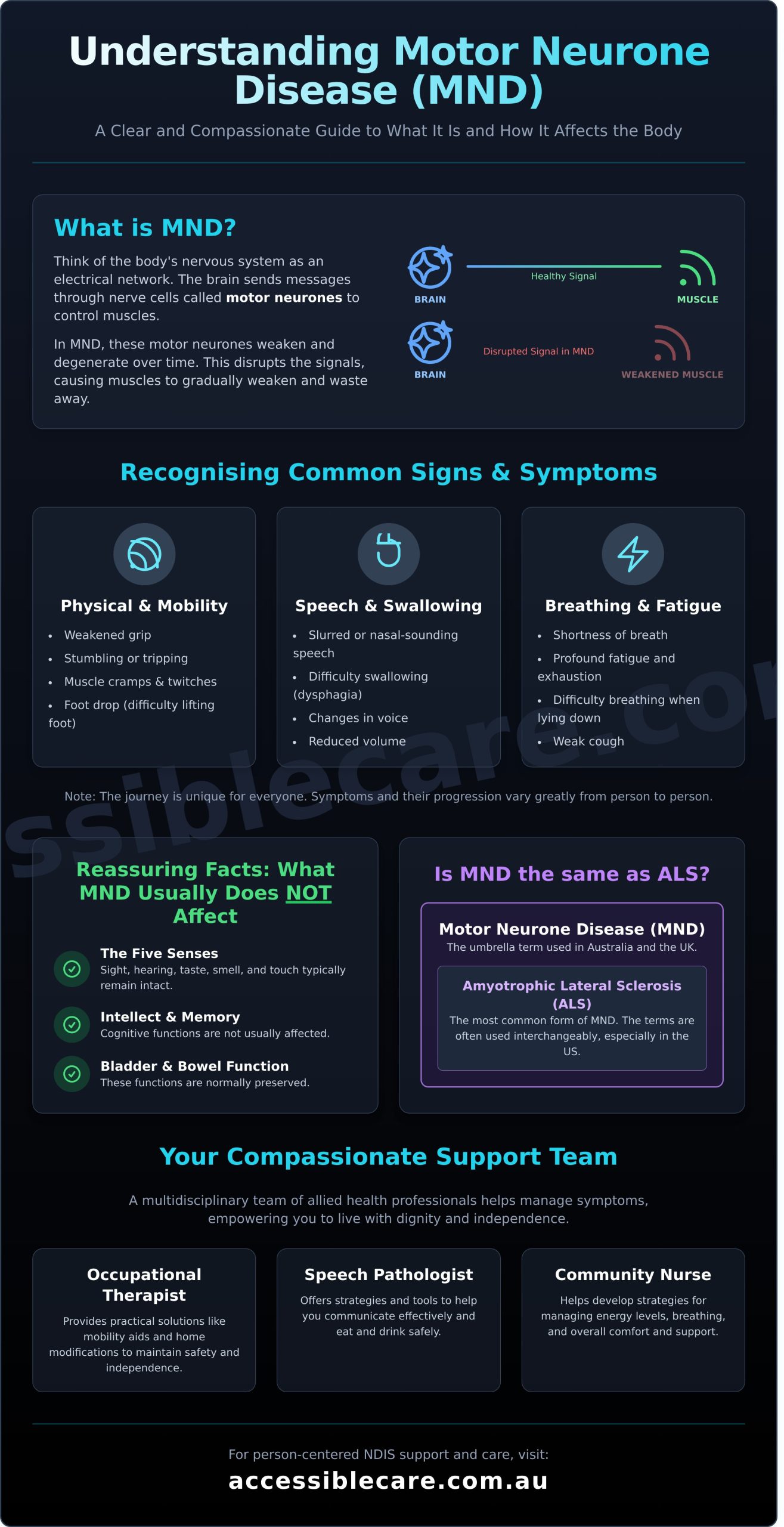
Receiving a diagnosis of Motor Neurone Disease (MND) can feel overwhelming, and one of the first questions many people ask is, “what is mnd?” In simple terms, MND is a condition that affects the nerves responsible for controlling our muscles. Think of your body’s nervous system as a complex electrical wiring system. The brain sends messages through these wires to your muscles, telling them what to do. In MND, this wiring system gradually becomes damaged, interrupting those vital signals.
It’s important to know that MND isn’t a single condition but a name given to a group of related Motor neuron diseases that cause the progressive loss of nerve cell function. While the journey is challenging, understanding the condition is the first step towards managing it with dignity and care. Please know that you are not alone, and a strong network of support is available to help you and your family every step of the way.
What are Motor Neurones?
Motor neurones are the specialised messenger cells that carry instructions from your brain to your muscles. They are essential for almost everything you do, from walking and lifting to speaking and swallowing. There are two main types: upper motor neurones (in the brain) and lower motor neurones (in the brainstem and spinal cord). They work together as a team to make your muscles move smoothly and effectively.
What Happens to the Body in MND?
When someone has MND, these vital motor neurone cells weaken, degenerate, and eventually stop working. Because the messages from the brain can no longer reach the muscles, the muscles begin to weaken and waste away over time. It’s also reassuring to understand what MND does not usually affect. For most people, the illness is limited to the motor system, meaning:
- The five senses of sight, hearing, taste, smell, and touch remain intact.
- The intellect and memory are not typically affected.
- Bladder and bowel function are usually preserved.
Is MND the Same as ALS?
You may hear the term Amyotrophic Lateral Sclerosis (ALS) used alongside MND, which can be confusing. ALS is simply the most common form of Motor Neurone Disease. In many parts of the world, especially the United States, the terms are used to mean the same thing. In Australia, MND is generally used as the umbrella term for this group of conditions, which includes ALS as well as other, rarer forms.
Recognising the Common Signs and Symptoms of MND
One of the most important things to understand about Motor Neurone Disease is that no two journeys are the same. The symptoms, their starting point, and the speed at which they progress can vary greatly from person to person. This variability is a core part of understanding what is mnd and why a person-centred approach to care is so vital. Symptoms often begin subtly, making them easy to overlook at first. As the National Institute of Neurological Disorders and Stroke explains, the condition affects motor neurones differently in each individual, leading to a unique pattern of challenges.
Physical and Mobility Changes
For many, the first signs are physical. You might notice changes that affect movement and coordination, which can gradually spread from one part of the body to another. Early signs often include:
- A weakened grip, making it hard to hold a pen or open a jar
- Stumbling or tripping more often
- Muscle cramps, stiffness, and noticeable twitches (fasciculations)
- Foot drop, where the front of the foot is difficult to lift
A dedicated occupational therapist can provide compassionate support, helping you find practical solutions like mobility aids and home modifications to maintain your independence and safety.
Changes to Speech and Swallowing (Bulbar Symptoms)
When MND affects the muscles in the face, throat, and tongue, it can impact communication and eating. This may lead to slurred or nasal-sounding speech (dysarthria), making it harder for others to understand you. Difficulty swallowing (dysphagia) can also occur, which requires careful management to prevent choking. A skilled speech pathologist is an essential partner in navigating these changes, offering strategies and tools to help you communicate effectively and eat safely.
Breathing and Fatigue
As the muscles that support your chest and lungs weaken, you may experience shortness of breath, especially when lying down. Another common and often challenging symptom is profound fatigue. This isn’t just normal tiredness; it’s an overwhelming sense of exhaustion that rest doesn’t always relieve. Community nurses and occupational therapists can work with you to develop strategies for managing your energy and breathing, ensuring you feel as comfortable and supported as possible.
The Journey After Diagnosis: What to Expect
Receiving a diagnosis of Motor Neurone Disease (MND) can feel overwhelming. It is a moment that changes things, not just for the person diagnosed but for their entire family. We understand that this time is filled with uncertainty and questions. While the path ahead may seem unclear, it’s important to know that a diagnosis is the first step towards proactively managing your health and building a dedicated support system to help you live with dignity and choice.
How is MND Diagnosed?
The journey to a diagnosis can sometimes take time, as there is no single test for MND. A neurologist, a specialist in the brain and nervous system, will typically make the diagnosis. They do this by carefully observing symptoms and conducting a series of tests to rule out other conditions with similar signs. According to the National Institute of Neurological Disorders and Stroke, this process of elimination is crucial for an accurate diagnosis. Common tests include:
- Electromyography (EMG) and Nerve Conduction Studies (NCS) to measure the electrical activity of muscles and nerves.
- Blood tests to check for other potential causes of your symptoms.
- Magnetic Resonance Imaging (MRI) to create detailed images of the brain and spinal cord.
Focusing on Quality of Life and Independence
Once the question of ‘what is mnd’ has been answered with a diagnosis, the focus can shift from uncertainty to action. This is the start of a new chapter—one centred on managing symptoms, maintaining independence, and prioritising your quality of life. At Accessible Care, we believe in a person-centred approach. This means your goals, your choices, and your definition of a good day are what guide your support plan.
Living well with MND is possible with proactive and compassionate support. By building a dedicated team of healthcare professionals, allied health therapists, and skilled carers, you can create a plan that empowers you to live the life you choose. Your journey is unique, and your care should be too. Our team is here to listen. Learn about our approach to care.
How Allied Health Support Makes a Difference in Living with MND
Living with Motor Neurone Disease (MND) is a journey that no one should face alone. While understanding what is MND involves learning about its challenges, it’s just as important to know about the incredible support available. A dedicated, multidisciplinary team of allied health professionals is key to managing symptoms and empowering you to live with comfort, dignity, and as much independence as possible. This collaborative approach focuses on creating tailored solutions that enhance your quality of life every day.
The Role of Speech Pathology
Communication and eating are fundamental parts of life. As MND progresses, a compassionate speech pathologist becomes a vital partner in maintaining these connections. They provide expert guidance to:
- Manage swallowing difficulties: By recommending texture-modified foods, drinks, and safe swallowing techniques, they help make mealtimes safer and more enjoyable.
- Preserve communication: They teach strategies to conserve vocal energy and clarity. When speech becomes more difficult, they introduce Augmentative and Alternative Communication (AAC) options, from simple letter boards to advanced eye-gaze technology, ensuring your voice is always heard. For these tools to work effectively online, websites must be properly designed, and you can check out Helplee to understand what digital accessibility entails.
How Occupational Therapy Helps Maintain Independence
An Occupational Therapist (OT) is a practical problem-solver focused on helping you continue participating in the activities that matter most. Their goal is to adapt your environment and routines to your needs. Support includes:
- Assistive technology: Prescribing equipment for daily tasks like dressing, bathing, and eating to make them easier and less tiring.
- Home modifications: Recommending changes like ramps, grab rails, or bathroom adjustments to improve safety and accessibility at home.
- Energy conservation: Developing personalised strategies to help you manage fatigue and prioritise your energy for meaningful activities.
To explore the types of assistive equipment and daily living aids available, you can visit FIVESTEP 五步健, a one-stop platform for rehabilitation products.
Maintaining muscle strength, flexibility, and overall fitness is crucial for managing MND symptoms. An exercise physiologist designs safe, individualised exercise programs to help you stay as mobile and independent as possible. Services like those offered by MoveMed often include hydrotherapy, where the buoyancy of water provides gentle resistance and support, making movement easier and helping to reduce pain and stiffness.
The Benefits of Exercise Physiology and Hydrotherapy
Community Nursing and High-Intensity Support
As care needs become more complex, skilled community nurses provide professional and reassuring support in the comfort of your own home. They are experienced in managing the specific health requirements of MND, offering peace of mind for you and your family. Their role often includes:
- Complex health management: Assisting with medication, nutrition, and other clinical needs.
- Respiratory care: Providing crucial support for breathing, including the use of non-invasive ventilation (NIV) machines.
- Care coordination: Acting as a central point of contact, liaising with your GP and other specialists, and providing education to ensure your family feels confident and supported.
This patient-centred model of care is recognised internationally; for example, providers like AVIAN Care in Hungary specialise in the kind of dedicated home nursing and physiotherapy that makes a significant difference for individuals and their families.
At Accessible Care, our dedicated team is here to build a support network that honours your choices and goals. To learn how we can help, please get in touch with our compassionate team today.
Navigating Your MND Journey with Compassion and Support
Facing a Motor Neurone Disease diagnosis can feel overwhelming, but knowledge and support are powerful tools. Understanding what is mnd and recognising its signs are crucial first steps. However, the most important takeaway is that you do not have to walk this path alone. With proactive management and the right allied health team, it is possible to maintain quality of life, adapt to changes, and continue pursuing your personal goals with dignity.
At Accessible Care, we provide that dedicated support. As a registered NDIS Provider in Melbourne and Adelaide, our experienced team of Speech Pathologists and Occupational Therapists offers a person-centred approach that always respects your choices and goals. We listen to your needs and work with you to create a tailored support plan. If you are ready to take the next step, we are here for a gentle and understanding conversation.
Contact us for a compassionate discussion about MND support services. Remember, this is your life and your journey. With a dedicated team by your side, you can face the future with confidence and support.
Frequently Asked Questions
Is there a cure for MND?
This is a difficult question, and at present, there is no cure for Motor Neurone Disease. However, this does not mean there is no hope or support available. Research is continually advancing, bringing new understanding to the disease. The focus of care is on managing symptoms and maintaining the highest possible quality of life, allowing individuals to live with dignity and purpose. A dedicated care team can help you navigate these options with compassion.
What is the life expectancy for someone with MND?
Life expectancy can vary significantly from person to person, as everyone’s journey with MND is unique. While the average is often stated as two to three years after diagnosis, many people live longer. It is more helpful to focus on living well and managing symptoms effectively. A positive approach supported by a compassionate care team, allied health professionals, and a strong support network can make a meaningful difference to your quality of life.
Is Motor Neurone Disease hereditary?
For the vast majority of people, MND is not hereditary. Around 90% of cases are known as ‘sporadic MND,’ meaning it occurs with no family history of the disease. Only a small number of cases, about 10%, are ‘familial MND,’ which is caused by a genetic mutation passed down through a family. If you have concerns about your family history, speaking with a GP or a genetic counsellor can provide clarity and peace of mind.
How is MND different from Multiple Sclerosis (MS) or Parkinson’s Disease?
While these conditions can share some symptoms, they affect the body differently. MND specifically damages the motor neurones, the nerve cells that control voluntary muscles like those used for walking, speaking, and breathing. In contrast, MS is an autoimmune disease that attacks the protective covering of nerves in the brain and spinal cord. Parkinson’s Disease primarily affects the brain’s ability to produce dopamine, leading to issues with movement, such as tremors and stiffness.
Can the NDIS provide funding for MND support services?
Yes, absolutely. In Australia, individuals with MND typically meet the eligibility requirements for the National Disability Insurance Scheme (NDIS). NDIS funding can be essential for accessing a wide range of supports tailored to your needs. This can include assistive technology to maintain independence, funding for personal care, therapeutic services like physiotherapy, and support coordination to help you manage your plan. We can help you navigate this process with confidence.
Are there any treatments available for MND?
While there is no cure, there are treatments and therapies that can help manage symptoms and significantly improve quality of life. Understanding what is mnd and how it affects you is the first step. Treatments often involve a multidisciplinary team, including physiotherapists to help with mobility, speech pathologists for communication and swallowing, and occupational therapists to adapt your home. There are also medications available that can help manage symptoms like muscle stiffness and slow progression for some people.

