


When everyday tasks-from making a cup of tea to getting dressed-start to feel like challenges, it’s natural to feel worried or overwhelmed. You might be wondering how to hold onto your independence after an injury, with a new diagnosis, or simply as you get older. In a world full of medical terms, understanding what is occupational therapy and how it can truly help can feel like another hurdle.
We’re here to make it simple. This compassionate guide was created to give you clear, supportive answers. We will gently explore what an Occupational Therapist does, see real-world examples of how they support people just like you, and show you how this person-centred care can empower you or your loved one to regain confidence and live life on your own terms. Let’s discover how you can get the right support to continue doing the things you love.
Key Takeaways
- At its heart, understanding what is occupational therapy is knowing it’s a partnership focused on helping you participate in the meaningful daily activities that bring you joy and independence.
- Occupational therapy supports people of all ages-from children to seniors-by creating a tailored plan that focuses on your personal goals, not just a diagnosis.
- The OT process is a collaborative journey where your therapist listens and works with you to achieve the outcomes you choose for your life.
- Discover how OT provides practical strategies and compassionate support to help you or your loved one build confidence and regain independence.
- Learn what to look for when choosing an occupational therapist in Australia to ensure you find a qualified, caring partner for your journey.
Defining Occupational Therapy: More Than Just a Job Title
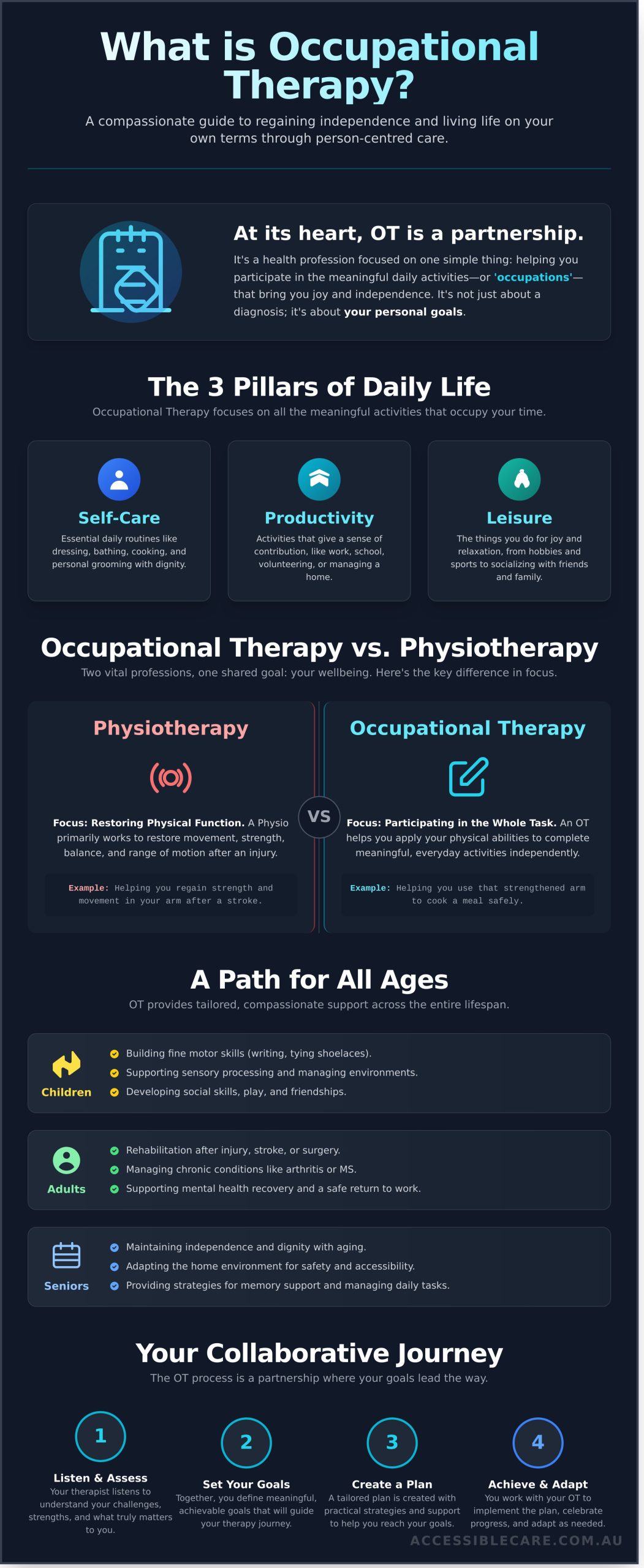
At its heart, occupational therapy (OT) is a caring, person-centred health profession dedicated to helping people do the everyday things that matter most to them. When an injury, illness, or disability makes daily activities challenging, an OT provides the practical support and guidance needed to overcome these barriers. So, what is occupational therapy in practice? Think of an Occupational Therapist as a compassionate and skilled coach for daily living, whose primary goal is to empower you to regain independence, build confidence, and participate fully in a life you choose.
The name can be a little misleading; it’s not just about jobs or employment. In the world of OT, the word ‘occupation’ refers to all the meaningful activities that occupy your time and bring purpose to your day. It’s a holistic approach that looks at the whole person, and you can Learn about Occupational Therapy on Wikipedia for a deeper understanding of its history and scope. These activities are unique to each individual, but they generally fall into three main areas.
What are ‘Occupations’ in Occupational Therapy?
An OT works with you to identify which occupations are most important for your wellbeing and independence. We support participants by breaking down these activities into manageable steps, focusing on building skills and confidence in:
- Self-care: Essential daily routines like dressing, bathing, cooking a meal, or managing your personal grooming with dignity.
- Productivity: The activities that give you a sense of contribution, such as attending school or work, volunteering in your community, or managing your home.
- Leisure: The things you do for joy and relaxation. This could be anything from gardening or playing a sport to socialising with friends and family.
How is Occupational Therapy Different from Physiotherapy?
It’s a common question, as both professions often work together to support your recovery. The simplest way to understand the difference is to look at their focus. A Physiotherapist primarily works to restore physical function and movement, such as rebuilding strength, improving balance, or increasing range of motion in a joint. An Occupational Therapist, on the other hand, focuses on helping you participate in the whole task. For example, a physio might help you regain strength in your arm after a stroke, while an OT will help you use that arm to cook a meal safely and independently.
Who Can Benefit From Occupational Therapy? A Path for All Ages
One of the most common questions we hear is, “what is occupational therapy, and who is it for?” The beautiful answer is that it’s for almost everyone. Occupational therapy (OT) is a deeply personal and supportive journey that helps people of all ages live their lives to the fullest, addressing both physical and psychosocial challenges. As the American Occupational Therapy Association explains, it focuses on the “occupations” or meaningful activities of daily life. The focus is always on your goals and your choices, not just a diagnosis.
Occupational Therapy for Children (Paediatric OT)
For children, OT is about building the foundational skills for a happy and engaged life. A compassionate paediatric OT partners with your family to support your child in navigating their world with confidence. This support is tailored to your child’s unique needs, whether they face physical, sensory, or developmental challenges.
- Helping with developmental milestones and fine motor skills, like learning to write or tie shoelaces.
- Supporting children with sensory processing disorders to better manage their environment.
- Assisting with social skills, play, and building friendships.
- Empowering children with conditions like autism or ADHD to thrive at school and at home.
Occupational Therapy for Adults
Life can present unexpected challenges. For adults, OT is a powerful tool for recovery and adaptation, helping you reclaim the activities that matter most. Whether you are recovering from an injury or learning to manage a long-term condition, an OT can provide practical strategies to restore function and confidence in your daily life.
- Rehabilitation after an injury, stroke, or surgery to regain skills for cooking, dressing, and self-care.
- Managing chronic conditions like arthritis or multiple sclerosis to conserve energy and reduce pain.
- Supporting mental health recovery by building healthy routines and engaging with the community.
- Assessing and modifying your workplace to support a safe return to work. This can involve collaboration with specialist firms, and companies like Safehouse Health and Safety Consultants Ltd offer a strong example of the types of professional health and safety services available.
In the case of acute issues like dental trauma, the first step is to address the immediate medical need; for example, you can explore Emergency Dental Services to see what’s involved, after which an OT can assist with adapting daily routines during recovery.
Occupational Therapy for Seniors
Maintaining independence and dignity is essential as we age. Occupational therapy for seniors focuses on creating safe, supportive, and fulfilling home environments. It’s about finding smart solutions to everyday challenges, allowing you to continue living in the place you love with confidence and security.
- Making practical home modifications to improve safety and prevent falls.
- Adapting daily tasks to manage changes in vision, memory, or mobility.
- Recommending assistive devices and technology to make life easier.
- Helping you stay connected to hobbies and social activities that bring you joy.
The Occupational Therapy Process: Your Journey with a Caring Partner
Beginning your journey with an occupational therapist (OT) is not about undergoing a clinical procedure; it’s about forming a supportive partnership. At the heart of this process is you-your story, your goals, and your choices. We believe in working with you, listening carefully to understand what matters most. This collaborative approach is central to answering the question of what is occupational therapy in a practical, meaningful way.
Your journey is a clear, three-step path designed to build confidence and restore independence, always with your OT as a dedicated guide by your side.
Step 1: The Initial Assessment and Conversation
Our first step is always a conversation. This initial assessment is less about testing and more about listening. Your OT will want to hear your story, understand your daily routines, and learn about the challenges you face. To get a true picture, they may visit you at home or school to see how you manage everyday tasks in your own environment. While they may use some standardised assessments to measure functional capacity, the main goal is simply to understand your unique needs and strengths.
Step 2: Setting Meaningful, Person-Centred Goals
Once we understand your situation, we work together to set meaningful goals. These are not our goals for you; they are your goals for your life. A goal might be something specific like, ‘I want to be able to cook my own breakfast safely,’ or broader, like, ‘I want to feel more confident joining community groups.’ We then break these bigger aspirations down into smaller, achievable steps, celebrating each success along the way and building momentum towards greater independence.
Step 3: Tailored Intervention and Support
This is where we put the plan into action with support tailored specifically for you. Your intervention plan is designed to empower you with the skills and confidence to achieve your goals. This support can include a range of strategies:
- Hands-on therapy: Practising daily tasks, learning new techniques, and building physical and cognitive skills in a supportive setting.
- Assistive technology: Recommending equipment-from simple dressing aids to specialised computer software-that makes life easier.
- Environmental modifications: Suggesting changes to your home or workplace, such as installing grab rails or reorganising a kitchen for better access.
- Family and caregiver training: Providing your support network with the knowledge and strategies to assist you effectively.
Real-Life Examples: How Occupational Therapy Changes Lives
The theory behind occupational therapy is important, but its true value shines through in the lives it changes. Understanding what is occupational therapy becomes much clearer when we see how it empowers people to overcome daily challenges and reclaim their independence. These stories show the compassionate, practical support that OTs provide every day.
Amelia’s Story: Thriving at School with Sensory Support
For young Amelia, the busy classroom was overwhelming. The constant noise made it hard to focus, leading to anxiety and difficult days. A compassionate occupational therapist introduced simple tools to help her manage. With noise-cancelling headphones for loud activities and a weighted lap pad for quiet work, Amelia found the calm she needed. Now, she can concentrate on her learning, participate with confidence, and truly enjoys her time at school.
David’s Story: Regaining Independence After a Stroke
After a stroke, David struggled with weakness on one side of his body, making simple tasks like dressing or preparing a meal feel monumental. His OT worked with him to relearn these skills in new ways. By teaching him one-handed techniques and introducing adaptive tools like a specialised cutting board, his OT helped restore his ability to care for himself. David’s renewed confidence and ability to live independently in his own home was a powerful step in his recovery journey.
Margaret’s Story: Ageing Safely and Comfortably at Home
Margaret loved her home but had grown fearful of falling in the bathroom. This constant worry was impacting her quality of life and causing her family stress. An OT completed a home assessment and recommended simple, effective modifications. With the installation of grab bars, a secure shower chair, and non-slip mats, Margaret’s fear vanished. She regained her confidence, and her family gained priceless peace of mind, knowing she was safe and secure.
Each of these stories provides a different answer to the question of what is occupational therapy, but they all share a common theme: enabling participation, dignity, and choice. It’s about finding personalised solutions that help you live your life, your way. If you or a loved one could benefit from tailored support, our experienced team is here to listen and help.
How to Find the Right Occupational Therapist for You
Beginning your journey with occupational therapy is a hopeful step towards greater independence. Finding the right therapist is just as important as understanding what is occupational therapy itself. The right professional will be more than a clinician; they will be a partner who listens to your story, respects your choices, and works collaboratively with you to achieve the goals that matter most.
In Australia, it’s essential to ensure any OT is fully qualified and registered with the Australian Health Practitioner Regulation Agency (AHPRA). This guarantees they meet strict professional standards. You can access OT services through various pathways, including the NDIS, a GP-referred Medicare plan, or your private health insurance.
What to Look for in an OT Provider
A great therapeutic relationship is built on trust and understanding. When searching for a provider, look for a team that demonstrates:
- Relevant Experience: They should have proven experience working with your specific age group, whether for paediatric or adult needs, and your particular condition or circumstances.
- A Person-Centred Approach: The focus should always be on you. A good OT empowers you to make choices about your own care and tailors every strategy to your unique goals and lifestyle.
- Clear Communication: You should feel heard, understood, and respected at all times. Look for a therapist who communicates with compassion, clarity, and a collaborative spirit.
Accessing Occupational Therapy through the NDIS
For NDIS participants, occupational therapy is one of the most common and valuable supports funded. It typically falls under the ‘Improved Daily Living’ category in your NDIS plan. An OT can conduct a Functional Capacity Assessment (FCA), a comprehensive report that helps the NDIA understand your support needs and can be vital for securing the right level of funding in your plan. Choosing an NDIS-registered provider ensures the highest standards of quality and safety in your care.
Your Path to Independence with Accessible Care
At Accessible Care, we are committed to providing compassionate, respectful, and person-centred care. Our dedicated team of experienced paediatric and adult occupational therapists in Melbourne and Adelaide is here to support you on your path to living the life you choose. We believe in building genuine partnerships based on trust and a deep understanding of your personal goals. Your choice, your life, your way.
Ready to take the next step? Contact us for a compassionate conversation about your goals.
Embrace Your Potential: Your Next Step with Occupational Therapy
Throughout this guide, we’ve seen that occupational therapy is a deeply personal and practical form of care, designed to help people of all ages participate in the activities that give their life meaning. It is a collaborative partnership focused on building skills, adapting environments, and restoring confidence. Understanding what is occupational therapy is the first powerful step toward reclaiming your independence and living a more fulfilling life.
If you are ready to explore how a tailored approach can support you or your loved one, our team at Accessible Care is here to listen. As a registered NDIS Provider with experienced paediatric and adult therapists, we serve the Melbourne and Adelaide communities with compassion and respect. We are dedicated to empowering you to live the life you choose.
Start your journey to greater independence. Get in touch with our caring team today.
Frequently Asked Questions About Occupational Therapy
Do I need a doctor’s referral to see an occupational therapist?
In Australia, you do not need a doctor’s referral to see an occupational therapist privately. You can contact a provider and schedule an appointment directly. However, a referral from your GP is necessary if you wish to access rebates through certain government schemes, such as a Chronic Disease Management (CDM) plan under Medicare. We recommend discussing your needs with your doctor to explore all available funding pathways and ensure collaborative care.
How is occupational therapy funded? Can I use my NDIS plan?
Yes, occupational therapy can be funded through your NDIS plan if it is considered a ‘reasonable and necessary’ support to help you achieve your goals. Funding can also come from other sources, including private health insurance (check your extras cover), Medicare rebates with a GP referral, or a Home Care Package for older Australians. We are here to help you understand your options and navigate the funding process with clarity and support.
What happens in a typical occupational therapy session?
A typical session is highly personalised and collaborative, reflecting what is occupational therapy at its core: helping you do the things you want and need to do. A session may involve practising daily tasks like cooking or dressing, learning new strategies to manage energy, modifying your home environment for safety, or exploring assistive technology. For children, therapy is often play-based, focusing on developing motor skills, sensory processing, and social interaction in a fun, supportive way.
How long will I or my child need to see an occupational therapist?
The duration of therapy is unique to each person and is based on your specific goals, needs, and progress. Some people may only need a few sessions to learn a new strategy or get recommendations for equipment. Others with more complex goals may benefit from longer-term support. Your compassionate therapist will work with you to create a tailored plan, and the length of service is always a collaborative decision, empowering you to choose what’s best.
Can occupational therapy help with mental health conditions like anxiety or depression?
Yes, absolutely. Supporting mental wellbeing is a key part of occupational therapy. Our therapists can help you develop practical coping strategies, build healthy routines, and re-engage in meaningful activities that bring you joy and a sense of purpose. By focusing on the connection between what you do every day and how you feel, we can support you in managing symptoms of anxiety or depression and improving your overall quality of life with dignity and respect.
What is a Functional Capacity Assessment and why do I need one for the NDIS?
A Functional Capacity Assessment (FCA) is a comprehensive report written by an occupational therapist. It provides a detailed picture of your abilities, challenges, and support needs across all areas of your life, from personal care to community participation. For the NDIS, an FCA is crucial evidence that demonstrates how your disability impacts you. It helps justify the funding you request in your plan by clearly showing which supports are ‘reasonable and necessary’ to help you achieve your goals.

