


What if nursing support at home could fit around your disability-related needs and everyday routines, rather than disrupt them? If you’re exploring NDIS community nursing services, it can be difficult to understand how nursing relates to your disability support needs, how your plan may apply, and how support might work alongside care you already receive.
Community nursing can provide support at home, including when recovery after surgery is part of the picture. However, not every nursing need or post-surgery service is funded by the NDIS. The connection to your disability-related needs, goals and plan matters.
This article explains what community nursing can mean in practice, what to consider when disability support and post-surgery recovery overlap, and how to think about plan fit and coordinating support at home. Accessible Care is a registered NDIS provider offering community nursing in clients’ homes in Melbourne and Adelaide, including support for people with complex medical and disability needs. Knowing what to consider can help you prepare for a focused conversation about the next step.
Key Takeaways
- Learn how ndis community nursing services may relate to disability support needs and goals at home.
- Understand why the right nursing approach depends on personal needs, practitioner scope and the home environment.
- See how disability-related nursing support can differ from general post-operative medical care, and why NDIS funding isn’t automatic.
- Prepare for a useful planning conversation by noting support needs, goals, plan details and daily routines.
- Explore how Accessible Care provides community nursing at home and high-intensity support in Melbourne and Adelaide.
When do NDIS community nursing services make sense at home?
A change in health can bring new nursing needs and raise questions about what support belongs at home, what relates to disability, and where to begin. NDIS community nursing is home-based nursing support connected to a participant’s disability-related needs. It may be relevant when those needs are complex or ongoing and nursing support could help the person maintain daily routines and independence.
The National Disability Insurance Scheme (NDIS) provides funding for eligible disability-related supports. Whether nursing support fits depends on the person’s circumstances, their plan and current NDIS rules. A service taking place at home does not, by itself, make it an NDIS-funded support.
How is NDIS community nursing different from general home nursing?
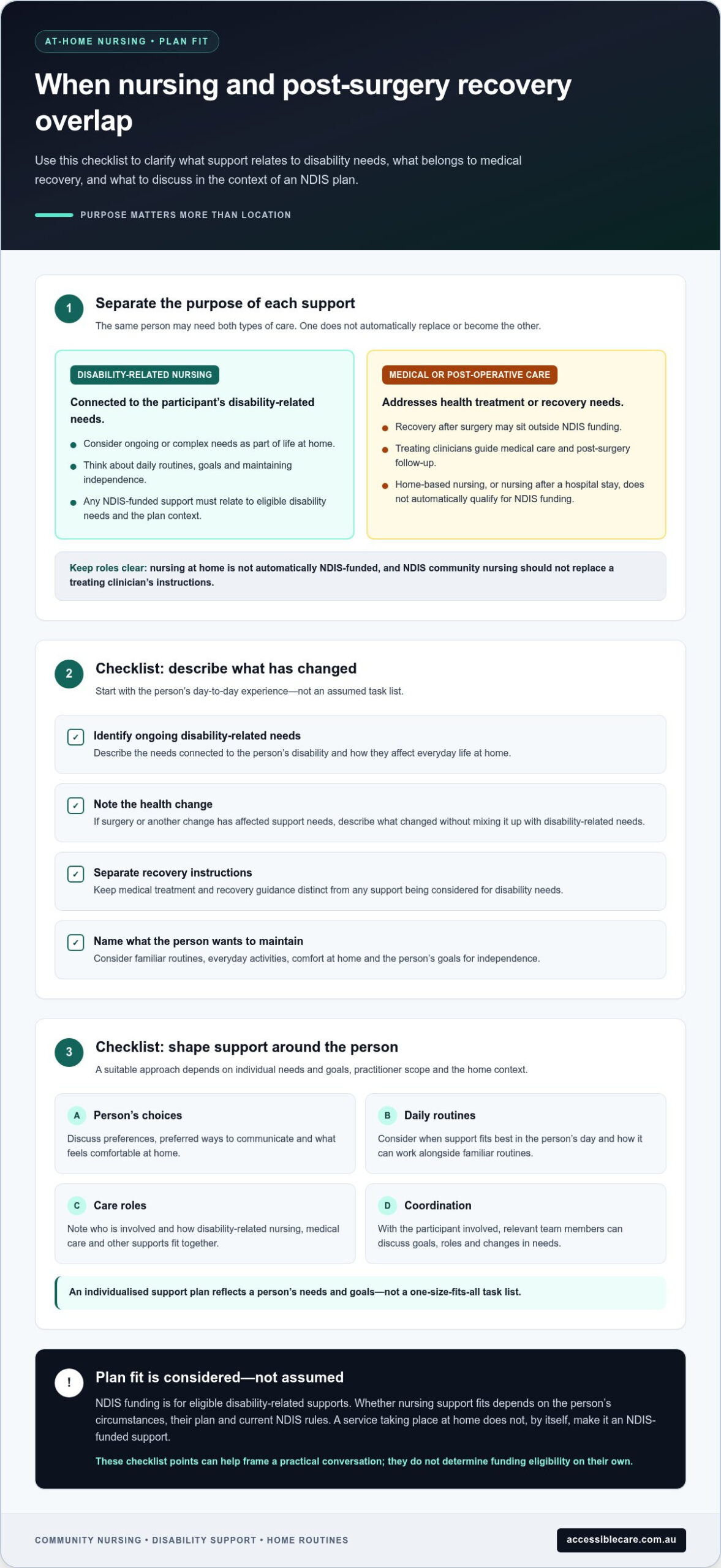
The key distinction is the purpose of the support. NDIS community nursing relates to a participant’s disability support needs. General medical care and post-operative care address health treatment or recovery needs, which may sit outside NDIS funding. The same person may need both types of care, but one does not automatically replace or become the other.
For example, a participant may have ongoing disability-related health needs and also be recovering from an operation. Their plan and individual circumstances matter when considering which supports may be eligible. Nursing at home, or nursing after a hospital stay, does not automatically qualify for NDIS funding.
Community nursing should not replace the instructions or follow-up provided by the person’s treating clinician after surgery. If recovery and disability support overlap, keep the roles clear: treating clinicians guide medical care, while any NDIS-funded nursing support must relate to eligible disability needs and the plan context.
When might home-based nursing support be relevant?
Home-based nursing may be worth exploring when a person has complex medical and disability needs that call for nursing support as part of life at home. Consider how support could fit the individual, their goals and their usual routines, rather than assuming everyone needs the same approach.
Start with the day-to-day impact. Are disability-related health needs making it harder to follow familiar routines or remain as independent as possible at home? Has a health change, including surgery, affected the support the person needs? These questions can help clarify what has changed and what the person hopes to maintain.
- Describe the ongoing needs connected to the person’s disability.
- Separate those needs from medical treatment or recovery instructions related to surgery.
- Consider how support could fit the person’s goals and home routines.
These details can help frame a practical discussion about support, but they do not determine funding on their own. NDIS community nursing services need to be considered against the person’s circumstances, plan and current rules. When needs overlap, understanding the purpose of each type of support is a helpful starting point.
What can NDIS community nursing support involve at home?
At home, nursing support should reflect the person, not a standard checklist. Accessible Care provides community nursing in clients’ homes and high-intensity support for people with complex medical and disability needs. The support approach depends on the person’s needs and goals, the practitioner’s scope and the home context. A service description alone cannot determine what is right for an individual.
An individualised support plan is shaped around a person’s needs and goals, not a one-size-fits-all task list.
For a useful conversation about NDIS community nursing services, consider what the person wants support to help them do in everyday life. Their preferences, routines and comfort at home matter. It is also useful to understand who is involved in their care and how different support roles fit together.
How support can fit a person’s daily routines
The person should have a meaningful say in how support is delivered. Their goals might include maintaining a familiar routine, taking part in everyday activities or becoming more involved in decisions about their care. Discuss preferred ways to communicate, what feels comfortable at home, and when support best fits the person’s day. These details help keep the person’s choices central.
Illustrative scenario: A participant with complex disability-related needs wants support to fit around a regular morning routine. They can explain what matters to them and discuss an approach that takes their preferences and home setting into account. This example shows how planning can reflect a person’s goals; it does not promise a particular outcome or clinical task.
When complex needs call for coordinated support
When several people contribute to a participant’s care, clear communication can help everyone understand the person’s goals and their own role. With the participant’s involvement, relevant team members can discuss the support approach and any changes in needs. This can reduce confusion between disability-related nursing and other care. For information about the NDIS and its supports, consult the official NDIS website.
High-intensity support may be relevant for people with complex medical and disability needs, but the label alone does not describe what support an individual will receive. The person’s circumstances and the practitioner’s scope shape the approach. You can also explore this guide to NDIS high-intensity supports for related context.
Before discussing support, note the person’s everyday goals, preferred routines, home context and who is already involved in their care. These points offer a practical starting place for exploring home-based community nursing support that respects the person’s choices and independence.
How to assess NDIS plan fit when nursing and post-surgery recovery overlap
It can be difficult to separate disability-related support from care needed because of an operation, especially when both affect life at home. Start by identifying the purpose of each support, then consider how it connects with the participant’s disability-related needs, goals and NDIS plan.
NDIS community nursing is not automatically funded simply because care happens at home. Funding depends on current NDIS rules, the individual’s circumstances and their plan context. The comparison below can help organise questions, but it cannot confirm eligibility or guarantee that a support or claim will be approved.
Disability-related nursing support
Consider whether the support relates to the participant’s disability needs and helps address goals or everyday functioning. Its fit depends on individual circumstances and the supports described in the plan.
General post-operative medical care
Care focused on treatment or recovery after surgery is guided by the relevant treating clinicians. Being delivered at home does not automatically make it an NDIS-funded support.
What questions help clarify whether support fits an NDIS plan?
Rather than starting with a list of nursing tasks, describe why support is needed and what the participant wants it to help them do. This makes it easier to discuss the connection between disability-related needs, personal goals and daily life. Keep the person’s perspective central, including their preferences about support at home.
It may help to write down:
- Which needs are ongoing and connected to the person’s disability?
- How do those needs affect everyday routines or participation?
- What has changed since surgery, and what recovery guidance have treating clinicians provided?
- What relevant recommendations or information has the care team shared?
These notes can make a planning conversation clearer, but they do not establish funding eligibility. For current rules and support-item details, refer to the NDIS website, as guidance and arrangements may change. Questions about provider quality and safeguards can also be explored through the NDIS Quality and Safeguards Commission.
How do post-surgery needs differ from ongoing disability-related support?
After surgery, treating clinicians remain responsible for recovery instructions and treatment decisions. Any NDIS community nursing services being considered should be assessed separately, based on whether they relate to the participant’s disability support needs and plan. A person may have both recovery needs and ongoing disability-related needs at the same time, but those purposes should not be treated as identical.
For example, surgery may temporarily change how someone manages familiar routines. A useful discussion can distinguish clinician-directed recovery from ongoing disability-related support that may help the person work towards their goals at home. Keep relevant recommendations together and check current official NDIS information before making funding decisions. A clear picture of needs, goals and plan context helps guide the next conversation with a community nursing provider.
How to Prepare for NDIS Nursing in Melbourne or Adelaide
Preparing for a conversation about support is easier when you have a few clear notes in front of you. You do not need to have every detail worked out. Start with what is happening at home, what matters to the person and what they would like support to help with.
Accessible Care provides community nursing at home in Melbourne and Adelaide. Before discussing ndis community nursing services, gather relevant information and consider how support might fit the person’s routines and preferences.
What information is useful before discussing support?
Bring together details that explain the person’s day, support priorities and any recent changes in their needs. Relevant plan information and care instructions can help keep the discussion grounded in the person’s circumstances. Share sensitive health information through appropriate, private channels rather than including it in general messages or documents.
- Describe current needs. Note what support is needed at home and what has changed, if anything.
- Identify goals. Write down what the person wants to maintain or work towards in everyday life.
- Gather relevant details. Have useful NDIS plan information and care instructions available for discussion.
- Talk through routines. Consider the person’s usual day, preferred arrangements and any practical features of the home that may affect support.
These notes are not a funding decision or a substitute for clinical guidance. They help make the conversation specific, so the person’s needs and priorities are easier to understand. If you’re still getting familiar with the scheme, Accessible Care’s guide to the NDIS offers background for participants and families.
How can support be shaped around home and personal preferences?
Start with the person’s view. What does independence look like to them? What would make a day feel manageable or meaningful? Their answers can clarify which routines matter, how they prefer to communicate and how they want to be involved in decisions about support.
Home context is personal. The layout, usual activities and presence of family or other supports can all be useful to discuss, without assuming one household is like another. Practical arrangements should reflect the individual’s needs and goals and be shaped in conversation with them. Their preferences matter, including how support fits around familiar routines.
If you’re in Melbourne or Adelaide and considering nursing support at home, talk with Accessible Care about home-based community nursing. Sharing your priorities and relevant plan details can help start a clear, person-centred discussion.
Explore Accessible Care’s NDIS community nursing in Melbourne and Adelaide
Choosing support at home is a personal decision. You may be weighing complex needs, existing care and what matters most to the participant in everyday life. Accessible Care is a registered NDIS provider serving Melbourne and Adelaide, with community nursing delivered in clients’ homes and high-intensity support for people with complex medical and disability needs.
Start with the person, not a pre-set list of tasks. Their goals, preferences and home routines can help shape a support conversation. Participants should have space to explain what they want help with and how they would like to be involved in decisions.
NDIS community nursing services may be part of a broader support picture, but funding depends on the participant’s circumstances, plan and current NDIS rules. A conversation can help explore needs and possible support arrangements, but it cannot promise a funding decision or make general post-surgery care automatically NDIS-funded.
What a first conversation can focus on
Begin with what matters most to the participant. What would they like to maintain in daily life? Which routines feel important? What has changed in their needs, and what support are they already receiving? Sharing relevant NDIS plan context can make the discussion more specific.
It may also help to describe the home environment and preferences that affect how support feels comfortable and practical. The participant can share their views directly, with family or other supporters involved if they choose. There is no need to have every answer ready. A clear account of priorities and questions is a useful beginning.
Where nursing needs overlap with recovery after surgery, keep the purpose of each support clear. Treating clinicians guide medical treatment and recovery instructions. Any potential NDIS support needs to be considered in the context of disability-related needs and current plan rules. The conversation can clarify what the participant hopes to achieve without implying that a particular service or funding outcome is assured.
A supportive path forward for participants and families
Families can help share important context, but the participant’s preferences should remain central wherever possible. Ask how they want to take part, what information they would like considered, and what a respectful approach at home looks like to them. Details about communication and routine can help keep support aligned with the person.
For some participants, home-based community nursing may sit alongside broader disability support. For people with complex medical and disability needs, high-intensity support may also be relevant. The right discussion depends on the individual’s needs, goals and circumstances. It should leave room to understand what matters to the person and explore support thoughtfully.
If you’re in Melbourne or Adelaide and would like to discuss your situation, talk with Accessible Care about support at home. Share what matters most, ask your questions and take the next step at a pace that feels right for you.
Take the next step at your own pace
Choosing support does not require having every answer today. A useful next step is to write down what the participant wants to keep doing, what feels difficult at home and what they would like to discuss. These priorities can make future conversations more focused and keep the person’s voice at the centre.
As you consider ndis community nursing services, keep the purpose of each support clear. Disability-related needs, personal goals and NDIS plan context all matter, particularly when nursing needs sit alongside post-surgery recovery. Funding is not automatic, so take time to consider the person’s circumstances and current NDIS guidance.
Accessible Care is a registered NDIS provider, with community nursing in clients’ homes across Melbourne and Adelaide. If you’re ready to talk through what matters to you, talk with Accessible Care about NDIS community nursing. Start with your questions and priorities, and take the next step by getting in touch with Accessible Care.
Frequently Asked Questions
What are NDIS community nursing services?
NDIS community nursing services are nursing support delivered in the community, including in a participant’s home, where the support relates to disability needs. The practical arrangement depends on the person’s situation, goals and the scope of the nursing support. For example, a participant may discuss how support could fit around a regular daily routine. The service’s name alone does not determine what support is suitable or funded.
Can NDIS community nursing help after surgery?
It may be relevant if the person also has disability-related nursing needs, but surgery alone does not make recovery care an NDIS support. The surgeon or other treating clinician remains the source for post-operative treatment instructions and decisions. If the participant’s disability needs affect their usual support at home during recovery, describe both needs clearly and consider them separately. Funding depends on current NDIS rules and the person’s plan circumstances.
Is community nursing funded by the NDIS?
It may be funded when the support meets applicable NDIS requirements and fits the participant’s individual circumstances and plan. Funding is not automatic just because nursing takes place at home or is provided by a nursing service. Before making arrangements, review current NDIS guidance and relevant plan information. If a need has changed, record what support is sought and how it relates to the participant’s disability-related goals.
Who can access NDIS community nursing services?
Access depends on a person’s NDIS eligibility, assessed needs and plan context. Community nursing may be considered for participants whose disability-related needs involve complex medical or support requirements, but having a health condition does not automatically mean a person qualifies for nursing funding. A useful first step is to identify the disability-related need, its effect on everyday life and any relevant information already included in the plan.
What nursing support can be provided at home?
The support that may be appropriate depends on the participant’s needs and goals, the home situation and the practitioner’s scope. Rather than assuming a standard set of nursing tasks, describe the support need and discuss how it relates to the person’s circumstances. Accessible Care provides community nursing in clients’ homes, including for people with complex medical and disability needs. Specific clinical activities should be described only where they have been assessed and agreed.
How do I arrange NDIS community nursing in Melbourne or Adelaide?
Start by noting the participant’s support priorities, relevant plan details and preferred home routines. Contact Accessible Care to discuss those needs and the proposed support arrangement in Melbourne or Adelaide. Keep sensitive health documents private and share relevant information through suitable channels. Before support begins, make sure you understand what has been discussed, how it relates to the participant’s goals and what remains subject to plan funding.
Can NDIS community nursing support complex needs at home?
It can be part of support for people with complex medical and disability needs, depending on the individual’s circumstances and the nursing support required. Accessible Care provides community nursing at home and high-intensity support for complex needs. The person’s goals and preferences should guide planning, while practitioners work within their scope. Consider how the support fits with existing care arrangements so everyone involved has a clear understanding of their role.

