

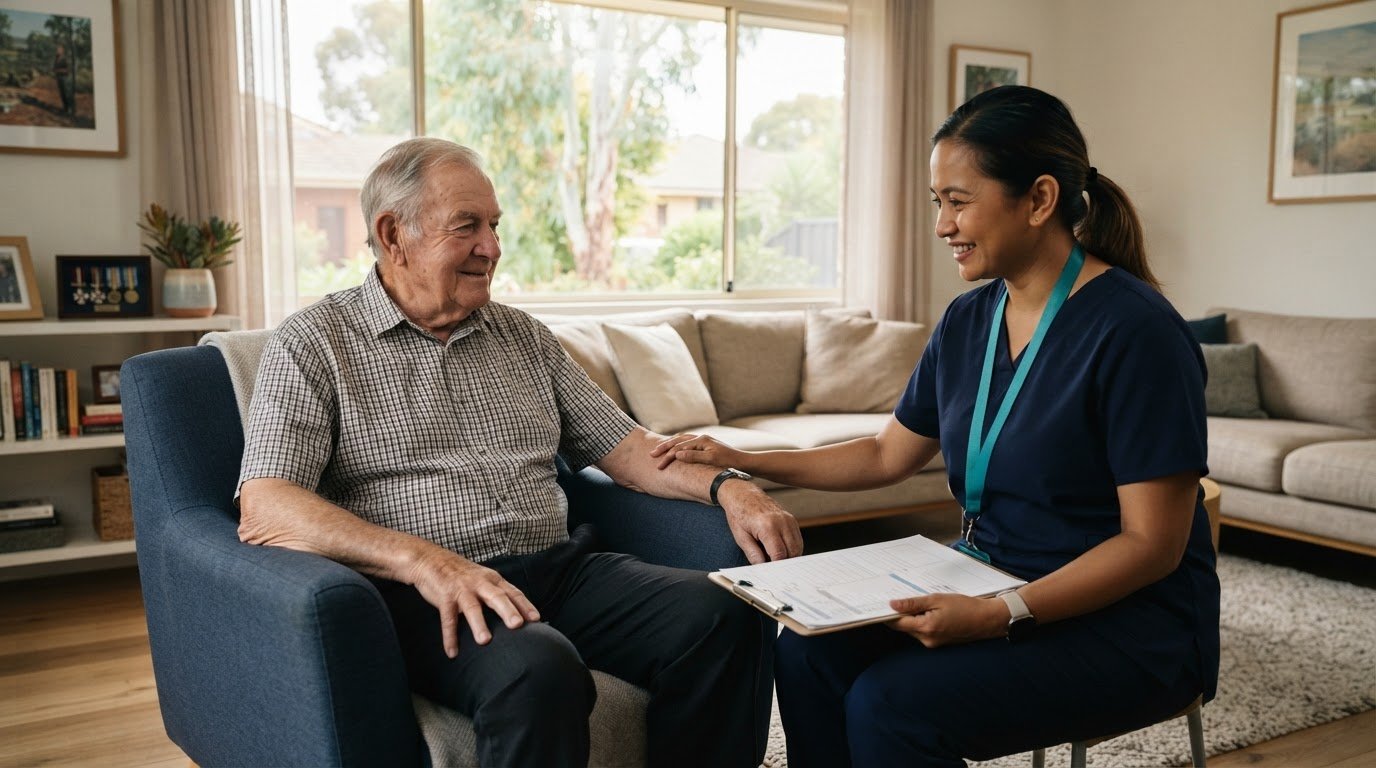
For veterans in Adelaide, DVA Community Nursing funds clinically required nursing and personal care at home for eligible clients, following an assessment of their nursing needs. Access generally starts with a written referral from an authorised referrer, such as a GP, treating medical practitioner, specialist or nurse practitioner. These home nursing services for veterans in Adelaide are distinct from Veterans’ Home Care, which focuses on lower-level help at home.
It’s understandable to want clear answers about what support is available, who may qualify and how referrals work. This guide explains how the DVA Community Nursing Program operates, what care may include and how it differs from Veterans’ Home Care. You’ll also find practical information about eligibility, funding and personalised care plans to help you understand the options and decide what may suit your circumstances.
Key Takeaways
- Understand how an assessed nursing care plan reflects a veteran’s needs, and why it should be reviewed when those needs change.
- Learn how DVA Community Nursing eligibility differs for Gold Card, White Card and Veteran Card – Specific Conditions holders.
- See what personal care at home may involve, including support with showering, dressing and other daily hygiene needs.
- Compare clinically required nursing with Veterans’ Home Care, which can help with household tasks and other low-level support.
- Explore how clinical care and allied health support at home can contribute to a veteran’s independence and daily wellbeing.
Personalised nursing care plans
Yes. DVA Community Nursing funds clinically required nursing and personal care at home for eligible clients after an assessment of their nursing needs. Veterans’ Home Care is a separate, low-level support program with different services and eligibility.
Personalised care planning
A nursing care plan records the care a veteran needs and how it will be delivered at home. Before DVA Community Nursing begins, veterans review and sign their plan.
The plan should reflect the person’s assessed needs, routines and preferences. Regular reviews and updates when health needs change help keep care relevant while respecting dignity and choice.
Eligibility and assessment
Veterans’ Home Care provides eligible veterans and dependants with low-level assistance at home. To determine eligibility and arrange an assessment, contact the VHC Assessment Agency on 1300 550 450.
An assessment identifies the support needed, such as personal care or domestic assistance. Eligibility and approved support depend on the program’s requirements and the person’s assessed circumstances.
DVA funding and VHC contributions
DVA funds eligible DVA Community Nursing services, with no out-of-pocket cost to the veteran. This applies to clinically required care within the program, not every type of home care.
Some Veterans’ Home Care services involve a small co-payment. Because the programs fund different types of support, distinguish clinical nursing from household help when considering possible contributions.
What the assessment considers
DVA Community Nursing includes an assessment of nursing needs. This helps determine the clinically required support, which may include wound care, medication management or personal care at home.
A clear care plan lets the veteran understand the agreed support before services start. If health needs change, the plan can be reviewed and updated to reflect them.
Choosing a DVA home care provider
For home nursing services for veterans in Adelaide, understand how DVA Community Nursing differs from Veterans’ Home Care. The distinction matters because clinical nursing and low-level domestic assistance meet different needs and follow different funding pathways.
A useful care discussion links the referral, assessed needs and signed plan. For example, a veteran who needs wound care needs a plan that describes the nursing support, not a household-help arrangement.
Recognising veteran-specific care experience
Veteran-focused care involves understanding DVA referrals, card-related eligibility and the difference between clinically required nursing and household support. These details shape how care needs are assessed and planned.
In Adelaide, a written care plan, a clear explanation of the assessment and reviews when needs change help keep support person-centred. These steps also let veterans and families take part in care decisions.
DVA Community Nursing Program
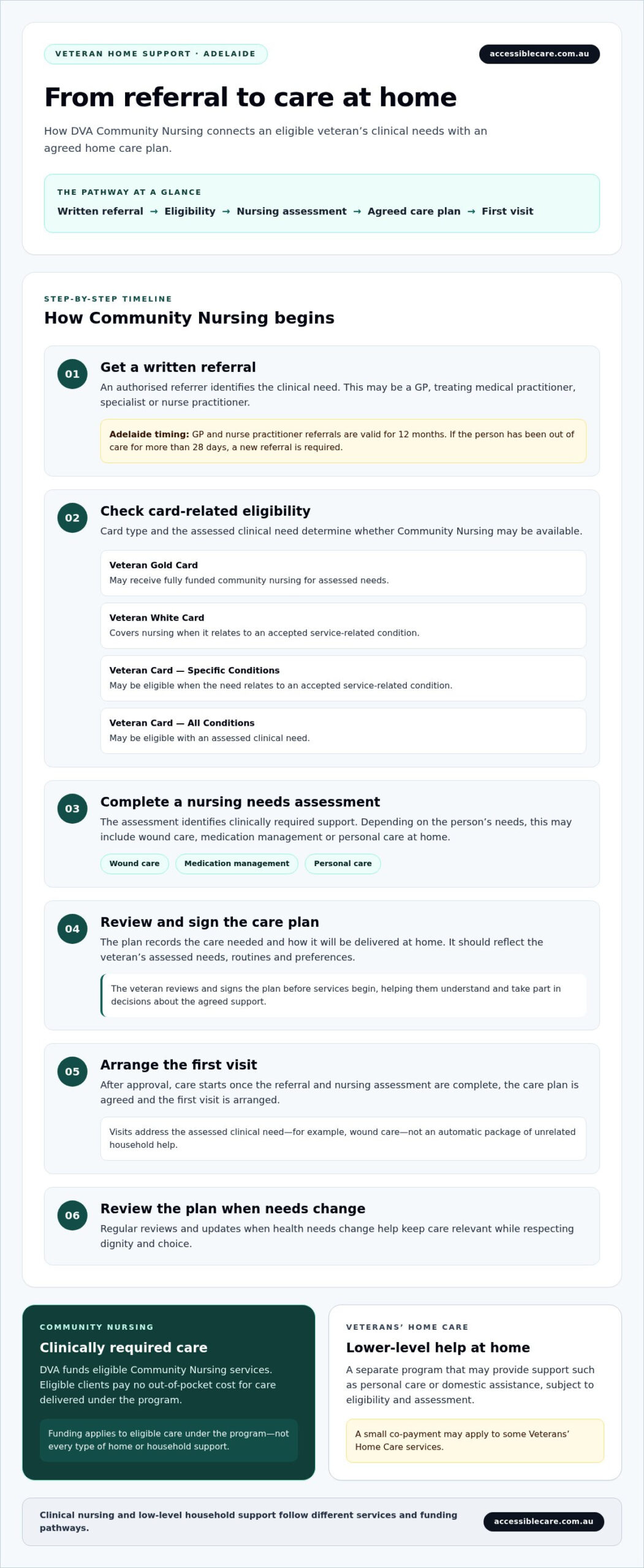
In Adelaide, eligible veterans may receive clinical nursing and personal care at home through DVA Community Nursing. Services may include wound care, medication management, hygiene, showering and dressing. After approval, care starts once the referral and nursing assessment are complete, the care plan is agreed and the first visit is arranged.
Program cost coverage
DVA funds eligible Community Nursing services, so veterans, war widows and widowers pay no out-of-pocket cost for this care. This applies to care delivered under the program, not every type of household or personal support.
A small co-payment may apply to some Veterans’ Home Care services. This program can help with lower-level support at home, while Community Nursing addresses clinically required nursing and personal care. Knowing the difference helps families understand what DVA funding covers and why household tasks may follow a different funding arrangement.
Provider sustainability payments are separate from the veteran’s cost for eligible care. For families, the key point is that provider payment arrangements don’t change the stated no-cost access for eligible Community Nursing clients.
Referral pathways
A written referral from an authorised referrer is required to start DVA Community Nursing. Depending on the circumstances, the referrer may be a GP, treating medical practitioner, specialist or nurse practitioner. The referral identifies the clinical need that will inform the assessment and care plan.
In Adelaide, referrals from a GP or nurse practitioner are valid for 12 months. If a person has been out of care for more than 28 days, a new referral is required. These timeframes matter when care pauses or a veteran’s circumstances change.
Card type also affects eligibility. A Veteran Gold Card holder may receive fully funded community nursing for assessed needs. A Veteran White Card covers nursing when it relates to an accepted service-related condition. A Veteran Card, Specific Conditions holder may be eligible when the need relates to an accepted service-related condition. An All Conditions holder may be eligible with an assessed clinical need.
For veterans in Adelaide, the process connects referral, assessment and agreed care. The nurse’s assessment identifies the support needed, and the care plan records how it will be provided. Veterans review and sign the plan before services begin, giving them a clear role in care decisions.
For example, a referral for wound care leads to an assessment of the nursing need, not an automatic package of unrelated household help. This distinction helps families understand the purpose of each visit and how it relates to the veteran’s assessed clinical needs.
When the need is for clinical support at home, community nursing support can be part of the care conversation. A referral and assessment remain central to DVA program access.
Hygiene, bathing and showering assistance
In Australia, support with bathing may come through Veterans’ Home Care or DVA Community Nursing, depending on the need. Veterans’ Home Care may provide personal care, while Community Nursing supports clinically required nursing and personal care. The distinction helps families understand whether assistance is for daily routines or an assessed clinical need.
Veterans’ Home Care personal care may include help with bathing or showering, toileting, dressing, grooming and eating. The assistance provided depends on program eligibility and assessed needs. For example, one veteran may need help getting dressed and groomed, while another may need assistance with showering.
DVA Community Nursing can also provide personal care at home, including hygiene, showering and dressing, when clinically required. This applies when personal care forms part of nursing support, rather than being a household task. The nursing assessment identifies the need and informs the care provided.
Respectful assistance supports dignity by involving the veteran in everyday choices. For example, agree which parts of a morning routine need help, such as showering or dressing, while preserving tasks the person can manage independently. Keep the focus on the person’s needs and preferences.
Domestic assistance is different from personal hygiene support. Veterans’ Home Care may cover household tasks such as:
- House cleaning, dishwashing and laundry.
- Bed-making and meal preparation.
- Shopping using a shopping list.
These tasks support household routines but don’t replace clinical nursing. Laundry or meal preparation, for instance, is domestic assistance, while wound care is a clinical nursing need. Identifying the task clearly helps families understand which type of support may be relevant.
Social assistance can also help when a carer needs a break. Veterans’ Home Care respite may include in-home respite and emergency short-term home relief, subject to program conditions and limits. This differs from showering assistance, but can help maintain care at home while a carer takes a needed break.
For veterans and families in Adelaide, a useful first step is to describe the assistance needed in practical terms. Separate personal care, such as help with toileting, from domestic tasks, such as dishwashing. When the need is clinical, DVA Community Nursing provides assessed nursing and personal care at home for eligible clients.
Clinical nursing and allied health at home
The Department of Veterans’ Affairs (DVA) Community Nursing Program supports eligible clients with clinically required care at home. In Adelaide, community nursing may include medication management, wound care and personal care. It addresses assessed clinical needs in familiar surroundings, rather than providing a hospital service.
A written referral from an authorised referrer starts access to DVA Community Nursing. Depending on the circumstances, this may come from a GP, treating medical practitioner, specialist or nurse practitioner. A nursing assessment then identifies the care needed and links each visit to the veteran’s health needs.
Examples of clinical nursing support include:
- Medication management as part of clinically required care.
- Wound care delivered at home.
- Personal care, including hygiene, showering and dressing.
- Support for assessed nursing needs through an agreed care plan.
These examples describe nursing and personal care, not every service a veteran may need. Someone recovering at home after a hospital stay, for example, may need wound care and help with dressing. The assessed nursing need guides the care plan, which the veteran reviews and signs before DVA Community Nursing begins.
Allied health has a different role. Occupational therapy and speech therapy address functional or communication goals, while community nursing provides clinically required nursing care. These services may contribute to broader support, but they are not the same service and should not be assumed to fall under the DVA Community Nursing Program.
For example, a veteran may need nursing support for wound care and occupational therapy to work on everyday tasks. Each service addresses a different goal. Keeping those needs distinct helps the veteran and family understand which support is clinical nursing and which relates to function or communication.
Care at home can support independence by addressing specific needs within daily routines. A nurse might provide medication management, while personal care may help with showering or dressing. The plan connects each task to the veteran’s assessed needs, rather than grouping all assistance into one general package.
DVA funds eligible Community Nursing services, and eligible clients pay no out-of-pocket cost for this care. This does not apply generally to all allied health or other care services. In Adelaide, the referral, clinical assessment and signed plan define the DVA nursing support provided.
For veterans and families, the practical distinction is whether the need is clinical nursing, personal care linked to nursing, or an allied health goal. A wound, medication routine or hygiene need may involve community nursing; a functional or communication goal calls for a different kind of support.
In-home nursing services in Adelaide
For veterans seeking home nursing services in Adelaide, the key distinction is between clinically required nursing and lower-level help at home. DVA Community Nursing supports assessed clinical needs, while Veterans’ Home Care (VHC) may assist with household tasks, personal care and safety maintenance. Identifying the need helps families understand which government-funded pathway may fit.
DVA Community Nursing may cover wound care, medication management and personal care, including hygiene, showering and dressing. For example, a veteran who needs wound care and help dressing has clinical and personal care needs that can be assessed together. The assessment identifies the nursing support required, and the veteran reviews and signs the care plan before services begin.
A written referral from an authorised referrer is required to start DVA Community Nursing. Depending on the circumstances, it can come from a GP, treating medical practitioner, specialist or nurse practitioner. In Adelaide, referrals from a GP or nurse practitioner are valid for 12 months. A new referral is required after more than 28 days out of care.
Card eligibility also shapes the DVA pathway. Gold Card holders may be eligible for fully funded community nursing. White Card holders can receive nursing related to an accepted service-related condition. Veteran Card, Specific Conditions holders may qualify when care relates to an accepted condition; All Conditions holders may qualify with an assessed clinical need.
VHC offers a different kind of home care. Eligible veterans and dependants may receive low-level help, such as cleaning, laundry, meal preparation, shopping using a list, or personal care. To determine eligibility and arrange an assessment, contact the VHC Assessment Agency on 1300 550 450. Some VHC services have a small co-payment, unlike eligible DVA Community Nursing, which has no out-of-pocket cost for the veteran.
Families may receive both DVA-funded and My Aged Care services if eligible for both, provided the same service isn’t funded by both departments. For example, household assistance through one pathway and clinical nursing through another may address distinct needs. Veterans’ Home Care clients with complex care needs may need referral to other Australian Government-funded programs.
When discussing home nursing services for veterans in Adelaide, describe the practical need, such as wound care, medication support or help with dressing. This helps clarify whether the conversation is about clinical nursing, VHC personal care or domestic assistance. A veteran may also change home care providers by giving the existing provider standard contractual notice.
For support that complements a veteran’s goals at home, explore support options and consider what would help maintain daily independence.
Accessible Care: NDIS Support Services
Accessible Care can support veterans whose needs align with NDIS Support Services rather than DVA-funded clinical nursing. In Australia, the NDIS may be a home-care funding pathway for people under 65 living with a permanent disability. Support can focus on personal goals and everyday participation.
Depending on a person’s needs, support may include Occupational Therapy, Speech Therapy or Positive Behaviour Support. For example, Occupational Therapy can focus on independence with daily activities, while Speech Therapy addresses communication goals. These supports complement a person-centred plan; they don’t replace DVA Community Nursing for clinically required care.
If you’re considering disability support alongside a veteran’s care, contact Accessible Care to discuss the person’s goals and support needs.
Choose a next step that supports independence
Choosing home nursing services for veterans in Adelaide is about more than arranging visits. It means keeping the veteran’s preferences, daily routines and personal goals central to decisions about support. A useful next step is to consider what would make everyday life easier, then identify the supports that align with those priorities.
For disability-related goals, Accessible Care offers NDIS Support Services, Speech Therapy and Occupational Therapy. These supports can address communication or daily activity goals alongside a person’s broader care arrangements. Start with the veteran’s priorities and the outcomes they want to work towards.
When you’re ready to explore support, contact Accessible Care to discuss the needs and goals that matter to you or your family. A thoughtful next step can help make care feel more personal, practical and centred on the person.
Frequently Asked Questions
What is the DVA Community Nursing Program?
The DVA Community Nursing Program funds clinically required nursing and personal care at home for eligible clients. It may support needs such as wound care, medication management or help with hygiene. For example, a veteran returning home after treatment may need nursing support beyond hospital. Care is based on assessed clinical need, not simply a general request for household assistance.
What if I need more help at home?
If clinical nursing isn’t the only need, separate the tasks so each can be considered through the relevant support pathway. Veterans’ Home Care may assist with household tasks, personal care and respite, while eligible veterans may also access My Aged Care services. A veteran may receive DVA-funded and My Aged Care services if eligible for both, provided the same service isn’t funded by both departments.
How do I find a provider that is right for me?
Match the care to the veteran’s assessed needs and funding pathway. For example, wound care requires clinical nursing, while laundry is domestic assistance. Discuss how the care plan addresses specific tasks, includes the veteran’s preferences and responds to changing needs. Distinguishing nursing from household support helps families understand what each service is intended to do.
What are the main government funding pathways for in-home care in Adelaide?
Common pathways include DVA services, My Aged Care and the NDIS, depending on eligibility and support needs. The Department of Health and Aged Care says government-funded aged care may be available from age 65 for people with care needs. Aboriginal or Torres Strait Islander people and people who are homeless or at risk of homelessness may access it from age 50. The NDIS is a pathway for people under 65 with permanent disability.
What if I have concerns about my care?
Raise concerns with the care team using a specific example, such as a task in the care plan that no longer reflects the veteran’s needs. Note what has changed and what support would help. Nursing plans are reviewed regularly and updated when health needs change, so concerns about changing needs can prompt a plan review. The veteran should remain involved in decisions about their support.
Who is eligible for DVA-funded nursing services at home?
Eligibility depends on the veteran’s card and assessed clinical need. A Gold Card holder may be eligible for fully funded community nursing. A White Card covers nursing when it relates to an accepted service-related condition. Specific Conditions holders may qualify when care relates to an accepted condition, while All Conditions holders may qualify with an assessed clinical need. Eligible war widows and widowers may also receive care under the program.
How do veterans apply for DVA home nursing services?
Access generally begins with a written referral from an authorised health professional, followed by an assessment of nursing needs. If eligible, the veteran reviews and signs the care plan before services begin. For Veterans’ Home Care, contact the VHC Assessment Agency on 1300 550 450 to determine eligibility and arrange an assessment. That pathway is separate from DVA Community Nursing and covers different types of assistance.
Do veterans need a GP referral or DVA approval for home nursing?
A written referral from an authorised referrer is required to start DVA Community Nursing, but it doesn’t have to come only from a GP. Depending on the circumstances, a treating medical practitioner, specialist or nurse practitioner may refer. The referral supports assessment of the clinical need. In Adelaide, a GP or nurse practitioner referral is valid for 12 months, and a new referral is needed after more than 28 days out of care.

