

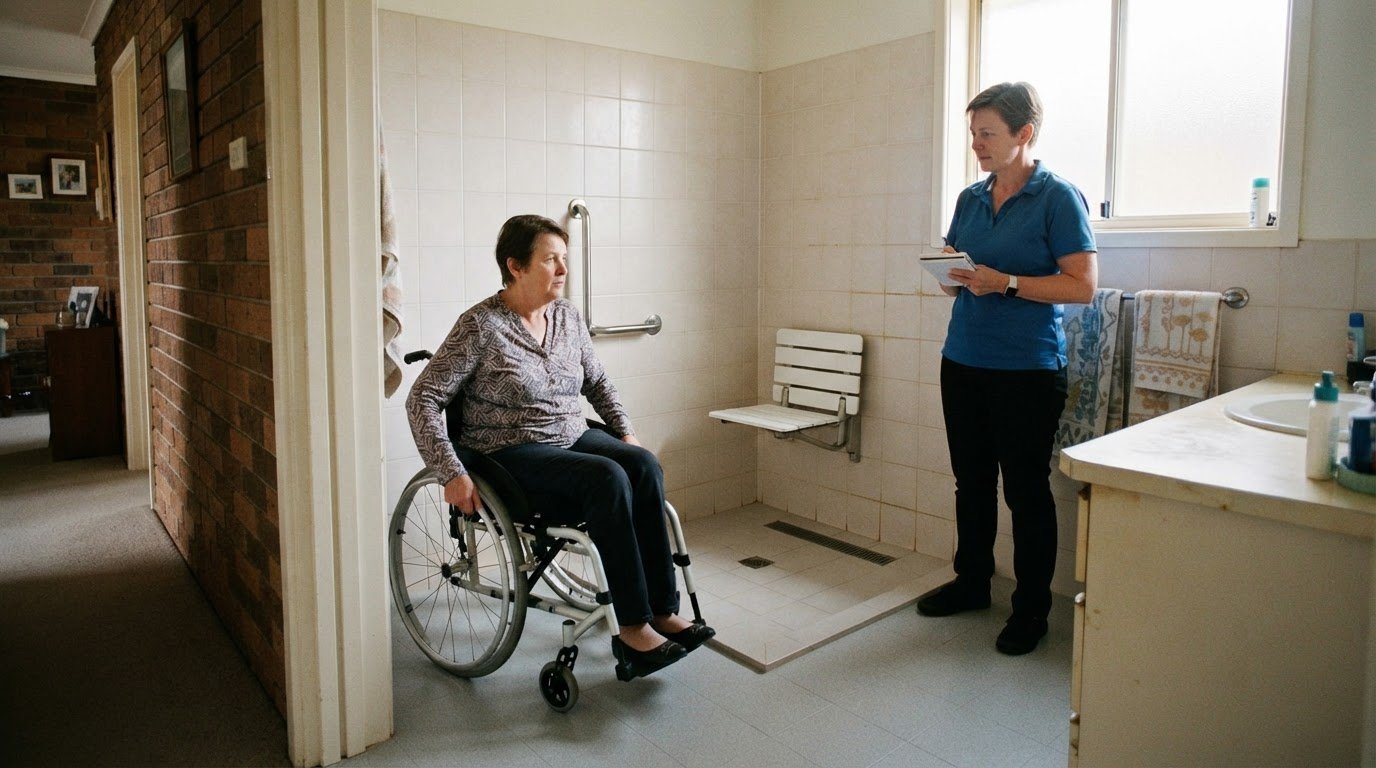
An occupational therapy assessment explains how a proposed change relates to your disability support needs. The NDIS considers funding requests against its criteria, and not every home improvement is covered.
It’s understandable to want a clear answer before making plans, especially when a change could affect your safety and independence at home. The NDIS may fund modifications that address disability-related needs, but generally won’t fund aesthetic upgrades, routine maintenance unrelated to accessibility, landlord obligations or moving to a new home. This guide explains which changes may be covered, when an occupational therapy assessment is needed, how approval works and what’s excluded. You’ll also learn what evidence and permissions may support a request, so you can understand the steps before work begins.
Key Takeaways
- Learn how simple, minor and complex modifications are grouped, and why the type of work can affect the evidence and quotes needed.
- Understand when an occupational therapist can assess your needs and when a home modification assessor is involved in complex proposals.
- See what the NDIA considers when assessing a request, including disability-related need, value for money and relevant property approvals.
- Identify common exclusions, such as aesthetic upgrades and routine maintenance unrelated to accessibility, before planning changes.
What home modifications are covered by the NDIS?
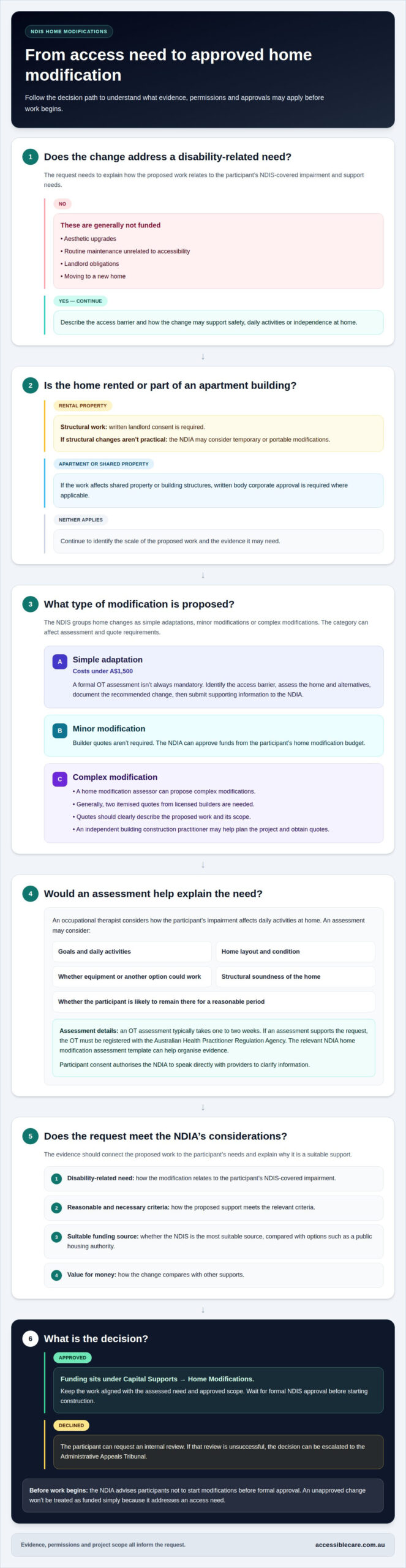
The NDIS groups home changes into three categories: simple adaptations, minor modifications and complex modifications. Simple adaptations cost under A$1,500. These categories help show the evidence and building work a request may require.
For complex work, people generally need two itemised quotes from licensed builders. Quotes should describe the proposed work clearly, so the NDIA can consider its scope and value for money alongside the participant’s assessments.
Builder quotes aren’t required for minor home modifications. For complex proposals, an independent building construction practitioner may help plan the project and obtain quotes. A home modification assessor can propose complex modifications. This separates functional recommendations from the construction details needed to plan structural changes.
Choosing a builder is part of turning an approved design into practical work. Compare itemised quotes with the recommended scope, including the specific access barriers the work addresses. Clear construction documents help align the builder’s work with the assessed needs and approved proposal. When choosing a builder, check that they have relevant experience and can clearly document the proposed work.
Construction oversight can help keep the agreed scope clear from planning through completion. For complex work, an independent building construction practitioner may support project planning and quote procurement. Keep the assessment, approvals and final quote together, and use them to clarify the intended work with the builder. Don’t begin modifications before formal NDIS approval.
Rental properties may need a different approach if structural changes aren’t practical. The NDIA may consider temporary or portable modifications instead. Written landlord consent is required for structural work in a rental. These steps help match the proposed change to the property while keeping the participant’s access needs central.
Do I need an occupational therapist for simple home modifications under $1,500?
Formal occupational therapy assessment isn’t always mandatory for simple adaptations costing under A$1,500. The steps are to identify the access barrier, assess the home and alternatives, document the recommended change, then submit supporting information to the NDIA.
Assessor and Occupational Therapist Roles
An occupational therapist considers how a participant’s impairment affects daily activities at home. They can recommend changes or alternatives, including equipment. Any occupational therapist can put forward Category A modifications for NDIA approval. Complex modifications have a separate requirement: only a home modification assessor can propose them. These roles help match the recommendation to the scale and nature of the work.
Assessing Home Modification Needs
An assessment considers the participant’s needs alongside the home’s layout and condition. For example, an occupational therapist may consider whether a bathroom change addresses an access barrier or whether equipment could achieve the same outcome. The NDIA also considers whether the home is structurally sound and whether the participant is likely to remain there for a reasonable period. These factors help shape a practical recommendation.
Assessment Requirements and Templates
For a simple modification under A$1,500, a formal OT assessment isn’t always required. Where an assessment supports the request, the OT must be registered with the Australian Health Practitioner Regulation Agency. The relevant NDIA home modification assessment template can organise the evidence. Participant consent also authorises the NDIA to speak directly with providers, helping clarify information without leaving the participant’s needs out of the discussion.
Assessment Process Steps
The OT assessment typically takes one to two weeks. The OT considers the participant’s goals, daily activities, home environment and possible alternatives before making recommendations. The resulting information can explain why a specific change is needed and how it relates to the participant’s circumstances. If you’d like support with an assessment, explore occupational therapy support for NDIS-related needs.
NDIS approval and funding for modifications
The NDIS home modifications process connects the proposed work to the participant’s support needs and plan. There’s no single funding limit for every participant; approval and installation timing depend on the evidence, permissions and project scope.
NDIS Plan Requests and Approval Stages
A request needs to show how the modification relates to the participant’s NDIS-covered impairment and meets reasonable and necessary criteria. The NDIA considers whether the NDIS is the most suitable funding source, such as compared with a public housing authority, and whether the change offers value for money compared with other supports. Approved funding sits under Capital Supports, in Home Modifications.
For minor modifications, the NDIA can approve funds from the participant’s home modification budget. If a request is declined, the participant can request an internal review. If that review is unsuccessful, the decision can be escalated to the Administrative Appeals Tribunal. A support coordinator may help organise information and involve relevant people in the request. The NDIS home modifications process allows the request to be reviewed against the evidence provided.
Work Before Funding Approval
Wait for formal approval before starting work. The NDIA advises participants not to begin modifications beforehand. An unapproved shower alteration or doorway change won’t be treated as funded simply because it addresses an access need. Approval confirms the funding decision and plan allocation. Keep the proposed work aligned with the assessed need and approved scope.
Strata or Body Corporate Approval
For an apartment, proposed work may affect shared property or building structures. Written body corporate approval is required where applicable. Apartment modifications in Sydney may also require strata or body corporate approval. Include relevant written permissions with the funding request. Written landlord approval is also required where applicable, particularly for structural changes to a rental home.
Costs and Funding Limits
Category thresholds describe types of modifications, not an automatic entitlement to funding up to those amounts. The NDIA assesses the requested work against the participant’s needs, alternatives and value for money. Funding is generally restricted to a participant’s primary residence. If a quote exceeds the available budget, don’t start work. The request must be assessed against the proposed scope and funding.
Modifications the NDIS does not fund
A change may make a home more comfortable without meeting the NDIS funding criteria. The key distinction is whether the modification relates to disability needs, rather than general upkeep, personal taste or a property owner’s responsibility.
The NDIS does not fund home modifications for:
- Aesthetic or non-disability reasons, such as changing a kitchen’s appearance without addressing an access need.
- Landlord obligations, which remain the property owner’s responsibility.
- Luxury upgrades that go beyond the disability-related modification being requested.
- Routine maintenance unrelated to accessibility, such as ordinary repairs that don’t address a disability barrier.
- Purchasing or relocating to a new home.
These exclusions don’t mean structural changes are automatically ineligible. A complex home modification involving structural work may still be considered if it addresses the participant’s disability-related needs and meets NDIS funding criteria. The purpose of the work matters: a bathroom change to address an access barrier is different from a renovation for style or general improvement.
Before preparing a request, separate disability-related work from unrelated improvements. Describe the specific access problem a proposed change addresses, rather than combining it with cosmetic upgrades or routine maintenance. This makes clear what the funding request covers and why the change supports independence at home.
A support coordinator can help organise information around the participant’s goals and distinguish the requested modification from other property work. If a quote includes both accessibility changes and non-disability improvements, identify each item clearly. The NDIS assessment focuses on disability-related support, not the full cost of unrelated work.
Understanding these exclusions can help participants shape a more focused request before seeking approval. For support with NDIS-related needs and planning, explore NDIS support options.
Accessible Care: NDIS Support Services
Accessible Care supports participants who need help understanding how disability-related needs connect with everyday life at home. Its occupational therapy can help clarify functional needs and identify goals to discuss as part of an NDIS plan.
Consider this support when you’re clarifying how your home environment affects daily activities or need guidance alongside other NDIS supports. The focus remains on your circumstances, priorities and choices. Home modification funding decisions and building work follow the NDIA’s assessment and approval process, while therapy can help you understand your support needs.
If you’d like to discuss your NDIS support needs, you’re welcome to contact Accessible Care.
Take your next step with confidence
Your home should support the way you want to live. A useful next step is to clarify what matters most in your daily routine. As you move through the NDIS home modifications process, keep your priorities at the centre of conversations about support. Describe the activities you want to manage more independently and the barriers that make them harder. This gives you a helpful foundation for planning with the people involved in your supports.
Accessible Care offers NDIS support services, speech therapy and occupational therapy. These supports can contribute to broader disability-related goals, with your needs and choices guiding the discussion. Explore what support may fit your circumstances and decide what feels right for you.
To talk through your support needs and next steps, contact Accessible Care. A thoughtful next step can help you move forward with greater clarity and confidence.
Frequently Asked Questions
Can I get my bathroom or kitchen renovated at the same time as modifications are being installed?
You can plan other renovation work alongside an accessibility modification, but the NDIS request should clearly separate disability-related work from unrelated upgrades. For example, itemise an accessible shower change separately from new tiles chosen for appearance. This helps show which work addresses a disability-related need. Keep the approved modification scope distinct, and don’t treat approval for one change as approval for the entire renovation.
What will the NDIS fund?
The NDIS may fund a home modification that relates to a participant’s NDIS-covered impairment and meets the funding criteria. For example, a change addressing difficulty entering or using an area of the home may be considered alongside other supports that could achieve the same outcome. The NDIA also considers value for money and whether another source, such as a public housing authority, is more appropriate to fund the work.
What happens if my landlord refuses to approve home modifications?
Without written landlord consent, structural changes to a rental home can’t proceed as proposed. Discuss the barrier with the occupational therapist involved in the assessment. The NDIA may consider temporary or portable options when structural changes aren’t practical in a rental. These alternatives may address access needs without permanent building work. Don’t arrange structural work until the necessary permission and NDIS approval are in place.
What happens if unexpected issues arise during the renovation?
If hidden damage or another site issue changes the proposed work, pause the affected part and record what was found. Ask the builder to explain the change and provide an updated itemised scope or quote. Keep this information with the original assessment and approval details, then seek guidance on how to handle the change before proceeding with additional work. This helps distinguish necessary changes from unrelated improvements.
What’s the difference between minor and complex modifications?
For example, a structural doorway alteration is complex by type, even if its cost is lower. This distinction affects who can propose the work and what construction information is needed to support the request.
Who is eligible?
A participant can request a home modification when it relates to their NDIS-covered impairment and meets the funding criteria. The NDIA considers whether the home is structurally sound and whether the participant is likely to remain there for a reasonable period. Funding is generally for a participant’s primary residence, so a proposed change to another property needs careful consideration of the home’s role and suitability.

