


Speech therapy is about more than practising sounds. Speech pathologists assess and support communication and swallowing across the lifespan, then tailor therapy to the person’s needs. The most useful questions to ask a speech pathologist cover what they’ll work on, how to practise at home, what to do when practice feels frustrating, and how their experience fits your goals.
It’s natural to want a clear picture of what happens in sessions and how you can help between them. Home practice can reinforce therapy strategies, but it should feel manageable and meaningful in everyday life.
This guide explains what speech pathologists do and shares practical questions to ask about home practice, frustration, professional membership and experience. You’ll be better prepared to discuss an approach that respects your needs and helps you take an active role.
Key Takeaways
- Understand how a speech pathologist can support communication and swallowing, and coordinate with teachers or other therapists.
- Learn how to make home practice manageable by fitting recommended strategies into everyday routines.
- Recognise how communication challenges may show up as frustration, and what to discuss when participation feels difficult.
- Know which questions can clarify a speech pathologist’s experience and professional membership, including requirements relevant to some NDIS participants.
1. What do Speech Therapists Do?
Speech pathologists are university-trained health professionals who assess and support communication and swallowing across the lifespan. They may work on speech sounds, understanding and using language, social communication, or swallowing food and drink. An assessment can include a conversation about development and medical history, observation, standardised tests and tasks that show how a person understands or communicates. Ask what the assessment will explore and how the findings relate to everyday learning, relationships or activities.
For a child, ask how therapy goals will support communication at home and school, and how you can help between sessions. For an adult, ask how therapy will relate to daily priorities, such as conversations, work or swallowing safely. A speech pathologist may provide a report describing strengths and difficulties, along with an individual therapy plan. Ask how you’ll receive updates and share changes you notice, such as a child using a new word during play or an adult finding conversation easier.
Teachers and other therapists can offer useful observations. With the family’s involvement, a speech pathologist may collaborate with a child’s teacher or other therapists to connect strategies across settings. Ask what information would help the team, how you’ll communicate, and who will share progress. For example, a teacher might describe which classroom instructions are difficult to follow. This can help the speech pathologist connect therapy with learning and participation.
Appointments and therapy frequency depend on the person’s goals and needs. Ask what the proposed schedule is intended to achieve and when progress will be reviewed. Some children may need therapy for a few months, while others need longer, and estimates can change as therapy progresses. Ask what signs will show progress towards a goal, such as clearer requests or better understanding, and how the plan will change if progress or challenges shift. These are practical questions to ask a speech pathologist before agreeing on next steps.
2. Supporting practice between sessions
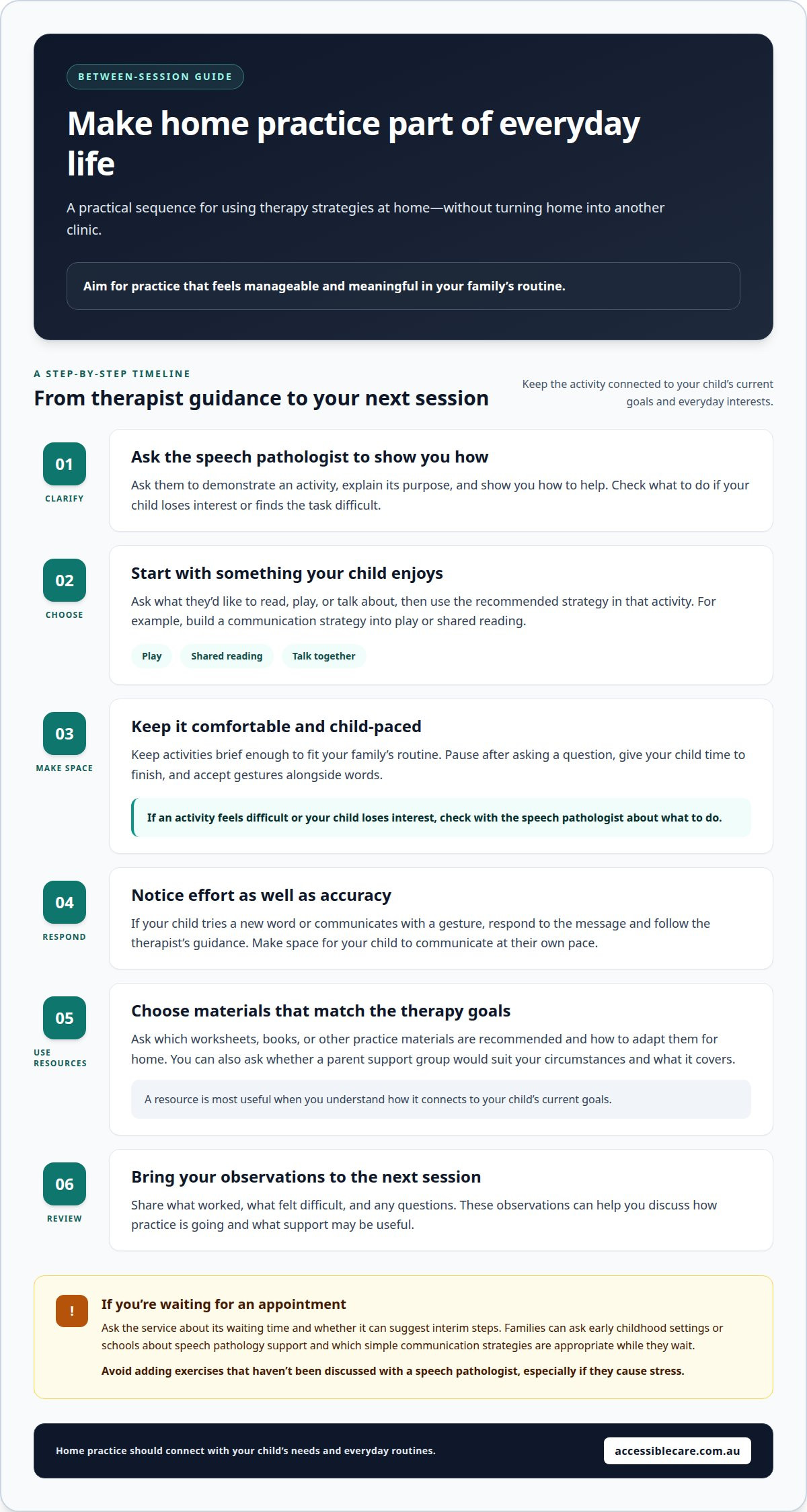
Practice between sessions can help your child use therapy skills in everyday situations. Ask the speech pathologist to demonstrate an activity, explain its purpose, and show you how to help without turning home into another clinic. For example, if your child is practising a communication strategy, ask how to build it naturally into play or shared reading. Check what to do if your child loses interest or finds the task difficult.
Keep activities comfortable and brief enough to fit your family’s routine. Ask your child what they’d like to read, play or talk about, then use the recommended strategy in that activity. Notice effort as well as accuracy. If your child tries a new word or communicates with a gesture, respond to the message and follow the therapist’s guidance. At the next session, share what worked, what felt difficult and any questions.
Resources should match the therapy goals and your child’s needs. Ask which worksheets, books or other practice materials the speech pathologist recommends, and how to adapt them for home. You can also ask whether a parent support group would suit your circumstances and what it covers. A resource is most useful when you understand how it connects to your child’s current goals.
If you’re waiting for an appointment, ask the service about its waiting time and whether it can suggest interim steps. Families can ask early childhood settings or schools about speech pathology support, and what simple communication strategies are appropriate while they wait. Avoid adding exercises that haven’t been discussed with a speech pathologist, especially if they cause stress. A clear plan can help you support communication without guessing.
To build confidence, make space for your child to communicate at their own pace. For example, pause after asking a question, accept gestures alongside words, and give them time to finish. If you’re looking for speech therapy support, ask how home practice can connect with your family’s routines and priorities.
3. Reducing frustration related to speech and language challenges
A child who can’t express a need may show frustration through behaviour. Communication difficulties can also make play, learning and friendships harder. Notice when this happens: during group play, after a question or when following classroom instructions. Share these examples with a speech pathologist, who can assess communication skills and help identify useful strategies. Behaviour offers information about a child’s experience, not a reason to blame them.
Early conversations can help families and educators respond before concerns affect participation at school. Parent-teacher meetings can reveal patterns, such as difficulty understanding instructions or joining conversations. Before school, language skills might include understanding everyday words, expressing needs and taking turns in conversation. These examples aren’t a pass-or-fail checklist. A speech pathologist can assess your child’s abilities and discuss which skills to support.
Does Medicare cover speech pathology in Australia, and who is eligible? Some speech pathology services may be eligible for a Medicare rebate. Families may also be able to access private health insurance rebates or NDIS support, depending on the relevant funding pathway and eligibility criteria.
Delaying support can mean communication difficulties affect a child’s learning, play or friendships for longer. If you notice concerns, discuss them with the child’s teacher and arrange an assessment conversation with a speech pathologist. If you have ongoing concerns about the service, raise them with the speech pathologist first. You can seek a second opinion or change speech pathologists if your concerns continue.
At home, build language practice into familiar moments. During a shared book, pause and let your child point, gesture or answer in their own words. At dinner, offer simple choices and give them time to respond. Follow your child’s interest rather than turning every exchange into a test. Speech pathologists can suggest activities suited to your child’s needs, explain what to model and help you decide how to respond when communication becomes frustrating. Consistent, supportive interactions can make everyday routines useful opportunities to communicate.
4. Checking a speech pathologist’s membership and experience
Ask about qualifications, Speech Pathology Australia membership and experience with the concerns you’re bringing. Membership and certification are different: a speech pathologist may belong to the professional association, while Certified Practising Speech Pathologist (CPSP) is a certification. Ask what each credential means for the practitioner’s work and how they maintain relevant skills.
In Australia, speech pathologists are not regulated by the Australian Health Practitioner Regulation Agency. The National Code of Conduct sets minimum standards for health service providers who aren’t regulated by the agency, including speech pathologists. You can ask how the practitioner applies these standards, explains your rights and handles concerns. A clear answer should help you understand how they communicate and work with you.
Experience matters most when it relates to your goals. Ask whether the speech pathologist has worked with children or adults who have similar communication or swallowing concerns. For example, if you’re seeking support for Developmental Language Disorder, ask what assessment approaches and therapy strategies they use. Speech pathologists can assess and provide therapy for this disorder, but their clinical expertise varies.
Funding can make certification especially relevant. If you have a plan-managed NDIS plan and are aged 7 or over, you can use NDIS funds only to see a registered provider who must be a CPSP. Ask whether the practitioner meets that requirement and how their experience relates to your plan goals. This helps clarify both the funding condition and the clinical fit.
Useful questions to ask your speech pathologist include: “What experience do you have with these concerns?” and “How will we review progress?” You can also ask how they involve you in decisions and respond to feedback. If you’re ready to discuss your goals with a practitioner, explore speech therapy support.
Accessible Care: NDIS Support Services
Accessible Care offers NDIS Support Services and Speech Therapy for people seeking support with communication goals. Its speech therapy addresses communication needs, while Occupational Therapy and Positive Behaviour Support may complement a person’s wider support plan where relevant. Consider these services when looking for support that reflects your goals and daily life.
As you explore next steps, bring questions about therapy goals, home practice and how progress will be discussed. A conversation can help you understand how support may fit your needs and NDIS plan.
To discuss support, contact Accessible Care or visit the website.
Make your next conversation count
Your next step doesn’t need to be a perfect plan. Treat your next conversation as the start of a working partnership, guided by your priorities. Bring one current concern and one everyday situation you’d like to make easier. That gives the discussion a clear starting point without requiring you to have every answer. A note on your phone can help you remember what matters most when you meet.
The questions to ask a speech pathologist can change over time. As goals shift, revisit what feels useful, what’s becoming easier and what needs a different approach. Share observations from home and ask the therapist to explain how they inform the next steps. Small, honest updates can keep support connected to real life and help you stay involved in decisions.
Accessible Care offers NDIS Support Services, Speech Therapy and Occupational Therapy. If you’d like to discuss support that reflects your needs, contact Accessible Care. Take the next step at a pace that feels right for you and your family.
Frequently Asked Questions
What do Speech Therapists Do?
Speech pathologists assess and support communication and swallowing for children and adults. Their work may involve speech sounds, understanding language, social communication or strategies for expressing needs. For example, someone who finds spoken communication difficult might explore signs, symbols or gestures with their therapist. Support is shaped around the person’s abilities and priorities, rather than one standard approach.
What questions should I ask a speech pathologist at the first appointment?
Ask what the first appointment involves, what information to bring and how you or your family can contribute. Useful questions to ask a speech pathologist include: “What would you like to understand about my concerns?” and “What should I expect after this visit?” You can also share a specific situation that feels difficult, such as joining classroom conversations or explaining needs at work.
What should I ask about a speech pathology assessment and diagnosis?
Ask which areas of communication the assessment will examine, how the findings will be explained and whether you’ll receive a written report. You can also ask how the pathologist distinguishes observed difficulties from a diagnosis, and whether they need more information from home, school or another professional. For a child, bring examples of communication during play, routines or conversations with familiar people.
What questions should I ask about treatment goals and therapy methods?
Ask how each goal connects to an activity that matters in daily life and what therapy methods may support it. For example, a goal might focus on making requests during family routines rather than practising a skill without context. Ask how you can take part, what progress might look like and how the approach could change if a goal no longer suits your priorities.
How often will speech therapy sessions be needed, and how long does treatment take?
The schedule and overall duration depend on the person’s needs, therapy goals and progress. Ask why the suggested session frequency suits your situation, when the plan will be reviewed and what might prompt an adjustment. A useful discussion also covers how progress between appointments will be considered. This helps you understand the reasoning behind the schedule and plan around everyday commitments.
Can NDIS funding be used for speech pathology, and what questions should I ask about it?
NDIS funding may support speech pathology, depending on the plan and applicable provider requirements. In Australia, people with a plan-managed NDIS plan who are aged 7 or over can use NDIS funds only to see a registered provider who must be a Certified Practising Speech Pathologist (CPSP). Ask whether this condition applies to your plan and how therapy goals relate to it.

