

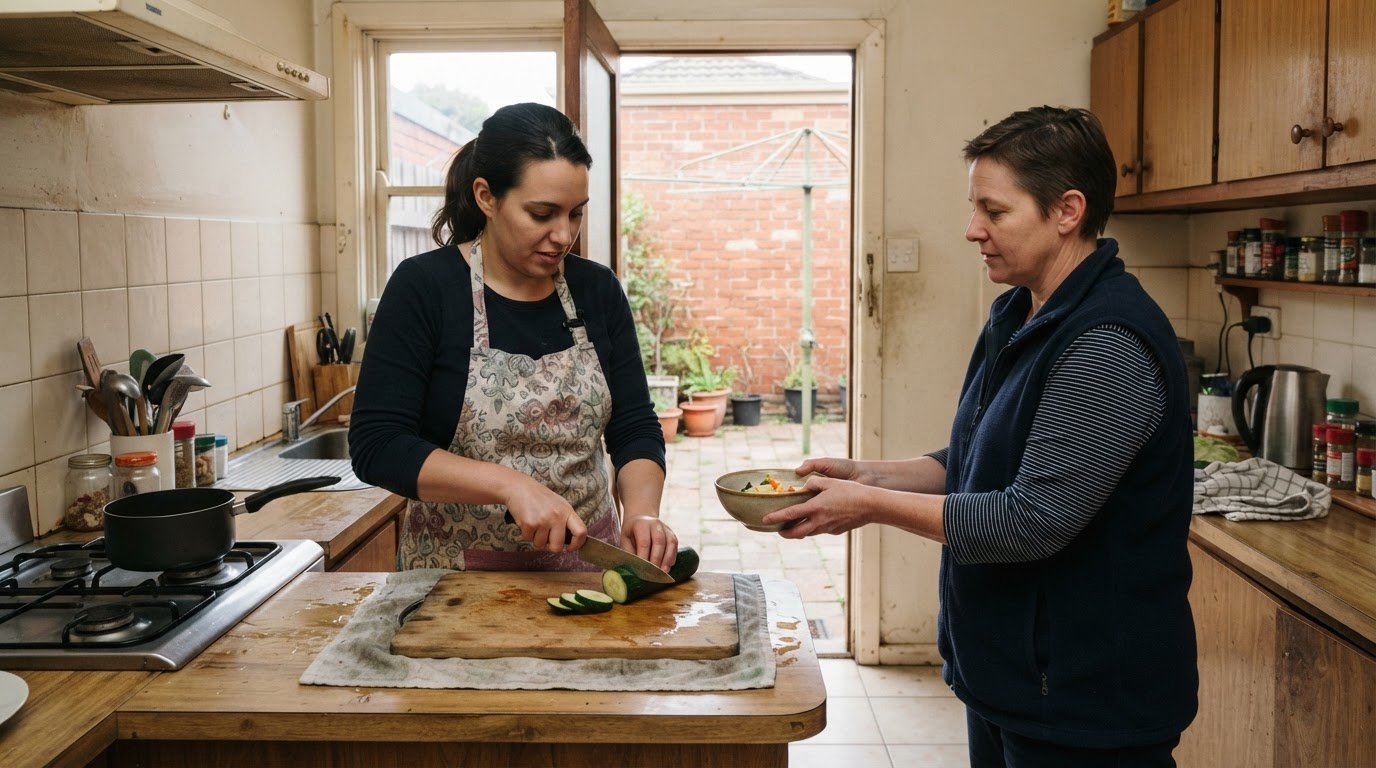
Daily living support should fit the person, not force them into a set routine. NDIS in-home support services in Melbourne can help with personal care and everyday tasks such as cooking, cleaning and laundry. To get started, identify which parts of daily life are difficult and how support could help the person work towards their goals.
It’s natural to want clear options when arranging care for a child, an adult or an infant with support needs. In-home assistance can take place in a person’s own home, a family home or shared accommodation, with the support shaped around individual routines and needs. This article explains the kinds of personal care and household help that may be available, how NDIS funding can relate to daily living support, and the practical steps to begin. It also helps clarify how support needs can differ across ages, so families can consider a suitable starting point with greater confidence.
Key Takeaways
- Identify the daily activities where assistance could support greater comfort and independence.
- Learn how to begin planning in-home support around personal goals and routines.
- Understand which household tasks may be included and how they relate to daily living needs.
- Explore how support considerations can differ for adults, children and infants.
Personal care and daily living support
The Australian Bureau of Statistics says NDIS support mainly serves people under 65 with permanent and significant disability. Daily support can help with routines in a person’s home or other living arrangements.
Personalised Care Plans
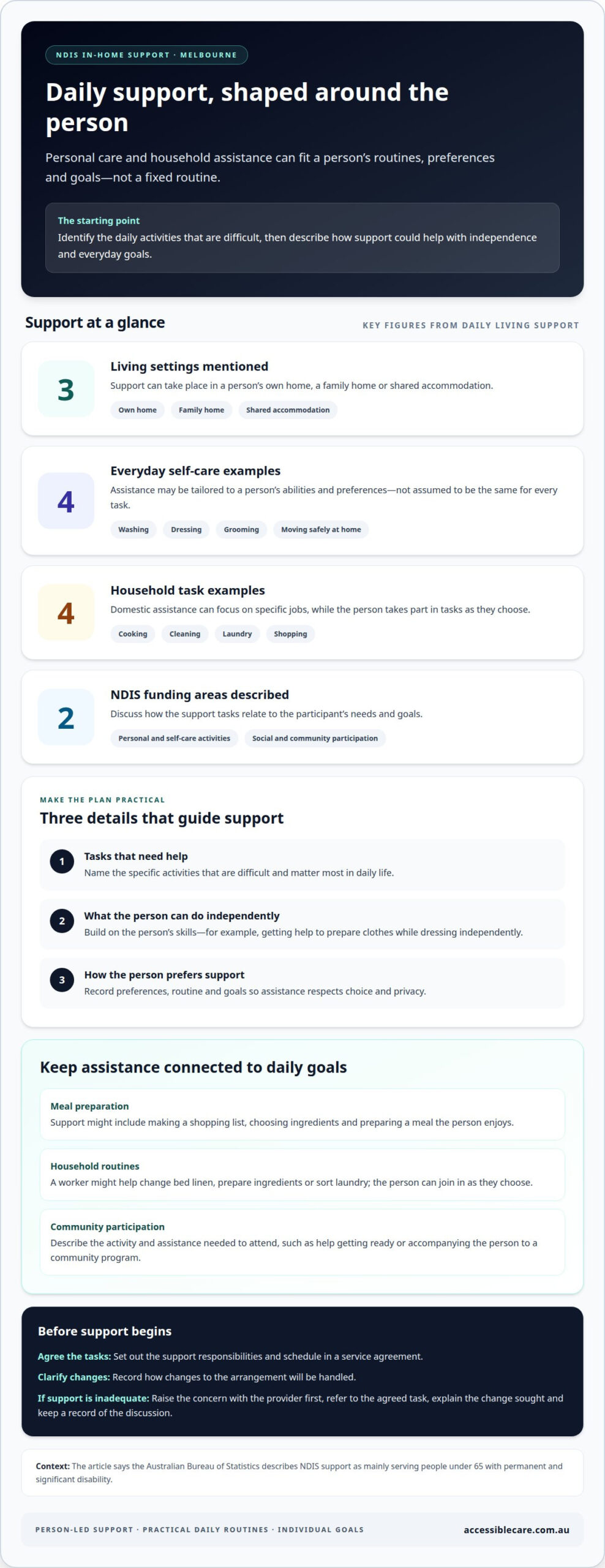
A personalised plan connects support tasks with the person’s daily routine, preferences and goals. For example, it can describe the help needed with dressing, bathing or moving safely around the home. The person’s skills and choices should guide how assistance is provided, rather than setting a fixed routine for everyone. In Victoria, clear details help a person and their support team understand what assistance is intended.
Useful plan details include which tasks need help, what the person can do independently and how they prefer support to be provided. A Melbourne provider can use these details to organise support around the person’s living arrangements and daily priorities.
Personal Care and Medication Assistance
Personal care can include help with washing, dressing, grooming and other self-care activities. The level of assistance should reflect the person’s abilities and preferences. For instance, someone might want help preparing clothes but prefer to dress independently. A written plan can capture that distinction, helping the support team respect privacy while providing practical assistance.
If medication assistance is part of the person’s routine, the plan should clearly describe the task and relevant timing. This distinguishes medication-related support from personal care and gives the team a consistent reference during daily visits.
Errands, Shopping and Meal Preparation
Daily living support may also include cooking, shopping, laundry and cleaning. For example, support could help someone make a shopping list, choose ingredients and prepare a meal they enjoy. The person can take part in each step according to their abilities, practising familiar tasks rather than having everything done for them.
Errands can be planned around practical needs, such as collecting groceries or household essentials. A support plan can identify the tasks that matter most and how assistance fits the person’s routine. This keeps household help connected to daily living goals and personal choice.
What is in-home support?
In-home support helps with daily activities where a person lives. To get started, identify the tasks where assistance could support their goals and independence.
Comparing Support Worker and Home Care Options
An NDIS support worker assists with agreed disability support tasks, such as personal care or community participation. Domestic assistance focuses on household tasks; “home care” is a broader everyday term, not a specific NDIS support. When considering NDIS in-home support services in Melbourne, focus on the tasks needed, such as self-care, household routines or joining community activities.
Before support begins, discuss worker screening arrangements and set out the agreed tasks in a service agreement. It can record the schedule, responsibilities and how changes are handled. These details help everyone understand the arrangement and provide a useful reference if expectations differ later.
Available In-Home Services in Melbourne
NDIS participants may use funding for personal and self-care activities or social and community participation. In-home support can also involve cooking, cleaning and laundry. Discuss how tasks relate to the participant’s needs and goals. Choosing NDIS in-home support services in Melbourne starts with describing the assistance that could make daily routines more manageable.
Identify the tasks and preferred routine, then discuss these with a provider. A registered NDIS provider can explain how support is organised. An eligible person may also self-fund support. A clear disability support plan can help keep assistance focused on personal priorities.
If support is inadequate, raise the concern with the provider first. The ACCC advises consumers with a service problem to contact the seller first. Explain what happened, refer to the agreed task, and describe the change you’re seeking. Keep a record of the discussion to help clarify next steps if a dispute continues.
Household tasks and domestic assistance
Household assistance can make everyday routines more manageable at home. In Melbourne, support may include cooking, cleaning and laundry, depending on the person’s needs and NDIS plan. Start by identifying which tasks are difficult and what assistance would help the person manage their living space.
Domestic assistance can focus on specific jobs rather than taking over the whole household routine. For example, a worker might help change bed linen, prepare ingredients or sort laundry. The person can join in as they choose, practising skills while receiving help with tasks they find challenging. A dedicated task list can show which jobs matter most, such as keeping the kitchen usable or preparing clothes for the next day.
Transport assistance can help a person take part in social and community activities. The NDIS identifies assistance with social and community participation as funding that may be used for in-home support. A practical first step is to describe the activity and the assistance needed to attend, such as help getting ready or accompanying the person to a community program. This connects travel needs with participation goals.
For a trip across Melbourne, clarify the destination, purpose and type of help needed. Support could involve preparing for an appointment, planning what to take, or assistance during community participation. The plan and the person’s goals shape which support is relevant. A service provider can discuss how workers will assist with the agreed tasks and how the routine can adapt when needs change.
For example, someone who finds shopping difficult might need help planning and completing a trip. Someone else may value laundry assistance so they can focus on another daily goal. These are distinct support needs, so describe each task clearly when discussing the NDIS plan. Specific examples help keep assistance practical, person-led and connected to daily living.
Support for adults, children and infants
Daily support should reflect a person’s age, routines and individual goals. According to the Australian Bureau of Statistics, the NDIS largely supports people under 65 with permanent and significant disability. The listed age range for potential NDIS eligibility is 7 to 65, making age an important starting point for families considering NDIS-funded support.
Support for adults
For an adult, tailored assistance might focus on a routine they want to manage more independently. One person may want support to organise morning tasks; another may need help preparing for community activities. Discuss the adult’s preferences, communication style and comfort with different tasks. Respectful support helps people retain control of everyday choices instead of replacing activities they can do themselves.
Support for children
For a child, consider how support fits around family routines, school preparation and developing daily living skills. For example, a child might practise choosing clothes or packing a bag with support. Parents or carers can share what works at home, while the child’s preferences remain part of planning. An approved plan can guide funded supports, with tasks aligned with the child’s needs and goals.
Considerations for infants
Infants sit outside the listed NDIS potential eligibility age range of 7 to 65. Families should therefore distinguish an infant’s day-to-day care needs from support funded through an NDIS participant plan. For example, note which routines involve the infant and which relate to an eligible participant’s own disability support. This helps keep the purpose of any planned assistance clear.
Across ages, a useful first step is to describe the person’s daily routine, the tasks where help is needed and the choices they want respected. Discuss tailored support for your family when you’re ready to consider the next step.
Accessible Care
Accessible Care supports individuals and families to explore options that reflect daily needs, personal goals and preferred routines. Its NDIS Support Services, Speech Therapy, Occupational Therapy and Positive Behaviour Support can address different aspects of disability support, depending on the person’s situation. For example, a family may be considering practical daily assistance alongside therapy to support communication or everyday skills. Starting with the tasks that matter most can make the conversation focused and useful.
If you’re unsure how to turn daily challenges into a clear next step, Accessible Care can listen and discuss support that may fit. Contact Accessible Care to talk about your support needs.
Choose a next step that fits your goals
The next step can be a focused conversation about the support that would make daily life easier. Beforehand, consider the person’s priorities, the routines they want to manage and where assistance could support confidence or independence. This gives the discussion a practical starting point without requiring every future decision to be settled.
For families considering NDIS in-home support services in Melbourne, Accessible Care offers NDIS Support Services, Speech Therapy and Occupational Therapy. These services address different needs, from everyday assistance to communication and daily living skills. The right place to begin depends on the person’s goals and the support they want to explore.
Contact Accessible Care to discuss support and share what matters most to you or your family. A clear first step can help you move forward with greater confidence, while keeping the person’s choices at the centre.
Frequently Asked Questions
How do I get started with assisted daily living?
Begin by noting the daily support you want and connecting it to your goals. If you already have an NDIS plan, review its funded supports and identify relevant activities. Then discuss those needs with an NDIS Registered Provider and agree on practical details, such as preferred routines and tasks. If you don’t yet have a plan, start by learning about NDIS access and planning steps.
How do support workers tailor their support to my needs and goals?
Support workers can use your preferences, communication needs and goals to guide how they provide assistance. For example, someone who wants to build confidence with a household routine might do each task with support rather than have it completed for them. Discuss what you’d like to do independently, what assistance helps and how you prefer workers to communicate with you.
What are the costs?
Accessible Care’s services follow NDIS pricing guidelines, and costs are explained during the first consultation, with no surprises. The amount depends on the service and support provided. Before support begins, ask for the proposed tasks and charging basis to be explained together. This helps you understand how the service relates to the participant’s goals and plan.
How do I find registered NDIS in-home support providers in Melbourne?
Accessible Care is a registered NDIS provider in Melbourne. Consider whether the provider’s support matches the participant’s needs and goals, then discuss the proposed tasks. Accessible Care’s Melbourne office is at 217 Moreland Road, Coburg VIC 3058. Phone 03 9989 4117 or email [email protected] to discuss support needs and how they relate to the plan.
What are the NDIS price limits for in-home support and personal care in 2026?
There isn’t one price limit for every in-home support task. For 2026, the relevant limit depends on the specific support item and applicable NDIS pricing arrangements. Identify the task being delivered, such as personal care or household assistance, and match it to the relevant item before budgeting. Don’t assume different types of support share the same limit.
How are NDIS in-home support services funded and claimed?
NDIS funding may be used for in-home support that relates to a participant’s plan, including personal and self-care activities or social and community participation. Keep a record of the agreed task and service provided. The claim pathway depends on how the participant’s plan is managed, so establish who submits payment claims and which records they need before regular support begins.

