

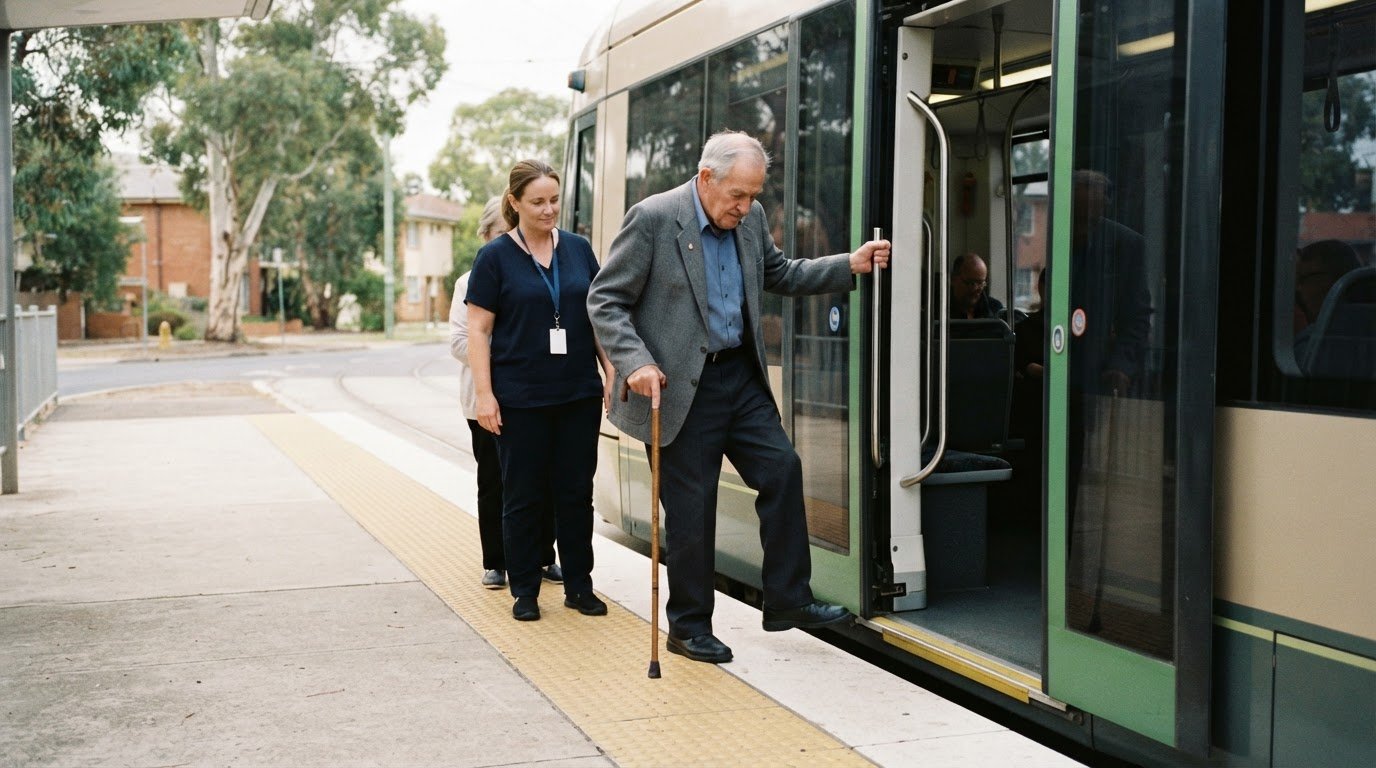
Finding disability support for veterans in Australia can involve DVA rehabilitation, equipment, in-home support and compensation. Some veterans may also access the NDIS, health services, aged care or community programs, but the same support is usually not funded twice. The best starting point depends on the support needed and how it relates to service and everyday life.
It can be difficult to know which program to approach or how different supports fit together. This guide explains how DVA programs and compensation work, what other support may be available, and how to start finding the right pathway. It also covers information that can help with a claim and practical ways to get help through the process.
Key Takeaways
- See how DVA rehabilitation, equipment, in-home support and compensation may address different needs, and how support can work alongside other services.
- Understand how DVA programs and the Veterans’ Entitlements Act 1986 relate to service-connected impairment and Disability Pension.
- Learn what service connection, the lasting impact of an impairment and supporting medical evidence mean for a DVA disability claim.
- Find practical ways to begin, including contacting DVA on 1800 838 372 or getting help with forms and documents at a Services Australia service centre.
DVA rehabilitation, equipment, in-home support and compensation
DVA rehabilitation may support a veteran’s health, wellbeing and employment goals, including returning to work. A rehabilitation plan can address barriers affecting daily life or employment, such as managing a health condition while preparing to resume work. Mental health needs can also form part of a veteran’s overall support needs. When discussing what help may be useful, describe how the condition affects routines, relationships and work.
Equipment and in-home support are practical areas to raise when a service-related condition affects everyday tasks. Explain what is difficult, where it happens, and how support could help the veteran maintain independence. For example, a veteran who struggles with a daily task can describe the task and its impact at home. This makes the need clearer when discussing possible support. Compensation is a separate consideration, and changes to Australia’s veterans’ compensation system were introduced on 1 July 2026.
Some veterans may receive support through DVA alongside the NDIS, health services, aged care or community support. The same support is usually not funded twice, so identify which program is addressing each need. For example, rehabilitation and employment goals may differ from disability-related supports in daily life. The National Disability Insurance Agency lists 1800 800 110 as the NDIS contact number in Australia. Use that number for NDIS enquiries, while keeping the veteran’s DVA needs distinct.
Family members and carers can also seek support. The Australian Government Department of Social Services lists 1800 422 737 as the Carer Gateway contact number. Carers can use this pathway to discuss support for their caring role. For phone access, the National Relay Service is free for people who are deaf, hard of hearing, or have speech or communication difficulties. The National Relay Service can be contacted on 1800 555 677 in Australia. These options can help families take part in support conversations and communicate their needs.
Department of Veterans’ Affairs programs
The Department of Veterans’ Affairs (DVA) supports war veterans, serving and former Australian Defence Force members, Australian Federal Police members, and their families. Its programs are based on entitlements shaped by service history and the legislation relevant to each person. Service dates and circumstances help determine which pathway applies. For families, understanding who a program covers can clarify who should make an enquiry or claim.
The Veterans’ Entitlements Act 1986 (VEA) provides benefits, including compensation for permanent impairment caused by service-related injuries or diseases. For example, a veteran with a lasting condition linked to eligible service may need to understand how the VEA assesses impairment. DVA uses the Guide to the Assessment of Rates of Veterans’ Pensions, known as GARP, to assess impairment and assign a Disability Pension Rate. The rate reflects the assessment, rather than the name of a diagnosis alone.
Keep DVA’s Veterans’ Entitlements Act Disability Pension separate from Services Australia’s Disability Support Pension. These are different payments administered by different bodies, so the relevant pathway depends on the benefit being considered. A VEA claim concerns service-related injury or disease and permanent impairment. Before discussing circumstances, identify the agency responsible for another form of assistance and the purpose of that payment. This keeps enquiries focused.
For a practical first step, map the veteran’s need to the relevant DVA issue: service-related impairment, rehabilitation, or another program. Record how the condition affects ordinary activities, employment, education or family life, then connect those effects to the service history. This gives a clearer account than listing diagnoses alone. If the person also has NDIS needs, NDIS disability support can help translate everyday goals into practical support, while DVA remains the pathway for its own programs and entitlements.
Starting the process of finding support
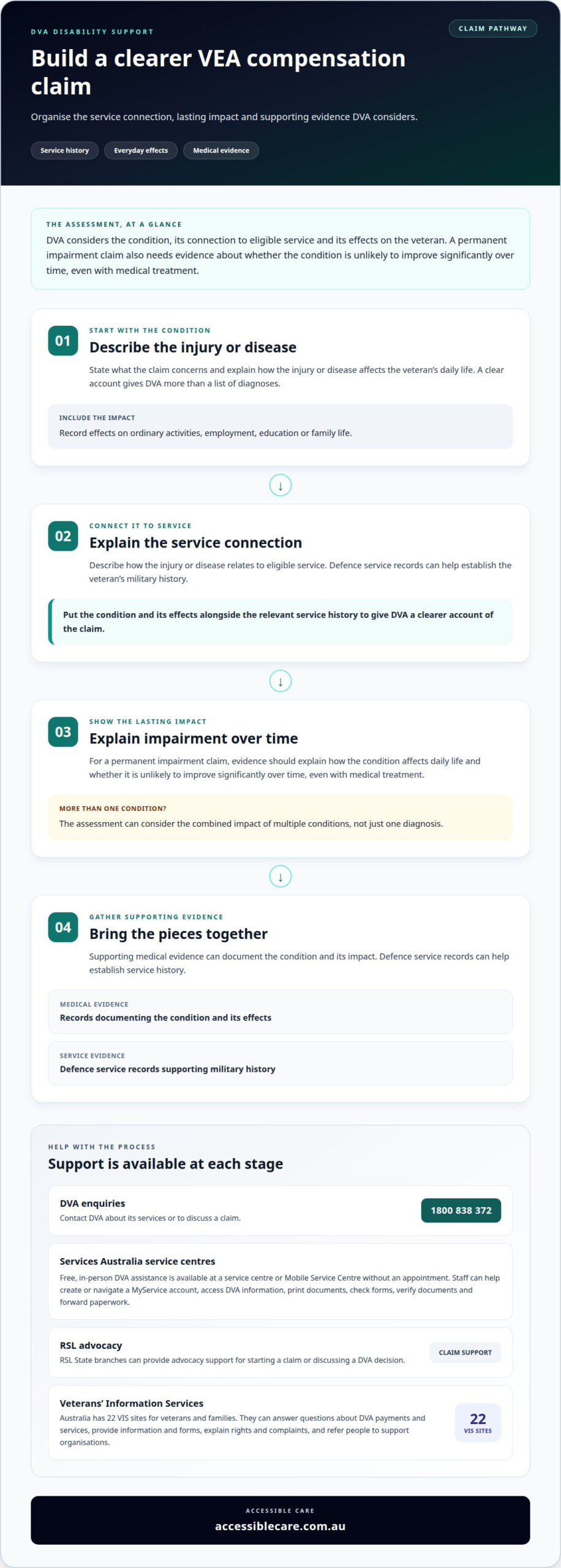
When finding disability support for veterans, start by organising the details that explain the claim. A VEA military compensation claim should describe the injury or disease, its connection to service and its effects on daily life. Include supporting medical evidence, such as records documenting the condition and its impact. Defence service records can help establish the veteran’s military history. Together, these details give DVA a clearer account of the claim and its service connection.
DVA assesses a service-related injury or illness by considering the condition, its connection to eligible service and its effects on the veteran. For a permanent impairment claim, evidence should explain how the condition affects daily life and whether it is unlikely to improve significantly over time, even with medical treatment. The assessment can consider the combined impact of multiple conditions, not just one diagnosis.
For help starting a claim or discussing a DVA decision, RSL State branches can provide advocacy support. Contact DVA on 1800 838 372 for enquiries about its services. Veterans can also get free, in-person DVA assistance at a Services Australia service centre or Mobile Service Centre without an appointment. Staff can help create or navigate a MyService account, access DVA information, print documents, check forms, verify documents, and forward paperwork.
Australia has 22 Veterans’ Information Services (VIS) sites for veterans and their families. These sites can answer questions about DVA payments and services, provide information and forms, explain rights and complaints, and refer people to support organisations. RSL branches across Australia also offer DVA advocacy, employment opportunities, financial and housing assistance, and ways to connect with the veteran community.
For families finding disability support for veterans, a focused first conversation can clarify the next step. Gather service records and medical evidence, and write a short description of the condition’s everyday effects. Then choose the relevant pathway: DVA for claims and payment enquiries, an RSL State branch for advocacy, or a VIS site for information and referrals. This gives veterans and families a practical starting point for seeking local support.
What are the eligibility rules for DVA disability benefits?
A permanent impairment claim may need to explain how the impairment relates to service. It must also be unlikely to improve significantly over time, even with medical treatment. A diagnosis alone does not establish these points. The claim needs to connect the service, condition and lasting effects. For example, explain how an injury linked to eligible service affects everyday activities, rather than only naming the injury.
DVA considers the overall effect of the impairment on the veteran. If several conditions contribute to daily difficulties, their combined impact is considered. Describe each condition and its effects, such as difficulties with mobility, communication or routine tasks. Medical evidence can help explain the nature and persistence of each condition. Clear details about changing needs can also show how conditions interact, rather than presenting them as unrelated.
Eligibility depends on the service connection and the impairment’s likely course. Explain why the condition is linked to eligible service and how it affects daily life, with evidence to support both points. If treatment has taken place, medical information can help describe the condition and whether substantial improvement is expected. The assessment considers the combined impact of accepted conditions when determining overall impairment.
If a veteran is dissatisfied with a Disability Pension assessment, they may seek a review or appeal. The Veterans’ Review Board can review the decision; if the veteran remains dissatisfied, an appeal may proceed to the Administrative Review Tribunal. Keep the assessment decision and relevant medical information together when seeking a review. The issue may concern the service connection, evidence of lasting effects or the assessment of combined impairments.
Understanding DVA eligibility can clarify which needs concern compensation and which relate to everyday disability support. For practical help with disability-related goals, explore NDIS support services. This is a separate support pathway from a DVA Disability Pension claim. It may be relevant when a person needs assistance connected to daily living, rather than an assessment of service-related impairment.
Accessible Care
Accessible Care can support veterans and families with practical disability-related goals alongside DVA processes. If goals involve communication, daily activities or behaviour support, its NDIS Support Services may be relevant. Speech Therapy, Occupational Therapy and Positive Behaviour Support address different needs, with support centred on the person’s goals and circumstances.
DVA is the pathway for DVA programs and compensation. Accessible Care supports disability-related goals, but does not assess or decide DVA claims. Keeping these roles separate can help families distinguish compensation questions from practical support needs in daily life.
To discuss disability support options for your circumstances, contact Accessible Care.
Take the next step at your pace
Support needs can change as health, routines and personal goals evolve. When finding disability support for veterans, focus on what could make daily life more manageable now. Priorities might include clearer communication, more confidence with everyday activities or support to work towards personal goals. The veteran and their family can decide what matters most and revisit those priorities as circumstances change.
Alongside DVA processes, Accessible Care offers NDIS Support Services, Speech Therapy and Occupational Therapy for disability-related support. These services address different needs while keeping the person’s preferences and goals at the centre. DVA decisions and disability support are separate pathways, so keep each conversation focused on the type of assistance needed.
If you’re ready to discuss support options, contact Accessible Care. One considered next step can help make the path ahead feel clearer.
Frequently Asked Questions
What disability support and compensation is available to veterans in Australia?
Veterans may access DVA rehabilitation and compensation alongside disability support available through other programs. The type of help depends on the need: rehabilitation can relate to wellbeing or employment goals, while disability support may assist with everyday activities. For example, a veteran with communication needs may explore NDIS-funded therapy if it aligns with their plan. Compensation is assessed separately through the relevant DVA pathway.
What is the difference between DVA compensation, the Disability Compensation Payment and the Military Rehabilitation and Compensation Scheme?
DVA compensation is a broad description, while Disability Compensation Payment is the name of a specific payment. The Military Rehabilitation and Compensation Scheme handles eligible military-related rehabilitation and compensation matters. These terms are not interchangeable; the relevant pathway depends on the veteran’s service and claim circumstances. DVA also administers the VEA Disability Pension, which is separate from Services Australia’s Disability Support Pension.
Can veterans receive NDIS support as well as DVA disability support?
Yes, some veterans can receive support through both systems, but the same support is usually not funded twice. For example, a veteran may have a DVA matter relating to service while seeking NDIS support for disability-related daily goals. Keep the purpose of each request clear and identify which program addresses each need. NDIS support is for eligible people with permanent and significant disability.

