


A person’s goals should shape their support, not the other way around. If you’re wondering what a circle of support is, it’s a group of people who meet with a person to listen, plan and help put their goals into action. A circle can work with 3 people or 10, depending on the person and the people around them.
In self-directed planning (SDP), support works best when it reflects what matters to the person. Family, friends and other trusted people can offer ideas and encouragement while respecting the person’s choices.
This guide explains why a circle of support matters, how to involve the person in shaping it, and practical steps for building a circle around their goals. You’ll also learn how members can share responsibilities and turn plans into everyday support, while keeping the person’s voice at the centre.
Key Takeaways
- Begin with the person’s priorities, then consider who can bring trusted relationships, useful skills or fresh perspectives.
- Agree on each member’s role and practical commitments so plans can move forward between meetings.
- Adapt communication and meeting arrangements to the person’s preferred way of taking part.
- Recognise when personal support and professional services can work alongside each other to help with a goal.
What is a Circle of Support, and Why Are They Important in SDP?
A circle of support is a group of people who meet with someone to help plan and pursue their goals. In self-directed planning (SDP), the person’s identity, values and choices guide the group. Members might include friends, family, teachers and care workers, alongside professional support.
Circle members volunteer their time, so their participation usually has no fee. Practical arrangements, such as transport, a meeting place or communication materials, may still involve costs, depending on the group’s choices.
Benefits include shared problem-solving, encouragement and help with decisions. A circle can also ease pressure on family carers, but it doesn’t replace family relationships or professional services. A meeting can work with 3 people or 10, depending on the person and their network.
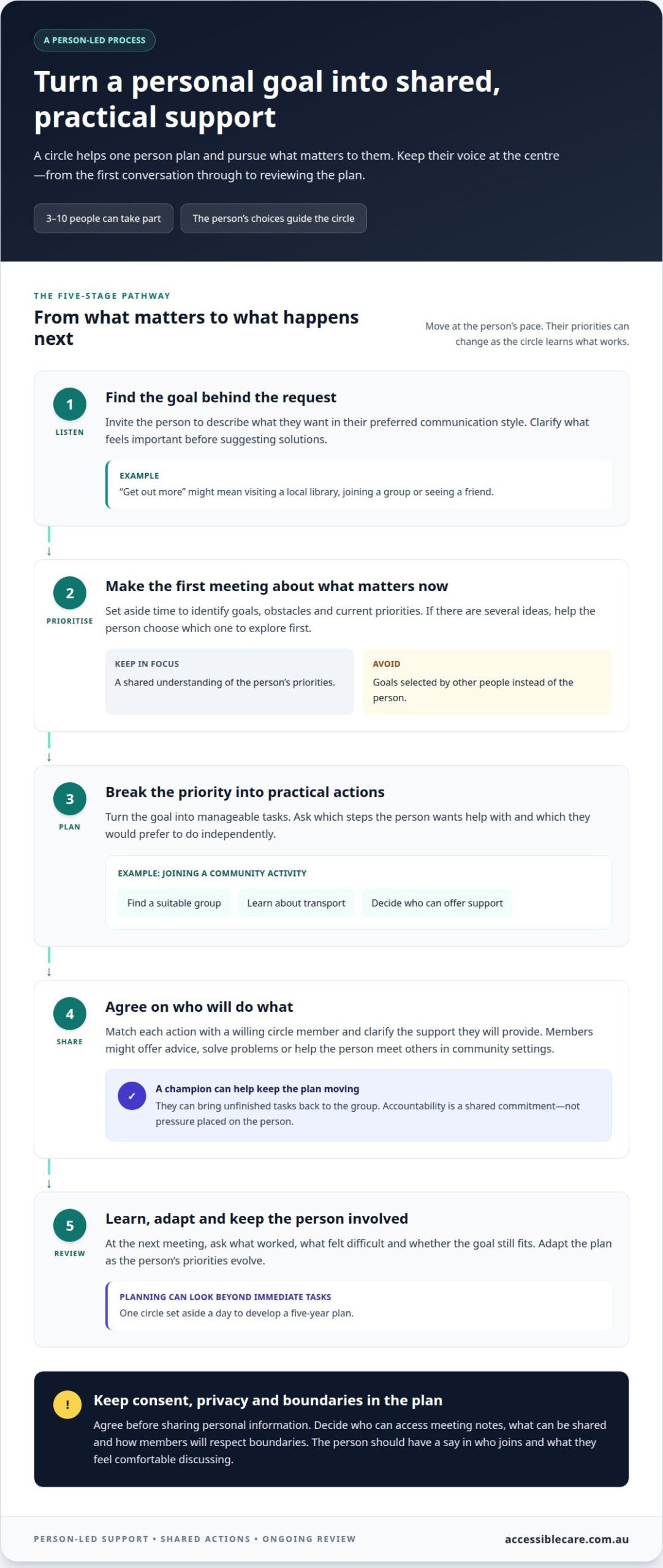
For privacy and safety, agree on consent before sharing personal information. Decide who can access meeting notes, what can be shared and how members will respect boundaries. The person should have a say in who joins and what they feel comfortable discussing.
- Start with the person’s priorities. Ask what matters to them, such as building friendships, learning a skill or getting involved in a local activity. Use their preferred communication approach, including visual cues if helpful.
- Build from trusted relationships. Identify people already connected to the person. A circle should reflect existing relationships and the person’s values, rather than being assembled around professional convenience.
- Agree on a shared purpose. Describe the goal in everyday terms, such as finding a regular community activity. Invite members to contribute ideas while keeping the person’s preferences central.
- Share practical responsibilities. Members can offer advice, help solve problems or support the person to meet others in community settings. Clear roles make it easier to turn discussion into action.
- Review how the circle is helping. Discuss what is working and whether the person’s goals have changed. An evolving circle can welcome new perspectives while maintaining consent, privacy and the person’s involvement.
Supporting the person’s goals and involvement
A useful plan starts with the person’s own idea of a meaningful life. These steps help a circle turn that vision into action while keeping decisions person-led.
- Listen for the goal behind the request. Invite the person to describe what they want, in their preferred communication style. A wish to “get out more” might mean visiting a local library, joining a group or seeing a friend. Clarify what feels important to them before the circle suggests solutions.
- Make the first meeting about priorities. Set aside time to identify goals, obstacles and what matters most now. If the person has several ideas, help them choose which one to explore first. The aim is a shared understanding, not a list of goals selected by other people.
- Turn the priority into practical actions. Break the goal into manageable tasks. For example, a plan to join a community activity might involve finding a suitable group, learning about transport and deciding who can offer support. Ask the person which steps they want help with and which they’d prefer to do independently.
- Agree on who will do what. Match each action with a willing circle member and clarify what support they’ll provide. A champion can help keep the plan moving and bring unfinished tasks back to the group. This makes accountability a shared commitment, not pressure placed on the person.
- Review progress and adapt the plan. At the next meeting, ask what worked, what felt difficult and whether the goal still fits. One circle set aside a day to develop a five-year plan, showing how members can also think beyond immediate tasks. Keep the person involved as priorities evolve.
When a goal needs coordinated practical help, support for individual goals can be part of the wider plan.
Definition and purpose of a circle of support
A circle of support is a group that meets with someone to help plan and pursue their goals. Unlike a support group or service team, it centres on one person’s life and includes relationships beyond paid services.
-
Define the Circle’s Purpose
Start by describing what the circle is there to support, using the person’s priorities as its guide. Judith Snow’s model describes four relationship circles: Intimacy, Friendship, Participation and Exchange. Together, these can help identify close relationships, social connections, community settings and paid professionals in someone’s life. Use the model to notice where relationships already exist and where the person hopes to build connections.
Keep the purpose focused on the person’s wellbeing and aspirations. For example, a circle might help someone explore local activities and build friendships, rather than taking over decisions or setting goals on their behalf.
-
Distinguish Circles from Groups and Teams
Explain that a circle is organised around one person and their goals. A support group usually brings together people with shared experiences, while a service team coordinates professional support. A circle may include professionals, but its purpose goes beyond delivering a service. Members contribute relationships, ideas and practical help in support of the person’s chosen direction.
Keep the group’s focus clear. If discussions centre only on service tasks, bring the conversation back to the person’s goals and relationships.
- Map relationships with the person. Use the four circles to discuss who matters to them, which groups they take part in and where new connections might grow. Treat the map as a conversation aid, not a scorecard of how many relationships they have.
- Agree on the circle’s role. Clarify how members will listen, share ideas and support agreed actions. Keep professional responsibilities distinct from voluntary relationships, so the circle adds connection without replacing a service team.
- Revisit the purpose as life changes. A person’s interests, relationships and goals can change over time. Review whether the circle still reflects their wishes, and adjust its focus if they want to pursue a different direction.
How circles of support work
A circle works best when its practical arrangements reflect the person’s preferences and goals.
- Choose a champion and facilitators. A champion helps form the circle and carries agreed plans into action. Ideally, appoint at least two facilitators to help organise communication and meetings. Keep the person involved in choosing who takes these roles, so coordination supports their voice rather than replacing it.
- Invite members and agree on expectations. Circle members are volunteers. Before they join, discuss their role, likely tasks, meeting frequency and expected level of support. A trial period can help both the person and a prospective member decide whether the arrangement suits them. The person should have a say in each invitation.
- Set a workable meeting routine. Meetings typically last about 2 hours, but there’s no single required format. Some circles meet quarterly; others choose a different rhythm based on their goals and members’ availability. Agree on a time and place that work for the person, then review the routine if it becomes difficult.
- Make communication accessible. A circle can meet in person or communicate by email or SMS. For a person who doesn’t use speech, visual cues can support participation. Ask how they prefer to share ideas, make choices and respond during meetings, then adapt the format to those preferences.
- Turn discussion into follow-through. At each meeting, record agreed tasks, who will handle them and when the group will revisit progress. New members can bring fresh skills and perspectives as the person’s goals change. Keep the process flexible, and focus on whether the person feels heard and the plan is moving forward.
For help connecting personal goals with practical support, discuss support for individual goals.
Accessible Care
Accessible Care can connect a person’s goals with practical disability support. When a goal involves communication, daily activities or positive behaviour support, professional services can complement the encouragement and relationships within a circle. The person’s preferences remain central, and family and circle members can share relevant insights with consent.
Accessible Care offers NDIS Support Services, Speech Therapy, Occupational Therapy and Positive Behaviour Support. These services may be useful when someone needs professional input alongside support from family, friends or community connections. For example, Speech Therapy can support communication goals, while Occupational Therapy can address everyday activities.
A circle and professional support have different roles, but they can work towards the same person-led goals. To discuss support for someone’s goals, contact Accessible Care.
Let the next step reflect the person’s wishes
Knowing what a circle of support can offer is a starting point, not a finished plan. Make space for the person to say what they want their support to feel like. They may want help exploring a new goal or simply a chance to talk through what matters before deciding. There’s no need to settle every detail at once. Start with one priority and let the person’s views guide what happens next.
If professional disability support could complement the person’s relationships and community connections, Accessible Care can discuss options that align with their goals. Services include NDIS Support Services, Speech Therapy and Occupational Therapy. A useful conversation begins by listening to the person’s perspective and understanding what they want help with.
Contact Accessible Care to discuss support for the person’s goals. Each thoughtful step can help keep their choices at the centre.
Frequently Asked Questions
What is a circle of support?
A circle of support is a group of people who help someone pursue goals that matter to them. The person might want to build confidence using public spaces, strengthen friendships or explore a future living arrangement. Members can offer encouragement, ideas and practical help, while keeping the person at the centre of the conversation. The circle can change as relationships and priorities develop.
Who is involved in a circle of support and what do they do?
The person chooses people they trust, such as relatives, friends, teachers or others who matter to them. Each member can contribute differently: one might share knowledge about a community activity, while another offers encouragement or helps think through a challenge. Paid professionals may also be part of the person’s wider network, with their professional role kept distinct from voluntary relationships.
How does a circle of support work?
Members communicate, consider the person’s priorities and agree on useful ways to help. For example, if someone wants to join a local group, members might explore suitable options or discuss what could make attending easier. The circle can meet in person or communicate by email or SMS. Its arrangements should suit the person, rather than follow a rigid template.
How do you start and organise a circle of support?
Start by asking whether the person wants a circle and whom they would like involved. Then invite people, explain the purpose and discuss what each person feels comfortable contributing. Agree on how the group will communicate and review its arrangements. A trial period can help the person and a prospective member decide whether joining feels right for both.
What Australian services or organisations help people create a circle of support?
A circle can grow from the person’s existing relationships without requiring a formal organisation. In Australia, disability support professionals may be part of the wider network alongside family, friends and community connections, while keeping their service role clear. Accessible Care offers NDIS Support Services and support work that may complement the person’s goals. These services don’t replace the relationships the person chooses or determine who belongs in their circle.
How can a circle of support help a person with disability make decisions and plan for the future?
Members can help the person explore options, consider different perspectives and express preferences about future goals. For instance, someone considering a new activity could discuss what interests them, what feels unfamiliar and what support might make participation easier. The circle can help turn these reflections into a plan, while ensuring the person’s views guide decisions rather than being displaced by others’ opinions.

