


Support work is about more than getting tasks done; it can help you take part in everyday life with greater support and choice. Knowing how to find an NDIS support worker starts with understanding what you want help with. Workers may assist with daily activities at home or in the community, including personal care, domestic tasks and social participation.
It’s understandable to want a worker whose approach feels right and whose support fits your needs. A practical first step is to clarify your goals, the tasks involved and how you’d like support to work.
This guide explains how to find an NDIS support worker, what support work can involve and how to choose an arrangement that suits your needs. It also covers what to discuss before support begins, including tasks, availability and charges, so you can make an informed decision.
Key Takeaways
- Clarify the support you want, when it’s needed and how rates will be agreed before services begin.
- A strong match considers your goals, interests, communication preferences and the way you like support delivered.
- Understand the practical differences between engaging an independent worker and arranging support through a provider.
- A provider can help coordinate the connection so expectations and the working arrangement are clear from the start.
Agreeing on services, availability and rates with a provider
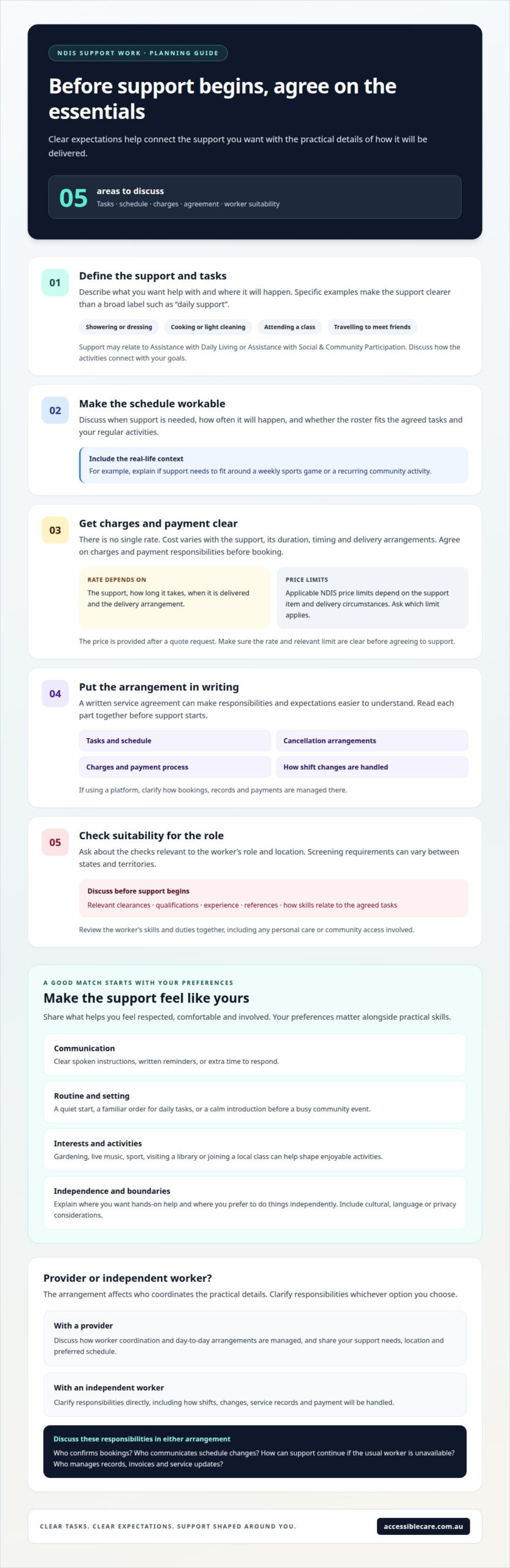
Start by defining the support you want and the tasks a worker will help with. NDIS support work can assist with everyday activities at home or in the community. You might need help with showering, dressing, cooking, light cleaning or attending a university class. Specific examples help clarify the practical skills involved and the time support may require.
In Australia, support work may be funded under Assistance with Daily Living or Assistance with Social & Community Participation. A provider can discuss which activities fit the support you’re seeking and how they relate to your goals. Be specific about tasks, such as preparing a meal or travelling with you to meet friends, rather than relying on a broad label like “daily support”.
Agree on the service arrangement before support starts. A written service agreement can set out the tasks, schedule, cancellation arrangements, charges and payment process. Read each part together, including how shift changes are handled. If you use a platform, clarify how bookings, records and payments are managed there.
Availability involves more than choosing a preferred day. Discuss when support is needed, how often it will happen and whether the schedule suits recurring activities, such as a weekly sports game. Ask how the proposed roster fits the agreed tasks.
The price depends on the support, its duration, timing and delivery arrangements, and is provided after a quote request. Applicable NDIS price limits depend on the support item and delivery circumstances, so the provider should identify the relevant limit when setting out the rate. Agree on charges and payment responsibilities before booking.
Screening requirements can vary between states and territories. Ask about the checks relevant to the worker’s role and location, including any required clearances. You can also discuss the worker’s qualifications, relevant experience and references, and how they relate to tasks such as personal care or community access. Review the worker’s skills and duties together before support begins.
There is no single rate. Cost varies with the support, its duration, timing and delivery arrangements. The applicable NDIS price limit also depends on the support item and delivery circumstances. Make sure the rate and relevant limit are clear before agreeing to support.
How a provider can match you with a support worker who suits your needs, interests and personality
A useful match starts with your routines, goals and preferences, not a generic worker profile. Explain what support looks like in practice. For example, you might prefer a calm introduction at home before attending a busy community event. Details like these help clarify what communication style and setting feel comfortable.
Discuss what helps you feel respected and involved. This might include how a worker gives instructions, supports decision-making or responds when plans change. Mention interests such as gardening, live music or watching sport, too. Shared interests can help shape enjoyable community activities, while your support needs and professional boundaries remain central.
- Communication: Explain whether you prefer clear spoken instructions, written reminders or extra time to respond.
- Routine: Describe important details, such as a quiet start to the morning or a familiar order for daily tasks.
- Interests: Name activities you want to pursue, such as visiting a library or joining a local class.
- Support approach: Outline where you want hands-on help and where you prefer to do things independently.
Share these details so the provider can consider workers whose experience and approach suit the agreed support. Assistance with community participation, for example, calls for a worker comfortable supporting outings and adapting to changes in plans. Personal preferences matter alongside practical skills. Explain any cultural, language or privacy considerations that affect how support should be delivered.
When choosing an NDIS support worker, discuss your goals, tasks, communication preferences, interests and boundaries. Ask how the proposed worker’s experience relates to your needs, and how you can give feedback if the arrangement needs adjusting.
A thoughtful matching conversation makes your preferences part of the support plan from the beginning. To explore how support work can fit your needs, consider the routines, interests and approach you’d like a worker to understand.
Finding support through an NDIS provider or an independent worker
In Australia, you can work with a provider or engage an independent worker. With a provider, discuss your support needs, location and preferred schedule, and how the proposed arrangement will work. For example, if you need support at home and help attending local activities, explain both settings so the arrangement reflects your routine.
To find support near you, share your suburb or travel area, where support should take place and when you need it. Discuss whether the worker’s location and availability suit the arrangement. If support involves regular travel, such as going to a community class, include the destination in the conversation.
Choosing between a provider and an independent worker depends on how you want support organised. Consider who coordinates shifts, communicates changes, manages service records and handles payment. With an independent worker, clarify these responsibilities directly. With a provider, discuss how worker coordination and day-to-day arrangements are managed.
- Coordination: Identify who confirms bookings and communicates schedule changes.
- Continuity: Discuss how support can continue if the usual worker is unavailable.
- Fit: Explain the tasks, settings and personal preferences that matter to you.
- Administration: Clarify who manages records, invoices and service updates.
For example, someone seeking help with cooking and community outings may value support from a consistent worker. Another person may prefer an organisation to coordinate different support needs. Neither arrangement suits everyone. Consider how much coordination you want and who will take responsibility for each practical task.
A provider can help you find an NDIS support worker in Australia by discussing your support needs and connecting them with a suitable worker. For a local match, share your area and the places support needs to cover. Then discuss the proposed arrangement, including coordination, continuity and responsibilities, before agreeing to services.
Connecting with a support worker through a provider
A provider can help turn your support needs into a practical connection with a worker. Start by explaining the activities you want help with, where support will happen and what matters in your working relationship. For example, note if you need assistance at home before an outing, or support to participate in a regular community activity.
A support coordinator or local area coordinator can help you understand support options and connect with providers. You can also approach an NDIS provider directly about support work. Share your location, preferred times and the assistance you’re seeking to focus the conversation on relevant arrangements.
Use these details to discuss a worker whose experience and approach align with your needs. If you’re working towards greater independence with daily activities, explain which tasks you want help with and which you prefer to do yourself. This helps shape the introduction around your goals, not just a list of tasks.
Before support begins, discuss how the first meeting will work. You might prefer to meet in a familiar place, have someone you trust present or begin with a short conversation about your routines. Agree on what information the worker needs, such as your communication preferences or important instructions for an activity.
- Introduce your priorities: Describe the goals and activities you want support to make possible.
- Clarify practical details: Explain locations, preferred times and how arrangements should be communicated.
- Plan the first interaction: Choose a setting and approach that helps you feel comfortable participating.
- Set a feedback pathway: Agree who you can speak with if your needs or routines change.
Keep communication clear as support gets underway. If your routine changes, explain what has shifted and which tasks are affected. This gives you, the provider and the worker a clear basis for discussing adjustments rather than relying on assumptions.
If you’re ready to discuss a connection for support work, speak with a support team about your needs and preferred arrangements.
Accessible Care: NDIS Support Services
Accessible Care provides NDIS support services, including person-centred support work shaped around your daily goals and preferences. Speech Therapy and Occupational Therapy may also be relevant if you’re looking for allied health support.
Share the activities you want assistance with, the routines that matter to you and how you prefer support to be delivered. This helps the team understand what you’re looking for and discuss suitable services. You remain involved in decisions about your support and the outcomes you want to work towards.
Contact Accessible Care to discuss your NDIS support needs and the next steps.
Take the next step towards support that fits
Choosing support can be the start of a new routine, relationship or opportunity to pursue a personal goal. As you consider how to find an NDIS support worker, keep your priorities at the centre of the conversation. Your needs may change over time, so consider what you want support to make possible now.
Accessible Care offers NDIS Support Services, Speech Therapy and Occupational Therapy in Melbourne and Adelaide. These services may be relevant if you’re considering support alongside therapy or exploring different forms of assistance for your goals. Start with a conversation about what matters to you and the support you’re seeking.
Contact Accessible Care to discuss your needs. Your goals can guide a thoughtful next step.
Frequently Asked Questions
What do NDIS support workers do?
NDIS support workers assist participants with everyday activities at home or in the community. This might include getting dressed, preparing food or taking part in a community activity. Tasks depend on the participant’s needs and goals. For example, a worker might provide practical assistance during cooking while supporting the participant to take part as independently as possible.
What is Support Work?
Support work provides practical assistance with daily living and participation. It can help someone with activities that are difficult to manage without support, such as personal care, household tasks or joining social and community activities. Support is shaped around the person’s situation and preferences, enabling participation rather than taking over tasks they can do themselves.
Should I use an NDIS registered provider or hire a support worker directly?
Choose the arrangement that best fits how you want support organised. A provider may suit you if you want an organisation to coordinate support. An independent worker may suit you if you prefer to manage the working relationship directly. Consider who will manage bookings, invoices and changes, and how you’ll maintain continuity if plans or needs change.
Can I use my NDIS plan to pay for a support worker, and does it depend on how my plan is managed?
Support work may be funded through Core Supports, including Assistance with Daily Living and Assistance with Social & Community Participation. Check your plan’s funded supports section for Core Supports. Your plan-management arrangement affects how payments are handled, so agree on who manages invoices and records. If your plan has no Core Supports funding, you can request a Plan Review and explain how a worker could help with your goals.
How do I check an NDIS support worker’s qualifications, experience and references?
Ask the provider to review the worker’s qualifications, relevant experience and references, and explain how they relate to the tasks involved.
What are the risks of hiring an independent NDIS support worker, and how can I stay safe?
With an independent worker, clarify who coordinates shifts, communicates changes, manages records and handles payment. Discuss relevant screening, then agree in a written service agreement on tasks, schedule, cancellation arrangements, charges and payment before support begins.

