

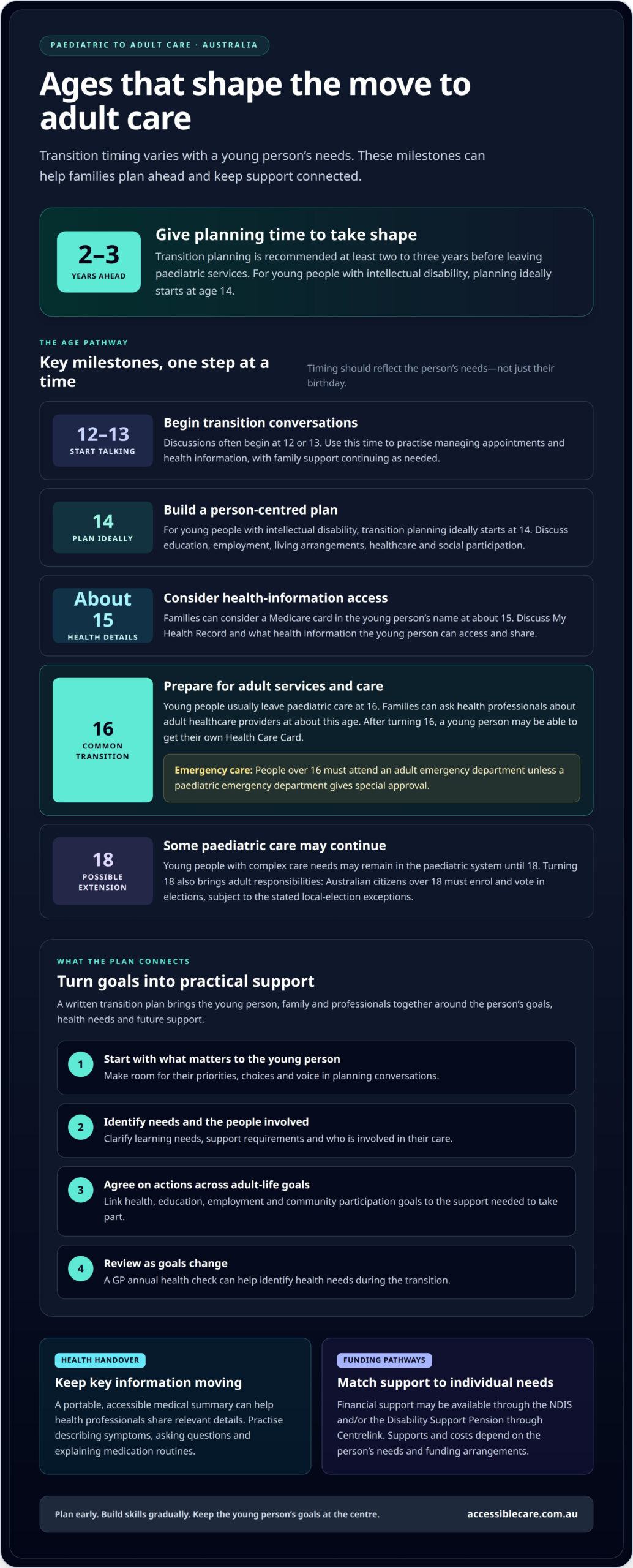
The move from paediatric to adult care usually happens at 16 in Australia, although young people with complex care needs may remain in the paediatric system until 18. Transitioning from paediatric to adult disability services is not just a change of age or provider. It can also mean different ways of organising care and involving the young person in decisions.
It’s understandable if this change feels uncertain for young people and their families. Planning ahead can make the shift clearer and help keep support connected to the person’s needs and goals. This article explains when the transition commonly happens, how adult services can differ from paediatric care, and what a person-centred plan can include.
You’ll also learn how families can prepare for changes in healthcare, daily support and decision-making. With time to build connections and discuss what matters, a young person can feel better supported as they move into adult life.
Key Takeaways
- Start transition conversations early and shape a plan around the young person’s goals, health needs and future support.
- Build independence gradually by helping the young person take part in health decisions and practise managing everyday aspects of their care.
- Use family resources and coordinated support to prepare for changes in responsibilities, services and adult life.
- Learn how adult services may place more responsibility on the young person, and how NDIS supports and therapies can help address their individual needs.
Purpose and planning of the transition to adult healthcare
A transition plan connects healthcare changes with a young person’s goals for adult life. Planning for transitioning from paediatric to adult disability services gives the young person, family and professionals time to prepare together.
Early Preparation for Adulthood
Early preparation means beginning conversations and building skills before paediatric support ends. For young people with intellectual disability, transition planning ideally starts at age 14; planning is recommended at least two to three years before leaving paediatric services. Discuss education, employment, living arrangements, healthcare and social participation, so the plan reflects the person’s priorities. At about 16, families can ask health professionals about adult healthcare providers.
Transition Plan Steps
A transition plan is a written, person-centred record of goals, health needs and future support. It turns broad hopes into practical conversations across services. Start by asking the young person what matters to them, then identify their learning needs, support requirements and the people involved in their care. Agree on actions for health, education, employment and community participation, and revisit the plan as goals change. A GP annual health check can help identify health needs during the transition.
For school-to-adult pathways, include next steps for further education, employment interests and community involvement. Link each goal to the support the young person may need to participate.
NDIS Planning and Self-Advocacy
NDIS planning connects a person’s goals with the disability supports they need. The young person’s own priorities should shape these conversations, even when it’s difficult to describe them in service-system language. Help them practise explaining what works, what support they want and what they hope to do next. Families can help them prepare while making room for the young person to speak and make choices.
Turning 18 also brings adult responsibilities. According to the Australian Electoral Commission, Australian citizens over 18 years must enrol and vote in local, state and federal elections, by-elections and referendums, subject to the stated local-election exceptions.
Funding Adult Disability Services
Funding options help meet eligible support needs, and the right pathway affects how a person can access assistance. Financial support may be available through the NDIS and/or the Disability Support Pension through Centrelink. The supports and costs involved depend on the person’s needs and funding arrangements; service costs vary by support and are not set out here.
When transitioning from paediatric to adult disability services, identify the supports needed for daily life, communication, health and participation. Then connect those needs with the person’s funding pathway and goals, rather than assuming every support is funded in the same way.
At what age do children leave the paediatric health system?
In Australia, children usually leave paediatric care at 16, while some with complex care needs remain until 18. Transition discussions often begin at 12 or 13, giving young people time to practise managing appointments and health information. The timing and preparation should reflect each young person’s needs, not just their birthday.
Building independence can begin with small steps: describing symptoms, asking a question during an appointment or explaining a medication routine. A young person can gradually take a more active role while family members continue to support them. Before an appointment, they might choose one topic to raise; afterwards, they can help record the next steps. These experiences can build confidence in speaking up and understanding their own health.
Health information should move with the young person. A portable, accessible medical summary can help health professionals share relevant details during a care handover. Discuss My Health Record as part of planning what information the young person can access and share. Families can also consider a Medicare card in the young person’s name at about 15. After turning 16, a young person may be able to get their own Health Care Card.
Plan for emergency care, too. In Australia, people over 16 must attend an adult emergency department unless a paediatric emergency department gives special approval. Help the young person practise explaining their condition, support needs and important health details. Agree on who can help communicate if they find this difficult during an emergency.
For support with building daily communication and self-management skills, explore NDIS support services as part of the young person’s wider transition planning.
Resources for families of young people with intellectual or developmental disabilities
For a young person with intellectual disability, transition can bring changes to healthcare, daily support and family roles. A clear handover and ongoing involvement can help address gaps as adult services begin.
Transition Experiences
Transition describes how a young person and their family adjust as paediatric support gives way to adult services. For some young Australians with intellectual disability, life after school can mean moving from structured support to services with less continuity. Families of young people with autism have also reported taking on more responsibility for coordinating services after paediatric care ends. Identifying this risk early gives everyone time to plan for handover and follow-up.
Balancing Family Involvement and Autonomy
Balancing family involvement with autonomy means supporting the young person’s choices and helping them communicate their needs. Service planning can involve complex, bureaucratic language that makes personal goals harder to express. Families can help by turning goals into clear examples, such as wanting support to join a community activity. Keep the young person’s preferences central in meetings and written plans.
Consent After Age 18
Consent after 18 means health professionals may need the young person’s agreement before discussing their care with parents or carers. Talk about this change before adulthood, including what information the young person wants shared and with whom. A practical step is to discuss how the young person can take part in appointments, ask questions and communicate consent. Family support can continue, while respecting their choices and privacy.
Finding Adult Services and Coordinators
Finding adult disability services means matching the young person’s goals and support needs with services available in their state or territory. Families can start with the current health team and NDIS planning conversations, asking which adult supports fit the person’s goals. A named transition coordinator can provide a consistent contact across service systems. To reduce handover gaps, agree on who will coordinate follow-up and what information adult services need.
Differences between paediatric and adult service models
Paediatric services often involve parents and coordinate care around a child’s development. Adult services place greater emphasis on the young person’s direct relationship with clinicians and involvement in decisions. This change can affect who receives appointment information, who coordinates referrals and how follow-up happens. A planned handover helps clarify these responsibilities rather than assuming they will carry over automatically.
For example, an adult provider should actively manage the transition and follow up after the young person leaves paediatric care. The handover can include medical documents and a clear summary of current supports, ongoing health needs and agreed next steps. Some paediatric care may not require an adult specialist, while other needs call for a new adult health contact. The distinction depends on what care remains relevant.
NDIS supports and state or territory adult services serve different purposes. The NDIS can fund disability-related supports linked to a person’s needs and goals; adult health services provide healthcare, such as treatment from a doctor. These systems may work alongside each other, but a healthcare appointment and disability support are not interchangeable. A plan should identify which system addresses each need.
After 18, paediatric therapy or mental health care does not automatically become an adult service. The young person may need an adult clinician or another suitable pathway, while some paediatric care may not require transfer. Before care changes, clarify who will provide each continuing service, where records will go and who follows up. A period of overlap can be discussed with health professionals before about 17, helping the young person meet an adult specialist while still seeing paediatric clinicians.
For practical disability support alongside adult healthcare, explore NDIS support services that can align with a young person’s goals and daily needs.
Accessible Care: NDIS Support Services
Accessible Care can support a young person’s adult-life goals through NDIS Support Services. This may be a useful next step when disability-related assistance is needed beyond paediatric healthcare. Support should reflect the person’s needs, preferences and NDIS goals.
Depending on individual needs, support may include Support Work, Speech Therapy, Occupational Therapy or Positive Behaviour Support. These services can help with practical goals, such as communicating preferences, developing daily living skills or participating in the community. The young person’s voice remains central to decisions about the support they receive.
If you’re considering support for a young person’s transition, contact Accessible Care to discuss their needs and goals.
Make the next step one the young person can shape
Moving into adult life is not a single handover. It’s an opportunity for a young person to keep shaping how support fits their routines, relationships and ambitions. As confidence grows, their preferences may change. Make room for those changes and keep their voice part of conversations about what comes next.
For families transitioning from paediatric to adult disability services, a useful next step is to identify one priority the young person wants support with now. It might be communicating more independently, building a daily living skill or taking part in a community activity. Focusing on one manageable priority can turn broad intentions into progress that feels relevant to the person.
Accessible Care offers NDIS Support Services, Speech Therapy and Occupational Therapy to support individual needs and goals. If you’d like to discuss the next step, contact Accessible Care. A thoughtful transition can grow from listening, shared decisions and support shaped around the young person.
Frequently Asked Questions
What is transition?
Transition is a planned move from child-centred to adult-oriented healthcare for adolescents and young adults with ongoing health needs. It involves more than changing clinics. A young person might gradually take part in discussing symptoms, communicating preferences and making care decisions. The process aims to support continuity while recognising the person’s developing independence and priorities for adult life.
How does transition from paediatric to adult disability services work in Australia?
Transition involves preparation, a handover and follow-up with adult services. The young person’s needs help determine which paediatric care continues, which services transfer and who coordinates each part. For example, an adult clinician may need a health summary and details of current treatment before the first appointment. A planned introduction can help the young person become familiar with the new team.
When should transition planning from paediatric to adult disability services begin?
Begin planning in early adolescence rather than waiting for paediatric care to end. For young people with intellectual disability, transition ideally starts at age 14, with planning recommended two to three years before leaving paediatric services. Early conversations give the young person time to identify priorities, practise describing support needs and build familiarity with adult healthcare. Families can raise transition planning during regular health appointments.
What are the eligibility rules for the NDIS when a young person turns 18?
Turning 18 does not, by itself, describe NDIS eligibility. Accessible Care explains that the NDIS provides reasonable and necessary supports to Australians under 65 with a permanent and significant disability. The relevant considerations include age, disability and the supports needed. A young person’s existing goals and changing adult-life needs can help frame discussions about the support they seek.
What legal, consent and decision-making changes apply at 18 for people with disability in Australia?
At 18, consent and decision-making become especially important, but legal arrangements can differ by state or territory. In NSW, the law assumes a person can make their own decisions after turning 18. Health professionals might need the young person’s consent to discuss their care with parents or carers. Talk beforehand about what information they want shared and how they wish family to support appointments.

