

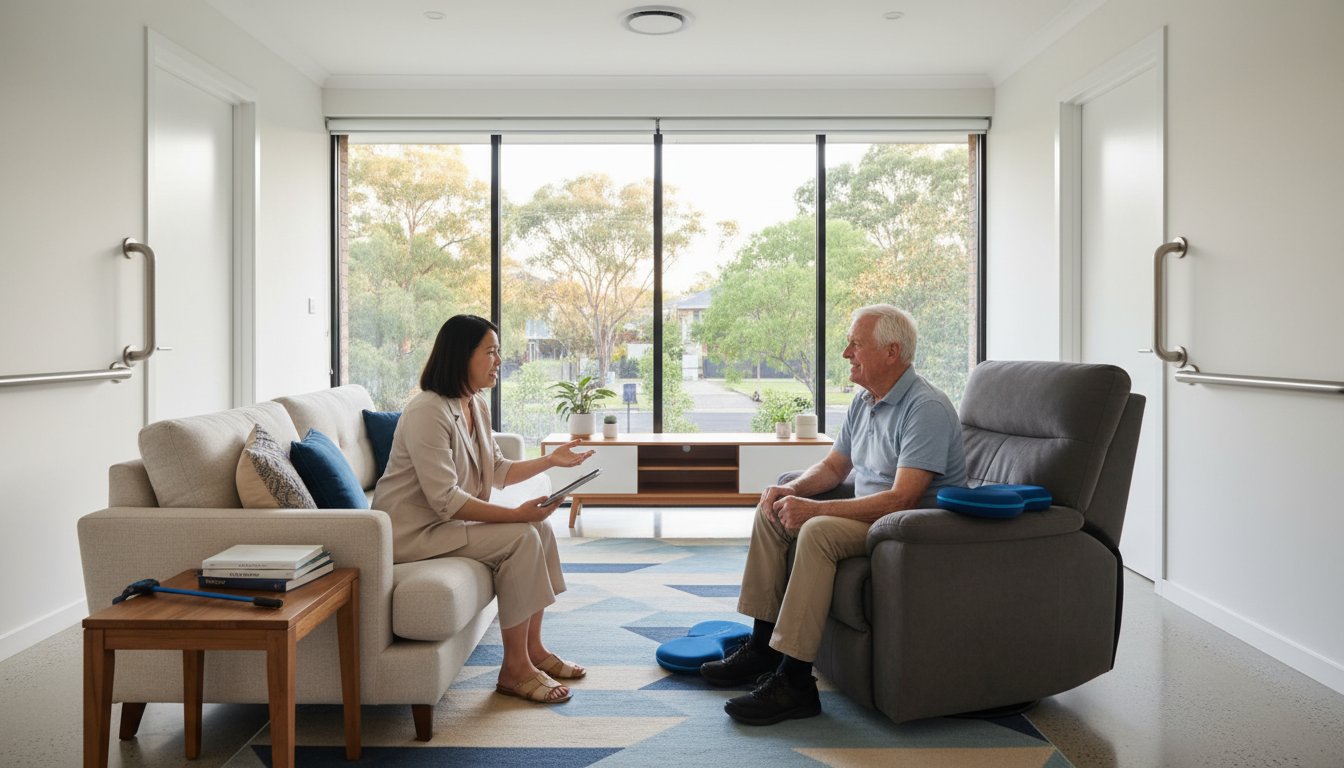
Imagine the frustration of sitting in your favourite armchair, wanting a cup of tea, but feeling held back by the physical effort it now takes to reach the kettle. For the 80 percent of Australians over age 60 who want to remain in their own dwellings as they age, according to 2020 AHURI research, these small daily hurdles can feel like mountain peaks. You deserve to feel safe and capable in your own space, yet navigating the NDIS or worrying about new people entering your home can feel overwhelming. We understand that your independence isn’t just a goal; it’s your dignity. This is where adult occupational therapy at home makes a life-changing difference by bringing professional care directly to your doorstep.
We believe that you’re the expert on your own life. In this guide, you’ll learn how personalised support can help you regain control over routines like showering or cooking with significantly less pain. We’ll show you how a compassionate therapist listens to your needs to remove physical barriers and simplify the NDIS process. By the end of this article, you’ll have a clear path toward staying in your home longer, feeling empowered to live your life, your way.
Key Takeaways
- Learn how focusing on your meaningful daily activities can help you regain independence and navigate your home with greater confidence.
- Discover the practical benefits of receiving adult occupational therapy at home, where support is tailored to the specific environment where you live and thrive.
- Explore how professional assessments identify creative ways to manage fatigue and pain, making your daily routine easier and more enjoyable.
- Understand how to navigate NDIS funding and the importance of Functional Capacity Assessments in accessing the right level of care for your needs.
- Find out how a compassionate, partner-led approach to therapy empowers you to live life your way with dignity and respect.
What is Adult Occupational Therapy at Home?
Adult occupational therapy at home is a specialized service designed to help you regain or maintain your independence within your own living space. Unlike clinical settings, this approach brings the therapist to you. It focuses on the “occupations” of your life. These aren’t just jobs; they’re the essential activities that fill your day, such as preparing a meal, managing personal grooming, or engaging in a favorite hobby. By working in your actual environment, a therapist can see exactly where you face hurdles and find practical, real-world solutions.
Choosing adult occupational therapy at home means your recovery happens where you feel most secure. There’s a significant difference between practicing a task in a sterile hospital gym and doing it in your own kitchen. In your home, the therapist sees the height of your counters, the grip of your bathroom tiles, and the layout of your furniture. This context allows for a level of precision that a clinic simply can’t match. Most importantly, receiving care in your private space requires a foundation of dignity and respect. Our therapists enter your home as guests and partners, ensuring you feel comfortable and empowered throughout every session.
The Goal of OT: Your Choice, Your Life, Your Way
The heart of our approach is centered on the belief that you’re the expert in your own life. We don’t arrive with a rigid checklist of clinical interventions. Instead, we start by listening. We want to know what you want to achieve, whether that’s walking to the mailbox or being able to cook for your family again. This person-centered focus ensures that every goal is your goal. When you’re the one leading the journey, your confidence grows. This mental well-being is just as vital as physical recovery. It’s about empowering you to live the life you choose, with the support you need to make it happen.
Who Can Benefit from In-Home OT Services?
Our mobile services are designed for a wide range of participants who face different life challenges. We provide specialized support for those living with an acquired brain injury, helping them navigate cognitive or physical changes in a familiar setting. Additionally, we work closely with NDIS participants who require tailored strategies to manage intellectual or physical disabilities. For older Australians, adult occupational therapy at home is a key tool for aging in place safely. With over 15% of the Australian population now aged 65 and over, the need for home-based safety assessments and mobility support has never been higher. We help ensure your home remains a place of safety rather than a source of stress.
- NDIS Participants: Tailored support to meet specific plan goals and improve daily living skills.
- Stroke and Injury Recovery: Rehabilitation that focuses on regaining motor skills and cognitive function.
- Seniors: Home modifications and fall prevention strategies to support long-term independence.
- Chronic Condition Management: Learning new ways to complete tasks while managing fatigue or pain.
Key Areas of Support: How an OT Transforms Your Daily Life
When a therapist visits you, they look at more than just physical movement. Adult occupational therapy at home focuses on the “whole person,” blending your physical health with your mental well-being. This process starts with a comprehensive assessment of your daily living skills. By observing you in your natural environment, an OT can identify exactly where a routine might be causing fatigue or pain. They don’t just suggest exercises; they look at how your home’s layout affects your energy levels and mood.
This holistic approach involves working with a multidisciplinary team of physiotherapists and support coordinators. By sharing insights across different specialties, your OT ensures that your home design, medical needs, and personal goals all align. It’s about creating a space where you feel safe and empowered to take charge of your day, rather than feeling restricted by your surroundings.
Mastering Daily Activities and Routines
Daily tasks like dressing, grooming, and preparing meals are the building blocks of independence. Your OT provides practical techniques to make these easier. For instance, they might teach you “energy conservation” methods to manage chronic fatigue during a busy morning. If memory is a concern, they can set up cognitive supports like digital reminders or simplified household management systems. Safety is always the priority. Since research from the Australian Institute of Health and Welfare suggests that about 42% of injury-related hospitalisations are due to falls, your therapist focuses on making your bathroom and kitchen as secure as possible.
Home Modifications and Assistive Technology
Sometimes, independence requires a change to your physical environment. Your OT identifies if you need grab rails, ramps, or a full bathroom redesign to improve accessibility. They prescribe assistive technology that ranges from simple weighted cutlery to complex mobility equipment. Every recommendation follows strict NDIS building and safety standards, such as the AS 1428.1 design for access and mobility. This ensures your home isn’t just functional, but also meets the high-quality benchmarks required for long-term safety. If you’re feeling overwhelmed by these technical choices, you can reach out to our compassionate team for guidance on the next steps.
Community Participation and Vocational Support
Independence doesn’t stop at your front door. Adult occupational therapy at home extends into your local neighbourhood. Your therapist helps you build the confidence to use public transport or visit local shops safely. If you’re in Melbourne or Adelaide, we offer tailored programmes that reconnect you with social groups and community events. For those looking to return to work or study after an injury, OTs provide vital vocational support. This includes workplace assessments and strategies to manage your workload while maintaining your health and dignity.
Why Choose In-Home Therapy Over Clinic-Based Visits?
Choosing adult occupational therapy at home means your recovery and skill-building happen where life actually unfolds. For many, the most significant barriers to independence aren’t found in a sanitized clinic, they’re found in the hallway, the bathroom, or the kitchen. When a therapist visits you, they see these challenges in real-time. This immediate context allows for solutions that work for your specific floor plan and daily habits.
The physical toll of traveling shouldn’t be ignored. Data from the Australian Institute of Health and Welfare shows that transport is a primary barrier for 16% of people with disability. By removing the need to commute, you save your energy for the session itself. You won’t arrive at your appointment feeling exhausted from navigating traffic or parking. Instead, you’re ready to focus on your goals in a space where you feel most secure.
- Direct Environment Assessment: We identify trip hazards, like rugs or poor lighting, that a clinic setting would never reveal.
- Immediate Integration: You can practice a new reaching technique and then use it to grab a glass from your own cupboard five minutes later.
- Reduced Anxiety: Being in a familiar environment lowers stress levels, which helps with cognitive processing and learning new tasks.
The Clinical Advantage of the Home Environment
Practicing “functional” tasks in your own kitchen beats a simulated setup every time. There’s a well-documented “transfer of skills” gap where patients perform well in a clinic but struggle to repeat those actions at home. Research in the Australian Occupational Therapy Journal indicates that home-based interventions often lead to more sustainable long-term outcomes. We also involve your family or carers naturally. They see the strategies we use and can provide consistent support long after the therapist leaves for the day.
Addressing the Objection: Is It as Effective?
It’s common to wonder if a home visit lacks the “power” of a fully equipped clinic. However, 2020 meta-analysis data confirms that mobile allied health services are just as effective as outpatient clinics for improving daily living activities. Modern therapists use portable, high-precision assessment tools to measure everything from grip strength to cognitive function right in your lounge room.
We take your privacy seriously. Every session is conducted with professional boundaries that respect your role as the head of your household. We aren’t just guests; we’re partners in your journey toward independence. Your choice, your life, your way is the foundation of how we provide adult occupational therapy at home, ensuring you feel empowered rather than overwhelmed.
Navigating NDIS Funding for In-Home Occupational Therapy
Understanding the NDIS can feel like learning a new language, but it’s the key to unlocking your independence. Most adult occupational therapy at home is funded through the “Capacity Building – Improved Daily Living” budget. This category is designed to help you build the skills needed for a more autonomous life. If you require specialized equipment, such as a custom wheelchair or a height-adjustable bed, funding may also be drawn from your “Capital – Assistive Technology” or “Core – Consumables” budgets.
The foundation of your funding journey is the Functional Capacity Assessment. This isn’t just a clinical checklist. It’s a comprehensive report that tells your story to the NDIS. Our OTs use this assessment to provide clear evidence of how your disability affects your daily routine. This document is vital during plan reviews to ensure you receive the right level of support for the year ahead.
When it’s time for home modifications, the NDIS follows the “reasonable and necessary” criteria outlined in Section 34 of the NDIS Act 2013. Your OT acts as your advocate, proving that a modification—like a ramp or a walk-in shower—is a cost-effective way to reduce your reliance on others. They handle the complex reporting required to show that these changes are directly related to your goals and represent value for money.
Preparing for Your First OT Assessment
Your first visit is a gentle, supportive conversation. To make the most of it, have your current NDIS plan, medical history, and a list of your daily challenges ready. We focus on listening to you. We’ll look at how you move through your kitchen or bathroom, but we do it with total respect for your privacy. You have the right to express your preferences at every step. It’s your home, and your choice always comes first.
Managing Your NDIS Plan with Your OT
For participants with more complex health requirements, high intensity supports are often necessary to maintain safety. Your OT tracks your progress against your specific NDIS goals throughout the year. If your needs change, they can provide the clinical justification needed to request more support hours. This constant monitoring ensures you aren’t left without care when you need it most. We’re here to help you advocate for the resources that keep you thriving in your own community.
Ready to maximize your NDIS support? Contact our compassionate team to book your home assessment today.
Accessible Care: Your Partner in Home-Based OT
Choosing the right partner for adult occupational therapy at home is a significant decision for your future. We believe every participant deserves a provider who listens first. Our approach across Victoria and South Australia centers on your unique story and personal goals. We don’t just provide services; we build a supportive partnership that respects your dignity and choices. Our skilled OTs find creative ways to adapt your environment, whether that involves recommending a specific high-tech kitchen aid or redesigning a bathroom layout to prevent falls and increase confidence.
We understand that health needs are often interconnected. That’s why we offer integrated support that links your OT goals with other essential services. If you face challenges with communication or swallowing, we can coordinate directly with our speech pathology team to ensure a holistic care plan. By combining OT expertise with nursing and speech support, we create a seamless experience. This integrated model reduces the stress of managing multiple providers and ensures every professional is working toward the same outcome: your independence.
Serving the Melbourne and Adelaide Communities
Our mobile teams travel directly to your door, whether you live in the heart of the Adelaide metropolitan area or the diverse suburbs of Melbourne. This local presence is vital because we understand the specific NDIS pathways in South Australia and Victoria. Our knowledge of local community resources helps us navigate the system more effectively for you. We’ve helped participants from the Mornington Peninsula to the Adelaide Hills access the equipment and modifications they need through trusted local suppliers. Our promise is to be a provider who listens, putting your dignity and comfort at the forefront of every visit.
How to Get Started with Accessible Care
Starting your journey toward better health shouldn’t feel like another hurdle to clear. We’ve designed a simple, pressure-free referral process specifically for NDIS participants and their families. When you reach out to us, we prioritize a fast and helpful response. You can expect a follow-up from our compassionate team within 48 hours to discuss your situation. During this initial conversation, we focus entirely on what you want to achieve. It’s about your choice, your life, your way. Taking that first step toward a more independent life at home is as easy as sending a message. We’re ready to help you live the life you choose on your own terms.
Your Path to a More Empowered Life at Home
Choosing the right support is a vital step toward reclaiming your autonomy. By bringing adult occupational therapy at home directly to you, the focus remains on your comfort and your specific goals. You’ll find that practicing daily tasks in your own kitchen or bathroom makes progress feel more natural and sustainable. Accessible Care operates as a Registered NDIS Provider, ensuring you have a reliable partner to help navigate your funding and care requirements.
Our experienced multidisciplinary team understands that every participant has a different story. We provide specialised support for ABI and complex care, focusing on dignity and respect throughout the process. It’s your life and your choice. We’re simply here to provide the tools and professional guidance you need to thrive in the environment you love most. You deserve a home that works for you, not against you.
Empower your independence; book your in-home OT assessment with Accessible Care today.
We look forward to supporting you as you build a brighter, more independent future.
Frequently Asked Questions
Is adult occupational therapy at home covered by the NDIS?
Yes, adult occupational therapy at home is covered by the NDIS under the Capacity Building – Improved Daily Living support category. According to the 2023-24 NDIS Price Guide, participants can use their budget to fund therapeutic supports that help them achieve independence. We work with you to ensure your plan reflects your goals so you can access the professional care you deserve in the comfort of your own space.
What is the difference between an OT and a physiotherapist?
An occupational therapist focuses on your ability to perform daily tasks, while a physiotherapist focuses on your physical movement and strength. OTs look at your environment and tools to help you manage activities like dressing or cooking safely. A 2022 study by the Australian Journal of General Practice notes that OTs specialise in functional independence. This means we help you adapt your home to suit your unique physical needs and lifestyle.
How long does a home occupational therapy assessment take?
A standard home assessment typically takes between 90 and 120 minutes to complete. During this time, your therapist will observe how you move through your home and discuss your daily challenges. We take the time to listen to your concerns because your comfort is our priority. This thorough approach ensures we create a tailored plan that truly supports your independence and respects your personal space.
Do I need a referral to see an occupational therapist at home?
You don’t need a formal GP referral to access adult occupational therapy at home if you’re a private client or NDIS participant. While doctors often provide recommendations, you can contact us directly to start your journey toward better independence. We believe in making care accessible and straightforward, so you can get the support you need without jumping through unnecessary hoops or waiting for extra paperwork.
Can an OT help with major home renovations like bathroom modifications?
Yes, our therapists provide the essential clinical reports and designs required for major bathroom modifications. We ensure all changes meet the AS 1428.1 standards for access and mobility to keep you safe. By working closely with builders, your OT ensures that every grab rail or walk-in shower is placed exactly where you need it. This professional oversight gives you peace of mind that your home will be both functional and beautiful.
What happens if I don’t feel comfortable with my therapist?
Your comfort and trust are vital, so you can request a different therapist at any time if you don’t feel a strong connection. We understand that inviting someone into your home requires a high level of confidence. Our team prioritises your dignity and will work quickly to find a professional who better suits your personality and needs. We’re here to support you, and that means ensuring you feel safe and heard.
How often will the occupational therapist need to visit my home?
The frequency of visits depends on your specific goals, but most participants start with a fortnightly or monthly schedule. For equipment trials or home modifications, visits may be more frequent over a 4 to 8 week period. We typically conduct a formal review of your progress every 6 months to ensure your support remains effective. Your therapist will always collaborate with you to decide on a rhythm that fits your life and energy levels.
Can I receive OT at home if I am not an NDIS participant?
Yes, you can access our services through Medicare, My Aged Care, or as a private client. If you have a Chronic Disease Management plan from your GP, you may be eligible for a Medicare rebate on up to 5 sessions per calendar year. We’re committed to empowering everyone in our community to live safely at home. No matter your funding source, you’ll receive the same compassionate, high-quality care tailored to your situation.

