


What if the “behaviours of concern” you manage every day aren’t problems to be fixed, but a vital form of communication waiting to be heard? It’s incredibly taxing to live in a constant state of high alert, feeling judged by the community or exhausted by the next looming crisis. You likely feel that your current path is unsustainable; you’re searching for a way to bring peace back to your home while ensuring your loved one is treated with the dignity they deserve.
We understand that managing an NDIS behaviour support plan can feel overwhelming, especially when you’re already stretched thin. You deserve a partner who listens first and acts with empathy, focusing on the person rather than just the process. In this guide, we’ll show you how a dedicated behaviour support practitioner uses evidence-based strategies to reduce distress and increase independence. We’ll break down how NDIS funding categories work in Australia and explain how a holistic, person-centric approach can finally unlock a better quality of life for your whole family.
Key Takeaways
- Learn how a practitioner views challenging behaviours as a vital form of communication, helping to uncover unmet needs and restore calm to your daily life.
- Discover how an NDIS behaviour support plan focuses on evidence-based strategies that prioritize your loved one’s dignity and independence over control.
- Understand the collaborative assessment process used to identify sensory or environmental triggers, ensuring support is tailored to your family’s unique situation.
- Identify which NDIS funding categories cover these services and learn how to choose a practitioner who values autonomy and self-direction.
- Explore how a multidisciplinary approach can provide a more holistic path toward greater community participation and long-term wellbeing.
What is a Behaviour Support Practitioner and How Can They Help?
A behaviour support practitioner is much more than a clinical consultant. They’re specialists who dedicate their expertise to understanding why “behaviours of concern” happen in the first place. Often, these behaviours are a person’s way of saying something they can’t put into words. Instead of focusing on control, these practitioners look for the unmet need, whether it’s sensory distress, a lack of choice, or physical discomfort. This deep understanding forms the foundation of a successful NDIS behaviour support plan, ensuring the individual feels seen and heard.
The heart of their work lies in Positive Behaviour Support (PBS). This isn’t about “fixing” a person; it’s an evidence-based approach that places human rights and dignity at the centre of every strategy. Their primary goal is to improve the overall quality of life for the individual and their family. When life becomes more predictable, accessible, and fulfilling, the need for challenging behaviours often decreases. You aren’t just getting a service provider; you’re gaining a partner who walks alongside you, listens to your lived experience, and respects your family’s unique rhythm.
The Role of a Practitioner in the NDIS Landscape
In Australia, the NDIS Quality and Safeguards Commission sets high standards for this profession. Every practitioner must be registered and meet strict suitability requirements to ensure they provide safe, ethical care. Their main responsibility is to develop a comprehensive NDIS behaviour support plan. This document isn’t just a piece of paper; it’s a living roadmap that outlines proactive strategies and response plans tailored to specific needs. Beyond writing the plan, they provide essential training to you, your family, and your support staff. This ensures everyone is on the same page, feeling confident and capable of providing support that truly helps.
Why ‘Positive’ Support Makes a Difference
Traditional approaches sometimes relied on reactive measures or punishment, but PBS turns that model on its head. It focuses on making proactive changes to a person’s environment to remove triggers before they cause distress. This might involve adjusting lighting for someone with sensory sensitivities or creating visual schedules to reduce anxiety about the day ahead. By teaching new skills, such as emotional regulation and effective communication, the practitioner empowers the individual to express themselves safely. Positive Behaviour Support is a holistic framework that prioritizes a person’s dignity while building their capacity for a meaningful life. This shift from “managing” to “empowering” creates a calmer home and fosters genuine independence.
The Positive Behaviour Support Process: What to Expect
The journey toward a calmer, more fulfilling life isn’t a one-size-fits-all approach. It’s a collaborative path we walk together, beginning with a deep, compassionate look at your unique circumstances. We don’t just want to see a reduction in “behaviours of concern”; we want to see more smiles, more community outings, and more personal wins. Success is measured by happiness and participation, not just compliance. This process is designed to be low-stress, acting as a supportive scaffold for your family rather than an added burden.
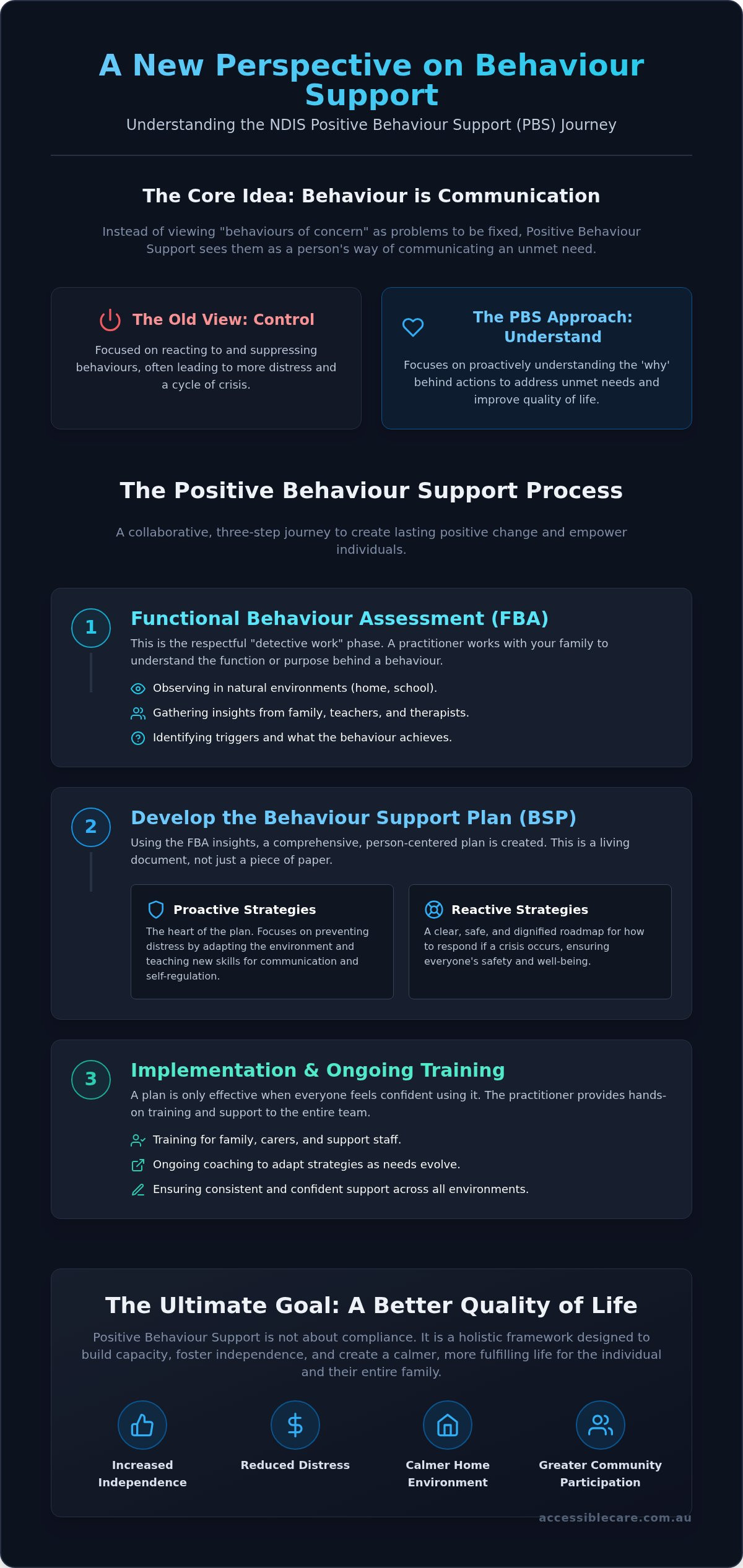
Step 1: The Functional Behaviour Assessment (FBA)
The Functional Behaviour Assessment (FBA) is the first essential step. Think of it as respectful detective work into the “why” behind specific actions. A practitioner will observe your loved one in their natural environments, such as your home or their school, to see what triggers distress and what the behaviour achieves for the person. By gathering insights from you, teachers, and other therapists, we build a full, empathetic picture of what the person is trying to communicate.
Step 2: Developing the Behaviour Support Plan (BSP)
Step 3: Implementation and Ongoing Training
A plan is only as good as its implementation. Practitioners spend time training your entire support circle, from parents to support workers, on how to use these strategies effectively. Ongoing coaching ensures that the advice works in real-life situations, not just on paper. Regular reviews keep the support relevant as needs change. If you’re looking for a partner to help navigate this journey, Accessible Care offers compassionate guidance tailored to your family’s needs through every stage of the process.
Understanding Behaviours of Concern as Unmet Needs
Challenging behaviour is rarely random. It’s usually a powerful, non-verbal message from someone who lacks the words to express their distress. When we stop seeing these actions as “problems” and start seeing them as unmet needs, everything changes. This perspective is the cornerstone of a compassionate NDIS behaviour support plan. It moves the focus away from compliance and toward genuine care. Root causes often include sensory overwhelm, hidden physical pain, or a deep-seated frustration from a lack of autonomy. By identifying and addressing these triggers, the person no longer needs to use behaviour to get their point across. This shift doesn’t just help the individual; it lifts the heavy burden of stigma and blame from families, replacing judgment with a shared goal of wellbeing.
The Connection Between Communication and Behaviour
Frustration is a natural response when your choices or feelings go unheard. If a person can’t say they’re tired or that a room is too loud, they’ll find another way to show it. This is why we integrate Speech Pathology into our holistic support model. Practitioners might introduce Augmentative and Alternative Communication (AAC) systems, such as picture boards or speech-generating devices. These tools provide a reliable way for people to advocate for themselves. When communication becomes easier, the distress that fuels challenging behaviour often begins to fade.
Sensory Needs and Environmental Factors
Everyday environments can be overwhelming for those with sensory processing sensitivities. A buzzing fridge or a bright supermarket aisle can feel physically painful or threatening. To create a truly supportive NDIS behaviour support plan, we often look to Occupational Therapy for guidance on environmental modifications. Simple changes can make a world of difference. Softening the lighting, reducing background noise, or establishing a predictable daily rhythm helps lower anxiety. When a person’s surroundings feel safe and tailored to their needs, they can focus on enjoying life and participating in their community with confidence.
NDIS Funding and Choosing the Right Practitioner
Finding the right path forward often begins with understanding how the NDIS supports these vital services. Typically, funding for a behaviour support practitioner is found under the “Capacity Building – Improved Relationships” category of your plan. This funding is designed to help you build a more stable, positive life by providing expert guidance tailored to your specific needs. However, a practitioner is more than just a line item in a budget. They should act as an expert navigator for your family, helping you move through the complexities of the system with ease and confidence.
When you’re choosing a professional to step into your life, empathy and a respect for autonomy are non-negotiable. You want someone who sees the person behind the behaviour and treats them with the dignity they deserve. It’s also essential to look for specific experience. Some practitioners specialize in early childhood, while others have deep expertise in supporting adults with complex intellectual disabilities or autism. Finding someone who understands your unique journey makes the collaborative process much more effective and reassuring.
Understanding Your NDIS Plan Categories
To get started, check your NDIS plan for the specific line item “Specialist Behavioural Intervention Support.” This is the funding used to engage a practitioner to conduct assessments and create a comprehensive NDIS behaviour support plan. It’s also important to know that this funding covers more than just the document itself. It includes the essential training and ongoing coaching for your family and support staff. This ensures that everyone knows how to implement the “Behaviour Management Plan” strategies safely and effectively. If you’re unsure where to look, your Support Coordinator can help you identify your available budget and connect you with trusted providers like Accessible Care.
Questions to Ask a Potential Practitioner
Choosing a partner in your care is a big decision. You deserve to feel comfortable and heard from the very first meeting. Here are a few questions to help you find the right fit:
- How do you involve the participant in the planning process? A good practitioner prioritizes the individual’s voice and choices whenever possible.
- What is your approach to reducing restrictive practices? The goal should always be to move toward the least restrictive options while maintaining safety.
- How do you collaborate with my other therapists? Success often depends on how well the practitioner works with your Speech Pathologist or Occupational Therapist.
At Accessible Care, we pride ourselves on being a supportive partner that values your family’s expertise and lived experience. If you’re ready to take the next step toward a calmer home environment, you can learn more about our compassionate NDIS support services and how we can help you achieve your goals.
Accessible Care: Compassionate Behaviour Support in Melbourne and Adelaide
At Accessible Care, we believe that every person’s story is unique. We don’t just see a set of challenges; we see a person with dreams, preferences, and a right to a fulfilling life. Our approach to creating an NDIS behaviour support plan starts with our signature promise: attentive listening. We take the time to deeply understand your family’s journey, ensuring our support feels like a natural extension of your home rather than an outside intervention. Whether you’re in the heart of Melbourne or the suburbs of Adelaide, our goal is to foster a sense of belonging and empower the independence your loved one deserves. You’re never just a number to us; you’re a partner in a shared mission to improve quality of life.
For those navigating more complex situations, our team has specialized expertise in high intensity supports. We understand the extra layers of care required for intricate medical or behavioural needs, and we’re here to provide the steady, professional hand you need. This focus on complex care ensures that even the most significant “behaviours of concern” are met with clinical excellence and profound empathy.
Our Multidisciplinary Approach
We know that behaviour doesn’t exist in a vacuum. It’s often tied to how a person communicates or how they process the world around them. That’s why our PBS practitioners don’t work in isolation. They collaborate closely with our Speech Pathologists (SLPs) and Occupational Therapists (OTs) to build a cohesive strategy. This means communication barriers and sensory sensitivities are addressed right alongside the NDIS behaviour support plan. Having a single, unified team reduces the stress of repeating your story to multiple providers. It ensures every therapist is rowing in the same direction toward your family’s goals, leading to more consistent and faster outcomes.
Serving the Melbourne and Adelaide Communities
Our roots are deep in the local NDIS landscapes of Victoria and South Australia. We understand the specific regional resources and community networks that can make a difference in your loved one’s life. Because we believe support should happen where life happens, our team travels to you. Providing assistance in a participant’s natural environment-whether that’s at home, school, or in the local park-allows us to see the real-world context of their daily life. This in-home approach minimizes the stress of travel for the participant and provides carers with strategies that actually work in their own living space. If you’re looking for a practitioner who treats you with dignity and truly hears your concerns, reach out to Accessible Care for a compassionate partner in your journey.
Taking the Next Step Toward Positive Change
Understanding that challenging behaviour is a form of communication is the first step toward lasting change. By looking past the surface and addressing unmet needs, you can transform daily life into something more predictable and joyful. A well-crafted NDIS behaviour support plan isn’t just a clinical requirement; it’s a compassionate roadmap designed to honor your loved one’s autonomy and build their independence. This approach shifts the focus from managing crises to fostering genuine connection and community belonging.
You don’t have to navigate this complex system alone. As a registered NDIS provider with a compassionate, multidisciplinary team of therapists, we’re here to provide the local support you need in Melbourne and Adelaide. We listen first, act with empathy, and stay by your side through every milestone, ensuring your family feels supported and heard at every turn. Peace of mind is possible when you have the right partners walking with you.
Start your journey toward a calmer, more empowered life with Accessible Care. You deserve a home environment filled with peace and a future full of genuine possibility.
Frequently Asked Questions
What is the difference between a psychologist and a behaviour support practitioner?
A psychologist often focuses on diagnosing and treating mental health conditions through clinical therapy, while a behaviour support practitioner specializes in analyzing the environment and communication behind specific actions. While some practitioners are psychologists, their role here is to create a functional NDIS behaviour support plan. They focus on practical strategies to improve quality of life and reduce distress by modifying surroundings and teaching new, adaptive skills to the individual.
Can NDIS funding be used for behaviour support for children?
Yes, NDIS funding is frequently used to provide behaviour support for children, especially through early childhood intervention or capacity building budgets. Addressing behaviours of concern early helps children develop essential communication and regulation skills before they reach school age. Our team works closely with families to ensure the support is gentle, age-appropriate, and focused on helping your child thrive in their natural play and learning environments.
How long does it take to develop a Behaviour Support Plan?
Developing a comprehensive NDIS behaviour support plan usually takes between four to eight weeks from the initial assessment. This timeframe allows our practitioners to conduct thorough observations, interview key people in the participant’s life, and analyze data to understand the behaviour’s function. We prioritize quality and depth to ensure the resulting strategies are safe, effective, and perfectly tailored to your family’s unique daily routine and long-term goals.
What are ‘restrictive practices’ and how does a practitioner reduce them?
Restrictive practices are interventions that limit a person’s rights or freedom of movement, often used as a last resort for safety. A practitioner’s primary goal is to reduce and eventually eliminate these practices by identifying the root causes of distress. By implementing proactive strategies and teaching new ways to communicate, we make the restrictive measures unnecessary. This process ensures the individual lives with greater dignity, autonomy, and personal freedom.
Do I need a referral to see a behaviour support practitioner at Accessible Care?
You don’t need a formal medical referral to access our behaviour support services at Accessible Care. Most families reach out to us directly or through their NDIS Support Coordinator once they have funding in their plan. We’ll start with a compassionate conversation to understand your needs and see how our multidisciplinary team can best support your journey toward a calmer and more empowered home life in Melbourne or Adelaide.
Can behaviour support be provided at school or in the workplace?
Behaviour support is highly effective when provided in the settings where the participant spends most of their time, including schools and workplaces. Our practitioners travel to these locations to observe environmental triggers and collaborate with teachers or employers. This ensures that the strategies in the NDIS behaviour support plan are consistent across all areas of life, helping the participant feel successful and supported wherever they choose to go.
What happens if the Behaviour Support Plan isn’t working for my child?
If a plan isn’t achieving the desired outcomes, we treat it as a living document that needs adjustment. We’ll revisit the data, listen to your feedback, and refine the strategies to better suit your child’s evolving needs. It’s common for plans to require fine-tuning as we learn more about what works best. Our team stays committed to the process, providing ongoing coaching until we find the right balance for your family.
How often will the practitioner visit our home in Melbourne or Adelaide?
The frequency of visits is entirely personalized based on the complexity of your needs and the current goals of your NDIS behaviour support plan. During the initial assessment phase, visits might be more frequent to gather accurate data. Once the plan is implemented, we might visit fortnightly or monthly to provide coaching and monitor progress. We’ll always work with you to find a schedule that feels supportive without being intrusive.

