


What if the most exhausting part of your day isn’t the physical recovery, but the “invisible” struggle of following a conversation or managing a simple schedule? Many people find that after a neurological change, the world feels a bit louder and more confusing. It’s common to feel a deep sense of frustration when you’re misunderstood in social settings or when memory gaps make daily tasks feel like hurdles. If you’re looking for cognitive communication therapy Melbourne, you’re likely seeking more than just a clinical service; you’re looking for a way to feel like yourself again.
We understand that the healthcare system can often feel cold and transactional, especially when you’re already managing so much. You deserve a partnership that honors your autonomy and listens to your specific goals. This guide will show you how specialized therapy helps you rebuild social confidence and regain independence in your daily routine. You’ll discover how a compassionate therapist can support you through the NDIS process, providing the practical strategies and professional guidance needed to navigate life with clarity and ease.
Key Takeaways
- Understand how cognitive communication therapy focuses on the link between thinking and language to help you navigate daily tasks more effectively.
- Learn how a speech language pathologist serves as a dedicated communication coach to help you rebuild social confidence and handle complex conversations.
- Discover how specialized cognitive communication therapy melbourne provides practical strategies for managing the unique social and cognitive changes that follow a stroke or brain injury.
- Find out how to navigate the NDIS system to secure funding for communication support through the Capacity Building budget and Functional Capacity Assessments.
- Explore the benefits of a person-centric approach that prioritizes your voice and goals, turning clinical therapy into a true partnership for independence.
What is Cognitive Communication Therapy?
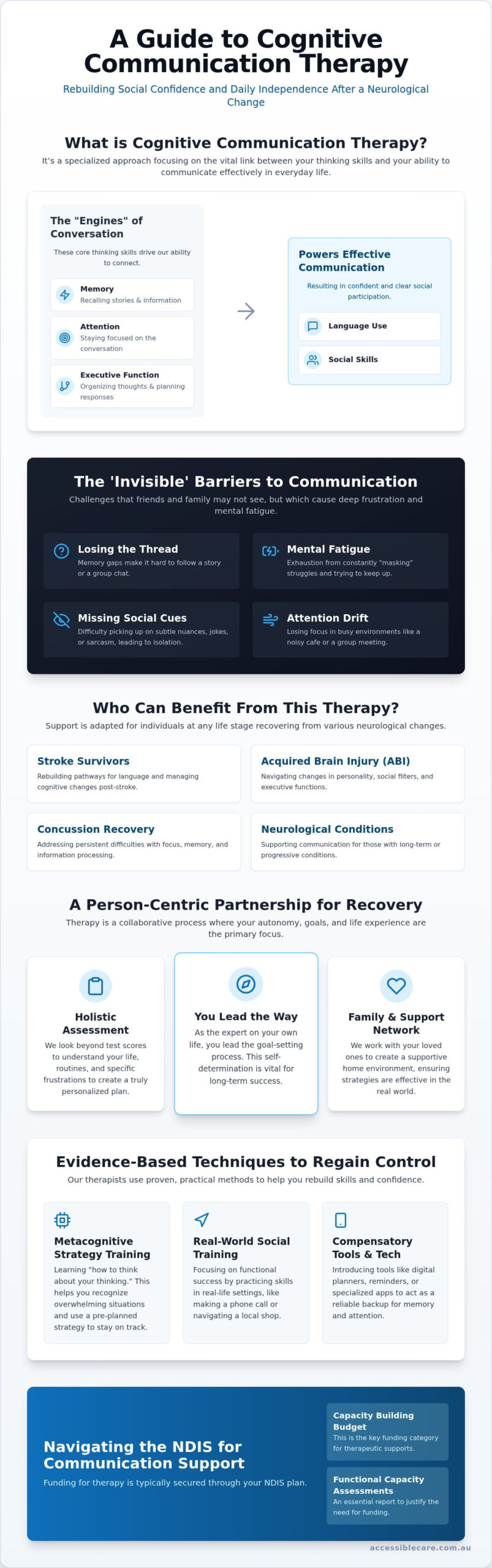
Communication isn’t just about the words that leave your mouth. It’s about the complex work your brain does to find those words, organize them, and understand the person you’re talking to. This is where cognitive communication therapy melbourne makes a real difference. It focuses on the intersection of your thinking skills and your language use. While traditional speech therapy often helps with the mechanics of speech, like articulation or a stutter, cognitive communication therapy looks at the “engines” that drive a conversation: memory, attention, and executive function.
If your memory is hazy, you might lose the thread of a story. If your attention drifts, you might miss a joke. These thinking skills are the foundation of how we connect with others. This approach is rooted in Cognitive rehabilitation therapy, which aims to help people regain the skills they need for social participation. It isn’t just about passing a clinical test; it’s about reclaiming your place in the community and feeling confident during a Sunday lunch with family.
The “Invisible” Barriers to Communication
Many of the challenges people face after a neurological change are “invisible” to the outside world. Friends and family might not see the immense effort it takes to follow a group chat or stay focused in a busy Melbourne cafe. You might find yourself “masking” your struggles, which leads to deep mental fatigue. It’s exhausting to constantly scan for social cues or try to remember what was said five minutes ago. We understand that emotional weight. Losing the ability to pick up on subtle social nuances can feel isolating, but these are skills that can be rebuilt with the right support.
Who Can Benefit from This Therapy?
When searching for cognitive communication therapy melbourne, you’re likely looking for a team that understands the specific needs of those recovering from a stroke, a concussion, or long-term neurological conditions. We often work with individuals who have an acquired brain injury, helping them navigate changes in personality or social filters. Whether you’re a young adult trying to return to university or a senior wanting to stay connected with your grandchildren, therapy is adapted to your specific life stage. The goal is always the same: helping you find your voice and your independence again.
How Specialized Speech Pathology Supports Cognitive Recovery
Thinking of a Speech Language Pathologist (SLP) as a communication coach helps shift the focus from clinical “fixing” to active skill-building. Our approach begins with a holistic assessment that looks far beyond a simple test score. We want to understand your life, your routines, and your frustrations. By seeing the person behind the diagnosis, we ensure that cognitive communication therapy melbourne is tailored to your specific world. This might mean focusing on the energy needed to follow a conversation at a family dinner or the focus required to return to a professional role.
You are the expert on your own life. We prioritize your autonomy by ensuring you lead the way in setting therapy goals. This sense of self-determination is vital for long-term recovery. We also recognize that communication is a two-way street. That is why we work closely with your family and support network. We help them learn how to create a supportive environment at home, ensuring that the strategies we practice in therapy translate into real-world comfort and connection.
Evidence-Based Therapeutic Techniques
Our therapists use proven methods to help you regain control. One core technique is metacognitive strategy training. This is essentially learning “how to think” about your communication. It helps you recognize when a situation is becoming overwhelming so you can use a pre-planned strategy to stay on track. We also believe in social communication training in real-world Melbourne settings. Whether it is practicing a phone call or navigating a local shop, we focus on functional success. To bridge any gaps, we introduce compensatory tools like digital planners or specialized communication apps that act as a reliable backup for your memory and attention.
The Importance of a Multidisciplinary Approach
Physical and cognitive recovery are deeply connected. Our SLPs often collaborate with our occupational therapy team to provide holistic care. For example, an OT might help you organize your physical space to reduce distractions, while the SLP helps you manage the cognitive load of the tasks you perform in that space. For NDIS participants with complex needs, having a coordinated team ensures that every part of your plan works together seamlessly. If you feel ready to explore these options, our compassionate Melbourne team is here to help you take that first step toward reclaiming your independence.
Therapy for Acquired Brain Injury (ABI) and Stroke in Melbourne
Recovering from a neurological event is a deeply personal journey that touches every part of your life. For those living with an acquired brain injury (ABI) or recovering from a stroke, the changes can feel as though they’ve altered the very fabric of your identity. An ABI might lead to shifts in personality or a thinning of the “social filter” that once helped you navigate group settings with ease. Stroke survivors often face specific cognitive-linguistic deficits, where the ability to organize thoughts or find the right words feels like trying to catch smoke. This is where specialized cognitive communication therapy melbourne becomes a vital part of your recovery team. We see this road as a marathon, not a sprint. It requires consistent, gentle support that respects your pace and honors your progress. For a broader look at how we support these complex needs, you can explore our speech pathology pillar.
Relearning Social Rules and Cues
Managing Cognitive Fatigue
Have you ever felt completely drained after a short conversation? This is cognitive fatigue, a common and often overwhelming experience after a brain injury. Communication now takes significantly more energy because your brain is working twice as hard to process information and filter out distractions. We teach you practical strategies for pacing your day and managing sensory overload. This might involve planning “brain breaks” between social events or learning how to advocate for your needs, such as asking a friend to move to a quieter area of a cafe. You have the right to participate in life at a pace that feels sustainable and comfortable for you.
Navigating the NDIS for Communication Support in Melbourne
Understanding how to access funding for cognitive communication therapy melbourne can feel like a daunting task, but the NDIS is designed to provide the support you need to reach your goals. Typically, this type of therapy is funded under the “Capacity Building” category of your plan. This budget is specifically intended to help you learn new skills and improve your independence. When your plan is being developed, the focus is on your “Support Purpose,” which ensures that every hour of therapy helps you move closer to the life you want to lead. Choosing a registered NDIS provider in Melbourne gives you peace of mind, knowing that your therapists meet high standards of quality and safety while understanding the local healthcare landscape.
A vital part of securing the right level of support is a Functional Capacity Assessment. This assessment provides a clear, professional picture of how your cognitive challenges impact your daily living. It goes beyond a simple diagnosis to show exactly where you need assistance to thrive. By documenting these needs clearly, we help you advocate for a plan that truly reflects your situation. If you need help starting this process, you can contact our NDIS support team for a compassionate guided conversation.
Preparing for Your NDIS Planning Meeting
Walking into an NDIS planning meeting with clear “communication goals” can make a significant difference in the funding you receive. Instead of general requests, try to be specific about what you want to achieve. You might mention goals like:
- “I want to be able to manage my own weekly calendar and appointments independently.”
- “I want to feel confident participating in group conversations at my local community center.”
- “I want to return to part-time work or volunteering by improving my focus and memory.”
When you describe the impact of cognitive gaps, focus on how they affect your safety and social connection. Don’t be afraid to ask for a specific number of hours for Speech Pathology. Your planner needs to understand that rebuilding these skills takes time and consistent effort.
Accessing Therapy in the Melbourne Community
Therapy shouldn’t be confined to a clinical room. Accessible Care supports participants across Melbourne and the surrounding suburbs through mobile therapy services. We come to your home, your workplace, or even a local library. Practicing social communication in real-world settings, like the bustling Queen Victoria Market or a quiet park in South Yarra, helps you generalize your skills. By working in the environments where you actually live and socialize, we ensure that your progress feels relevant and practical. This mobile approach removes the stress of travel and allows us to see how you interact with your world in real time.
Why Choose Accessible Care for Your Therapy Journey?
Reclaiming your confidence starts with feeling truly heard. Our Melbourne-based Speech Language Pathology team doesn’t just look at a diagnosis; they look at the person. We believe therapy should be built around your life, not a textbook. This “listening-first” philosophy ensures that every session of cognitive communication therapy melbourne is relevant to your specific goals and daily routines. We focus on the practical moments that matter to you, whether that’s returning to a professional role or simply enjoying a quiet conversation with a loved one. By centering our care on your perspective, we turn clinical goals into meaningful life changes.
Our team brings both technical expertise and a caring ethos to every interaction. We understand that navigating life after a neurological change is challenging, and we’re here to provide the steady, professional guidance you need. We are committed to providing the highest standard of cognitive communication therapy melbourne families can rely on, ensuring that every individual feels empowered to take control of their own recovery path.
A Partnership Built on Trust and Respect
We honor the autonomy and self-determination of every individual we support. You are the expert on your own life, and our role is to act as a facilitator for your success. We take a gentle approach to building trust with families and carers, recognizing that a neurological change affects the whole support network. You aren’t just a “case number” in our practice. We treat every person with the mutual regard and professional care they deserve, creating a supportive partnership rather than a transactional service. This respect for your personal journey is the foundation of everything we do, from our first meeting to your final therapy session.
Start Your Recovery Today
Taking the first step toward recovery is a brave decision, and we’re here to make that process as simple and stress-free as possible. It begins with a comprehensive initial assessment where we listen to your story and identify the specific areas where you want to grow. We have deep experience supporting veterans and individuals with complex care needs, ensuring that everyone has access to high-quality, customized support. We’re ready to help you navigate the NDIS system and find the practical strategies that work for your unique situation. Book a compassionate consultation with our Melbourne team today and begin the journey of reclaiming your connection and independence.
Reclaim Your Voice and Your Independence
Rebuilding the connection between thinking and talking is a journey that deserves a dedicated partner. You’ve seen how specialized support can bridge the gap between clinical recovery and true social participation. By focusing on your unique goals and navigating the NDIS system together, we turn “invisible” challenges into manageable steps. Cognitive communication therapy melbourne is about more than just practicing skills; it’s about honoring your story and helping you find your place in the community again. You don’t have to navigate this road alone.
As a Registered NDIS Provider with a compassionate, experienced SLP team, we offer the holistic, multidisciplinary support you need to feel confident in your daily life. We are here to listen, to guide, and to celebrate every milestone with you. Our focus remains on your autonomy and self-direction at every stage of your recovery. Begin your journey to clearer communication with Accessible Care Melbourne today. Your future is waiting, and we’re ready to help you reach it with clarity and confidence.
Frequently Asked Questions
Is cognitive communication therapy the same as speech therapy?
No, it’s a specialized area within speech pathology that focuses on how thinking skills affect your ability to interact. While traditional speech therapy might help with physical sounds or stuttering, cognitive communication therapy melbourne looks at the “thinking” behind the talk. This includes how memory, attention, and problem-solving allow you to follow a conversation or stay on topic during a busy family dinner.
Can the NDIS pay for cognitive communication therapy in Melbourne?
Yes, the NDIS typically funds these services under the “Improved Daily Living” or “Capacity Building” categories of your plan. As a registered NDIS provider, we help you align your therapy with your specific goals for independence and social participation. We can also provide the documentation needed for your plan reviews to ensure your support continues as long as you need it.
How do I know if my loved one needs a cognitive communication assessment?
You might notice they struggle to find the right words, lose the thread of a story, or find social settings overwhelming. Other signs include difficulty managing a calendar, missing social cues, or feeling exhausted after short conversations. If these “invisible” challenges are impacting their confidence or daily life, a professional assessment is a helpful first step toward finding practical solutions and regaining autonomy.
What happens during the first therapy session at Accessible Care?
Your first session is a gentle, listening-first conversation where we focus on your life rather than just a textbook. We’ll discuss your daily routines, your frustrations, and the specific goals that matter most to you. This holistic approach helps us understand the person behind the challenges. We use this time to build a supportive partnership and start identifying strategies that make an immediate difference in your comfort.
Can therapy help with memory loss after a stroke or ABI?
Yes, therapy provides powerful compensatory strategies to manage the impact of memory loss on your communication. We don’t just focus on “drills” to fix memory; we teach you how to use tools like digital planners, apps, and environmental cues to stay organized. This approach reduces the cognitive load on your brain, making it easier to focus on the people you’re talking to without feeling overwhelmed.
Do you offer mobile therapy services across all Melbourne suburbs?
Yes, we provide mobile cognitive communication therapy melbourne families can access in the comfort of their own homes. Our therapists travel across the greater Melbourne area to meet you where you feel most secure. We can also conduct sessions at your workplace or a local community hub. This real-world practice helps you apply your new skills in the environments where you actually use them every day.
How long does it take to see progress in communication skills?
Progress is a personal journey and varies for everyone, but many people feel more confident after just a few sessions. While rebuilding complex cognitive skills is a marathon rather than a sprint, the practical strategies we provide can offer immediate relief in daily tasks. We celebrate every small win with you, focusing on consistent, gentle progress that leads to long-term independence and better social connections.
Do I need a referral from a doctor to see a speech pathologist?
No, you don’t need a formal referral from a GP to start your journey with us. You can reach out directly to book an initial assessment, whether you’re using an NDIS plan or seeking private support. We’ve made the process simple and accessible so you can get the help you need without navigating extra hurdles. Our team is ready to listen and help you take that first step today.

