

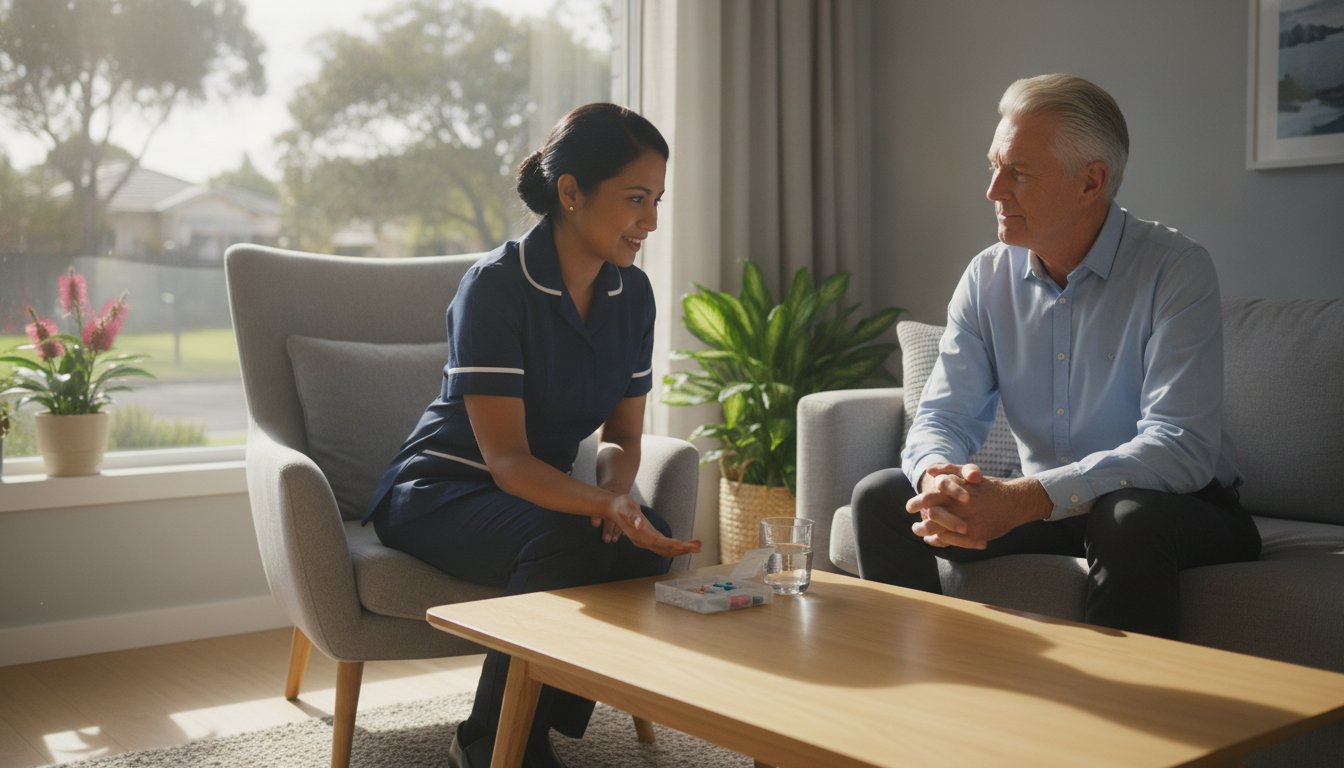
What if the very thing that feels like a burden on your independence actually became the key to staying in your own home for longer? Managing a complex dosage schedule or handling high-risk Schedule 8 drugs can feel like a full-time job; it is natural to feel anxious about making a mistake or feeling overwhelmed by the sheer volume of timings. You deserve to feel secure and supported in your own space, rather than stressed by the cabinet in your bathroom.
We understand that medication is deeply personal, and the fear of errors is a heavy weight to carry. This is where professional community nursing medication management makes a world of difference. It is not about taking control away from you; it is about providing a safety net that empowers you to focus on your goals. By partnering with an experienced nurse, you can replace confusion with clarity and anxiety with peace of mind.
In this guide, you’ll learn how professional community nursing ensures a safe, error-free routine while helping you navigate your NDIS funding options under the 2026-27 guidelines. We’ll explore how person-centred care protects your health and builds the confidence you need to maintain your independence at home.
Key Takeaways
- Understand how community nursing medication management moves beyond simple oversight to a framework that prioritizes your safety and independence.
- Learn the distinct roles of Registered Nurses and support workers to ensure you receive the right level of professional care and competency training.
- Navigate your NDIS funding with confidence by identifying whether medication support fits into your Core Supports or Capacity Building budget.
- Discover how a multidisciplinary team, including OTs and nurses, collaborates to design a personalized plan that honors your health goals.
- Identify the differences between Standard and High Intensity nursing supports to ensure your home care routine is both safe and sustainable.
Table of Contents
What is Community Nursing Medication Management?
At its heart, community nursing medication management is a professional service designed to ensure you take your medicines safely, correctly, and effectively within the comfort of your own home. It represents a significant shift from traditional clinical oversight toward what is known as the “Quality Use of Medicines” (QUM) framework. This approach means that medicines are used only when necessary. When they are required, they are chosen and administered with the highest level of care to achieve the best possible health outcomes for you. It is about more than just a schedule; it is about ensuring every tablet or injection serves your wellbeing.
For many NDIS participants, person-centred care is the heartbeat of this service. It means your goals and preferences aren’t just considered; they are the foundation of your entire plan. Whether your goal is to manage a chronic condition more effectively or to reduce the time you spend worrying about dosages, this support is tailored to your life. There is a vital link between safe medication and your overall health. When your routine is stable and error-free, you gain the physical and mental energy needed to maintain your autonomy and enjoy your daily activities without the constant shadow of health-related anxiety.
The Goal of Medication Autonomy
Managing complex health needs often carries a heavy “mental load.” Remembering names, dosages, and specific timings can be exhausting for both you and your family. Professional support lightens this burden, allowing you to breathe easier and focus on what truly matters. Our nursing expertise focuses on helping you transition from high-level support toward self-management whenever it is safe and appropriate for your circumstances. Medication autonomy is the ability to manage health with dignity. This journey is about building your skills and confidence so that your health supports your lifestyle, not the other way around.
Why Professional Oversight Matters
Expert monitoring is essential for preventing adverse drug reactions and unnecessary hospitalisations. A nurse acts as a vital bridge, communicating directly with your GP and pharmacists to ensure every part of your care team is on the same page. This is particularly important when managing high intensity supports NDIS, where clinical precision is a requirement for safety. Historically, the Role of a District Nurse has always included this level of vigilant community care, ensuring that even the most complex medication regimes are clinically sound. This oversight provides a safety net, giving you and your family the peace of mind that your health is in capable, caring hands. Professional nurses notice the small changes in your health that might otherwise go unnoticed, allowing for early intervention and a more stable home life.
The Role of Registered Nurses and Support Workers
The safety of your care depends on the expertise of the people supporting you. In the context of community nursing medication management, it is essential to understand the different roles within your team. A Registered Nurse (RN) acts as the clinical lead. They perform the initial holistic assessment, design your management plan, and take responsibility for complex clinical decisions. An Enrolled Nurse (EN) provides high-quality care under the supervision of an RN. While both are highly skilled, the RN holds the authority to delegate specific tasks to support workers, ensuring every action taken in your home meets national safety standards.
Documentation is the backbone of safe care. Nurses maintain rigorous oversight, auditing medication charts and administration logs to ensure absolute accuracy. This is especially critical for Schedule 8 medications, which are controlled drugs requiring strict legal compliance. By following the Guiding Principles for Medication Management, our team ensures that every dose is accounted for and every reaction is monitored. As of July 1, 2026, updated regulations in states like Victoria have further clarified the clinical standards required for handling controlled substances, and we bring this level of professional vigilance into your daily routine to prevent errors.
Managing Complex Medication Needs
Some health journeys require more than a simple tablet routine. We provide specialized support for subcutaneous injections, PEG feeding, and complex wound care medications that require a clinical touch. Managing “PRN” or “as-needed” medications requires a nurse’s clinical judgment to prevent over-reliance and ensure the medicine is truly effective for your symptoms. This tailored approach is vital for participants living with an acquired brain injury, where medication needs can be intricate and require constant, gentle adjustments to support recovery and comfort.
Support Worker Training and Competency
Your daily support workers are a trusted part of your life. To ensure they assist you safely, our RNs provide comprehensive competency training. This process, known as “delegation of care,” involves the nurse teaching and then assessing the support worker on specific tasks until they are fully competent. We don’t just train once; we conduct ongoing assessments to ensure your team’s skills remain sharp and up to date with the latest health standards. You also have the security of knowing an RN is available to guide the team through any unexpected queries. If you have questions about how our team can support your specific needs, our experienced community nurses are here to help you find the right path forward.
Medication Management Under the NDIS
Navigating the funding for your health support doesn’t have to be a stressful experience. Understanding how the NDIS categorises your care is the first step toward true peace of mind. For most participants, community nursing medication management is funded through “Core Supports” when it relates to your daily living needs, or “Capacity Building” if the focus is on improving your health skills and independence. Working with a registered NDIS provider in Melbourne or Adelaide ensures that your care meets the strict quality and safety standards required by the commission. It is vital to ensure that specific nursing hours are clearly documented in your plan during your NDIS review meetings. Without this explicit detail, accessing the professional oversight you need can become an unnecessary challenge.
Our team understands the local landscape in both South Australia and Victoria. We help you bridge the gap between your clinical needs and your NDIS goals. By having a professional nurse involved in your planning process, you can ensure your budget reflects the reality of your health requirements. This proactive approach protects your health and ensures that your support remains stable and sustainable over the long term.
Integrating Nursing into Your NDIS Plan
When you meet with your NDIS Local Area Coordinator (LAC), clear communication is essential. We recommend discussing how medication support directly impacts your ability to live safely at home. You can use a functional capacity assessment to provide the clinical evidence needed to justify these nursing hours. This assessment looks at your daily life holistically, showing the LAC exactly why professional oversight is required for your safety. It is also helpful to reference the 2026 NDIS pricing updates for community nursing services, which ensure that providers are paid fairly for the high level of skill they bring to your home.
High Intensity vs. Standard Support
The NDIS distinguishes between standard and high-intensity care based on the complexity of your health needs. High-intensity support is often required for conditions like complex diabetes management, seizure monitoring, or when medications are delivered through specialised means. Because professional NDIS high intensity supports involve greater risk, they require a detailed, nurse-led management plan. A core part of this is the creation of “Medication Administration Records” (MAR). These records are more than just a checklist; they are a clinical tool used by our nurses to track every dose, monitor for side effects, and ensure your routine remains perfectly aligned with your doctor’s orders.
Designing Your Personalized Medication Management Plan
Creating a plan that truly works for you is a collaborative and thoughtful process. It begins with a holistic initial assessment where our nurses look beyond your prescription list. We consider your physical health, your home environment, and your personal goals to ensure the support we provide enhances your daily life. Effective community nursing medication management isn’t a one-size-fits-all clinical schedule; it’s a living document that grows with you. This journey involves five clear steps to ensure your safety and comfort.
- Step 1: The holistic initial assessment, looking at your health, home, and goals.
- Step 2: Collaborating with your multidisciplinary team, including OTs and Speech Pathologists.
- Step 3: Choosing the right tools, such as Webster packs or electronic reminders.
- Step 4: Establishing a routine that fits your lifestyle, not just a clinical schedule.
- Step 5: Regular reviews and adjustments as your health and independence grow.
By following this methodical path, we ensure that your medication routine supports your life rather than dictating it. We listen to what matters to you most, whether that is staying active in the community or simply having the energy to enjoy time with family. This approach builds a foundation of trust and reliability between you and your care team.
Holistic Assessments and Individual Needs
Your health doesn’t exist in a vacuum. A professional occupational therapy assessment can identify physical barriers, such as difficulty opening pill bottles or reaching storage cabinets. Similarly, our team works closely with speech pathology specialists if you experience dysphagia or difficulty swallowing. A multidisciplinary approach ensures no aspect of your health is ignored. This collaborative effort means your community nursing medication management plan is clinically sound and practically achievable in your own home.
Tools for Success: Webster Packs and Reminders
The right tools can turn a complex task into a simple, stress-free habit. Dose Administration Aids (DAAs), commonly known as Webster packs, are excellent for error prevention because they organize your medications by day and time. For those who are tech-savvy, integrating smart technology and phone apps provides gentle medication reminders throughout the day. We also help you find safe storage solutions that maintain the efficacy of your medicines while keeping your home safe for everyone. These small adjustments create a significant shift in your confidence. If you are ready to build a routine that supports your independence, our team is here to listen. Contact us to begin your personalized care journey today.
Compassionate Community Nursing with Accessible Care
We believe that the most important part of any care plan is your voice. At Accessible Care, our commitment to community nursing medication management begins with a simple promise: we listen first. Your autonomy is our priority, and we view our role as a supportive partnership rather than a clinical direction. Our experienced Registered Nurses serve the Melbourne and Adelaide communities with a deep understanding of the unique challenges you face. We work tirelessly to bridge the gap between complex medical needs and the comfortable, dignified life you deserve to lead at home. By putting your goals at the center of everything we do, we ensure that your health supports your lifestyle, not the other way around.
Starting your journey with us is a straightforward and gentle process. We understand that inviting a care team into your home is a significant decision. That is why we focus on building a foundation of trust from our very first conversation. Our team is here to guide you through every step, from initial assessments to the daily implementation of your routine. We are more than just a service provider; we are your advocates and partners in health.
Our Approach in Melbourne and Adelaide
Our local expertise in the Victorian and South Australian health systems allows us to provide a level of care that is both professional and highly relevant to your location. We don’t work in isolation. Our nurses actively connect with your local pharmacists and GPs to create a seamless care circle. This collaboration ensures that any changes to your prescriptions or health status are communicated instantly and accurately. We provide reliable, nurturing support that feels like a partnership, ensuring you never have to navigate the complexities of the health system alone. Whether you are in the heart of Adelaide or the suburbs of Melbourne, our team is committed to being a dependable presence in your life.
Empowering Your Journey to Independence
True care is about more than just managing symptoms; it is about focusing on your strengths and goals to build long-term self-reliance. We celebrate your progress and adjust our support as your confidence and independence grow. There is a profound peace of mind that comes from knowing you are in expert, caring hands. This security allows you to focus your energy on the things that bring you joy and fulfillment. We are dedicated to helping you achieve the best possible quality of life through professional, person-centred support that respects your choices and honors your journey. Contact Accessible Care today to discuss your community nursing needs.
Embracing Confidence in Your Daily Care
Managing your health at home should never feel like a source of stress or uncertainty. By choosing professional community nursing medication management, you are doing more than just preventing errors; you are reclaiming your time and mental energy. You now understand how a personalized plan, backed by the expertise of Registered Nurses and a multidisciplinary team, provides a safety net that honors your autonomy. Whether you are navigating complex NDIS funding or seeking high intensity support, the right team makes the system work for you.
Accessible Care is a registered NDIS provider with a dedicated team serving both Melbourne and Adelaide. We specialize in high intensity support and take pride in our holistic approach to your wellbeing. We are here to listen, to support, and to ensure you feel secure in every step of your health journey. You don’t have to manage these complexities alone.
Book a compassionate consultation with our nursing team today and discover how we can help you live with greater confidence and peace of mind. Your independence is our priority, and we look forward to walking this path beside you.
Frequently Asked Questions
What is medication management in community nursing?
It is professional support provided by nurses in your home to ensure medicines are taken safely, correctly, and effectively. This service includes everything from organizing dosages to monitoring for side effects and adverse reactions. Professional community nursing medication management focuses on the “Quality Use of Medicines” to improve your health outcomes while respecting your personal lifestyle and daily goals.
Can NDIS support workers give medication?
Yes, support workers can assist with medication, but only if they’ve been specifically trained and deemed competent by a Registered Nurse. This process is known as delegation of care. The nurse remains responsible for the clinical oversight, ensuring the support worker follows the correct protocols and documentation standards to keep you safe and secure in your home environment.
What are the 7 rights of medication administration in nursing?
The 7 rights are a vital safety checklist used by nurses: right person, right medication, right dose, right time, right route, right reason, and right documentation. Following these principles prevents errors and ensures your treatment is as effective as possible. Our nurses use these standards every day to provide a high level of clinical security, giving you and your family total peace of mind.
How do I get funding for community nursing in my NDIS plan?
You can access funding by discussing your clinical needs with your Local Area Coordinator (LAC) during your plan meeting or review. It’s helpful to provide clinical evidence, such as a functional capacity assessment, to justify the need for nursing hours. Ensure these hours are clearly written into your plan under Core Supports or Capacity Building to secure the professional care you deserve.
What is a Webster pack and how does it help?
A Webster pack is a sealed medication folder that organizes your tablets into specific days and times of the week. It helps by significantly reducing the risk of missing a dose or accidentally taking the wrong amount. These packs are a simple yet powerful tool for error prevention, making it much easier for you or your support team to manage a complex schedule with confidence.
Is community nursing available in Melbourne and Adelaide?
Yes, Accessible Care provides experienced community nursing services across both the Melbourne and Adelaide regions. We understand the local health systems in Victoria and South Australia, allowing us to coordinate effectively with your local GPs and pharmacists. Our nurses are committed to providing nurturing, professional care that helps you maintain your independence within your own local community.
For those located in Western Australia, Elleson Care offers similar person-centred NDIS and aged care services, providing a high standard of local support for participants wishing to remain in their own homes.
How does an RN differ from an EN in medication management?
A Registered Nurse (RN) has a broader scope of practice and is responsible for the overall clinical assessment and delegation of tasks. An Enrolled Nurse (EN) provides high-quality care under the supervision of an RN. In community nursing medication management, the RN designs the plan and trains support workers, while both roles work together to ensure your daily health needs are met safely.
What happens if my medication needs change?
Your care plan is a living document that we review and adjust whenever your health status or prescriptions change. Our nurses maintain constant communication with your doctors to ensure any updates are implemented immediately and safely. We focus on being responsive and flexible, ensuring your support always reflects your current needs and helps you achieve your long-term health and independence goals.

