

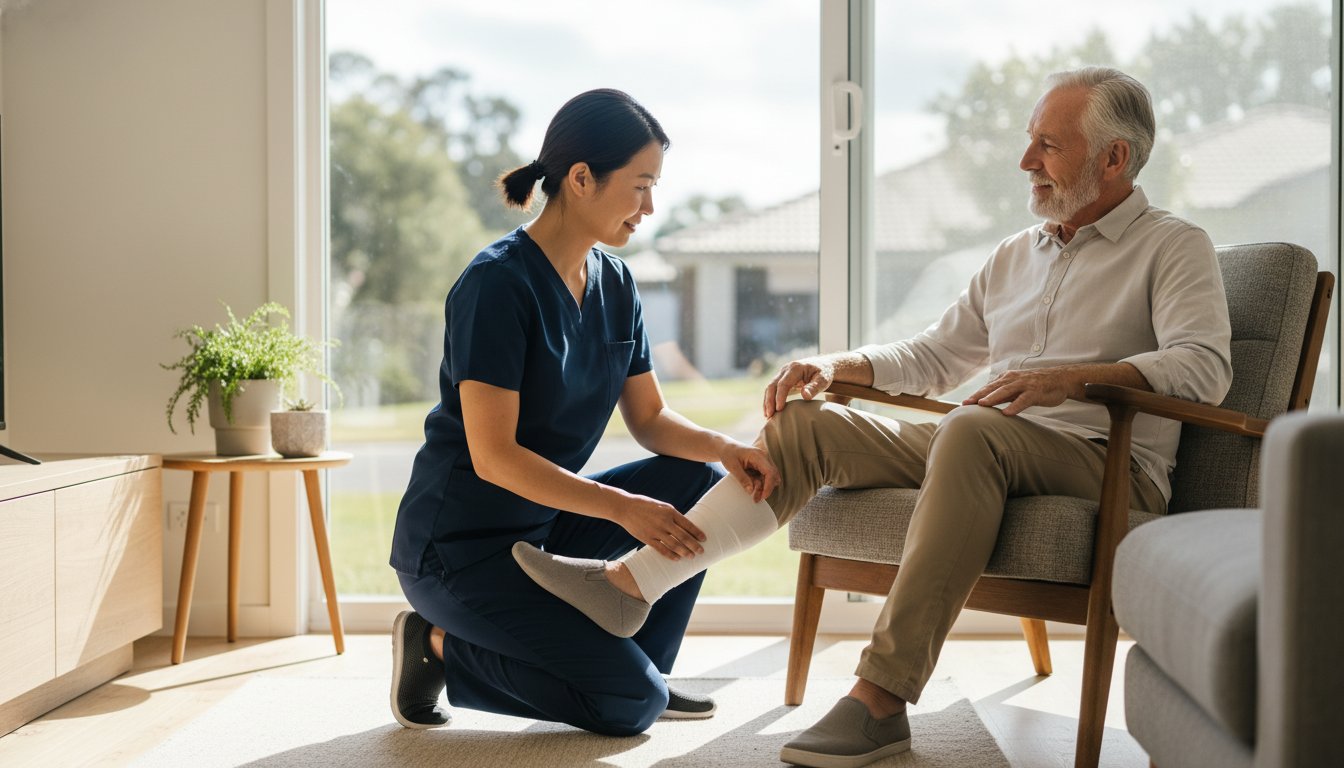
Did you know that over 420,000 people across Australia are currently managing a chronic wound? If you’re one of them, you likely understand the physical toll of slow-healing injuries and the quiet anxiety that comes with every dressing change. It’s exhausting to balance your recovery with the stress of traveling to a clinic, especially when you’re worried about potential infections or hospital readmission.
You deserve to feel safe and supported in your own home. We believe that community nursing wound care should be about more than just clinical tasks; it’s about restoring your comfort and your independence. By accessing specialized support through the NDIS, you can receive expert attention that focuses on your unique goals and your lifestyle.
In this guide, we’ll explain how the 2025-26 NDIS pricing arrangements work for nursing services and how you can use your consumables budget to access high-quality supplies. You’ll discover how a consistent, compassionate relationship with a professional nurse can turn the healing process into a smooth journey toward a better quality of life.
Key Takeaways
- Learn how professional wound care at home can accelerate your recovery and prevent unnecessary hospital visits.
- Discover the specific ways community nursing wound care manages complex needs like surgical incisions and pressure injuries with expert precision.
- Understand why having a Registered Nurse is vital for maintaining sterile environments and ensuring effective infection control.
- Gain clarity on navigating your NDIS plan to include funding for high-intensity nursing supports and daily personal activities.
- See how a person-centric approach in Melbourne and Adelaide respects your autonomy while providing the nurturing support you need to heal.
Table of Contents
- Understanding Community Nursing Wound Care under the NDIS
- Types of Complex Wounds Managed in a Community Setting
- The Importance of Specialized Nursing for Chronic Wound Management
- Navigating NDIS Funding and Care Planning for Wound Management
- Accessible Care: Compassionate Wound Management in Melbourne and Adelaide
Understanding Community Nursing Wound Care under the NDIS
Healing is a deeply personal journey that shouldn’t feel like a series of clinical appointments. At its heart, community nursing wound care is about bringing specialized medical expertise into the warmth and privacy of your own home. It’s a supportive service designed to ensure that skin injuries, surgical incisions, or chronic sores receive the highest level of professional attention without requiring you to leave your familiar surroundings. This approach isn’t just about convenience; it’s about providing a safe space where you feel seen and respected as an individual, rather than just a patient with a diagnosis.
Within the NDIS framework, wound care is recognized as a vital health support that directly impacts your independence. When a wound is managed correctly, it doesn’t just heal faster; it stops being a barrier to your daily life. You might have goals related to community participation or returning to work, and effective wound management is often the first step in making those dreams achievable. By focusing on your wellbeing and autonomy, this service ensures that your health supports work in harmony with your lifestyle choices.
We view our role as a partnership. It’s a collaborative relationship where your nurse listens to your concerns, understands your pain, and values your input. This empathetic connection is what sets community nursing apart from traditional clinical settings. Moving beyond the simple task of applying a dressing, we focus on a person-centred model that prioritizes your comfort and peace of mind. This consistent care helps prevent the complications that often lead to hospitalisation, allowing you to stay where you feel most secure.
The Role of a Community Nurse in Your Recovery
A professional nurse brings a wealth of knowledge to your doorstep. Their work often mirrors traditional District Nurse duties, which involve conducting thorough assessments of both the wound and your general health. They don’t just look at the surface; they check for underlying issues that might slow down your progress. Your nurse will select and apply advanced clinical dressings specifically suited to your skin’s needs. They also take the time to educate you and your family, explaining how to protect the wound and which signs of infection to watch for, so you always feel in control of your recovery.
Why Home-Based Care is Often the Best Choice
For many, the physical strain of traveling to a clinic is a major source of stress. Long trips and uncomfortable waiting rooms can actually increase pain and slow down the body’s natural healing processes. Choosing home-based care removes these hurdles entirely. You can rest in your favorite chair or stay in your own bed while receiving treatment. This familiar environment promotes mental wellbeing, which is a powerful tool for physical recovery. Additionally, staying at home significantly minimizes your exposure to hospital-acquired infections, providing a much safer option for those with compromised immune systems or limited mobility.
Types of Complex Wounds Managed in a Community Setting
Every wound tells a different story. Some are expected parts of a recovery journey, like a surgical incision, while others, such as chronic ulcers, can feel like a persistent weight on your daily life. Professional community nursing wound care provides the specialized attention needed to manage these complexities with grace and expertise. Our nurses follow the latest clinical standards set by Wounds Australia, ensuring your care is grounded in the most current research and best practices.
Surgical wounds require meticulous monitoring after you leave the hospital. It’s often a relief to be home, but the responsibility of caring for stitches or staples can feel overwhelming. Similarly, diabetic ulcers require a vigilant eye. Because diabetes can affect circulation and sensation, even a small blister can become serious if it’s not managed by a professional who understands these specific risks. Chronic ulcers, whether venous or arterial, also need long-term, patient strategies to promote healing in skin that may be slow to respond. These wounds often require specialized dressings that balance moisture and protect the surrounding skin from damage.
Managing Pressure Injuries and Mobility Challenges
For those living with limited mobility, skin integrity is a top priority. Pressure injuries, or bedsores, can develop quickly, but they’re often preventable with the right support. A community nurse can identify the very first signs of skin breakdown, such as persistent redness that doesn’t fade. We work with you to establish comfortable repositioning schedules and recommend specialized equipment to take the pressure off vulnerable areas. This often involves collaborating closely with Occupational Therapists to find the best seating or bedding solutions for your unique body. If you’re feeling worried about your skin health, specialized community nursing wound care support can offer the peace of mind you need. You can reach out to our Community Nursing team to discuss a personalized plan.
Post-Surgical and Acute Wound Management
Coming home after a major procedure is a milestone, but it’s also a time when you need extra reassurance. We provide expert monitoring for signs of localized infection or more serious concerns like sepsis. You don’t have to worry about the discomfort of traveling back to a hospital just for suture or staple removal; we perform these tasks gently in your own living room. For more complex recoveries, our nurses are experienced in managing specialized treatments like vacuum-assisted closure (VAC) therapies or surgical drains. We handle the technical details so you can focus entirely on your rest and recovery.
The Importance of Specialized Nursing for Chronic Wound Management
Why settle for basic care when your health and comfort are at stake? Specialized nursing is the bridge between a wound that lingers and a body that heals. A Registered Nurse brings a level of clinical judgment that goes far beyond simply changing a bandage. They understand the complex biology of tissue repair and the delicate balance required for community nursing wound care to be truly effective. This expertise allows them to recognize subtle changes in your skin that an untrained eye might miss, ensuring your treatment plan evolves as you do.
Healing shouldn’t be a painful ordeal that you have to endure alone. We believe that managing your comfort is just as important as managing the wound itself. Our nurses collaborate closely with your GP to ensure your pain management plan is effective and adjusted as your recovery progresses. Whether it’s timing dressing changes to coincide with medication or using gentler techniques, our goal is to make every interaction a source of relief rather than stress. You deserve a recovery process that respects your limits and prioritizes your peace of mind.
Maintaining a sterile environment in a home setting requires discipline and high standards. Our nurses follow strict infection control protocols, using sterile techniques to create a protective barrier between your health and potential complications. This professional vigilance is what keeps you safe and helps prevent the infections that often lead back to a hospital ward. By bringing this clinical rigor into your home, we provide a level of safety that allows you to focus entirely on getting better.
Beyond the Dressing: A Holistic View of Healing
Your body needs the right fuel to repair itself from the inside out. We don’t just look at the wound; we assess your nutritional needs, as vitamins and proteins are the essential building blocks for skin regeneration. We also take the time to evaluate your home environment. Is the lighting adequate for safe movement? Is your favorite chair providing the right support for your circulation? By linking with multidisciplinary teams, we ensure that every factor influencing your health is addressed, creating a comprehensive support system that surrounds you with care. For accident victims who need to expand this circle of support, the Injury Assistance Network can help connect you with vetted medical and legal professionals specialized in personal injury recovery.
Preventing Complications and Hospital Readmission
A wound that doesn’t show progress for two weeks is often considered ‘stalled’ and requires a fresh treatment strategy. Early detection by a specialist means we can pivot your care before a minor issue becomes a major complication. This proactive approach is especially vital for participants living with Acquired Brain Injuries, where changes in sensation or mobility can impact skin integrity. We maintain regular reporting to your NDIS coordinator and medical team, ensuring everyone is working toward the same goal. This clear communication builds a reliable circle of support that keeps your recovery on the right track.
Navigating NDIS Funding and Care Planning for Wound Management
The NDIS is designed to empower you, but we know that understanding the fine print of funding can feel overwhelming when you’re already managing a health challenge. Securing community nursing wound care within your plan is a significant step toward reclaiming your independence. It’s not just about getting a service funded; it’s about ensuring you have the right level of clinical expertise to heal safely at home. By working closely with your Support Coordinator, you can articulate why specialized nursing is a “reasonable and necessary” support for your specific situation.
One of the most effective ways to justify nursing hours is through a Functional Capacity Assessment (FCA). This document provides a clear picture of how your wound impacts your daily life and why professional intervention is required. During your NDIS plan review, this assessment acts as a powerful voice for your needs. It demonstrates that expert wound management isn’t just a medical requirement; it’s a foundational support that allows you to engage with your community and pursue your personal goals without the constant fear of infection or pain.
What is NDIS High Intensity Support?
In the NDIS world, certain health needs are classified as High Intensity Supports. This category covers clinical tasks that carry a higher risk and require the specialized oversight of a Registered Nurse. Complex wound management falls directly into this category because of the technical skill needed for advanced dressings and infection monitoring. Ensuring your plan reflects these high-intensity needs means your care will always meet the rigorous standards set by the NDIS Quality and Safeguards Commission. This gives you peace of mind that you’re in safe, professional hands every time a nurse visits your home.
Creating a Collaborative Wound Care Plan
A good care plan is a living document that grows with you. We don’t just tell you what to do; we listen to what you want to achieve. Whether your goal is to walk to the park or simply to spend a day without pain, your wound care plan should reflect those aspirations. We review your progress regularly, adjusting our strategies as your skin heals and your needs change. This collaborative approach empowers you to take the lead in your own recovery, ensuring that community nursing wound care is delivered in a way that respects your schedule, your home, and your dignity. If you’re ready to include expert nursing in your plan, you can contact our NDIS support team today to start the conversation.
Accessible Care: Compassionate Wound Management in Melbourne and Adelaide
At Accessible Care, we believe that healing happens best when you feel understood and respected. Our approach to community nursing wound care is built on a foundation of honor and self-determination. We don’t see ourselves as directors of your health, but as nurturing facilitators who help you achieve your own objectives. Our local presence in Melbourne and Adelaide means you have access to reliable in-home support that understands the unique NDIS landscape of Victoria and South Australia. We’re here to ensure that your recovery is a smooth, supportive partnership that prioritizes your comfort above all else.
Our team consists of Registered Nurses who are deeply experienced in the complexities of disability and aged care wounds. They bring a wealth of technical expertise, but they also bring a caring ethos that makes every visit feel personal and reassuring. Beyond clinical tasks, we offer a multidisciplinary advantage. Because we also provide Speech Pathology and Occupational Therapy, we can look at your health from every angle. This integrated approach ensures that if you need pressure-relieving equipment or nutritional guidance to support skin repair, our team works together to provide a seamless experience.
Why Families in Melbourne and Adelaide Trust Us
Trust is earned through consistency and listening. We make it a priority to provide consistent staffing so you can build a genuine, trusting relationship with your nurse. You won’t have to explain your history to a new person every week. Instead, you’ll work with a professional who already knows your story and your preferences. We practice attentive listening, taking the time to understand your unique life situation and how your wound affects your daily happiness. This emotional connection is what allows us to navigate the NDIS system on your behalf with such care; we know exactly what you’re fighting for and why your independence matters.
How to Start Your Healing Journey with Accessible Care
Taking the first step toward professional support should be easy and stress-free. We’ve designed a simple referral process for NDIS participants, their families, and case managers. Once you reach out, we begin with an initial holistic assessment. This isn’t just a clinical checklist; it’s a conversation where we determine the best path forward for your specific recovery goals. We look at your physical needs, your home environment, and your personal aspirations to create a plan that truly fits your life. If you’re ready to experience a more compassionate form of community nursing wound care, we’re here to help. Contact our compassionate team today to discuss your wound care needs.
Embrace Your Journey Toward Recovery and Independence
Healing is more than just a clinical process; it’s a path toward reclaiming the life you love. By understanding how the NDIS supports your health goals, you can access the specialized attention you need without leaving the comfort of your home. Whether you’re managing a post-surgical incision or a long-term chronic ulcer, professional community nursing wound care provides the safety and expertise required for a successful recovery. You don’t have to navigate these challenges alone or worry about the stress of clinic visits.
As a Registered NDIS Provider, we’re dedicated to your autonomy and wellbeing. Our team of experienced Registered Nurses works within a holistic multidisciplinary team to ensure every aspect of your health is considered. We’re here to listen, to support, and to help you heal on your own terms. Your comfort and peace of mind are our highest priorities, and we’re ready to partner with you every step of the way.
Book a compassionate consultation for community nursing today and discover how personalized support can make a difference in your life. You have the strength to heal, and we have the expertise to guide you home.
Frequently Asked Questions
Does the NDIS cover the cost of wound dressings and clinical supplies?
Wound dressings and clinical supplies are generally covered under the ‘Consumables’ category within your Core Supports budget. This funding allows you to purchase the items your nurse needs to manage your care effectively in your own home. It’s best to check your specific plan or speak with your Support Coordinator to ensure you have an adequate budget for these essential tools. We can help you identify which specific supplies are most suitable for your unique healing journey.
Can a support worker perform my wound dressing changes?
Support workers can only perform simple wound care tasks if they’ve received specific training and are supervised by a Registered Nurse. For complex or high-intensity wounds, a qualified nurse must perform the dressing changes to ensure clinical safety and proper infection control. This professional oversight is vital for preventing serious complications and ensuring that the healing process stays on the right track. We prioritize your safety by matching the right level of expertise to your specific clinical needs.
How often will a community nurse need to visit for wound care?
The frequency of visits depends entirely on the type of wound you have and how quickly your body is healing. Some wounds require daily attention; others may only need a dressing change every few days. During your initial assessment, your nurse will create a personalized schedule that respects your lifestyle while providing the clinical support necessary for effective community nursing wound care. We always aim to balance professional clinical requirements with your need for privacy and routine.
What should I do if I think my wound is becoming infected?
You should contact your nurse or GP immediately if you notice increased pain, redness, swelling, or an unusual odor from the wound site. Early intervention is the most effective way to manage an infection and prevent it from becoming a more serious health concern. Your nurse will assess the situation and work with your medical team to adjust your treatment plan and provide the necessary care. Don’t wait for your next scheduled appointment if you feel something isn’t right.
Can community nursing help with chronic wounds that haven’t healed for months?
Specialized nursing is specifically designed to manage chronic wounds that have stalled in the healing process for long periods. Our nurses use advanced clinical techniques and evidence-based products to address the underlying causes of slow healing, such as poor circulation or pressure. By providing consistent and expert community nursing wound care, we aim to stimulate tissue repair and help your body finally close wounds that have been a long-term burden on your wellbeing and comfort.
Is community nursing wound care available for NDIS participants in both Melbourne and Adelaide?
We provide dedicated wound management support to NDIS participants across both the Melbourne and Adelaide metropolitan areas. Our local teams are familiar with the specific healthcare networks in Victoria and South Australia; this allows us to offer reliable, in-home care that fits seamlessly into your life. We are committed to ensuring that participants in these regions have access to the nurturing, professional support they deserve. You can reach out to our local coordinators to discuss availability in your specific suburb.
What is the difference between generalist nursing and high-intensity wound care?
Generalist nursing covers routine health tasks; high-intensity wound care involves complex clinical procedures that carry a higher level of risk. High-intensity care requires the advanced skills of a Registered Nurse who can manage specialized treatments like vacuum-assisted closure or deep tissue injuries. This level of support ensures that even the most challenging wounds are managed with the highest standards of clinical safety and expertise. It provides the peace of mind that comes from knowing a specialist is overseeing your recovery.

