


Did you know that the average person swallows between 500 and 700 times every single day? It is an automatic reflex most of us never think about until it suddenly becomes a source of deep anxiety. When every meal feels like a potential risk, the simple joy of eating can quickly turn into a daily struggle. If you are living with the constant fear of choking or the frustration of a restricted diet, we understand how isolating that can feel. Finding the right dysphagia therapy in Melbourne shouldn’t be an additional burden on your shoulders when you are already managing so much.
You deserve to feel safe and supported during every meal. We recognize that navigating NDIS funding for swallowing support can feel overwhelming, but specialized help is closer than you think. In this guide, we will discover how professional speech pathology and NDIS-funded dysphagia therapy in Melbourne can improve your swallowing safety and overall quality of life. We will explore practical ways to manage swallowing at home, ensure better nutrition, and provide a clear path toward regaining your confidence at the dinner table. By focusing on your unique goals, we can work together to make mealtimes a time of connection rather than a time of worry.
Key Takeaways
- Understand how neurological conditions like stroke or ABI impact swallowing and why early intervention is vital for your long-term safety.
- Learn how specialized dysphagia therapy in Melbourne uses clinical evaluations and instrumental assessments to create a personalized recovery plan.
- Discover how to navigate NDIS funding through the Capacity Building budget to access essential, high-intensity swallowing supports.
- Gain practical tools for safer eating at home, including simple postural adjustments and the globally recognized IDDSI framework for texture-modified diets.
- Explore how a collaborative team of speech pathologists, OTs, and nurses provides a holistic approach to managing complex swallowing needs.
Understanding Dysphagia: More Than Just a Swallowing Difficulty
Eating and drinking are fundamental to our survival and our social lives. When this process becomes difficult, it’s known as dysphagia. Effectively, Understanding Dysphagia means recognizing it as a condition where moving food or liquid from your mouth to your stomach takes more time and effort than usual. With over one million Australians living with this condition, you aren’t alone in this journey. For some, it might even be impossible to swallow safely without support. This isn’t just a clinical issue; it’s a deeply personal challenge that affects how you interact with the world.
Common causes often include neurological events like a stroke or an Acquired Brain Injury (ABI), as well as progressive conditions like Motor Neurone Disease (MND). Recognizing the signs early is the first step toward finding effective dysphagia therapy in Melbourne. You might notice a loved one coughing during meals, having a “wet” or gurgly sounding voice after drinking, or experiencing frequent, unexplained chest infections. These red flags can create a sense of constant anxiety for families, turning what should be a pleasant mealtime into a source of stress and fear.
The Impact of Swallowing Disorders on Quality of Life
The consequences of unmanaged swallowing difficulties reach far beyond the dining table. Many people begin to withdraw from social gatherings because they feel embarrassed or unsafe while eating in public. This isolation can be heartbreaking. Physically, the risks of dehydration and malnutrition are significant if someone isn’t consuming enough fluids or nutrients. Accessing specialized speech pathology provides a vital foundation for recovery. It’s about more than just safety; it’s about restoring the ability to participate in life’s simple pleasures.
Who is at Risk? Recognizing the Signs Early
While anyone can develop swallowing issues, certain groups face higher risks. For adults with neurological conditions, symptoms might include food getting stuck in the throat or taking a long time to chew. It’s also important to watch for paediatric signs. Children might show food refusal, sensory aversions, or a failure to gain weight. Early intervention helps prevent secondary health complications like aspiration pneumonia and ensures that dysphagia therapy in Melbourne is tailored to your specific needs right from the start. Look for these common indicators:
- Adults: Difficulty clearing food from the mouth, a sensation of choking, or pain when swallowing.
- Children: Arching the body during feeds, excessive irritability, or feeding times that last longer than 30 minutes.
How Dysphagia Therapy Works: Assessment and Rehabilitation
The journey toward safer eating and drinking begins with a supportive conversation. A Speech Language Pathologist (SLP) starts by performing a comprehensive clinical swallow evaluation. This isn’t just a series of tests; it’s a careful observation of how you manage different food textures and fluid thicknesses. They check the strength of your facial muscles and the coordination of your tongue and jaw. By identifying your physical strengths alongside the challenges, your therapist can create a roadmap that respects your personal goals and lifestyle.
Modern dysphagia therapy in Melbourne relies heavily on the principle of neuroplasticity. This is the brain’s remarkable ability to reorganize itself by forming new neural connections throughout life. When a stroke or injury disrupts the swallowing reflex, targeted repetition can help the brain “relearn” these vital movements. Your therapy plan isn’t a one-size-fits-all solution. It’s a dynamic strategy tailored to your specific physiological weaknesses, designed to build your confidence and independence at every meal.
Rehabilitative Exercises to Build Strength
Just like any other muscle in your body, the ones responsible for swallowing need regular exercise to stay functional. Your therapist might guide you through specific strengthening drills for your tongue, jaw, and the muscles deep within your throat. Coordination is just as important as raw strength. We use precise timing drills to ensure your airway closes at exactly the right moment during a swallow. Rehabilitative therapy is an exercise-based approach to restore function. By committing to these exercises, you’re actively rebuilding the physical foundation needed for a safer and more enjoyable dining experience.
The Role of Instrumental Assessments
While a clinical evaluation provides a wealth of information, sometimes we need to see exactly what’s happening beneath the surface. Instrumental assessments, such as Fiberoptic Endoscopic Evaluation of Swallowing (FEES) or a Videofluoroscopic Swallow Study (VFSS), allow us to view the swallow “on screen” in real-time. We often collaborate with experienced radiologists and ENT specialists across Melbourne to facilitate these detailed sessions. Seeing the internal mechanics of your swallow helps us target the correct muscle groups with pinpoint accuracy. These insights ensure your therapy is as effective as possible, and the strategies we develop can be easily continued in the comfort of your home. If you’re feeling uncertain about your next steps, a professional speech therapy consultation can provide the clarity and guidance you need to move forward safely.
The NDIS Path to Swallowing Support in Melbourne
Understanding the NDIS system can feel like learning a new language. When you’re already managing the physical and emotional weight of a swallowing disorder, navigating government funding shouldn’t be another hurdle. Most participants access speech pathology through the “Capacity Building – Improved Daily Living” budget. This category is designed to help you build the skills needed to live more independently. For many, this means working toward safer mealtimes and better nutrition through specialized dysphagia therapy in Melbourne.
In more complex cases, swallowing support is integrated into high intensity supports NDIS. This is particularly relevant if you require constant monitoring or have a high risk of aspiration. Choosing a registered NDIS provider for these services is essential. It ensures that your therapists and support staff adhere to the highest safety standards and quality safeguards. We take pride in being a registered partner that walks alongside you, ensuring your care is both professional and deeply personal.
Accessing Mobile Dysphagia Therapy at Home
Traveling to a clinic can be exhausting, especially if you have mobility challenges or feel anxious in new environments. Mobile therapy brings the expert care to you. When an SLP visits your home, they can see your real-life challenges. They check the height of your dining chair, the weight of your favorite cutlery, and the distractions in your kitchen. This contextual assessment is a cornerstone of therapy at home. By practicing in the place where you actually eat, your progress often feels faster and more sustainable. It’s about making your everyday life easier, one meal at a time.
Navigating Your NDIS Plan for Speech Pathology
Your NDIS planning meeting is your opportunity to advocate for the support you need. When discussing your goals, focus on how swallowing difficulties impact your participation in daily life. Do you want to join family dinners again? Are you hoping to improve your nutrition to boost your energy? These are functional goals that planners look for. To justify ongoing support, you’ll need evidence-based reports from your speech pathologist. These documents outline your progress and explain why continued dysphagia therapy in Melbourne is necessary for your safety. We understand these requirements are complex, and we’re here to help you prepare the right documentation to keep your support on track.
Practical Strategies for Safer Mealtimes at Home
Bringing clinical advice into your daily routine is where the real transformation happens. While assessments provide the data, the way you manage breakfast, lunch, and dinner determines your safety and comfort. Mealtimes shouldn’t feel like a high-stakes test. By using practical tools from dysphagia therapy in Melbourne, you can create a calm and predictable environment. This shift allows you to focus on the connection with your loved ones rather than just the mechanics of the meal.
Success at home often starts with small, environmental adjustments. Reducing distractions is vital; turning off the television or radio helps the brain focus entirely on the complex task of swallowing. Pacing is equally important. Taking smaller bites and ensuring the mouth is completely clear before the next spoonful reduces the risk of food “stacking” in the throat. Carers play a central role here, acting as gentle guides who monitor these rhythms and provide the necessary encouragement to stay safe.
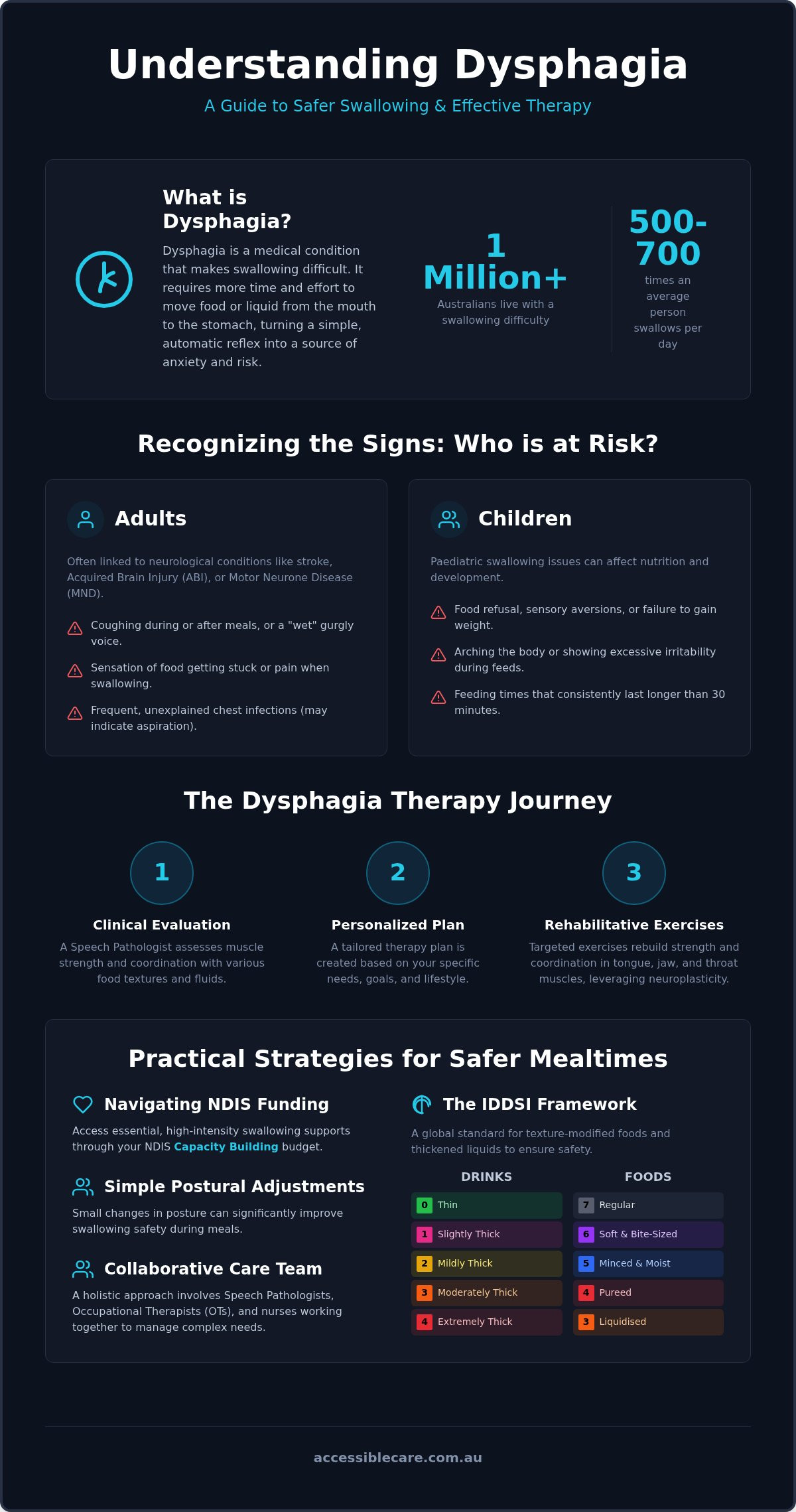
Understanding Texture Modification (IDDSI)
In Australia, we use the International Dysphagia Diet Standardisation Initiative (IDDSI) to describe food and drink textures. This framework uses a series of levels, from thin liquids to regular foods, to ensure everyone is using the same language. By following these levels as part of your dysphagia therapy in Melbourne, you ensure that every meal is prepared to your specific safety needs. For many, a “soft and bite-sized” diet is recommended because it requires less chewing strength and reduces the risk of large pieces of food blocking the airway. When using thickening agents for fluids, it’s crucial to follow the specific ratios prescribed by your therapist. Don’t guess the measurements; use the provided scoops to ensure the consistency is exactly what your body needs to swallow safely.
Safe Swallowing Techniques for Carers
Compensatory strategies are immediate tools to manage safety without changing physiology. These aren’t meant to “fix” the swallow forever, but they protect you right now. One common example is the “Chin Tuck,” where you tilt your head toward your chest while swallowing to help protect the airway. Your therapist might also suggest a head turn or a double swallow to clear any remaining food. It’s important for carers to watch for signs of fatigue, such as increased coughing or slower chewing toward the end of a meal. If you notice these signs, it’s often safer to stop the meal and try again later when energy levels are higher. For personalized guidance on these techniques, our team is ready to help with NDIS support services tailored to your home environment.
Why Choose Accessible Care for Your Dysphagia Therapy?
Choosing a partner for your health journey is a deeply personal decision. At Accessible Care, we believe that every individual deserves to be heard, honored, and respected. Our approach to dysphagia therapy in Melbourne is built on a foundation of empathy and professional excellence. We don’t just see a clinical diagnosis; we see a person with unique stories, preferences, and goals. Whether you’re recovering from an acquired brain injury or managing a progressive neurological condition, we’re here to support your autonomy and self-direction.
Our local presence in Melbourne means we truly understand the community and the specific NDIS landscape in Victoria. We know that navigating the system can feel like a full-time job. That’s why we position ourselves as your reliable guide, helping you translate your NDIS plan into meaningful, life-changing support. We’re committed to a partnership where your voice is the most important one in the room. By listening attentively to your concerns, we ensure that every therapy session moves you closer to the life you want to lead.
A Holistic Approach to Complex Care
Complex swallowing needs rarely exist in isolation. To provide the best possible outcomes, our Speech Language Pathologists (SLPs) work within a multidisciplinary team. Our Occupational Therapists (OTs) can assist with specialized feeding equipment or assess your seating to ensure your posture supports a safe swallow. At the same time, our Community Nursing team plays a vital role in monitoring respiratory health and managing the complexities of high-intensity care. We focus on the whole person rather than just the process. This collaborative model ensures that your physical safety, nutrition, and social connection are all supported under one roof.
Start Your Journey to Safer Swallowing
Taking the first step toward a safer mealtime experience is simple and stress-free. We begin with a gentle initial assessment in the comfort of your own home, where you feel most relaxed. Our team then handles the heavy lifting of the NDIS reporting process, providing the evidence-based documentation needed to justify your ongoing care. We’re here to make the path to support feel easy and accessible for you and your family. If you’re ready to improve your quality of life and regain confidence at the dinner table, we’re ready to listen. Contact Accessible Care for compassionate dysphagia support today and discover a partnership built on trust and genuine care.
Embrace a Safer Pathway to Swallowing Success
Regaining your confidence at the dining table is about more than just safety; it’s about reclaiming your independence and social connection. We’ve explored how understanding the signs of dysphagia and using the IDDSI framework can transform your daily life. You don’t have to manage these complexities alone. With the right support, mealtimes can become a time of comfort and nourishment once again. It’s possible to move past the fear of choking and focus on the joy of sharing a meal with those you love.
As a Registered NDIS Provider with an experienced Melbourne SLP team, we offer holistic multidisciplinary support tailored to your specific needs. Our focus is always on your autonomy and personal goals. If you’re ready to explore how specialized dysphagia therapy melbourne can help you or your loved one, we’re here to listen and help. We invite you to Book a Compassionate Swallowing Assessment with Accessible Care today. You deserve to feel safe and empowered every time you eat. We look forward to being your partner on this journey toward a better quality of life.
Frequently Asked Questions
Is dysphagia therapy covered by the NDIS in Melbourne?
Yes, dysphagia therapy is covered by the NDIS for eligible participants in Melbourne. As a registered NDIS provider, we deliver these services through the Capacity Building budget, specifically under Improved Daily Living. This funding allows you to access specialized speech pathology to improve your swallowing safety and independence. We’ll work with you to ensure your therapy goals align with your NDIS plan, making the process of accessing dysphagia therapy melbourne as smooth and stress-free as possible.
Can a speech pathologist come to my home for swallowing therapy?
Yes, our speech pathologists provide mobile services and can visit you in the comfort of your own home across Melbourne. We believe that assessing your swallowing in your natural environment is the best way to develop practical strategies. It allows us to see how you interact with your own kitchen, seating, and favorite meals. Home visits also remove the physical and emotional stress of traveling to a clinical office, which is especially helpful for those with limited mobility.
What is the difference between a clinical swallow evaluation and a FEES assessment?
A clinical swallow evaluation is an initial assessment where a therapist observes you eating and drinking to identify physical signs of difficulty. It’s usually the first step in your journey. In contrast, a FEES assessment uses a small camera to see your internal swallow mechanics on a screen. While the clinical evaluation provides a great starting point, the instrumental FEES assessment offers a detailed look at exactly which muscles need the most support during your dysphagia therapy melbourne.
How long does it take to see results from dysphagia rehabilitation?
Every journey is unique, so the timeline for results depends on your specific condition and goals. Some participants notice improvements in safety and comfort within a few weeks of starting consistent exercises. For others, particularly those recovering from a stroke or brain injury, the process relies on neuroplasticity and may take several months of dedicated practice. We focus on celebrating small milestones along the way, ensuring you always feel encouraged and supported as you work toward safer mealtimes.
Does dysphagia therapy help with dementia-related swallowing issues?
Yes, therapy can be incredibly beneficial for individuals living with dementia-related swallowing issues. Our approach focuses on maintaining quality of life and comfort rather than just intensive rehabilitation. We work closely with families and carers to modify food textures and simplify the mealtime environment to reduce confusion. By focusing on person-centric care, we help ensure that eating remains a dignified and safe experience for your loved one throughout their journey with dementia.
What should I do if I suspect a loved one is aspirating?
If you notice acute signs like a persistent cough, fever, or difficulty breathing after eating, you should seek medical advice immediately. These can be indicators of aspiration pneumonia. For long-term safety, it’s vital to book a professional swallowing assessment. Our team can help identify why aspiration is happening and provide you with immediate compensatory strategies to protect the airway. We’re here to offer the guidance and peace of mind you need during these worrying times.
Can dysphagia therapy help someone transition off a feeding tube?
Yes, dysphagia therapy is a critical part of the process for anyone hoping to transition away from a feeding tube. We focus on strengthening the muscles involved in swallowing and improving coordination to ensure you can manage oral intake safely. This transition is always managed carefully in collaboration with your medical team. Our goal is to help you regain your autonomy and the simple pleasure of eating, moving at a pace that feels safe and comfortable for you.
Do I need a GP referral to see an NDIS speech pathologist?
You don’t need a GP referral to access speech pathology if you’re an NDIS participant. You can contact us directly to begin your journey toward safer swallowing. However, having your medical history or a recent report from your doctor can be very helpful for our therapists. It allows us to understand the underlying cause of your difficulties and tailor our holistic assessments to your specific needs. We’re here to make the intake process easy and accessible.

