


What if your NDIS planning meeting wasn’t a high-stakes test you had to pass, but a collaborative conversation about your right to live a full life? With over 660,000 Australians currently navigating the scheme as of June 2024, it’s common to feel like just another number in a complex system. You might feel anxious about the jargon or worry that you won’t be able to explain your daily struggles clearly enough to protect your funding. It’s exhausting to feel like you have to prove your disability over and over again. Learning how to prepare for ndis planning meeting sessions is the first step toward reclaiming your voice and your choice.
We believe your plan should be a true reflection of your goals, whether that’s securing speech therapy for your child or finding the right support worker to help you stay active in your community. This guide provides a compassionate, expert checklist to help you walk into your meeting with total confidence. You’ll learn how to translate your lived experience into the language the NDIS understands so you can secure the A$ value of support you actually need. We’ll walk you through everything from gathering evidence to articulating your vision for a more independent future.
Key Takeaways
- Understand the vital roles of Planners and LACs to ensure you feel supported and heard during this foundational conversation.
- Learn how to prepare for ndis planning meeting by organising your medical and functional evidence to clearly justify your support needs.
- Discover how to set meaningful short and long-term goals that empower you to live “your choice, your life, your way.”
- Gain practical tips for navigating the meeting with honesty, including how to choose an environment where you feel most comfortable.
- Identify the essential steps to take after your plan is approved to successfully implement your funding and access compassionate care.
What is an NDIS Planning Meeting and Why Does it Matter?
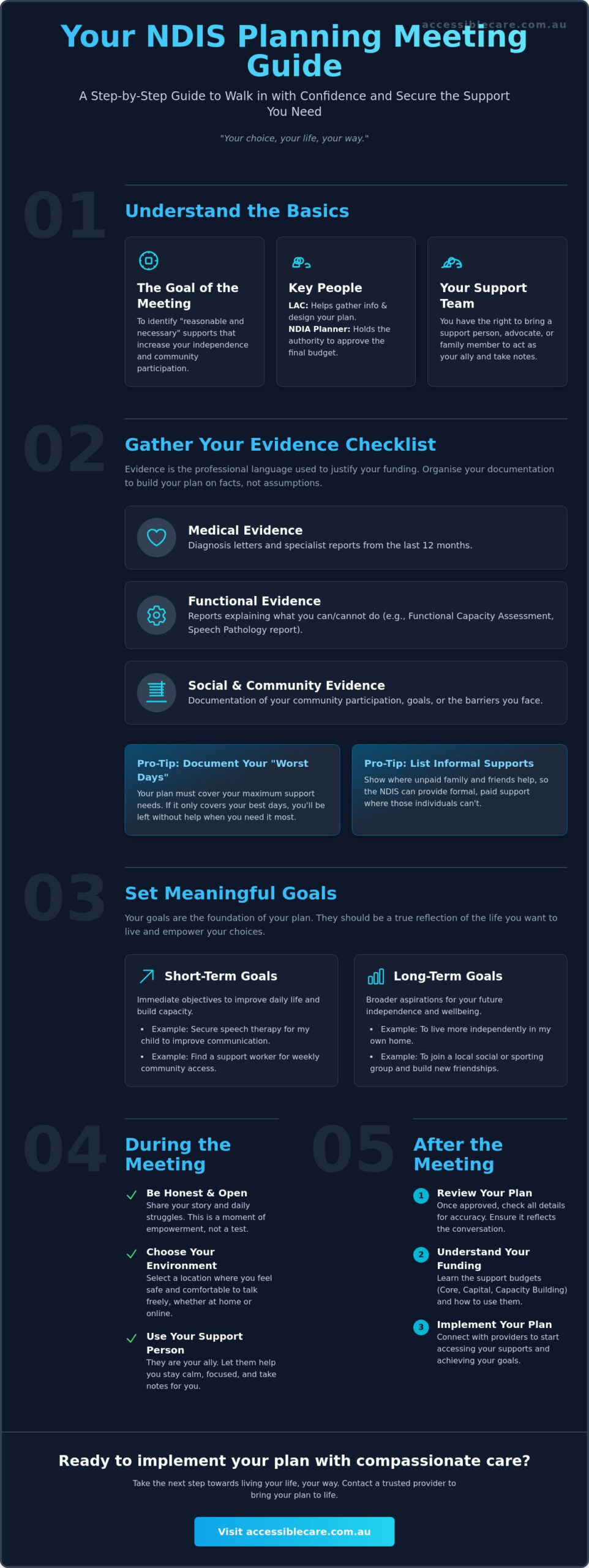
Think of your NDIS planning meeting as the cornerstone of your independence. It’s the foundational conversation that determines the funding and support you’ll receive to reach your goals. You’ll typically meet with a Local Area Coordinator (LAC) or an NDIA Planner. The LAC helps gather information and design your plan, while the NDIA Planner holds the authority to approve the final budget. Understanding these roles is a key part of learning how to prepare for ndis planning meeting effectively.
It’s natural to feel nervous or overwhelmed before this discussion. Talking about your daily struggles can feel vulnerable, but we want you to see this as a moment of empowerment. This is your platform to share your story and advocate for the life you want to lead. Our guiding principle is always “Your choice, your life, your way.” By being open and honest, you’re taking the first step toward a plan that truly reflects your unique needs.
The National Disability Insurance Scheme was built to put you at the centre of your care. During the meeting, the focus stays on your aspirations and the practical help you need to get there. It’s about ensuring you have the resources to live with dignity and respect.
The Goal of the Meeting
The main objective is to identify which supports are “reasonable and necessary” for your situation. The NDIS examines how your disability impacts your daily life, from getting dressed in the morning to joining local social groups. They want to see how support can increase your independence and community participation. According to the NDIS Act 2013, reasonable and necessary supports must be related to your disability, represent value for money, and be effective in helping you achieve your individual goals.
Who Can Attend Your Meeting?
You have a legal right to bring a support person, advocate, or family member to your meeting. This person acts as your ally, helping you stay calm and focused on your priorities. They can also take detailed notes so you can reflect on the conversation later without feeling pressured to remember every word. For paediatric meetings, we strongly recommend that both parents or primary carers attend. Having multiple perspectives ensures the NDIA gets a complete picture of the child’s environment and daily requirements. Knowing you have a team behind you is a vital part of how to prepare for ndis planning meeting with confidence.
The Essential NDIS Preparation Checklist: Gathering Your Evidence
Understanding how to prepare for ndis planning meeting starts with one word: evidence. In the NDIS system, evidence is the professional language used to justify your funding. Planners don’t just look at a diagnosis; they look at how that diagnosis impacts your life every day. Providing clear, written proof from health professionals ensures your plan is built on facts rather than assumptions.
Organise your documentation into three clear categories to make the meeting smoother:
Don’t forget to bring a list of your informal supports. These are the family, friends, and community members who help you without being paid. It’s vital to show where these people are currently stepping in so the NDIS can provide formal support where those individuals can’t keep up. When documenting your life, focus on your “worst days.” While it’s hard to talk about, the NDIS needs to know your maximum support requirements. If your plan only covers your best days, you’ll be left without help when you need it most.
Functional Capacity and Therapy Reports
A functional capacity assessment is the gold standard for securing Occupational Therapy funding. This report provides a professional snapshot of your ability to manage at home and in the community. If you have communication or swallowing goals, recent speech pathology reports are essential. Planners value reports from a multidisciplinary team because they offer a holistic view of your needs. This clinical data, when paired with the official NDIS preparation guide, creates a strong case for “reasonable and necessary” supports.
Daily Activity Logs and Impact Statements
Keep a 24-hour diary for at least seven days before your meeting. Record every time you require assistance, even for small tasks like prompting to take medication or help with buttons. This is particularly helpful when describing the impact of acquired brain injury on cognitive and language skills, which aren’t always visible. Use this template sentence to be clear: “Because of [condition], I need help with [task] so that I can [goal].” For instance, “Because of my ABI, I need help with daily planning so that I can attend my appointments on time.”
If you’re feeling unsure about which documents will best reflect your needs, the team at Accessible Care is here to listen and guide you through the process.
Setting Meaningful Goals: Your Choice, Your Life, Your Way
Your goals are the most critical part of your NDIS plan. They act as the foundation for every dollar of funding you receive. When you’re thinking about how to prepare for ndis planning meeting, it’s vital to remember that the NDIS can only fund supports that directly help you achieve these specific outcomes. If a support isn’t linked to a goal, it’s unlikely to be included in your budget.
You’ll need to identify short-term goals for the next 12 months and long-term aspirations for your future. Short-term goals often focus on immediate needs like building a specific skill or accessing the community. Long-term goals are about your vision for a “good life,” such as moving into your own home or finding a career you love. Be as specific as possible. Instead of saying “I want to be healthier,” try “I want to increase my mobility so I can visit the local shops independently three times a week.” This clarity helps the planner understand exactly what support you need to succeed.
Goals for Independence and Occupational Therapy
Occupational Therapy (OT) focuses on making daily life easier and more dignified. If you want to live more independently, your goals should reflect the specific tasks you find challenging. For adults, this might mean learning to cook meals safely or using assistive technology to manage personal care. For younger participants, tips for your child’s planning meeting often suggest focusing on developmental milestones like dressing or playing with peers. Framing a goal around “increasing independence in daily living tasks” allows an OT to recommend the specific equipment or training required for your home.
Goals for Communication and Social Connection
Social life and communication are vital for your wellbeing. Speech therapy goals shouldn’t just be about the mechanics of talking; they’re about building relationships. You might set a goal to “use my communication device to join a local hobby group and make new friends.” If communication barriers lead to safety concerns or require complex care, you may need to discuss high intensity supports ndis. These supports ensure you stay safe while you’re out in the community. If challenging behaviours make social life difficult, including a Positive Behaviour Support goal can provide funding for specialist strategies that help you connect with others in a way that feels safe and respectful.
Navigating the Meeting: Tips for a Successful Conversation
The day of your planning meeting is your opportunity to advocate for the life you want to lead. While it might feel daunting, remember that you’re the expert on your own life. Knowing how to prepare for ndis planning meeting discussions ensures you feel empowered when sitting down with your Local Area Coordinator (LAC) or NDIA planner. This conversation is the foundation of your support for the coming years.
Follow these steps to ensure a productive and calm experience:
- Step 1: Choose your environment. You have the right to request a meeting format that suits your comfort level. This could be an in-person meeting at your home, a face-to-face chat at an NDIS office, a phone call, or a video session. If you feel more confident in your own space, ask for a home visit.
- Step 2: Be honest and detailed. Many people naturally downplay their struggles out of politeness or habit. However, this is the time to describe your “worst days.” If you need help with basic tasks like showering or meal preparation, be specific about exactly how much support you require.
- Step 3: Discuss your informal supports. While family and friends often help out of love, you must be clear about when this support is not sustainable. If a primary carer is returning to work or facing their own health challenges, the NDIS needs to know so they can provide funded alternatives.
- Step 4: Ask about plan management options. You can choose to be Self-Managed, Plan-Managed, or NDIA-Managed. Most participants find Plan Management offers the best balance of flexibility and reduced admin stress.
- Step 5: Review the notes. Ensure the LAC has captured your primary goals correctly before the meeting ends. Ask them to read back the main points to avoid errors in the draft.
Understanding how to prepare for ndis planning meeting requirements means being ready to speak up for your rights. You don’t have to do this alone; you can always have a support person or advocate present to help you stay focused.
Questions You Should Ask the Planner
Active communication helps prevent misunderstandings. You should ask: “How will this specific funding help me achieve my goal of [insert your goal]?” This links your needs directly to the NDIS criteria. Also, ask what happens if your circumstances change before your next review. Understanding the process for a plan variation provides peace of mind. Lastly, ask for a clear timeline on when you’ll receive your draft or final plan.
Advocating for Complex Care Needs
If you or a loved one requires community nursing or high-intensity support, your advocacy needs to be even more detailed. You must explain the necessity for 24/7 care or specialised medical equipment using reports from your specialists. Focus on “capacity building” supports too. These help you learn skills to manage your own supports over time, fostering independence. If you need a partner who truly listens to these complex requirements, reach out to the compassionate team at Accessible Care today.
After the Meeting: Implementing Your Plan with Accessible Care
Once your NDIS plan is approved, it usually appears in your myPlace portal within 7 to 28 days. Reading through the funding categories can feel overwhelming at first. Your budget is typically divided into three areas: Core Supports for daily living, Capacity Building for learning new skills, and Capital Supports for equipment or home modifications. Understanding how these funds translate into real-world services is the final step in knowing how to prepare for ndis planning meeting outcomes effectively.
Accessible Care acts as your dedicated partner across Melbourne and Adelaide. We don’t just provide services; we build relationships. It’s vital to choose a provider who listens to your story and respects your dignity. We believe that every participant deserves a support system that feels like a partnership rather than a transaction. Our team focuses on your unique strengths, ensuring your NDIS journey aligns with our promise: “Your choice, your life, your way.”
How to Start Your Support
Getting started is a straightforward process designed to reduce your stress. We begin by linking your approved NDIS plan to our specialised Speech Pathology and Occupational Therapy services. In our Melbourne and Adelaide clinics, our multidisciplinary team collaborates daily. This ensures your therapists work together so your goals aren’t treated in isolation. You can book an initial assessment immediately to establish a baseline and start your therapy sessions without unnecessary delays. We focus on practical outcomes that improve your quality of life from the very first appointment.
Ongoing Support and Plan Reviews
Your NDIS journey is a continuous cycle of growth. As you move toward your next scheduled review in 2026, our team helps you collect the necessary data and progress reports. These documents provide the evidence required to show the NDIA how your funding has made a measurable difference in your life. Our compassionate support workers provide the daily consistency you need, focusing on empowering your independence. We track your milestones closely to ensure you are ready for your next how to prepare for ndis planning meeting cycle with confidence and clear results.
Ready to take the next step? Contact Accessible Care today to discuss your NDIS journey and find out how our team can support your goals.
Taking the Next Step Toward Your Future
Navigating the NDIS doesn’t have to be a solo journey. By gathering your clinical evidence early and clearly defining your personal goals, you’re already ahead. Understanding how to prepare for ndis planning meeting ensures that your voice is heard and your needs are met. It’s about turning your aspirations into a funded reality that supports your independence and well-being. Focus on your vision for the year ahead and remember that you’re the expert in your own life.
As a Registered NDIS Provider in Melbourne and Adelaide, Accessible Care is here to walk beside you. Our experienced multidisciplinary therapy team takes a compassionate, person-centred approach to every participant. We prioritize dignity and respect, ensuring you feel empowered throughout the entire process. We believe in your right to live your life, your way, and we’re ready to help you navigate the system with confidence and ease.
Empower your NDIS journey—get in touch with Accessible Care today
You’ve got the tools and the knowledge to succeed. We’re standing by to ensure you have the professional support to match. Your brighter future starts with a single, confident conversation.
Frequently Asked Questions
What should I bring to my first NDIS planning meeting?
You should bring your NDIS Planning Booklet, recent medical reports, and a list of your daily challenges. It’s also helpful to have a copy of your “My NDIS” profile if you’ve already started one. Having these documents ready is a vital step in how to prepare for ndis planning meeting. It ensures your Local Area Coordinator understands your specific needs from the very first moment. You’re also welcome to bring a trusted friend or family member for emotional support.
Can I change my NDIS goals after the meeting is over?
Yes, you can update your goals at any time by requesting a plan variation or during your scheduled plan reassessment. The NDIS is designed to be flexible as your life changes. If your circumstances shift, contact your planner to discuss how your plan can better reflect your new aspirations. It’s your life and your choice, so your plan should always support your current journey and evolving needs.
How long does an NDIS planning meeting usually take?
Most NDIS planning meetings last between 60 and 90 minutes. This timeframe provides enough space to discuss your daily life, your long term goals, and the specific supports you need to achieve them. If your situation is more complex, it might take a little longer. Don’t feel rushed; this is your dedicated time to be heard and understood by the person helping shape your support.
What is the difference between a goal and a support?
A goal is the specific outcome you want to achieve, while a support is the resource or service that helps you get there. For example, a goal might be “learning to cook for myself,” while the support would be the funding for a support worker to assist you in the kitchen. Understanding this distinction helps you clearly communicate what you need while you learn how to prepare for ndis planning meeting.
Do I have to use a specific NDIS provider suggested by the LAC?
No, you have the right to choose any provider that meets your needs and helps you achieve your goals. While an LAC might provide a list of local options, the final decision is always yours. This is a core part of the “Your choice, your life, your way” philosophy. You can switch providers at any time if you feel you aren’t receiving the compassionate care you deserve.
What happens if I am unhappy with my NDIS plan after the meeting?
You can request an Internal Review of a Decision within 100 days of receiving your plan approval letter. If you believe the funding doesn’t reflect your actual needs, you can submit an S100 review request. According to NDIA data from 2023, many participants use this process to ensure their plans are fair and accurate. We recommend keeping detailed notes of your meeting to support your request for a review.
Can I have my planning meeting at home in Melbourne or Adelaide?
Yes, you can request to have your planning meeting in the comfort of your own home in cities like Melbourne or Adelaide. The NDIA offers face to face meetings, phone calls, or video chats to make the process accessible for everyone. Being in your own environment can help you feel more relaxed. It often makes it easier to describe your daily living requirements when you’re in the space where you live.
How do I explain that I need high-intensity support?
Provide recent clinical evidence from your GP or specialist that details the complexity of your daily care needs. Use specific examples of when you require 24 hour assistance or specialized medical intervention. Clear documentation from health professionals ensures the NDIS understands why high intensity support is essential for your safety. This evidence based approach helps secure the right level of funding for your unique situation and ensures your dignity is maintained.

