


What if the time your child spends on a waitlist could actually become a season of growth instead of just a period of waiting? It’s incredibly difficult to watch your child struggle while you’re told to wait months for an initial appointment. You might feel like you’re failing them or that their development is on hold, especially when facing the reality of long waitlists for paediatric therapy adelaide families are currently experiencing. We understand that this silence from providers feels heavy, and the complexity of the NDIS often adds to that weight.
We believe that every moment is an opportunity for connection and progress. This guide shares proactive strategies you can start at home today to support your child’s unique journey while you wait for a formal intake. You’ll learn how to effectively work the waitlist system, manage the financial considerations of private versus NDIS funded care, and ultimately find a provider with the capacity to give your child the dedicated attention they deserve. We’ll walk through how to bridge the gap between where you are now and the professional support your family needs, ensuring you feel empowered as your child’s strongest advocate.
Key Takeaways
- Gain a clear understanding of the current paediatric health landscape in South Australia to help you manage expectations and plan your next steps.
- Understand the science of neuroplasticity and why starting support early reduces the need for higher intensity interventions later in life.
- Access a structured plan for high-impact activities you can do at home to support your child’s development despite the long waitlists for paediatric therapy adelaide families are facing.
- Learn practical tips for finding providers with current capacity by using your NDIS network and searching for smaller, community-based teams.
The Reality of Paediatric Therapy Waitlists in Adelaide
Finding out your child needs extra support is a significant moment. It often brings a sense of clarity, but it can also bring a new set of worries. In South Australia, many families find that the next step, actually starting therapy, is blocked by a challenging reality. The current state of paediatric allied health in Adelaide is one of high demand and limited supply. It’s completely normal to feel frustrated, anxious, or even a bit helpless when you’re told there’s a long wait. Please know that your feelings are valid, and you aren’t alone in this experience. A paediatric waitlist is a temporary hurdle on your family’s path, not a permanent barrier to your child’s potential.
Why is the Wait So Long in South Australia?
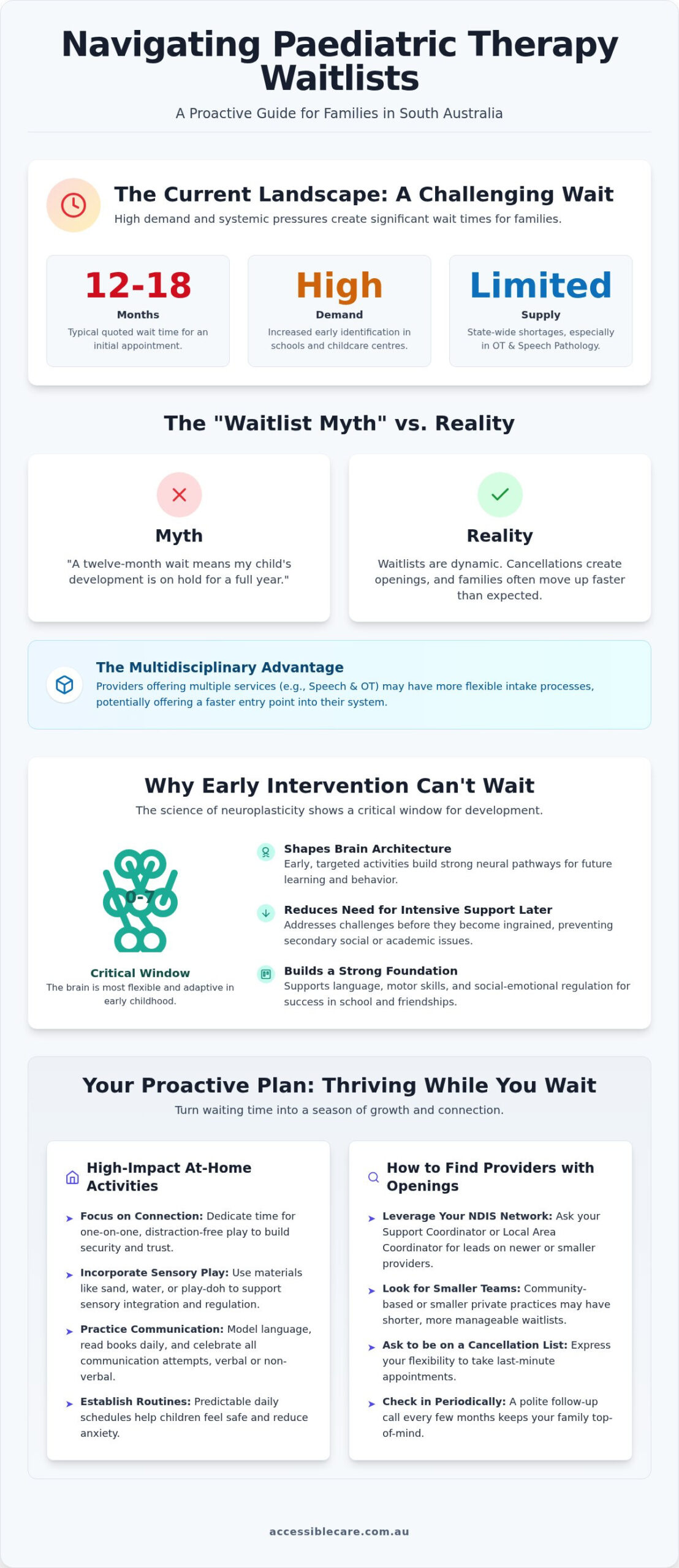
Adelaide suburbs have seen a significant surge in demand for NDIS services. This is partly due to a positive shift in our community; our schools and childcare centres are much better at identifying developmental needs early. While this means more children are being referred for Early childhood intervention, the number of qualified professionals hasn’t grown at the same pace. We are seeing specific shortages in Occupational Therapy and Speech Pathology across the state. Additionally, the administrative process of moving from Early Childhood Early Intervention (ECEI) supports to permanent NDIS plans can create bottlenecks that keep families waiting longer than they should. These systemic pressures contribute to the long waitlists for paediatric therapy adelaide families must navigate.
The ‘Waitlist Myth’ vs. Reality
When you hear that there are long waitlists for paediatric therapy adelaide providers often quote timeframes like twelve or eighteen months. This can feel devastating. However, there’s a difference between a static list and an active intake process. Many clinics are constantly reviewing their lists to match families with new openings as they arise, meaning the situation is often more fluid than it first appears.
- Myth: A twelve-month wait means your child won’t get any help for a full year.
- Reality: Cancellations happen frequently, and families often move through the system faster than the initial estimate suggests.
- The Multidisciplinary Advantage: Choosing a provider that offers both Speech Therapy and Occupational Therapy can sometimes provide a faster entry point. These teams coordinate care internally, which can occasionally open doors sooner than single-discipline clinics.
It’s helpful to remember that being on a list is an active step, not a passive one. By understanding how the system works, you can better position your family to access support as soon as it becomes available.
Why Early Intervention Can’t Wait: The Risks of Delay
The first few years of a child’s life are a period of rapid neurological growth. This is due to neuroplasticity, which is the brain’s remarkable ability to form new connections and adapt to new experiences. While the brain remains plastic throughout our lives, it’s at its most flexible during early childhood. This is why addressing developmental challenges early is so vital. When we intervene during these formative years, we aren’t just teaching a skill; we are literally helping to shape the brain’s architecture. Every positive interaction and targeted activity helps build a stronger foundation for the future.
Unfortunately, the long waitlists for paediatric therapy adelaide families face can make this window feel like it’s closing. It’s important to understand that while time is a factor, there are always proactive strategies while you wait that can keep your child moving forward. Early support often reduces the need for high-intensity, more invasive interventions later in life. We’re catching challenges before they become deeply ingrained habits or lead to secondary social struggles. While navigating the long waitlists for paediatric therapy adelaide providers currently have, focusing on these early milestones remains the priority.
The Window of Opportunity
The ages between birth and seven years are often described as a critical window for language acquisition and motor skill development. During this time, children are primed to absorb the building blocks of communication. If a child struggles with speech now, it can impact their later literacy and academic success in the classroom. Similarly, supporting social-emotional regulation before your child enters the Adelaide school system helps them build the resilience needed to navigate friendships and group learning. You can learn more about how tailored support makes a difference in our guide, Paediatric Therapy: Helping Your Child Shine.
Long-term Benefits of Timely Support
When a child receives support early, the benefits ripple out through their entire life. We often see a significant reduction in secondary challenges like low self-esteem or school refusal when a child feels capable and understood. This timely support also empowers you. You become your child’s primary advocate and their first therapist, equipped with tools to support them in everyday moments. The emotional and developmental return on investment is profound; by acting as soon as concerns arise, you’re giving your child the best possible foundation for independence. If you’re feeling overwhelmed by the process, our team at Accessible Care is here to listen and help you navigate the next steps for your family.
Proactive Strategies While You Are on a Waitlist
Waiting doesn’t have to mean standing still. We define ‘Waitlist Wellness’ as the proactive management of a child’s needs during the intake period, ensuring developmental momentum continues even before your first official session. While the long waitlists for paediatric therapy adelaide families are currently navigating can feel like a stop sign, they are actually an invitation to build a therapeutic environment within your own home. By taking small, intentional steps now, you’re creating a foundation of support that will make professional intervention even more effective when it begins.
To help you get started, we suggest this simple five-step approach to home-based support:
- Observe and Note: Keep a simple diary of what triggers frustration and what brings your child joy.
- Audit Your Routine: Identify one daily task, like mealtime, where you can add a small developmental goal.
- Simplify Communication: Use visual cues or schedules to help your child understand the day’s flow.
- Engage Your Village: Connect with teachers or childcare workers to align your support strategies.
- Use Your NDIS Funds: Look into using ‘Capacity Building’ budget lines for parent training or webinars that empower you with new skills.
Home-Based Speech and Language Support
You can naturally expand your child’s vocabulary during everyday routines like bath time or meals. Try using ‘parallel talk’, which involves describing what your child is doing as they do it, without expecting a response. For example, “You’re pouring the water” or “The block is red.” This builds receptive language in a low-pressure way. Using visual schedules with simple drawings of the day’s events can also significantly reduce communication-related frustration at home by helping your child feel more in control of their environment.
Occupational Therapy Ideas for the Living Room
Your home is already full of tools for sensory and motor development. For fine motor skills, involve your child in ‘messy play’ with flour or water, or let them be a ‘kitchen helper’ by tearing lettuce or stirring batter. If your child struggles with emotional regulation, creating a ‘sensory nook’ with soft pillows and dim lights can provide a safe space to decompress. For gross motor challenges, use household items like cushions and chairs to build indoor obstacle courses that encourage crawling, balancing, and jumping.
Collaborating with Schools and Childcare
Your child’s educators are vital partners while you manage the long waitlists for paediatric therapy adelaide providers have. Share your concerns openly with Adelaide teachers to explore school-based support options. You can request an Individual Education Plan (IEP) even before you’ve secured an external OT. Many schools also have access to wellbeing officers or psychologists who can offer interim guidance on social-emotional regulation and classroom participation.
How to Find Paediatric Therapy Openings in Adelaide
Finding a provider often feels like a full-time job. When you’re dealing with the long waitlists for paediatric therapy adelaide families often encounter, it pays to look where others aren’t looking. While the major clinics might have the biggest Google presence, smaller boutique providers often have more flexible intake systems. Don’t be afraid to click onto the second or third page of search results to find these dedicated, local teams. You might find a therapist whose books have just opened or who specializes in the exact area your child needs.
If you have an NDIS Support Coordinator, let them do the heavy lifting for you. They have their finger on the pulse of the local market and can spend the time calling providers to check current capacity. This allows you to focus your energy on your child’s daily growth while an expert handles the system’s complexities on your behalf. They can often identify providers who are expanding their teams or opening new service areas before it’s widely advertised.
Navigating the NDIS Provider Finder
The NDIS portal is a powerful tool if you know how to filter your search. You can search specifically for registered providers in South Australia; however, if you’re self-managed or plan-managed, don’t overlook non-registered therapists who may have shorter queues. We recommend getting on three or four waitlists simultaneously to increase your chances. When you make an intake call, ask about their ‘churn rate’. This refers to how often spots open up. Knowing this gives you a much better idea of the true timeline than a generic six-month estimate.
Considering Telehealth and Community-Based Care
Telehealth is a game-changer for many families. It often bypasses the physical constraints of a clinic, allowing your child to start sessions from the comfort of home. This ‘mixed delivery’ model can be combined with in-person visits later once a spot becomes available. For a broader look at how these sessions support development, you can read our guide on What is Occupational Therapy? to see how it fits your child’s specific goals.
Mobile therapists bring the support directly to you. This reduces the travel burden on busy families and allows the therapist to see your child in their natural environment, like home or school. At Accessible Care, we focus on this community-based approach to make therapy as accessible and low-stress as possible. Reach out today to see how our mobile team can help you bypass the traditional clinic queue and find the right support for your child’s unique journey.
Accessible Care: A Compassionate Path to Support
At Accessible Care, we believe you shouldn’t have to navigate this journey alone. We don’t just see ourselves as clinicians; we are your partners in uncovering your child’s full potential. We understand the emotional toll that comes with the long waitlists for paediatric therapy adelaide families often face. That’s why we’ve built a team dedicated to active listening and genuine connection. Our multidisciplinary approach brings together experienced Speech Language Pathologists and Occupational Therapists to provide a wrap-around support system for your family.
Our commitment goes beyond traditional therapy. We focus on holistic assessments that look at the whole child, considering their environment, interests, and individual autonomy. We respect that every family’s goals are unique. Whether you’re seeking to improve communication or manage daily transitions, we’re here to facilitate your child’s self-direction. By focusing on the person rather than just the process, we help build an environment where your child feels truly seen and supported. It’s our goal to offer a supportive alternative to the long waitlists for paediatric therapy adelaide currently experiences.
Our Approach to Paediatric Therapy
Communication is the heart of connection. Our speech pathology services focus on ‘Finding Your Child’s Voice,’ ensuring they have the tools to express their needs and dreams. We also integrate Positive Behaviour Support to help create a more peaceful and predictable home life for everyone. This isn’t about control; it’s about empowerment. We give your child the skills to shine independently, fostering the confidence they need to participate fully in their community and school life. Every session is an opportunity to celebrate progress and build self-esteem.
Getting Started with Accessible Care
We know you’ve already been through a lot of stress. Our intake process is intentionally simple and low-stress, designed to fit into the lives of busy Adelaide parents. During your first holistic assessment, we take the time to understand your child’s strengths and your family’s priorities. We work closely with your existing NDIS plan and goals to ensure every session is purposeful. We want you to feel confident that the care your child receives is customized, respectful, and deeply effective. If you’re ready to take the next step, please reach out to our compassionate team today to discuss how we can support your child’s unique path forward.
Empowering Your Child’s Journey Today
The long waitlists for paediatric therapy adelaide families encounter are a hurdle, but they aren’t a dead end. By starting with proactive home strategies and building a supportive environment now, you’re already making a profound difference in your child’s development. Early intervention is a journey of small, meaningful steps, and every effort you make today builds a stronger foundation for their future independence.
Our holistic multidisciplinary team is ready to walk this path with you. As an NDIS Registered Provider, we offer the expertise of experienced Speech Language Pathologists and Occupational Therapists who prioritize your child’s unique voice and autonomy. We’re here to provide the clarity and support you need to move beyond the waiting game. Speak with a compassionate Adelaide provider today to discover how we can partner with your family. You’ve been your child’s strongest advocate from the start, and we’re here to ensure you have the professional support to match your dedication. Your child’s potential is bright, and we’re ready to help them shine.
Frequently Asked Questions
How long are the average waitlists for paediatric OT in Adelaide right now?
Wait times vary significantly across South Australia, but many families find that the long waitlists for paediatric therapy adelaide providers currently manage range from six to eighteen months. These timeframes depend on your specific suburb and whether you are seeking a boutique provider or a larger clinic. It’s helpful to remember that these are often estimates; active intake processes and cancellations can sometimes move your family forward faster than initially expected.
Can I use my NDIS funding for parent training while we wait for a therapist?
Yes, you certainly can. NDIS ‘Capacity Building’ funds are designed to empower you with the skills needed to support your child’s independence. You can use this budget to access parent coaching sessions, webinars, or specialized training from qualified therapists. This is a proactive way to manage the long waitlists for paediatric therapy adelaide families are facing, as it allows you to start implementing therapeutic strategies at home immediately.
What is the difference between a private waitlist and an NDIS waitlist?
The main difference is the funding and administrative path. A private waitlist is for families paying out-of-pocket or using Medicare rebates, such as a Chronic Disease Management Plan. An NDIS waitlist is for those with an active NDIS plan. While many Adelaide providers manage one combined list, some may have different intake capacities based on their registration status or the specific reporting requirements involved with NDIS-funded care.
Is telehealth effective for children with ASD or ADHD?
Clinical experience shows that telehealth is a highly effective tool for children with neurodivergent needs. It allows therapy to take place in the familiar, low-stress environment of your own home. This often leads to better engagement and less sensory overwhelm for the child. Therapists use a collaborative model to coach parents through activities, ensuring that the strategies learned are practical and easy to use in your child’s daily routine.
Should I put my child on multiple waitlists at once?
We strongly encourage you to place your child’s name on multiple waitlists. This is a standard practice in Adelaide and increases your chances of securing a spot sooner. We suggest keeping a simple list of the providers you’ve contacted. When you eventually accept a spot with a therapist, please take a moment to notify the other clinics. This small act of courtesy helps the whole system work more efficiently for every family.
What documents should I have ready for when a therapy spot opens up?
Having your documents ready ensures your child can start their journey without administrative delays. You should have your child’s current NDIS plan, any diagnostic reports from paediatricians, and recent observations from school or childcare. If you have any previous therapy summaries or a GP referral, keep those handy too. Being organized allows your multidisciplinary team to build a holistic understanding of your child’s needs from the very first assessment.
How can I tell if a provider is the right ‘fit’ for my child’s personality?
The right fit feels like a supportive partnership based on mutual respect and attentive listening. Look for a therapist who focuses on your child’s strengths and interests rather than just their challenges. During your first interaction, notice if they prioritize your child’s autonomy and make them feel comfortable. A good provider will empower your child to find their own voice and work collaboratively with you to achieve your family’s unique goals.
Does Accessible Care offer speech therapy and OT in the same location?
Accessible Care is a mobile and community-based provider, meaning we don’t limit our support to a single clinic location. Our multidisciplinary team of Speech Language Pathologists and Occupational Therapists brings professional care directly to your home, school, or childcare centre in Adelaide. This approach allows us to observe and support your child in their natural environment, making therapy sessions more relevant, comfortable, and integrated into your family’s real-world daily life.

