

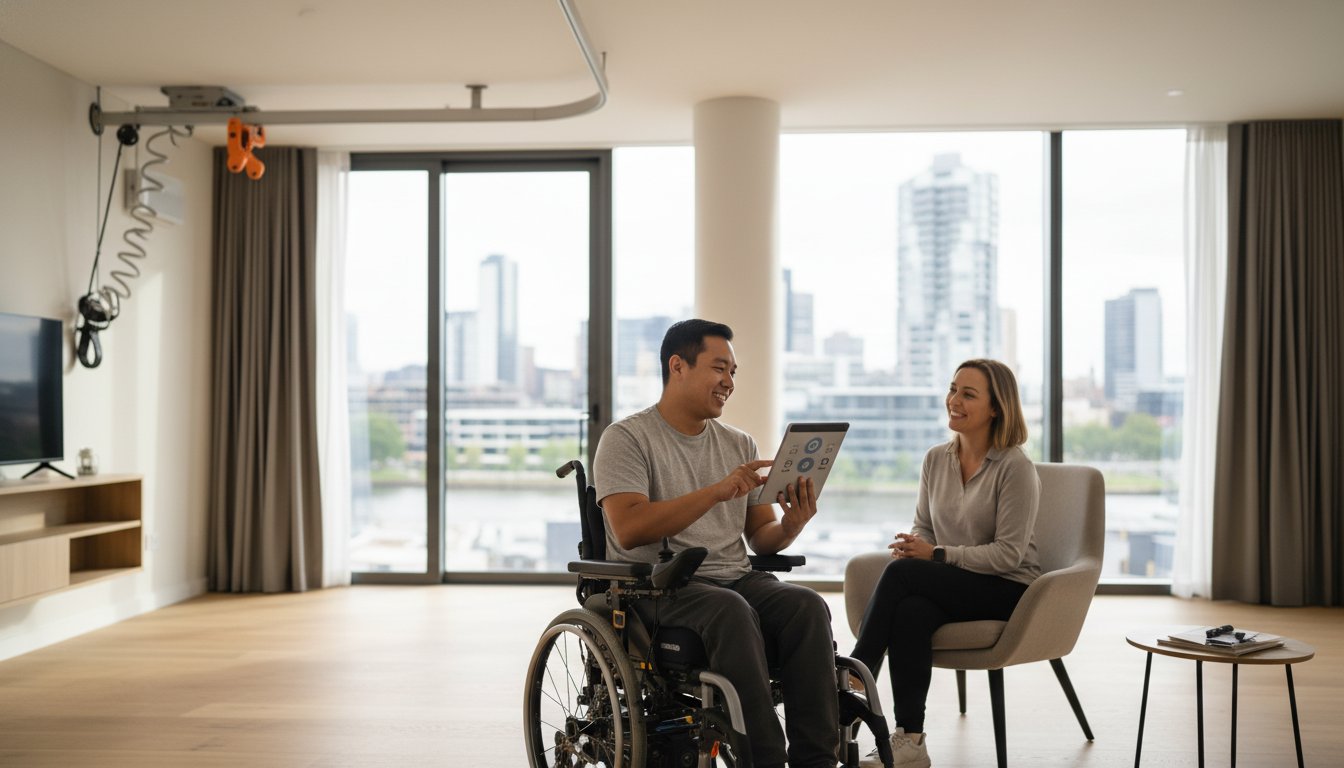
What if your home was no longer a series of obstacles, but a space that actually anticipated your every move? For many people living with ndis high physical support needs, the daily reality often feels like being trapped in a clinical environment that prioritizes routine over personhood. You might feel overwhelmed by a maze of acronyms or worried that choosing specialized housing means sacrificing your autonomy. We believe you deserve a sanctuary where your dignity is honored and your life is made easier through thoughtful design and compassionate care.
We agree that the current system can feel like a confusing puzzle of SDA and SIL requirements. This guide is here to provide clarity and a sense of peace. You’ll discover how High Physical Support housing and specialized nursing work in harmony to restore your independence. We will explore the latest design standards for features like ceiling hoists and emergency power, provide a clear roadmap for your application, and show you how high-intensity support can be delivered with heart and expertise right in your own home.
Key Takeaways
- Learn how High Physical Support design moves beyond basic accessibility to create a true sanctuary that honors your personal agency.
- Discover the essential structural features and smart home technologies that reduce your reliance on manual assistance and enhance your safety.
- Understand the eligibility requirements for ndis high physical support needs and the evidence you’ll need to secure specialized housing funding.
- Gain a clear, step-by-step roadmap for coordinating with your occupational therapist and support team to navigate the SDA application process.
- See how integrating high-intensity clinical care into your home environment provides the peace of mind you and your family deserve.
What is NDIS High Physical Support (HPS)?
High Physical Support (HPS) represents the highest level of design within Specialist Disability Accommodation (SDA). It is much more than just a building with wider doorways or accessible bathrooms. It is a specialized environment carefully crafted to empower individuals with the most significant physical impairments. The core philosophy here is simple but profound: your home should adapt to you, not the other way around. By integrating structural reinforcements and advanced technology, HPS housing aims to maximize your independence and reduce the daily physical barriers you face.
While other categories like “Fully Accessible” focus on wheelchair access, HPS goes several steps further. It includes specific requirements for ceiling hoists and emergency power backups to ensure your safety is never compromised. The National Disability Insurance Scheme (NDIS) oversees the funding for these dwellings, ensuring that those who need this level of environmental support can access it. They look for evidence of extreme functional impairment or very high support needs before approving HPS in a participant’s plan. This ensures the funding reaches those who truly require a highly specialized living space to maintain their health and dignity.
The Relationship Between SDA and SIL
Understanding the difference between SDA and SIL is vital for anyone with ndis high physical support needs. Think of SDA as the physical stage, which is the house itself, and SIL as the daily support, which is the dedicated staff who help you. For HPS participants, these two elements are inseparable. You need a home that can support a hoist, but you also need skilled professionals to operate it safely. When your housing and your support team work in harmony, you experience a higher quality of life. Coordinated care ensures that your physical environment and your personal support plan are always aligned with your goals.
A Person-Centric Approach to Complex Needs
At its heart, HPS is about more than just technical specifications. It is about your right to live a life filled with choice and control. We believe that a clinical label should never define your lifestyle. Your home should be a place where you feel like yourself, not a patient in a facility. This is why we focus on integrating high intensity supports that respect your autonomy and personal preferences. Accessible Care is deeply committed to this person-centric model. We act as your partner, listening to your goals and helping you shape an environment where you can truly thrive. You deserve a space that celebrates your dignity and supports your journey toward independence every single day.
Essential Design Features for High Physical Support Needs
Imagine waking up in a room where every corner has been designed to support your movement without friction. For individuals with ndis high physical support needs, the physical environment is the foundation of their freedom. High Physical Support (HPS) housing isn’t just about accessibility; it’s about providing a robust infrastructure that handles the most complex physical requirements. This starts with structural reinforcements in the ceilings of bedrooms and bathrooms to support permanent hoist systems. These hoists allow for safe, dignified transfers that protect both you and your support team, ensuring that your daily routines are as smooth as possible.
The layout of an HPS home also accounts for the use of heavy power wheelchairs. This means doorways must be significantly wider than standard builds, and floor finishes must be durable enough to withstand constant use without wearing down or creating tripping hazards. Every detail, from the height of the kitchen benches to the slip-resistance of the bathroom tiles, follows the official SDA Design Standard. Perhaps most importantly, these homes require emergency power backup. If you rely on life-sustaining equipment like ventilators or monitors, you deserve the peace of mind that comes from knowing your home will keep you safe even during a blackout.
Advanced Home Automation and Assistive Technology
Technology plays a transformative role in restoring autonomy. Modern HPS dwellings integrate smart home features that you can control through voice commands or specialized interfaces. Being able to adjust the climate, open the front door, or dim the lights without needing to ask for help is a powerful way to reclaim your dignity. We focus on customizing these technologies to your specific physical capabilities. As technology evolves, your home should be ready to adapt, ensuring you always have access to the latest tools for independence. If you’re feeling overwhelmed by these technical choices, our team offers dedicated support work to help you explore what’s possible.
Safety and Accessibility Standards
Safety is a silent but constant priority in a high-support environment. This includes sophisticated communication systems that provide 24/7 access to support staff if an emergency arises. Accessibility also means that every room is functional for you. Kitchens and bathrooms are modified with height-adjustable surfaces and side-opening ovens, allowing you to participate in daily tasks as much as you wish. These standards aren’t just rules; they’re a commitment to ensuring that people with ndis high physical support needs can live in a space that truly feels like home, rather than a clinical facility.
Who is Eligible for High Physical Support Funding?
Understanding eligibility is often the most stressful part of the journey. You might wonder if your specific situation fits the criteria or if the paperwork will truly reflect your daily life. To qualify for High Physical Support funding, the NDIA looks for evidence of extreme functional impairment or very high support needs. This means that even with the best equipment, your disability significantly impacts your ability to perform daily tasks like dressing, eating, or moving around your home. It’s not just about the diagnosis; it’s about how that diagnosis interacts with the world around you.
Common conditions that often lead to this level of funding include quadriplegia, advanced multiple sclerosis, or cerebral palsy. However, a medical history alone isn’t enough to secure approval. The NDIA requires detailed evidence showing that a standard home simply cannot meet your needs safely. They also apply a “Value for Money” test. This isn’t about choosing the cheapest option. Instead, it’s about the NDIA ensuring that investing in a specialized home will lead to better health outcomes, increased safety, and more independence for you over the long term. It’s a way of proving that the right environment will actually reduce your reliance on other types of costly, less effective interventions.
The Critical Role of Functional Capacity Assessments
Your primary ally in this process is your Occupational Therapist. They conduct a Functional Capacity Assessment (FCA) to paint a clear, professional picture of your ndis high physical support needs. This report is the most important piece of evidence you’ll provide to the NDIA. The OT looks at how you interact with your current environment and identifies exactly where it fails you. They don’t just list what you can’t do; they highlight how specific features, like automated doors or ceiling hoists, will help you reach your personal goals. By clearly linking your aspirations to the physical design of a home, the OT helps the NDIA see the human impact of the funding. If you’re looking to understand this process better, learning what is occupational therapy can help you see how these professionals advocate for your freedom.
Navigating Complex Physical and Nursing Needs
Many people eligible for HPS also require clinical oversight. This is where community nursing becomes essential. If you manage respiratory support, complex wound care, or have other high-intensity health requirements, your home must be able to accommodate these services safely and efficiently. There is a beautiful synergy between the physical design of the house and the medical support you receive. A well-designed HPS home provides the space and infrastructure for nurses and support workers to deliver care without it feeling like a hospital. This balance ensures your health is managed while your home remains a private, comfortable sanctuary. We focus on this holistic view, ensuring your clinical needs and your lifestyle goals are treated with equal importance.
Steps to Access High Physical Support in Your NDIS Plan
The journey toward a home that truly supports your independence begins with a clear goal in your NDIS plan. You don’t just need a roof over your head; you need a space that honors your autonomy. Start by expressing your desire for housing that accommodates your ndis high physical support needs during your planning meeting. This isn’t just about a building. It’s about how that building will change your life. Once your goals are set, you’ll need to gather a team of experts to help you build your case. This typically includes a Support Coordinator to manage the process, along with clinicians who understand your daily challenges.
After your team is in place, the next formal step is submitting the Home and Living Support Request Form to the NDIA. This document is where you and your team explain why standard housing is no longer suitable. It is a detailed request that requires patience and precision. Once the NDIA reviews your evidence, they will make an SDA decision. If approved, you’ll receive funding specifically for a High Physical Support dwelling. This is when the search for your new home truly begins. You’ll want to review potential providers carefully, ensuring their values align with your own and that they respect your rights as a tenant.
Gathering Your Evidence Base
Building a strong application requires more than just a list of medical conditions. You need a comprehensive functional capacity assessment that details your support requirements throughout a typical day. It’s also vital to include reports from speech pathology if you have complex communication or swallowing needs. These reports provide a holistic view of your health and safety. By documenting your current housing risks, such as narrow hallways or lack of hoist access, you make a compelling case for why HPS is a necessary investment in your future. We believe that every piece of evidence should reflect your unique voice and your right to a better life.
Searching for HPS Vacancies in Melbourne and Adelaide
Finding the right home in Melbourne or Adelaide requires a methodical approach. The NDIS SDA Finder tool is a great starting point to see what’s available in your preferred suburbs. When you tour a potential home, consider asking these questions:
- How does the smart home technology adapt to my specific physical capabilities?
- What are the protocols for emergency power backup and staff communication?
- Can I bring my own support team, or is there an onsite provider?
It’s important to understand your rights and the provider’s responsibilities before you sign a service agreement. If you’re feeling overwhelmed by these local options, our team is here to provide compassionate support work tailored to your specific journey. You deserve a partner who listens and helps you navigate the search with confidence.
Holistic Care: How Accessible Care Supports Your Journey
A beautiful, specialized home is a vital foundation, but it is only the beginning of your story. For individuals with ndis high physical support needs, the true magic happens when a thoughtfully designed environment meets a team of people who genuinely care about your goals. In Melbourne and Adelaide, Accessible Care stands as a registered NDIS provider dedicated to bridging the gap between specialized housing and high-quality clinical support. We don’t just provide services; we build a supportive partnership that honors your autonomy and simplifies the complexities of the NDIS.
We understand that living in a High Physical Support (HPS) home often requires a sophisticated level of assistance. This is why we focus on integrating high intensity supports directly into your daily routine. Whether it’s mastering the use of a new ceiling hoist or ensuring your smart home technology is perfectly calibrated to your voice, our team is there to ensure the physical features of your home actually translate into real-world independence. By bringing together a multidisciplinary team, we ensure that every aspect of your physical, emotional, and social well-being is nurtured in one cohesive care plan.
Community Nursing for Complex Physical Needs
Safety and health are the quiet pillars of a successful life at home. Our community nursing team provides the professional clinical oversight necessary for those with the most complex ndis high physical support needs. This includes managing intricate medication schedules, providing respiratory or ventilation support, and overseeing complex nutrition or wound care. We deliver this high-level medical assistance with a gentle touch, ensuring your home remains a sanctuary rather than a clinic. For families, this means having the peace of mind that comes from knowing their loved one is safe, supported, and treated with the utmost respect by experts who value person-centric care.
Therapeutic Support for Long-Term Autonomy
Independence is a journey that evolves over time. Our Occupational Therapists and Speech Pathologists work alongside you within your HPS environment to ensure you’re getting the most out of every design feature. We also provide Positive Behaviour Support for participants with a dual diagnosis, focusing on strategies that promote connection and reduce stress. Our approach always begins by listening first. We want to understand what a “good day” looks like for you so we can tailor our support to match your self-directed goals. By focusing on your strengths and your vision for the future, we help you turn your specialized house into a true home where you can thrive on your own terms.
Embracing Your Future with Confidence and Care
High Physical Support is much more than a technical category; it is a pathway to reclaiming your day-to-day freedom. By combining specialized SDA design with high-intensity clinical care, you can create a life that prioritizes your dignity and safety. We’ve explored how the right evidence and a dedicated team can turn the complexity of the NDIS into a clear roadmap for your success. When you live with ndis high physical support needs, having a home that works for you is everything. It’s about finding that perfect balance where smart technology and compassionate support meet.
As a Registered NDIS Provider and Specialists in High Intensity Support, we’re here to help you navigate every step. Our experienced multidisciplinary team in Melbourne and Adelaide is ready to listen and provide the professional oversight you deserve. We believe in your right to a self-directed life and a home that feels like a sanctuary. Contact Accessible Care today for a compassionate discussion about your high physical support needs. You don’t have to walk this path alone. We’re here to support your journey toward independence with heart and expertise.
Frequently Asked Questions
What is the difference between High Physical Support and Fully Accessible SDA?
High Physical Support dwellings include everything found in the Fully Accessible category but add vital features for those with the most complex physical impairments. This includes structural reinforcements for ceiling hoists and emergency power backups. While Fully Accessible homes focus on wheelchair movement, HPS homes are built to support life-sustaining equipment and high-intensity transfers that require specialized infrastructure.
Can I live with my partner or family in a High Physical Support home?
You absolutely can live with your loved ones in many High Physical Support settings. The NDIS recognizes the importance of connection and often supports co-resident arrangements where you share your home with a partner or family member. While your NDIS funding covers the specialized cost of the home, your family members would typically pay a contribution toward the rent just as they would in any other property.
How much does High Physical Support SDA cost the participant?
Most participants pay a Reasonable Rent Contribution rather than the full market rent. This amount is usually capped at 25% of your basic Disability Support Pension plus any Commonwealth Rent Assistance you receive. The NDIS pays the remaining SDA payment directly to the housing provider, ensuring that your ndis high physical support needs don’t lead to personal financial hardship.
Do I need to have 24/7 nursing care to qualify for HPS funding?
You don’t need to require 24/7 nursing care to qualify for HPS funding. Eligibility is based on your physical requirements and whether you need a home with specific structural features to live safely and independently. While many HPS participants do receive nursing support, the funding for the house itself is separate from the funding for your medical or daily support staff.
What happens if my physical needs change after I move into HPS housing?
High Physical Support homes are specifically designed to be future-proof and adaptable. Because the structural reinforcements and technology are already in place, it’s much easier to add new assistive tools if your physical capabilities shift. We’re here to help you adjust your support plan so your care always matches your current situation, ensuring you never lose your sense of security or autonomy.
Is High Physical Support funding available in Melbourne and Adelaide?
Yes, High Physical Support housing and specialized care are available across both Melbourne and Adelaide. Accessible Care is proud to support participants in these regions, connecting them with high-quality homes and the multidisciplinary teams they need to thrive. We understand the local landscapes and can help you find a community that feels right for you and your family.
How long does the NDIS take to approve High Physical Support funding?
Approval times can vary depending on the complexity of your situation and the quality of your evidence. It’s common for the process to take several months from the initial request to a final decision. Providing a thorough Functional Capacity Assessment from the start is the best way to help the NDIA understand your ndis high physical support needs and avoid unnecessary delays in your application.

