

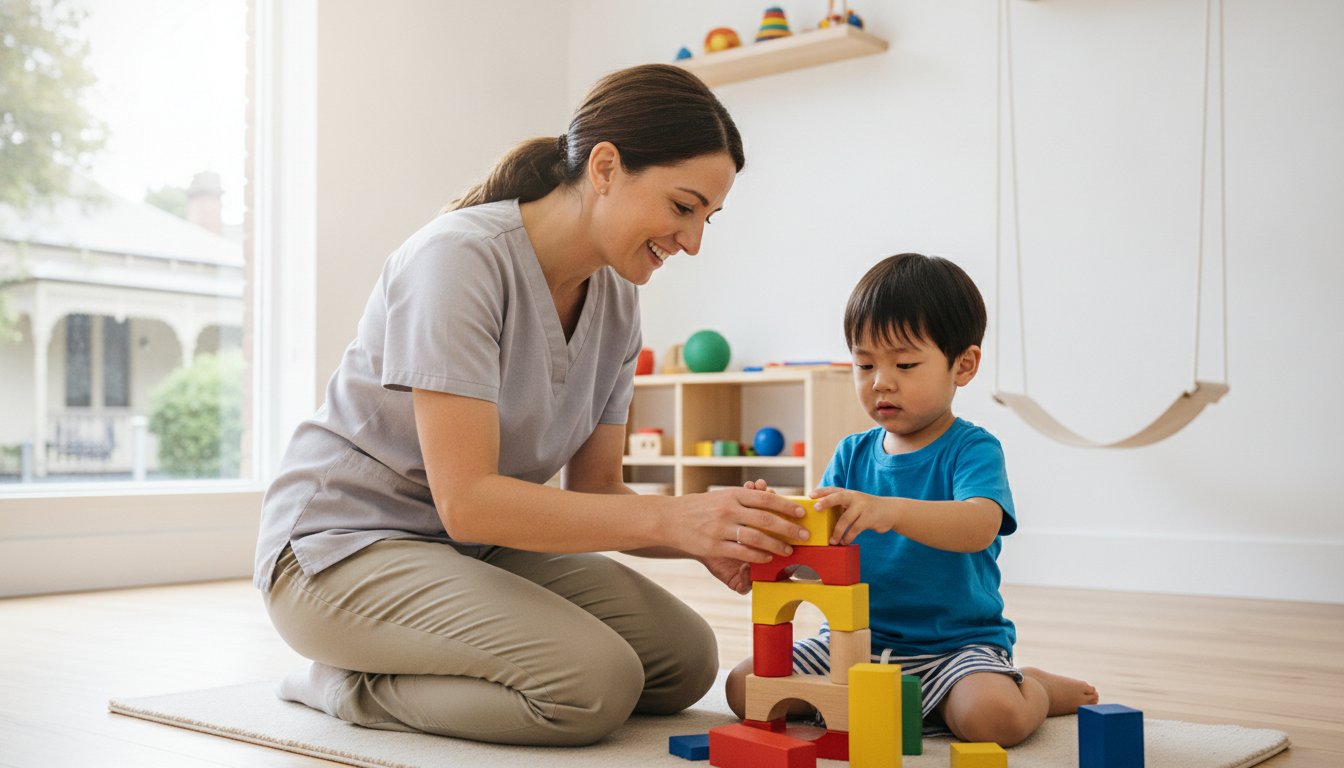
What if the most important thing your child needs for their first day of school isn’t the ability to write their name or count to twenty? It’s natural to feel a heavy pressure to focus on academic milestones, yet true success often lies in the way a child moves, feels, and interacts with their surroundings. You might feel anxious about your child keeping up with peers or overwhelmed by the complexities of the NDIS funding process as you prepare for this big transition. We understand those worries, and we’re here to walk beside you with heart and expertise.
In this guide, you’ll discover how occupational therapy for school readiness moves beyond letters and numbers to build the foundational physical, emotional, and social skills your child needs to thrive. We believe school readiness is about sensory regulation and motor autonomy, giving your child the confidence to participate fully in classroom life. We will explore key developmental milestones, provide practical strategies for your home routine, and show you how a supportive partnership with a professional caregiver can make all the difference. Let’s replace that “big school” anxiety with a clear, gentle path forward for your family in 2026.
Key Takeaways
- Learn why school readiness is a spectrum of maturity rather than a simple “pass or fail” academic test.
- Understand the vital role occupational therapy for school readiness plays in helping children master the “occupations” of playing and learning.
- Explore the three foundational pillars that support everything from holding a pencil to navigating complex social interactions.
- Find out how to turn everyday play into meaningful skill-building opportunities that prepare your child for the school environment.
- See how a collaborative care team can simplify the transition and provide the peace of mind your family deserves.
Table of Contents
What Does School Readiness Really Mean in 2026?
The preschool years are a critical window for building independent habits. During this time, children transition from relying entirely on parents to managing small, daily tasks themselves. It’s the “work” of childhood. This includes things like:
- Opening a lunchbox and unwrapping a sandwich independently.
- Managing their own clothing, like putting on a jumper or shoes.
- Following a simple two-step instruction from an adult.
- Managing the big emotions that come with trying something new.
These habits create a sense of autonomy. When a child feels they can handle the physical and social demands of the room, they’re free to focus on learning. If we focus only on reading and writing too early, we risk overlooking the motor and sensory foundations that make those academic skills possible later on.
The Shift from Academics to Developmental Foundations
At age four, the ability to sit still on a rug or hold a crayon with control matters more than memorizing the alphabet. These align with the foundational principles of early childhood education, which emphasize that learning is a holistic process. By focusing on occupational therapy for school readiness, we ensure children learn how to learn in a group setting. This approach prevents early burnout and builds a genuine love for discovery.
When to Consider a School Readiness Check
A four-year-old developmental check with your family doctor is a gentle way to see how your child is progressing. You might notice subtle signs that they need extra support, such as avoiding messy play or struggling to play alongside peers. Seeking occupational therapy for school readiness isn’t about fixing a problem; it’s a proactive parenting step. It’s about providing the right tools at the right time so your child can start their journey with a smile.
The Critical Role of Paediatric Occupational Therapy
In the world of a young child, “occupations” aren’t jobs in the traditional sense. Instead, they are the essential acts of playing, learning, and making friends. The Role of School-Based Occupational Therapy is to ensure every child can participate in these daily activities to their fullest potential. When we focus on occupational therapy for school readiness, we look at the hidden skills that make classroom life possible. We don’t just see a child struggling to hold a pencil; we see a child who might need more trunk stability or sensory support to feel comfortable in their seat.
Physical readiness often starts with core strength. It’s a foundational skill that many people overlook. A child needs a strong “trunk” to sit upright at a desk for extended periods. If their body feels unstable, their brain is too busy trying to keep them from sliding off the chair to focus on what the teacher is saying. OTs work to build this physical stability while also adapting the environment. This might mean suggesting a footrest to provide a sense of security or a slanted writing board to make drawing easier. These small changes help the environment suit the child, rather than forcing the child to struggle against a space that doesn’t fit them yet.
Sensory Processing: The Key to Staying Focused
A modern classroom is a sensory whirlwind. Between the hum of the air conditioner, the flicker of fluorescent lights, and the chatter of twenty peers, a child’s nervous system can easily become overwhelmed. Sensory modulation is the brain’s filter for environmental noise. When this filter isn’t working smoothly, a child might become restless, irritable, or completely shut down. OTs provide gentle strategies to help children stay “regulated” throughout the day. This could include “heavy work” activities like pushing a trolley or using a weighted lap pad to provide calming input. These tools help your child remain calm and ready to listen.
Executive Functioning and Following Instructions
Think about a common classroom request: “Finish your drawing, put it in your folder, and line up at the door.” For many children, this is a complex mountain to climb. It requires working memory to hold onto three different steps and the cognitive flexibility to stop a fun activity and start a transition. Occupational therapy for school readiness helps children practice these sequences in a low-pressure way. We use visual schedules and predictable routines to build their confidence. If you’re feeling overwhelmed by these expectations, our team offers compassionate support to help you and your child navigate these developmental steps together.
The Three Pillars of School Readiness
When we discuss occupational therapy for school readiness, we often group a child’s development into three essential pillars. These pillars aren’t separate boxes. They overlap and support one another, creating a sturdy foundation for your child to stand on. By understanding these areas, you can move away from the pressure of “academic” prep and focus on the skills that truly build confidence. According to the Official AOTA Guidelines, addressing these developmental areas early ensures that children can engage fully in the roles and routines of their school community.
Pillar 1: Physical Independence and Fine Motor Control
Fine motor skills are about more than just holding a pencil. They involve the strength and coordination needed for scissors, glue sticks, and opening lunch containers. We look for the development of a “pincer grasp,” where the thumb and index finger work together. Interestingly, fine motor success starts with gross motor play. Climbing, crawling, and balancing build the shoulder and core stability required for steady hand movements. Self-care autonomy is also a huge part of this pillar. A child who can manage their own buttons, zippers, and hand-washing feels a profound sense of agency. They don’t have to wait for an adult to help them with basic needs, which builds immediate classroom confidence.
Pillar 2: Social Dynamics and Group Participation
The playground and the classroom rug are social puzzles. To thrive, a child needs to understand turn-taking and how to read the social cues of their peers. It’s about learning when to listen and when to contribute. Occupational therapy for school readiness helps children navigate these dynamics, especially during transitions. Moving from “play time” to “tidy-up time” can be distressing for some. We work on strategies that help children switch gears without significant emotional upheaval. This pillar also includes the vital skill of self-advocacy. Your child needs to feel safe and capable of telling a teacher when they’re hurt, hungry, or confused.
Pillar 3: Emotional Regulation and Resilience
School is full of “first tries” and occasional mistakes. Emotional readiness is the “internal toolkit” a child uses to handle frustration when a tower falls over or they lose a game. It’s about building resilience so that a small setback doesn’t ruin their entire day. Managing separation anxiety is another hurdle. We help families create predictable goodbye routines that lower stress for both the child and the parent. When a child learns to recognize their “big feelings” and knows how to calm their own body, they’re much better equipped to handle the long school day. It is this emotional balance that allows them to focus on the joy of learning alongside their new friends.
Practical Ways to Support Readiness at Home
Building a foundation for school doesn’t require expensive kits or endless worksheets. In fact, play is the work of the child. It’s through movement and exploration that they learn how their bodies work and how to interact with the world. Integrating occupational therapy for school readiness into your home life can be a joyful, natural process that doesn’t feel like “extra” work for you or your child. By focusing on everyday moments, you’re helping them build the confidence they need for the big transition ahead.
One of the most effective ways to build core strength is through “heavy work” activities. These are tasks that involve pushing, pulling, or carrying weight. You don’t need a gym; simply asking your child to help carry a light bag of groceries or push a laundry basket across the floor does wonders for their physical stability. Similarly, reading together for just ten minutes a day fosters the focus and language skills they’ll need in a busy classroom. It’s a quiet time that builds connection while gently stretching their attention span and curiosity.
Play-Based Fine Motor Activities
Strengthening little hands is best done through tactile play. When your child squishes playdough or uses a spray bottle to water the garden, they’re building the hand strength needed for writing and using scissors. You can also try these low-pressure activities:
- Tweezers and Tongs: Ask your child to move pom-poms or pasta shapes from one bowl to another using kitchen tongs.
- Threading: Use large beads or dry penne pasta to create necklaces, which improves hand-eye coordination.
- Sensory Drawing: Practise drawing shapes or letters in a tray of sand or shaving cream to build pre-writing confidence without the stress of a pencil and paper.
Daily Routines as Learning Opportunities
The morning rush is often a missed chance for building autonomy. Encouraging your child to dress themselves, even if it takes a bit longer, helps them master zippers and buttons. This sense of occupational therapy for school readiness in action builds the self-care skills they’ll need when you aren’t there to help. Practise opening lunchboxes and drink bottles during weekend picnics so they feel like a pro by the first day. If your child thrives on predictability, using a simple visual schedule at home can mirror the structure of a school day and reduce transition anxiety. If you feel your child needs more tailored support, you can speak with our team about a customised approach for your family.
How Accessible Care Supports Your Child’s Journey
Starting school is a milestone for the whole family, and we believe you shouldn’t have to navigate it alone. At Accessible Care, we offer a warm and professional approach to paediatric occupational therapy that focuses on the whole child. We don’t just look at a checklist of skills. We listen to your child’s unique voice and honour their autonomy as they grow. Our multidisciplinary team, which includes experts in speech therapy and positive behaviour support, works together to ensure every aspect of your child’s development is nurtured. This collaborative care means your child receives a wrap-around service that builds their confidence from every angle.
We understand that the “occupations” of childhood, such as playing, making friends, and learning, are the building blocks of a happy life. By choosing occupational therapy for school readiness, you’re giving your child a supportive partner who understands their specific needs. Our therapists are dedicated to empowering your child to take the lead in their own journey. We focus on what they can do today while gently preparing them for the challenges of tomorrow. It’s about creating a sense of peace for you and a sense of “I can do this” for them.
NDIS Support for School Readiness
Navigating the NDIS can feel overwhelming, especially when you’re already busy with school preparations. As a registered provider, we’re here to help you understand how your funding can be used for early childhood intervention. One of the most important tools in this process is the Functional Capacity Assessment. This detailed report helps the NDIS understand your child’s current strengths and where they might need extra support. It serves as a vital bridge when transitioning from Early Childhood Early Intervention (ECEI) to permanent NDIS plans as your child reaches school age. This ensures there’s no gap in the support your child needs to thrive in their new classroom environment.
Our Compassionate Approach in Melbourne and Adelaide
We provide occupational therapy for school readiness across Melbourne and Adelaide, bringing our services directly to where your child feels most comfortable. Whether it’s in your family home or a local community setting, we meet your child in their natural environment. This approach allows us to see how they interact with the world in real-time. It also makes it easier to create a genuine partnership between therapists, parents, and future teachers. We believe that when everyone in a child’s life is on the same page, the child feels more secure and capable. If you’re ready to begin this journey, we invite you to reach out for a gentle, professional consultation to discuss how we can support your family’s unique needs.
Stepping Into the Classroom with Confidence
The transition to school is a journey of small, meaningful steps. You’ve seen that readiness isn’t about mastering a syllabus before the first bell rings. It’s about your child feeling secure in their body, managing their emotions, and having the independence to navigate a new world. By focusing on the physical and sensory foundations of learning, you’re giving them the tools to thrive for years to come. Remember that play is a powerful teacher; every lunchbox opened or jumper zipped is a significant victory for their self-esteem.
If you’re feeling overwhelmed by the NDIS process or want to ensure your child has the best start possible, we’re here to help. As a Registered NDIS Provider with a multidisciplinary team of OTs and Speech Pathologists, we offer specialised paediatric support across Melbourne and Adelaide. We invite you to Book a Compassionate School Readiness Consultation with Accessible Care. Let’s work together to make occupational therapy for school readiness a gentle and empowering experience for your family. Your child has a bright future ahead, and we’re honoured to walk this path beside you.
Frequently Asked Questions
How do I know if my child needs occupational therapy before starting school?
You might notice your child avoids “messy” play, struggles to sit still for a story, or finds it hard to use scissors. These are gentle indicators that a consultation might be helpful. Occupational therapy for school readiness isn’t just for children with a specific diagnosis. It’s a supportive tool for any child who needs a bit more help with the physical or sensory demands of a busy classroom.
Can NDIS funding pay for school readiness programs or OT sessions?
Yes, NDIS funding often covers these sessions if they align with your child’s developmental goals. Most families access this through the “Capacity Building” or “Early Childhood Intervention” budgets. We can help you navigate the NDIS requirements to ensure your child receives the right support at the right time. Our team is experienced in providing the documentation needed for plan reviews and funding applications.
What is the difference between school readiness and school maturity?
School readiness refers to the specific skills a child has learned, while school maturity is about their internal neurological development. A child might be “ready” because they know their letters, but they might lack the “maturity” to sit still or manage their emotions in a group. Occupational therapy for school readiness addresses both by building skills and supporting the underlying sensory systems that help a child feel capable.
How can an OT help with my child’s pencil grasp and handwriting?
OTs focus on the foundational strength of the hand and shoulder rather than just the pencil itself. We use fun activities like playdough and vertical drawing to build the muscles needed for a functional pincer grasp. By improving hand-eye coordination and finger isolation, we make writing a less tiring and more enjoyable task. This approach ensures your child doesn’t feel pressured by “perfect” handwriting too early in their journey.
My child is struggling with toileting; can an occupational therapist help?
Yes, OTs are highly skilled in helping families navigate toileting challenges by looking at sensory and motor factors. We look at whether a child can feel the internal “urge” to go or if the sensory environment of the bathroom is overwhelming. By breaking the process into small, manageable steps and building motor skills for clothing management, we help your child achieve the autonomy they need to feel confident at school.
What role does speech therapy play in school readiness?
Speech therapy is a vital partner to OT, focusing on communication and the ability to follow complex instructions. While OTs look at the “doing” and “feeling,” speech pathologists help a child express their needs and interact positively with peers. A multidisciplinary approach ensures your child can follow a teacher’s directions and advocate for themselves. This combination of support builds a complete foundation for both social and academic participation in the classroom.
How long does a typical school readiness assessment take?
A typical school readiness assessment usually takes between one and two hours of direct interaction with your child. During this time, the therapist observes their play, motor skills, and how they respond to different sensory inputs. Following the session, we provide a comprehensive report and a clear plan. This assessment is a gentle way to identify strengths and areas where a little extra support could make a big difference.
What if my child is diagnosed with a disability like Autism or Aspergers before school starts?
Receiving a diagnosis before school starts allows you to put the right supports in place immediately. We work closely with families to create a tailored intervention plan that honours your child’s unique way of seeing the world. Early intervention is about empowering your child and giving them the specific tools they need to navigate a mainstream or specialist school environment with confidence, joy, and a sense of belonging.

