

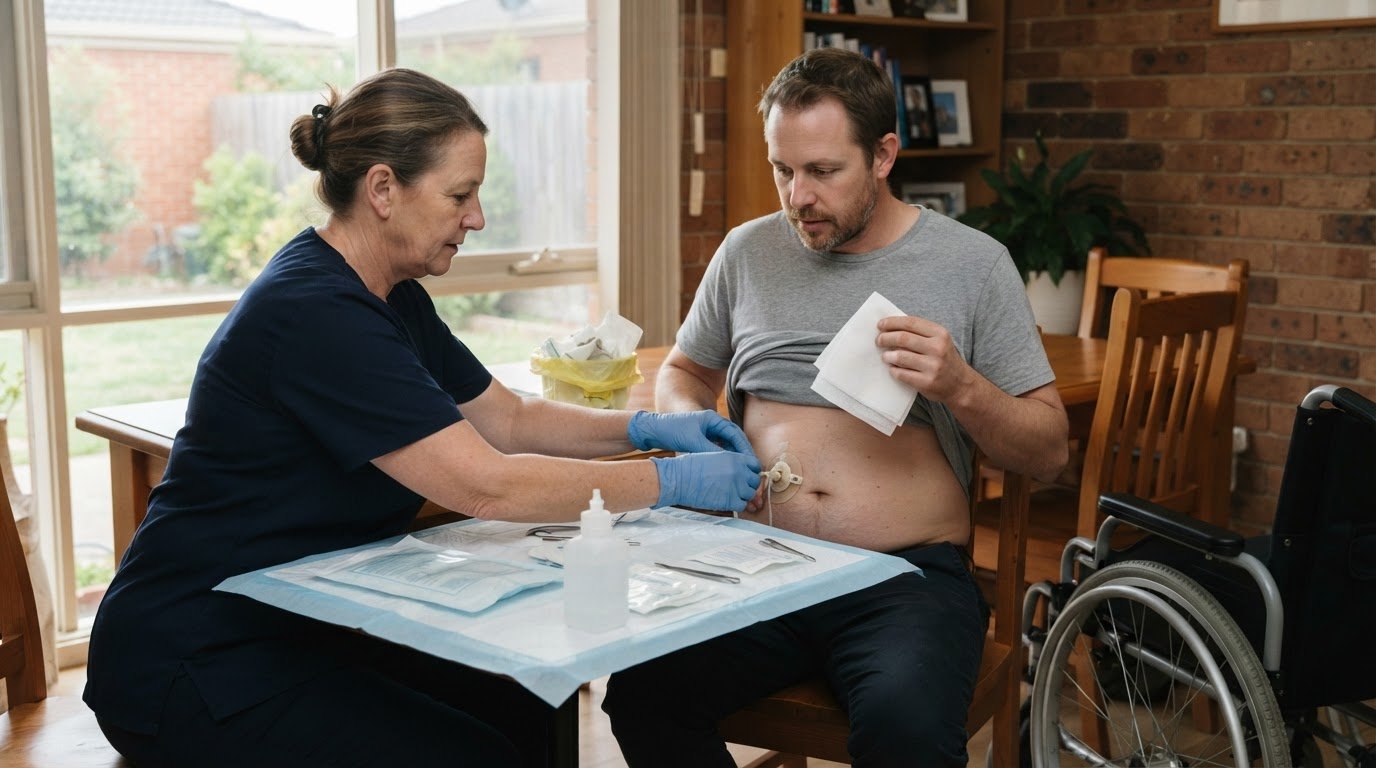
Good disability care involves more than responding to health concerns as they arise. The role of a community nurse in disability care includes assessing health needs, supporting chronic conditions and treatments, and helping people access care that fits their lives. Support may take place at home or in the community, with dignity and independence at its centre.
It’s understandable to want clear answers about how nursing fits into disability support and the NDIS. Community nurses can help people and families understand health needs, follow care plans and communicate with other services. They can also support advocacy, helping ensure a person’s needs and preferences are heard in healthcare settings.
This article explains what community nursing can involve, how NDIS-funded nursing support may work, and how nurses contribute to managing chronic conditions. You’ll also learn how they can help people and families navigate services, coordinate care and make informed decisions about the support they need.
Key Takeaways
- Understand how nurses can support health needs, treatments and daily wellbeing while respecting a person’s independence.
- See how home and community nursing can be shaped around individual needs and coordinated with other supports.
- Learn how ongoing health monitoring and practical education can help people and their care teams manage chronic conditions.
- Discover how nurses can help people communicate their needs and access appropriate health and disability services.
What is Community Nursing in Disability Care?
The role of a community nurse in disability care is to support a person’s health needs while promoting dignity and independence. Nursing may include clinical care, education and practical assistance at home or in the community.
Family and Care Team Support
Family and care team support involves sharing relevant health information and providing guidance so people can offer consistent, informed assistance. With the person’s agreement, a nurse can explain care routines, medication schedules and signs that may need attention. For example, a nurse may demonstrate a wound-care routine and explain when to raise a concern. Clear guidance can help families and support workers feel prepared while keeping the person’s preferences central.
Clinical and Medication Support
Clinical support may include nursing care for needs such as PEG feeding, diabetes and other chronic conditions. A nurse can monitor changes, assist with medication and help the person follow an agreed care routine. For example, recording changes in a person’s condition alongside their medication schedule gives the care team relevant information to respond to. Nurses can also explain health needs to the person and their carers, helping build confidence without asking support workers to make clinical decisions.
Independence and Quality of Life
Nursing support can help someone maintain everyday routines and work towards goals that matter to them. Respiratory assistance or overnight support may address health needs while the person remains at home or in the community. Nurses foster independence by adapting assistance to the person’s abilities and choices. For example, a nurse can teach a safe care routine that enables someone to take part in managing their health. This person-centred approach supports quality of life as well as clinical needs.
Privacy, Consent, and Safeguarding
Privacy, consent, safeguarding and duty of care underpin respectful, safe nursing practice. Nurses protect personal information, explain care in an accessible way and seek the person’s consent before providing care or sharing details when the person can make that decision. Families and care teams should be involved in line with the person’s wishes. Safeguarding means taking concerns about harm seriously; duty of care means providing support responsibly and raising risks through appropriate care channels.
NDIS community nursing delivered at home or in the community
NDIS community nursing provides clinical care outside hospital, often in a participant’s home or community. Supports relate directly to disability-related health needs and can be tailored to the person’s daily routines.
Personalised Care Plans and Reviews
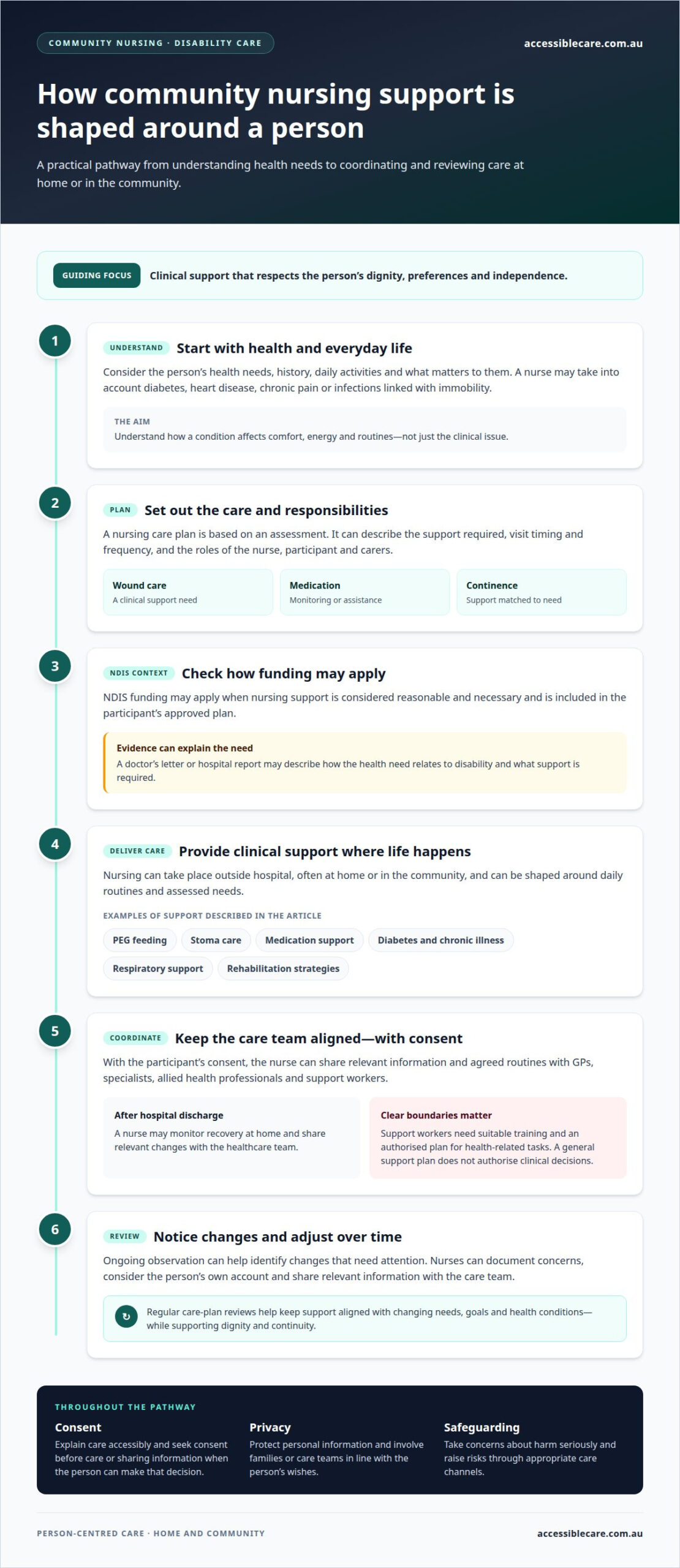
A nursing care plan sets out clinical support based on an assessment of the person’s health needs. It may describe the care required, visit timing and frequency, and the responsibilities of the nurse, participant and carers. For example, a plan may cover wound care, medication monitoring or continence support. Regular reviews help keep the plan aligned with changing needs, goals and health conditions, while supporting dignity and continuity.
NDIS funding may apply when nursing support is considered reasonable and necessary and included in the participant’s approved plan. Evidence such as a doctor’s letter or hospital report can explain how the health need relates to disability and what support is required.
Coordinating Care with Other Providers
Care coordination involves sharing relevant information with the participant’s consent so everyone understands their role. A community nurse can communicate with GPs, specialists, allied health professionals and support workers about clinical needs and agreed routines. For instance, after a hospital discharge, the nurse can monitor recovery at home and share relevant changes with the healthcare team. This connects clinical care with everyday disability support.
Support workers may assist with health-related tasks under an authorised plan when they are suitably trained. A general support plan alone does not authorise workers to make clinical decisions. Clear instructions from nursing professionals define tasks, escalation steps and who to contact if the person’s condition changes.
Community nursing can include wound care, medication administration and monitoring, PEG feeding, stoma care, or support with diabetes and chronic illness. Care may also involve respiratory support or rehabilitation strategies, depending on assessed needs. These services can be delivered at home or in the community, where nurses can understand how health needs affect everyday life. Explore community nursing support as part of a coordinated approach to disability care.
Chronic condition management
For a person with disability, a chronic condition can affect energy, comfort and everyday routines. Community nursing helps monitor health over time, respond to changes and support the person’s chosen level of independence.
Care starts with understanding how a condition affects the individual. A nurse may consider diabetes, heart disease, chronic pain or infections linked with immobility, alongside the person’s daily activities and health history. This holistic view helps shape care around practical priorities, such as maintaining nutrition, managing discomfort or making routine tasks easier.
Ongoing observation can reveal changes that need attention. For example, a nurse may track a person’s health indicators against their usual pattern, document concerns and share relevant information with the care team. The person’s own account matters too. Finding a familiar activity newly difficult can provide useful context about how their health affects daily life.
Prevention is part of community nursing. A nurse can help identify risks related to a person’s condition and explain relevant care routines to the person and their family. For someone who spends long periods using a wheelchair, practical advice about pressure care may help address a risk associated with reduced mobility. Education can also help families recognise changes and communicate them clearly.
When health needs change, care can be adjusted to suit the person’s circumstances. After a hospital discharge, for example, monitoring recovery and coordinating relevant support can make the transition home more manageable. Preventive education and follow-up may also help reduce avoidable hospital readmissions, though the approach depends on the person’s needs. This collaborative process supports informed choices, independence and quality of life.
Advocacy and access to services
Advocacy helps people have their needs, preferences and concerns heard in healthcare settings. A community nurse can help participants explain how disability affects their health and daily life, then coordinate appropriate clinical support.
In Australia, accessing NDIS community nursing starts with identifying health needs directly related to disability. The support must be considered reasonable and necessary and included in the participant’s approved plan. Medical evidence, such as a doctor’s letter or hospital report, can describe the need and its impact. A nurse can help clarify the clinical support required and how it relates to the person’s goals.
Effective advocacy turns a person’s experience into clear information for care teams. With consent, a nurse may help prepare questions for a GP, explain a care need to a specialist or communicate access requirements before an appointment. For example, a participant who has difficulty explaining pain may use agreed communication strategies alongside observations from their care team. This can make discussions more inclusive and keep the participant’s voice central.
Service boundaries matter. The NDIS does not fund services that are the responsibility of the health system or another mainstream service. A nurse can help distinguish disability-related clinical nursing from mainstream healthcare needs, then support coordination between those systems. Clear records of assessments, treatment needs and changes help everyone understand their responsibilities and support continuity of care.
Rural and remote participants may face extra coordination challenges when nurses, specialists and other services are far apart. Distance can make in-person appointments and timely communication harder to arrange. Shared care plans, agreed contacts and consistent monitoring help identify gaps and changes early. An NDIS provider can help participants understand how approved supports fit alongside other services, without replacing mainstream healthcare.
For support with disability-related nursing needs and service coordination, explore community nursing support.
Accessible Care: Community Nursing
Accessible Care provides community nursing for people who need disability-related clinical support in everyday settings. This support can help when needs such as wound care, medication assistance or chronic condition management affect daily routines and independence.
Support can be shaped around the person’s needs and goals. NDIS support services, speech therapy or occupational therapy may also address other support needs, depending on the person’s circumstances and approved supports. The individual’s preferences should remain central, while families and support teams understand their roles.
If you’re considering community nursing or related disability support, contact Accessible Care to discuss your needs.
Take the Next Step Towards Person-Centred Support
The next step can start with a clear conversation about what matters most to the person. Their priorities, routines and preferred ways to communicate can shape support that respects choice and builds confidence. The role of a community nurse in disability care is most meaningful when clinical support fits into a person’s life rather than defining it.
Accessible Care offers NDIS support services, speech therapy and occupational therapy. These supports can address different needs as part of a person-centred approach. A conversation can help you describe the support you’re seeking and consider what may align with your goals and NDIS plan.
Contact Accessible Care to discuss support and explore a next step that feels right for you or someone you care about. Your needs and choices can guide the conversation.
Frequently Asked Questions
What does a community health nurse do?
A community health nurse assesses health needs and provides care outside hospital settings. Their work may include health education, prevention, recovery monitoring and support with ongoing conditions. For example, they may help someone understand nutrition choices, practise prescribed exercises at home or learn to use an assistive device. The focus is practical health support that fits the person’s circumstances and everyday environment.
What does a community nurse do in disability care in Australia?
In Australia, a community nurse supports a person’s health needs at home or in the community, including needs related to disability. They can connect clinical care with daily routines and share relevant information with other healthcare professionals. For example, after a hospital discharge, a nurse may monitor recovery at home and coordinate information for follow-up care.
What clinical services can community nurses provide to people with disability?
Community nurses can provide clinical support such as catheter and continence management, pressure area care, stoma care, tracheostomy support and ventilator care. They may also assist with palliative and end-of-life support. The person’s assessed health needs determine which tasks are relevant. For example, continence support may include assessment and tailored advice to address comfort and daily routines.
How do community nurses support daily living, independence and participation?
Community nurses can help people develop health routines that make everyday activities more manageable. They might teach exercises prescribed for home practice or explain ways to reduce pressure risks during extended wheelchair use. For someone preparing to return to a community activity, nursing support can also address health-related barriers and coordinate relevant care. The person’s choices and goals guide how assistance fits into daily life.
What role do community nurses play in medication management and preventing health complications?
Community nurses can assist with medication, monitor health and notice changes that may need attention. They can also help the person and care team understand medication routines, record relevant observations and communicate concerns to appropriate healthcare professionals. For example, a change in someone’s usual condition can be shared with the clinical team alongside information about their current care routine.
How do community nurses involve families, carers and people with disability in care planning?
Community nurses involve the person in decisions and include family members or carers according to the person’s preferences. They can explain care tasks, provide practical education and help the team understand how to communicate with someone with cognitive disability. For example, agreeing on clear communication approaches can help carers share observations and support the person’s participation in care discussions.

