


Imagine your child finally climbing the playground ladder without hesitation, their face lit up with the quiet pride of “I did it.” For many families, these milestones feel out of reach, hidden behind clinical jargon and the constant worry that a loved one is falling behind their peers. You want to provide support that feels like play, not a clinical procedure, but it’s hard to know where to start when you’re feeling overwhelmed.
We understand that every step toward independence is a victory of the heart. It’s completely normal to feel anxious about motor development, but you don’t have to navigate this path alone. This guide shows you how purposeful occupational therapy gross motor skills activities can transform daily life into a series of empowering successes. We’ll move past the complex terminology to focus on what matters most: building the physical foundation for a life of autonomy and dignity.
You’ll discover a clear breakdown of gross motor development and a list of easy, engaging activities you can start at home today. We’ll also provide the tools you need to feel confident when choosing a registered NDIS provider in Melbourne or Adelaide. Let’s explore how movement can become a bridge to a more confident, independent future.
Key Takeaways
- Understand how developing large muscle groups builds the physical foundation for emotional well-being and daily confidence.
- Discover how occupational therapists use “meaningful occupation” to ensure therapy feels like play rather than a clinical chore.
- Learn practical occupational therapy gross motor skills activities that you can easily integrate into your home routine with little to no equipment.
- Explore ways to turn everyday household tasks into therapeutic opportunities that help you meet your NDIS social participation goals.
- Gain clarity on how to find a registered NDIS provider in Melbourne or Adelaide that focuses on a holistic, person-centric approach.
What Are Gross Motor Skills and Why Do They Matter for Independence?
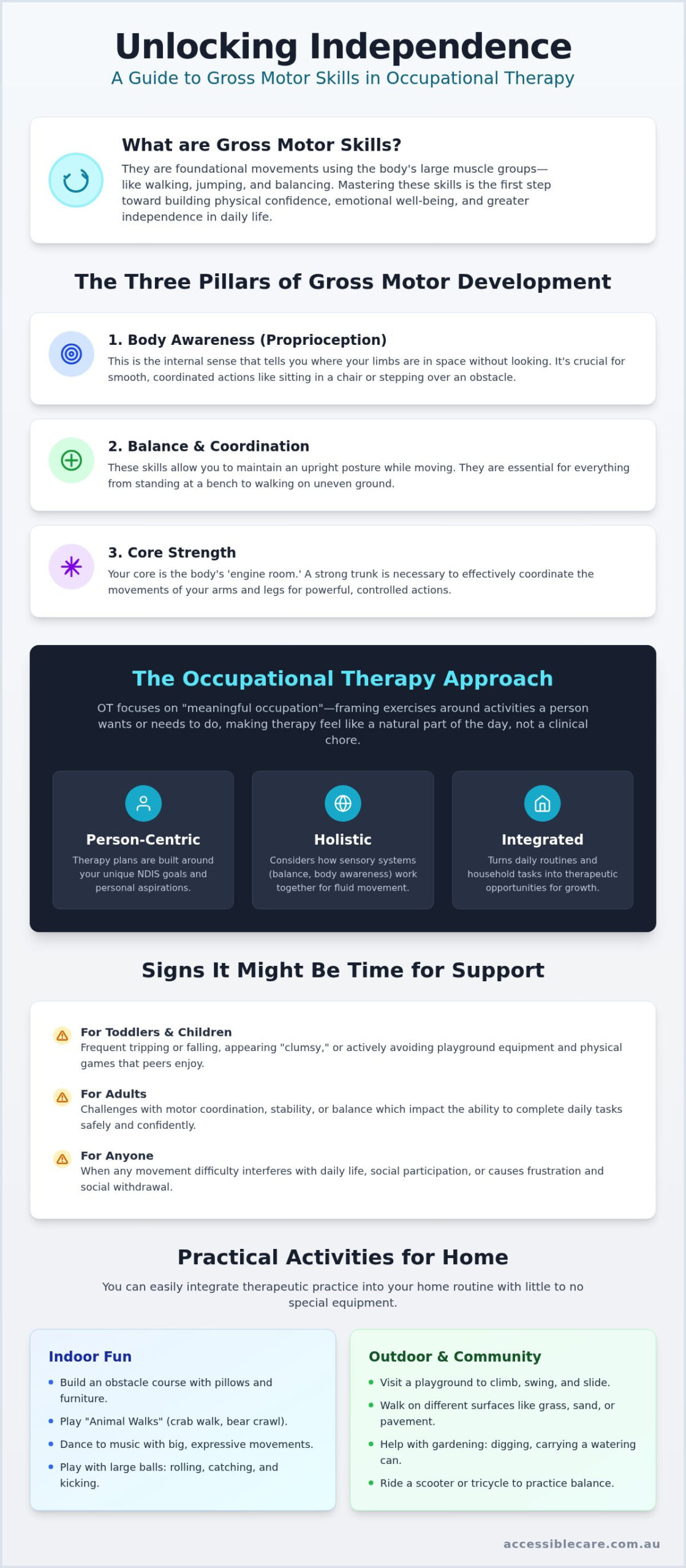
Movement is more than just exercise; it’s the way we connect with our environment and express our autonomy. When we talk about What Are Gross Motor Skills, we’re referring to the movements that involve our large muscle groups. These are the foundational actions like walking, jumping, and maintaining core stability that allow us to move through our homes and communities with confidence. For many, engaging in purposeful occupational therapy gross motor skills activities is the first step toward reclaiming a sense of personal agency.
These skills aren’t just about physical strength. There’s a profound link between physical movement and emotional well-being. When a person feels stable and capable in their body, their self-esteem naturally grows. Conversely, struggling with balance or coordination can lead to frustration and social withdrawal. For NDIS participants, mastering these skills is vital for achieving goals related to community participation and daily living. Remember that gross motor development also serves as a precursor to fine motor success. A child needs a stable shoulder and core before they can effectively hold a pencil or use cutlery.
The Three Pillars of Gross Motor Development
To understand how to improve these skills, we look at three essential components that support every move you make:
- Body Awareness (Proprioception): This is the internal sense that tells you where your limbs are without looking at them. It’s what allows you to sit down in a chair or step over an obstacle smoothly.
- Balance and Coordination: These skills allow you to move fluidly while maintaining an upright posture. They’re necessary for everything from standing at a kitchen bench to walking on uneven grass.
- Core Strength: Think of your core as the engine room. Without a strong trunk, it’s difficult to coordinate the movements of your arms and legs effectively.
When to Seek Support from an Occupational Therapist
You might notice a toddler who frequently trips or a school-aged child who avoids playground equipment because it feels too hard. In adults, challenges often arise from neurological conditions that affect motor coordination and stability. If these difficulties interfere with daily life, it’s a sign that professional support could help. A functional capacity assessment is often the best place to start. This holistic review helps identify specific gaps in movement and provides a roadmap for tailored occupational therapy gross motor skills activities that respect your unique goals and lifestyle.
The Occupational Therapy Approach to Gross Motor Skills
Occupational therapy moves beyond simple repetition. It focuses on “meaningful occupation,” which means we frame every exercise around the activities you actually want or need to do. For a child, this often means play. For an adult, it might mean the ability to walk to the shops or tend to a garden. By choosing occupational therapy gross motor skills activities that resonate with your personal interests, we ensure that therapy feels like a natural part of your day rather than a clinical chore.
Our approach is person-centric and holistic. We don’t just look at a weak muscle; we look at how that muscle affects your ability to live a self-directed life. A deep understanding of What Are Gross Motor Skills involves looking at the sensory systems behind the movement. This includes the vestibular system, which manages balance, and the proprioceptive system, which tells your brain where your body is in space. When these systems work together, motor planning becomes fluid and automatic.
Individualised Therapy Plans
Every journey is unique. We start by setting SMART goals that align perfectly with your NDIS plan and your personal aspirations for independence. Success often comes from collaboration. Working with a multidisciplinary team ensures that your gross motor progress supports other areas, like speech or daily living tasks. We also look at your environment. Sometimes, a small change at home or school can provide the extra support needed to master a new skill.
Sensory Integration and Motor Planning
What some might call “clumsiness” is often a challenge with sensory processing. Our therapists help bridge this gap by focusing on sensory integration. We use the “Just Right Challenge” to find the perfect balance between effort and success. If an activity is too easy, there’s no growth; if it’s too hard, it leads to frustration. By hitting that sweet spot, we help build the neural pathways needed for repetitive, purposeful movement. Each time you successfully complete a coordinated move, you’re strengthening the connections in your brain. If you’re ready to see how a tailored approach can help, our team at Accessible Care is here to listen and guide you through the process.
Effective Occupational Therapy Gross Motor Activities for All Ages
Bringing therapy into the comfort of your home shouldn’t feel like an added burden. By using items you already own, like cushions, chairs, or even laundry baskets, you can create a supportive environment for physical growth. The heart of these occupational therapy gross motor skills activities is to make progress feel natural and joyful. We often refer to this as “stealth therapy,” where the participant is so engaged in the fun that they don’t realise they’re working on complex motor planning or core stability. Safety is always our priority; ensure you have a clear, non-slip space and provide gentle supervision. Most importantly, let the participant lead the way. When someone chooses the activity, they feel a sense of agency that keeps them motivated and proud of their achievements.
Paediatric Activities: Fun for Developing Bodies
Children learn best when their bodies are moving and their imaginations are active. You can find many creative Gross Motor Coordination Activities that turn strengthening into a game. Try these simple ideas at home:
- Animal Walks: Encourage your child to move like a bear on all fours, a crab on hands and feet with their tummy up, or a frog with deep squats and jumps. These movements build incredible core and limb strength.
- Obstacle Courses: Use lounge cushions to crawl over and dining chairs to crawl under. This helps with sequence planning and understanding where their body is in space.
- Balloon Volleyball: Keeping a light balloon in the air is a gentle, low-pressure way to improve hand-eye coordination and bilateral integration.
For more specific strategies tailored to younger family members, you can explore our guide to paediatric occupational therapy.
Adult Activities: Building Strength and Stability
Gross motor needs don’t end in childhood. Adults living with neurological conditions or those working through injury often require targeted support to maintain their independence and dignity. These occupational therapy gross motor skills activities focus on stability and confidence in the community:
- Functional Reaching: Practice reaching for items on different shelf heights while standing. This improves balance and core control during real-world daily tasks.
- Modified Yoga or Tai Chi: These practices focus on slow, controlled coordination and breath, which are vital for maintaining posture and reducing the risk of falls.
- Community Walking: Practice walking on different terrains, such as grass, gravel, or sand, to improve gait and confidence when navigating the world.
Sensory-Based Gross Motor Play
Movement is deeply tied to our sensory systems, and sometimes the body needs specific input to feel calm and organised. Heavy work is a therapeutic tool that provides resistance to the muscles and joints, offering the brain the proprioceptive input it needs to regulate the nervous system. You might try:
- Heavy Work: Have a child push a laundry basket full of clothes or ask an adult to help carry bags of groceries.
- Swinging and Spinning: Targeted vestibular input, such as using a backyard swing or a swivel chair, can significantly improve balance and spatial orientation over time.
Integrating Gross Motor Practice into Daily Life and NDIS Goals
We often hear from families who feel they simply don’t have time for another set of exercises. It’s a valid concern when you’re already managing a busy household or a complex NDIS plan. The beauty of occupational therapy gross motor skills activities is that they don’t have to be a separate event on your calendar. Instead, they can become the way you navigate your existing routine. Consistency is far more important than intensity. Doing five minutes of purposeful movement every day builds neural pathways more effectively than a single, exhausting hour once a week. By weaving these moments into your day, you’re not adding a chore; you’re enhancing your life.
Linking these physical improvements to your NDIS goals is a key part of the process. For many, a goal like “increased social participation” starts with the physical ability to navigate a community centre or stand comfortably at a social gathering. When you focus on gross motor progress, you’re directly supporting your path to a more active, connected life. Every small victory in balance or coordination is a step toward greater autonomy and self-direction.
At-Home Integration Strategies
Your home is the perfect environment for natural motor learning. You don’t need a gym when you have a kitchen or a backyard. Consider these simple ways to integrate practice into your daily rhythm:
- Meal Preparation: Helping with stirring, reaching for ingredients, or even just standing at the bench builds core stability and standing endurance.
- Gardening: Pulling weeds, digging, or watering plants provides excellent bilateral coordination and heavy work for the muscles.
- Movement Snacks: Break up long periods of sitting with short bursts of activity. A quick stretch or a lap around the house helps avoid fatigue and keeps the body engaged.
Measuring Progress and Celebrating Wins
It’s important to look beyond the exercises and see the functional changes. Are you climbing the stairs with more confidence? Can you carry a tray without wobbling? These are the real-world markers of success. Your therapist plays a vital role in this journey, constantly reviewing and adjusting your home programme to ensure the occupational therapy gross motor skills activities remain supportive and achievable. This ongoing collaboration ensures that your hard work translates into lasting independence. If you’re looking for a partner to help you turn these daily moments into milestones, our team at Accessible Care is ready to support your journey with a personalised approach.
Finding Compassionate OT Support in Melbourne and Adelaide
Choosing a provider is a significant decision for any family. You aren’t just looking for a service; you’re looking for a partner who respects your goals and understands your journey. At Accessible Care, we’re deeply committed to your autonomy. We believe that occupational therapy gross motor skills activities should always serve your personal objectives, helping you live a life that is self-directed and full of dignity. We don’t just see a set of physical challenges; we see a person with unique aspirations and the right to lead their own path.
The NDIS can sometimes feel like a complex puzzle, especially when you’re already managing the daily realities of a disability. We take the stress out of the process by helping you navigate your funding and ensuring you get the most out of your plan. Beyond our clinical therapy, we offer comprehensive support work. This multidisciplinary approach means that the progress you make in therapy sessions is reinforced by a dedicated support team who can help you practice your new skills in real-world settings, from the local park to the grocery store.
Our Services in Melbourne and Adelaide
Our teams in Victoria and South Australia bring deep local expertise to every relationship. We understand the specific needs of NDIS participants in Melbourne and Adelaide, and we’re proud to offer mobile and in-home therapy options. This allows you to practice occupational therapy gross motor skills activities in the environment where you feel most comfortable and secure. We work hard to keep our waitlists manageable so you can begin your journey toward independence as quickly as possible. Whether you’re in the heart of the city or the surrounding suburbs, our practitioners come to you.
The Accessible Care Difference
The Accessible Care difference starts with a simple promise: we listen first. We want to understand what independence looks like for you before we suggest a single exercise. Our experienced practitioners treat you as an active partner in your care, not just a patient in a system. We value your perspective and your expertise in your own life. We invite you to experience our compassionate approach and discover how a truly supportive partnership can change your outlook on the future.
Taking the next step is easy and low-pressure. You can book an initial assessment through our website or by giving our friendly team a call. We’ll walk you through the process, answer your questions about NDIS funding, and start building a plan that honours your choices. Let’s work together to turn your goals into reality.
Embracing a Future of Confidence and Movement
Developing gross motor skills is a journey of reclaiming your independence and building a foundation for a life of self-direction. By integrating purposeful occupational therapy gross motor skills activities into your daily rhythm, you turn ordinary moments into opportunities for growth and empowerment. Whether it’s through playful animal walks with a child or functional reaching exercises for an adult, every coordinated movement strengthens the connection between the body and the brain.
As a Registered NDIS Provider with an experienced paediatric and adult OT team, we’re here to ensure you don’t have to walk this path alone. We proudly serve the Melbourne and Adelaide communities, offering a partnership built on attentive listening and mutual respect. You deserve a support system that honours your perspective and prioritises your unique objectives above all else. We’re committed to providing the gentle, professional guidance you need to navigate the NDIS and achieve your personal milestones.
Begin your journey to independence with a compassionate OT assessment today. Your goals are within reach, and we’re ready to help you move toward them with confidence and peace of mind.
Frequently Asked Questions
How do I know if my child needs an occupational therapist for gross motor skills?
Signs include avoiding playground equipment, frequent tripping, poor posture, or difficulty with sequence-based movements like jumping. If these challenges prevent them from joining in social play or daily routines, an assessment is beneficial. Our paediatric team focuses on how these physical hurdles affect your child’s confidence and social participation. Early intervention helps build the foundational stability required for more complex tasks later in life.
Can NDIS funding be used for gross motor therapy activities?
Yes, NDIS funding from your “Capacity Building, Improved Daily Living” budget is typically used for occupational therapy gross motor skills activities. As a registered NDIS provider, we assist you in aligning these activities with your specific plan goals, such as increasing community engagement or improving personal care independence. This ensures your therapy is both clinically effective and fully supported by your available NDIS funding.
What is the difference between physiotherapy and occupational therapy for motor skills?
While both address movement, physiotherapists generally focus on the physical mechanics of the body, such as muscle strength and joint range of motion. Occupational therapists focus on meaningful occupation. We look at how those motor skills allow you to perform specific daily tasks, like dressing, gardening, or navigating a school environment. We treat the whole person, ensuring that physical progress translates directly into greater autonomy and quality of life.
How often should gross motor activities be practiced at home?
Consistency is the key to success in motor learning. We recommend incorporating short “movement snacks” several times a day rather than one long, exhausting session. Practicing your prescribed occupational therapy gross motor skills activities for 5 to 10 minutes daily helps strengthen neural pathways more effectively. This rhythmic approach prevents fatigue and makes therapy feel like a natural part of your routine rather than an overwhelming chore.
Do I need a referral to see an occupational therapist at Accessible Care?
No, you don’t need a formal GP referral to access our services at Accessible Care. You can contact our team in Melbourne or Adelaide directly to book an initial assessment. We work with self-managed, plan-managed, and NDIA-managed participants. This direct access ensures you can begin your journey toward independence without unnecessary delays, allowing us to start listening to your unique needs and objectives right away.
Are gross motor activities effective for adults with an acquired brain injury?
Yes, gross motor activities are highly effective for adults recovering from an acquired brain injury. These exercises focus on neuroplasticity, helping the brain find new ways to coordinate movement and balance. Our adult OT programs are designed to rebuild the stability needed for community navigation and household tasks. We treat every adult as a partner in their recovery, focusing on the specific goals that matter most to their dignity.
What equipment do I need for home-based OT activities?
Most home-based activities require very little specialized equipment. We often use common household items like cushions for balance, laundry baskets for heavy work, or chairs for stability during reaching tasks. If specific tools are needed, your therapist will suggest affordable or NDIS-funded options that fit your home environment. Our goal is to make therapy accessible and easy to integrate into your existing space without requiring a gym setup.
How long does it take to see progress in gross motor development?
Every individual’s timeline is unique, but many families notice small functional improvements within 4 to 8 weeks of consistent practice. Progress in gross motor development is often gradual and builds upon itself. You might first notice improved core stability, followed by better coordination in more complex tasks. We focus on celebrating these incremental wins, as they are the building blocks for long-term independence and confidence in daily life.

