


What if the “job” you needed help with wasn’t your career, but simply the act of living your life with confidence? It’s a common mistake to think therapy is only for physical injuries or workplace returns. In reality, the most important work any of us does is the “job of living.” If you’ve been searching for answers, you’re likely asking: what is occupational therapy, and how can it help me or my loved one feel whole again?
We understand that feeling “stuck” in your daily routine or worrying about a child’s development can be exhausting. It’s natural to feel anxious when autonomy feels out of reach or when the NDIS system feels like a maze. This guide is designed to offer clarity and hope. You’ll discover how occupational therapy provides the tools to regain independence and master the tasks that matter most. We’ll walk through the value of personalized assessments, how to use NDIS funding effectively, and how a supportive partnership can help you achieve your own objectives with peace of mind.
Key Takeaways
- Learn how occupational therapy empowers you to master the “job of living” by focusing on the activities that bring meaning to your daily routine.
- Discover how personalized home modifications and skill-building can help you regain independence and comfort in your own space.
- Understand the differences between paediatric and adult support to ensure every family member receives the right care for their specific life stage.
- Find out how to maximize your NDIS “Improved Daily Living” funding and prepare for a successful Functional Capacity Assessment.
- Get a compassionate answer to what is occupational therapy and learn why a person-centric approach is vital for achieving your long-term goals.
What is Occupational Therapy? Defining the ‘Job of Living’
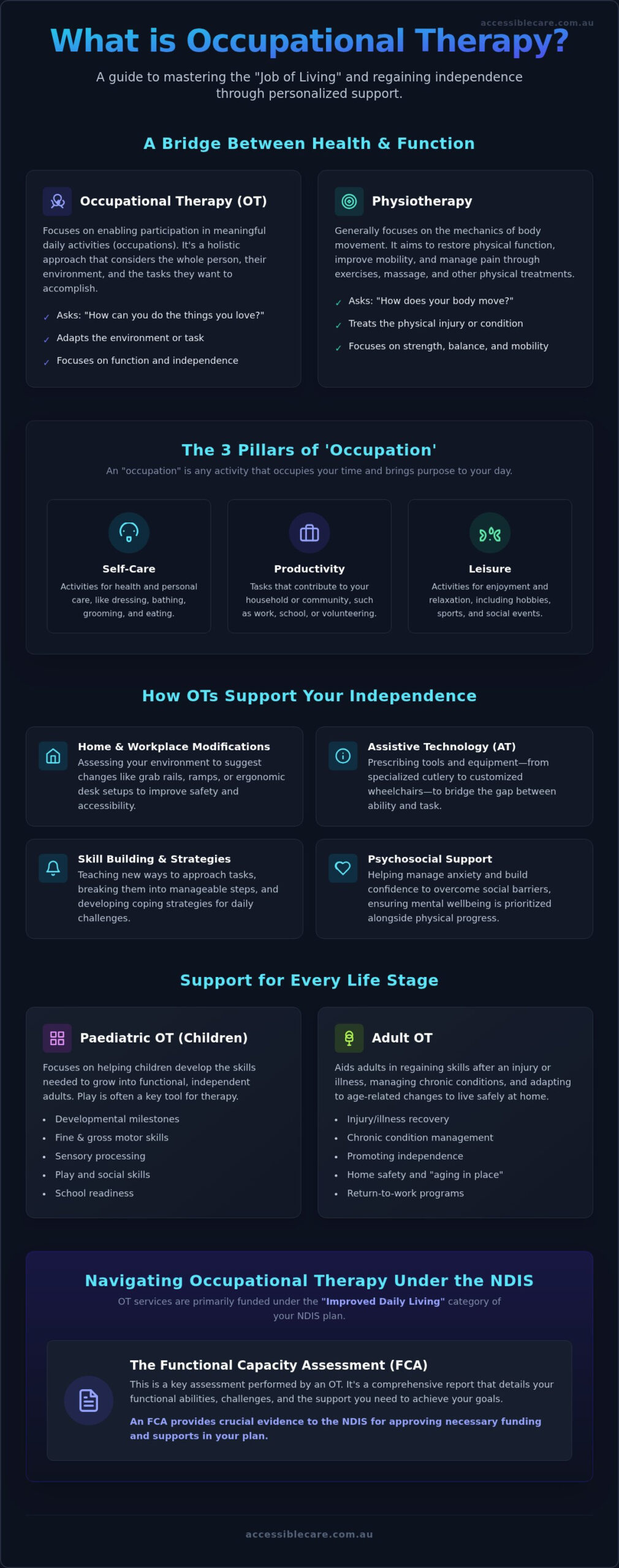
When you first ask what is occupational therapy, you might imagine a clinical setting filled with exercise equipment or workplace assessments. While those elements exist, the heart of the profession is much warmer and more personal. Occupational therapy is a holistic health profession focused on one primary goal: enabling you to participate in the everyday activities that make life meaningful. It’s about empowering you to master the “job of living,” whether that means regaining the ability to make a cup of tea or helping a child learn to play with their peers.
While many people confuse this field with physiotherapy, the two have distinct roles in your recovery. Physiotherapy generally focuses on the mechanics of movement, such as strength, balance, and joint range of motion. In contrast, truly understanding what is occupational therapy means recognizing it as a bridge between health and function. OTs don’t just look at how your body moves; they look at how you use those movements to engage with the world. They focus on the practical life skills and adaptations needed to ensure you aren’t just moving, but truly living.
Why is it called ‘Occupational’ Therapy?
A common misconception is that “occupational” refers only to your career or workplace. This often causes confusion for retirees or parents of young children. In this context, an “occupation” is any activity that occupies your time and brings purpose to your day. OTs categorize these activities into three essential pillars: self-care, productivity, and leisure. Self-care includes basic needs like dressing and grooming. Productivity covers work, school, or volunteering. Leisure includes the hobbies and social connections that nourish your spirit.
An occupation is any activity that fills your day, from the simple act of brushing your teeth to the joy of tending to a garden.
The Role of an Occupational Therapist (OT)
Think of your OT as a creative problem-solver who walks alongside you. Their role isn’t to direct you, but to facilitate your path to autonomy. They begin by looking at three specific areas: the person, the environment, and the task itself. If a task feels impossible, they don’t just see a barrier; they see an opportunity for adaptation. They might suggest a different way to hold a utensil, recommend a grab rail for the bathroom, or break a complex task into smaller, manageable steps.
They achieve this through a deeply person-centric approach. By listening to your specific goals, an OT creates a customized plan that values your self-determination. Whether you’re recovering from an injury or supporting a child with developmental delays, the focus remains on what you can do. This partnership provides the comfort and confidence needed to navigate daily challenges with a sense of peace and independence.
How an OT Supports Your Independence and Wellbeing
Independence is the cornerstone of dignity. When people ask what is occupational therapy in a practical sense, they’re often looking for ways to overcome daily frustrations. This support covers everything from self-care tasks, like dressing and cooking, to managing the emotional weight of a diagnosis. By focusing on your strengths, an OT helps you find new ways to complete routines that once felt effortless. According to the American Occupational Therapy Association, this process is about helping people live life to its fullest by promoting health and preventing injury or disability.
Beyond the physical, OTs provide vital psychosocial support. They help you manage the anxiety that often comes with a loss of autonomy or a new disability. By breaking down social barriers and teaching coping strategies, they ensure you remain an active participant in your community. This holistic approach ensures that your mental wellbeing is prioritized alongside your physical progress.
Home and Workplace Modifications
Your environment should work for you, not against you. Small, thoughtful changes can be transformative for your daily confidence. A home safety assessment identifies potential hazards and suggests solutions like grab rails, non-slip flooring, or adjusted desk heights. For those in Melbourne or Adelaide, these assessments often happen in your own home or office to ensure recommendations are perfectly tailored to your space. OTs also collaborate with builders and NDIS planners to facilitate major modifications, ensuring your home remains a sanctuary of safety and accessibility.
Prescribing Assistive Technology (AT)
Assistive technology spans a wide spectrum of tools designed to empower you. It might be something as simple as specialized cutlery that makes dining easier, or as complex as a customized powered wheelchair. The goal is always to bridge the gap between your current ability and the task you want to achieve. Before purchasing any equipment, your OT will guide you through professional trials to ensure the tool truly meets your needs. Understanding how this fits into your plan is easier when you view our NDIS guide on assistive technology.
If you’re ready to explore how these solutions can help you or a loved one, our team is here to provide compassionate occupational therapy tailored to your unique journey.
Support for Every Life Stage: Paediatric vs. Adult OT
Occupational therapy isn’t a one-size-fits-all solution. It evolves with you as your needs change throughout your life. Whether you’re a parent wondering how to support a child’s development or an adult recovering from an injury, the core answer to what is occupational therapy remains the same: it’s about enabling you to do what you love. According to the U.S. Bureau of Labor Statistics, therapists work in diverse settings to help people of all ages develop, recover, and improve the skills needed for daily living. This lifelong partnership ensures that no matter your age, your right to autonomy is honored.
Paediatric Occupational Therapy: Helping Children Shine
For children, “occupation” means playing, learning, and growing. Paediatric OTs focus on the building blocks of a successful childhood. They help little ones develop the fine motor skills required for writing and drawing, which are essential for school readiness. By making therapy feel like play, they build a child’s confidence without it feeling like a chore.
Sensory processing is another vital area. Some children feel overwhelmed by loud noises or certain textures. OTs use sensory integration therapy to help them navigate their world with more comfort. This support often extends to the classroom, where therapists help with social skills and emotional regulation. These tools ensure every child has the chance to participate fully in their school community and shine alongside their peers.
Adult OT: Regaining Control and Confidence
In adulthood, the focus often shifts toward rehabilitation and maintaining the life you’ve built. If you’ve experienced a stroke or a neurological event, an OT helps you relearn the life skills that provide a sense of agency. This might include:
- Ergonomic assessments to ensure you can return to work safely without further strain.
- Home modifications that allow you to age in place with dignity and safety.
- Specialized strategies for veterans or those living with chronic health conditions.
A significant part of this work involves supporting those with an Acquired Brain Injury (ABI). These injuries can change how you process information or interact with others; a compassionate therapist acts as a steady guide during this recovery. They help bridge the gap between the person you were and the person you are becoming, focusing on your strengths at every step.
As young people with disabilities grow, transitioning from paediatric to adult services can feel daunting. We focus on making this journey smooth and empowering. By understanding what is occupational therapy across the lifespan, families can feel confident that their support system will adapt as their loved one moves into adulthood, preserving their independence every step of the way.
Navigating Occupational Therapy Under the NDIS
Understanding how the National Disability Insurance Scheme (NDIS) supports your journey is essential for accessing the right care. When you explore what is occupational therapy within the Australian framework, you’ll find it primarily sits under the ‘Capacity Building’ section of your plan. Specifically, the ‘Improved Daily Living’ category is designed to help you develop the skills needed for independence. This funding allows you to partner with a professional who can help you master the tasks that matter most to you, from personal care to community participation.
Occupational therapists also play a vital role in securing funding for other essential needs. They provide the professional evidence required for home modifications and assistive technology. By choosing an NDIS-registered provider, you ensure that your therapist adheres to the strict quality and safety standards set by the NDIS Commission. This gives you peace of mind that your support is both professional and reliable. Whether you’re self-managed, plan-managed, or NDIA-managed, having a registered provider can simplify the administrative process and ensure your goals remain the priority.
What is a Functional Capacity Assessment?
A Functional Capacity Assessment (FCA) is a comprehensive report that serves as a map of your support needs across all areas of life. The NDIA often requires these assessments for complex care planning or during plan reviews to ensure your funding matches your actual daily requirements. It isn’t a clinical test that you “pass” or “fail.” Instead, it’s a detailed look at how you interact with your environment and where barriers exist.
In Melbourne or Adelaide, these assessments often take place in your own home. This community-based approach allows your therapist to see the real-world challenges you face. They observe your routine, listen to your concerns, and recommend solutions that truly work for your specific lifestyle. The resulting report is a powerful tool that advocates for the level of support you need to live safely and independently.
Steps to Start OT with Your NDIS Funding
Starting your therapy journey shouldn’t feel overwhelming. We’ve simplified the process into three clear steps to help you move forward with confidence:
- Step 1: Check your plan. Review your NDIS plan to ensure you have funding allocated under ‘Capacity Building’ (Improved Daily Living) or ‘Core’ supports if you need equipment.
- Step 2: Find a compassionate provider. Look for a team that prioritizes your autonomy and has experience in your specific area of need, such as ABI or paediatric support.
- Step 3: Goal-setting session. Complete an initial intake where you’ll discuss your objectives. This session is about listening to your perspective and creating a customized plan that reflects your personal agency.
By following this methodical path, you can ensure your NDIS funding is used effectively to improve your quality of life. If you’re ready to take the next step, you can book an NDIS occupational therapy assessment today to start your journey toward greater independence.
Choosing Compassionate OT Care in Melbourne and Adelaide
Finding the right support team is a deeply personal journey. When you ask what is occupational therapy in the context of your own life, the answer should always center on your autonomy and self-direction. We believe that therapy is most effective when it feels like a supportive partnership rather than a transactional service. Our team is dedicated to providing care that respects your individual objectives; we help you navigate the complexities of the NDIS with a reliable and nurturing guide by your side.
By choosing a multidisciplinary provider, you gain access to a holistic support network. Our occupational therapists work closely with our Speech Pathology team and community nurses to ensure every aspect of your wellbeing is addressed. This collaborative approach means your care is consistent and comprehensive, which reduces the stress of managing multiple separate providers. Whether you’re in Melbourne or Adelaide, this unified strategy helps you achieve a better quality of life through shared expertise and a common focus on your independence.
A Holistic Approach to Therapy
Our goal isn’t just to provide a short-term fix, but to facilitate long-term outcomes that truly matter to you. We look at the big picture of your life, considering how your physical health, mental wellbeing, and environment all intersect. We are deeply committed to listening to your unique story, ensuring your lived experience guides every decision we make together. This ensures that the strategies we develop are not only clinically sound but also deeply relevant to your personal daily routine.
One of the most significant benefits we offer is mobile therapy. We understand that traveling to a clinic can be exhausting and stressful for many families. That’s why we provide in-home assessments and support across Victoria and South Australia. By working with you in your own environment, we can identify practical solutions that are immediately applicable to your real-world challenges. This community-based approach fosters a sense of comfort and safety, allowing you to focus entirely on your progress and peace of mind.
Ready to Start Your Journey?
We’ve designed our referral process to be as simple and stress-free as possible for NDIS participants and their families. We know that you may already be feeling overwhelmed, so we prioritize clear communication and gentle guidance from the very first contact. Whether you need a Functional Capacity Assessment or ongoing skill-building support, our professional team is ready to assist you in Melbourne and Adelaide with the highest standards of care.
Your path to independence starts with a single conversation. We invite you to connect with our compassionate OT team today to learn more about how we can support your “job of living.” Let’s work together to create a future where you feel empowered, respected, and fully in control of your own journey.
Embracing Your Path to a More Independent Life
Understanding what is occupational therapy is the first step toward reclaiming your autonomy and peace of mind. This journey is about much more than clinical exercises; it’s about mastering the “job of living” through the activities that bring purpose to your day. Whether you’re supporting a child’s development or seeking rehabilitation for an adult, a person-centric approach ensures your unique goals remain the focus of every session.
Navigating the NDIS doesn’t have to be a solo effort. As a Registered NDIS Provider with experienced adult and paediatric teams, we’re here to walk alongside you. We proudly serve families across Melbourne and Adelaide, offering the convenience of community-based support in the comfort of your own home. If you’re ready to explore how customized care can transform your daily routine, we invite you to Book a Compassionate OT Assessment with Accessible Care today. You deserve to live with confidence and dignity, and we’re honored to help you achieve your own objectives.
Frequently Asked Questions
Do I need a doctor’s referral to see an occupational therapist?
You don’t need a doctor’s referral to book an appointment with our team if you’re an NDIS participant or a private client. This allows you to seek support as soon as you feel it’s needed. However, if you’re looking to claim rebates through Medicare or the Department of Veterans’ Affairs, a GP referral is usually required. We always recommend checking your specific plan requirements to ensure a smooth and stress-free start to your therapy.
Is occupational therapy covered by the NDIS?
Yes, occupational therapy is a core component of the NDIS framework for building independence. It’s typically funded under the “Capacity Building – Improved Daily Living” category of your plan. This funding helps you work with a professional to master daily tasks and improve your quality of life. As a registered NDIS provider in Melbourne and Adelaide, we help you understand what is occupational therapy and how to use your budget to achieve your goals.
What is the difference between an OT and a physiotherapist?
The main difference lies in the focus of your recovery or development. Physiotherapists primarily treat the physical body, focusing on movement, strength, and joint range of motion. In contrast, an occupational therapist focuses on how you use those physical abilities to perform daily tasks. They look at the “job of living,” helping you adapt your environment or learn new techniques to brush your teeth, cook a meal, or participate in community activities with confidence.
How much does an occupational therapy session cost in Australia?
The cost of an occupational therapy session can vary based on the type of support you need and your funding source. For NDIS participants, the price is set by the NDIS Price Guide, which ensures consistency across providers. If you’re a private client or veteran, different rates may apply. We suggest contacting your provider directly to discuss your specific needs; this allows for a transparent and personalized quote based on your unique situation.
Can an OT help my child with autism or ADHD?
Occupational therapists provide essential support for children with autism or ADHD by focusing on their unique sensory and developmental needs. They help children develop the emotional regulation and social skills required to thrive in school and at home. Through play-based therapy, an OT can improve fine motor skills, sensory integration, and attention. This nurturing approach empowers your child to navigate their world with less anxiety and more joy, building confidence at every life stage.
Will an occupational therapist come to my home?
Yes, our team provides mobile therapy services throughout Melbourne and Adelaide. We believe that receiving support in your own home environment is often the most effective way to build independence. It allows your therapist to see exactly how you interact with your space and recommend practical, real-world modifications. Whether it’s a home safety assessment or a skill-building session, being in a familiar setting helps you feel more comfortable and focused on your progress.
How long does a Functional Capacity Assessment take?
A Functional Capacity Assessment is a comprehensive process that typically involves several hours of direct interaction. This time is used to observe your daily routine, discuss your goals, and assess your environment. After the initial visit, your therapist spends additional time writing a detailed report for the NDIA. This report serves as a vital map of your support needs. The total timeframe ensures every detail of your autonomy and safety is carefully considered for your plan review.
Can OT help with mental health conditions?
Occupational therapy is highly effective for managing mental health conditions by focusing on your ability to engage in meaningful activities. When you ask what is occupational therapy in a mental health context, it’s about building routines that support your wellbeing. OTs help you develop coping strategies for anxiety, manage time effectively, and improve social participation. This holistic approach empowers you to regain control over your life and find peace in your daily routines.

