


The best disability support is never just about ticking off a checklist of daily chores; it is about finding a genuine partner in your independence. If you’re exhausted from balancing family caregiving with work, or frustrated by workers who fail to show up, your feelings are completely valid. Searching for a reliable NDIS support worker Melbourne participants and families can truly depend on often feels overwhelming, especially when you are trying to make sense of funding categories and service agreements.
You deserve consistent care that eases your stress rather than adding to it. In this guide, you’ll discover how to choose a trustworthy support worker who honours your personal autonomy, fosters community connection, and restores calm to your home. We’ll explore practical steps to evaluate compatibility, make the most of your NDIS plan, and build a lasting relationship grounded in mutual respect.
Key Takeaways
- Effective disability support focuses on autonomy and personal agency, helping participants build everyday living skills rather than simply having tasks done for them.
- Introducing dependable assistance into the home eases caregiver burnout, allowing family members to step back from constant care duties and restore balanced relationships.
- Following a clear selection framework makes it easier to find an ndis support worker melbourne families can rely on for verified credentials, safety compliance, and genuine personal connection.
- Aligning everyday support workers with allied health goals, such as speech and occupational therapy, helps reinforce progress in real-world settings.
- Choosing providers who emphasise thoughtful matching based on shared interests and values ensures long-term consistency and reduces disruptive staff turnover.
What Does an NDIS Support Worker in Melbourne Actually Do?
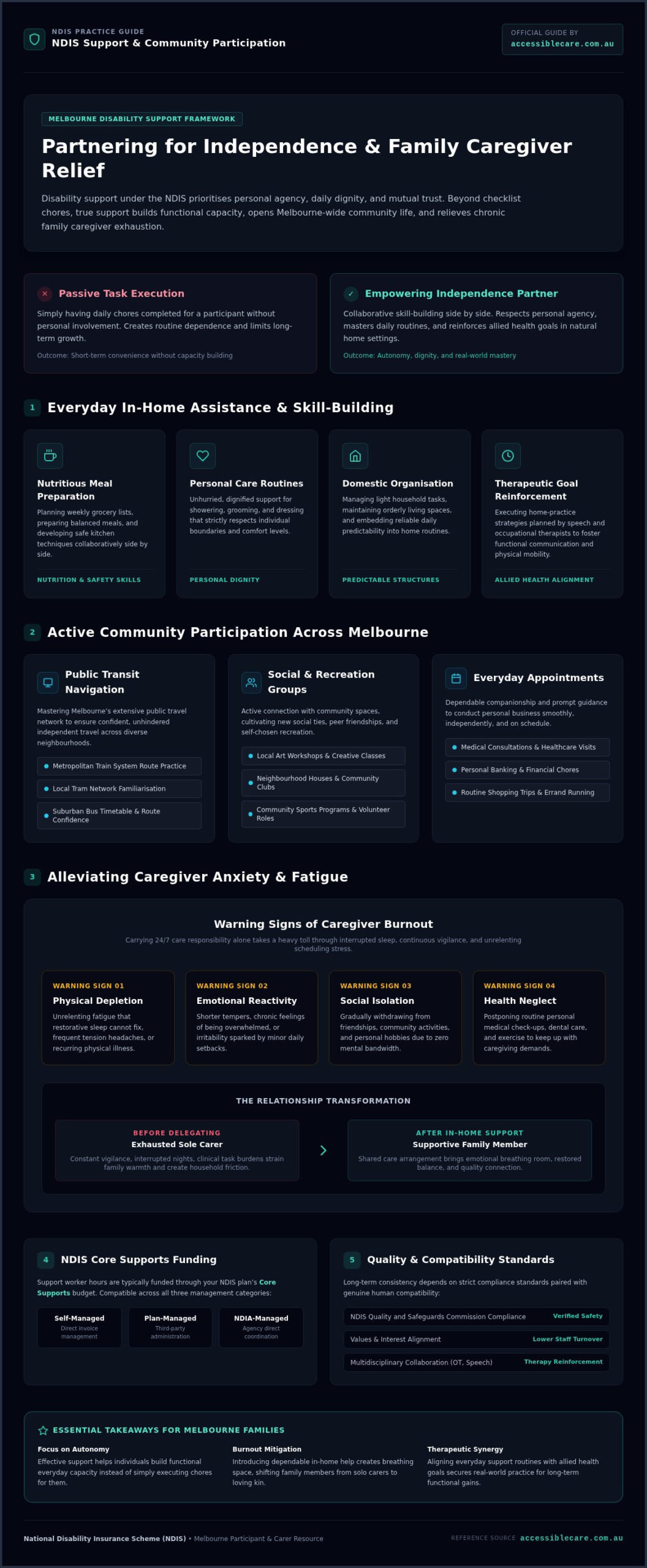
A support worker is far more than someone who helps with household chores. True support centres on personal agency, everyday dignity, and mutual trust. Under the National Disability Insurance Scheme (NDIS), an ndis support worker melbourne participants rely on serves as an independence partner, helping individuals build functional capacity while navigating everyday life on their own terms.
Rather than taking over daily activities, dedicated workers collaborate with participants to master routines, participate in local life, and maintain domestic stability. This assistance also creates vital breathing room for primary carers, relieving ongoing fatigue while preserving healthy family relationships. Funding typically draws from your plan’s Core Supports budget, whether your funding is self-managed, plan-managed, or NDIA-managed.
Everyday In-Home Assistance and Skill-Building
In-home support focuses on creating routines that feel predictable, safe, and empowering. Key activities include:
- Nutritious meal preparation: Planning weekly groceries, cooking balanced meals, and learning safe kitchen skills side by side.
- Personal care routines: Respectful, unhurried help with showering, grooming, and dressing that preserves personal dignity.
- Domestic organisation: Managing light household chores, organising living spaces, and establishing practical daily structures.
- Reinforcing therapeutic goals: Assisting with home practice strategies designed by allied health practitioners to strengthen physical mobility and communication.
Active Community Participation Across Melbourne
Community connection helps participants feel valued, engaged, and confident outside the home. A qualified ndis support worker melbourne families engage facilitates safe access to local spaces across the city’s diverse neighbourhoods:
- Public transit navigation: Building confidence using Melbourne’s train, tram, and bus networks to travel independently.
- Social and recreational groups: Attending local art workshops, neighbourhood houses, community sports, or volunteer roles.
- Everyday appointments: Providing dependable companionship for medical visits, personal banking, and routine shopping trips.
By blending attentive listening with professional guidance, support workers help bridge the gap between clinical goals and rich, self-directed lives in the community.
How In-Home Support Alleviates Family Caregiver Anxiety and Fatigue
Caring for an adult child, partner, or aging parent is an act of deep love, but carrying the entire responsibility alone takes a quiet, heavy toll. Caregiver fatigue rarely appears overnight. It accumulates gradually through interrupted nights, constant scheduling, and the unceasing vigilance required to manage complex physical or behavioural needs. When primary carers reach a state of chronic exhaustion, the quality of home life deteriorates for the entire household.
Introducing a dedicated ndis support worker melbourne families trust provides genuine relief. Engaging qualified workers who follow standards set by the NDIS Quality and Safeguards Commission allows family members to step back from around-the-clock duties. This shared care arrangement restores emotional breathing room and brings stability back into everyday family life.
Recognising the Warning Signs of Caregiver Burnout
Many family carers become so accustomed to daily stress that they fail to recognise when exhaustion turns into burnout. Common physical and emotional indicators include:
- Physical depletion: Unrelenting fatigue that restorative sleep fails to resolve, frequent headaches, or recurring illness.
- Emotional reactivity: Shorter tempers, persistent feelings of being overwhelmed, or uncharacteristic irritability over minor setbacks.
- Social isolation: Withdrawing from friendships, personal hobbies, and community networks due to lack of time or mental bandwidth.
- Health neglect: Postponing your own medical check-ups, dental visits, or exercise routines to keep up with caregiving demands.
Shifting from Sole Carer to Supportive Family Member
When you delegate personal hygiene routines, domestic tasks, and community outings to a professional, your relationship with your loved one transforms. You move away from acting as a full-time care coordinator and return to being a parent, partner, sibling, or child. This shift fosters greater self-determination for the participant, who gains autonomy by working with individuals outside the immediate family circle.
Building these healthy boundaries protects long-term emotional wellbeing. If you are exploring how scheme categories accommodate these crucial services, review our what is the NDIS guide. Taking time to recharge without guilt is essential for sustainable caregiving. When you’re ready to explore balanced assistance, speaking with an experienced care team at accessiblecare.com.au can help you design a sustainable routine tailored to your family’s needs.
How to Choose the Right Melbourne Support Worker: Step-by-Step
Finding the right match shouldn’t feel like a guessing game. When you bring an ndis support worker melbourne families invite into their private spaces, you need far more than basic geographic convenience. A structured vetting process protects your safety, honours your personal boundaries, and ensures genuine human compatibility. Begin by documenting the participant’s daily routines, sensory preferences, communication styles, and long-term goals before scheduling interviews.
Verifying Essential Victorian Credentials and Safeguards
Safety begins with verified compliance. Ensure your candidate holds an active NDIS Worker Screening Check, a Victorian Working with Children Check where relevant, and current First Aid and CPR certifications. Beyond formal paperwork, every worker must uphold the NDIS Code of Conduct. Always contact recent professional references to confirm emotional maturity, punctuality, and a verifiable history of dependable attendance.
Conducting Person-Centred Interviews and Value Alignment
A resume confirms training, but real conversation reveals character. Involve the participant directly in all candidate discussions, ensuring their voice guides the final choice. Ask practical behavioural questions to see how they respond under pressure:
- “How do you adapt when a morning routine needs to shift unexpectedly?”
- “What steps do you take to support someone’s independence without taking over the task?”
- “How do you ensure you are actively listening to non-verbal cues?”
Notice whether the candidate addresses the participant directly with dignity and patience, rather than speaking solely to family members.
Starting with a Trial Session and Mutual Agreement
Once you identify a promising match, schedule a paid introductory shift. Use this time for low-pressure conversation, domestic orientation, and observing natural rapport in the home environment. If the chemistry feels right, establish clear expectations through a comprehensive service agreement.
Document planned arrival times, cancellation notice periods, and emergency contacts. A dependable ndis support worker melbourne participants thrive with will respect household privacy, honour personal choices, and communicate openly whenever questions arise.
Connecting Support Work with Multidisciplinary Allied Health Care
Support work should never happen in isolation. While therapy appointments introduce essential strategies, meaningful progress takes root during everyday routines between clinical visits. An experienced ndis support worker melbourne participants partner with serves as a vital bridge, translating clinical recommendations into practical, daily moments. This collaborative approach reinforces progress while relieving family carers of the exhausting job of coordinating therapy exercises alone.
Reinforcing Occupational and Speech Therapy in the Home
When allied health practitioners and support workers align their efforts, regular household activities become natural opportunities for personal growth:
- Daily independence routines: Putting home strategies into practice, as detailed in our occupational therapy guide, helps individuals build fine motor coordination, practice sensory modulation, and gain confidence in the kitchen.
- Functional communication practice: Encouraging alternative communication methods and social cues guided by our speech pathology insights ensures participants express their choices clearly in community settings.
- Observational tracking: Documenting real-world milestones and subtle functional changes provides valuable evidence to share during scheduled NDIS plan reassessments.
Collaborating with Community Nurses on High-Intensity Needs
For participants with complex medical requirements, everyday care requires clinical oversight. Skilled support workers follow direct instructions from registered community nurses to ensure absolute safety, whether adhering to precise hoist transfer procedures or supporting skin integrity routines. Explore detailed care standards in our NDIS high intensity supports guide.
Aligning an ndis support worker melbourne families choose with clinical therapists creates an empowering care circle centred on mutual goals. When you’re ready to build an integrated team that respects your individuality, contact Accessible Care today to discuss tailored support options.
Partnering with Accessible Care for NDIS Support Services in Melbourne
Choosing a care provider is ultimately an act of trust. At Accessible Care, we believe that quality assistance is built on mutual respect, attentive listening, and authentic human connection. As a registered provider adhering to NDIS Quality and Safeguards Commission standards, we deliver thoughtful, person-centred support across metropolitan Melbourne and surrounding Victorian suburbs. We look beyond basic checklists to support your autonomy, honour your routines, and relieve the daily pressures felt by family caregivers.
Our Person-Centred Matching and Onboarding Approach
A successful care relationship starts with understanding the person behind the plan. Finding an ndis support worker melbourne participants genuinely enjoy spending time with requires more than matching calendar availability. Our tailored process ensures genuine compatibility:
- In-depth initial discovery: We listen closely to your personal story, daily preferences, communication style, and long-term aspirations.
- Thoughtful hand-matching: We connect participants with vetted support workers who share complementary personalities, cultural values, and personal hobbies.
- Supervised continuity: Our team provides ongoing professional mentoring, regular reviews, and dependable backup coverage to prevent unexpected roster gaps.
- Multidisciplinary connection: Because we also deliver speech therapy, occupational therapy, positive behaviour support, and community nursing, our workers can collaborate directly with allied health professionals to reinforce your functional capacity.
Starting Your Support Journey Across Metropolitan Melbourne
Beginning a new support routine should feel calm, transparent, and reassuring. Whether your plan is self-managed, plan-managed, or NDIA-managed, our local Melbourne team ensures onboarding is straightforward and stress-free. We establish clear, easy-to-read service agreements so you always know what to expect from your shifts.
By prioritising your self-determination and listening to your lived experience, we help you build practical skills, expand your social world, and restore balance to your family home. Connect with Accessible Care to arrange compassionate support and take a confident step towards reliable care tailored to your life.
Embracing Independence and Restoring Peace of Mind
Finding the right in-home assistance transforms your entire household. When daily support shifts from basic task-checking to a genuine partnership, participants gain the confidence to pursue their own goals while family carers receive the space they need to rest. Connecting everyday routines with allied health strategies ensures each day builds meaningful capacity and long-term autonomy.
You don’t have to manage this journey alone. Choosing a registered provider that adheres to strict NDIS Quality and Safeguards Commission standards gives you confidence and safety. Through attentive listening and person-centred matching, Accessible Care pairs you with a trusted ndis support worker melbourne families can rely on, supported by an integrated multidisciplinary team bridging support work, occupational therapy, speech pathology, and community nursing.
Dependable, respectful support can restore balance and vitality to your home life. Speak with our compassionate Melbourne care team today to take the first step towards care tailored to your unique journey.
Frequently Asked Questions
What is the difference between an NDIS support worker and an allied health therapist?
An allied health therapist, such as an occupational therapist or speech pathologist, assesses functional capacity, diagnoses developmental needs, and designs formal clinical treatment programs. A support worker assists with implementing those recommendations during everyday routines, personal care, and community activities. While therapists guide your clinical goals, your support worker provides the consistent, hands-on partnership that turns therapeutic strategies into practical daily living skills.
Can an NDIS support worker in Melbourne help me use public transport and attend local community events?
Yes, community participation is an essential part of disability support. A qualified ndis support worker melbourne participants team up with can build your confidence across Victoria’s public transport network, from tapping your myki to navigating tram and train routes. They also accompany you to local sporting matches, neighbourhood art groups, or volunteering roles, ensuring you access your community safely and comfortably.
How do I pay for an NDIS support worker using my NDIS plan funds?
Support work is typically funded under the Core Supports budget in your NDIS plan, specifically Assistance with Daily Life or Assistance with Social and Community Participation. If your plan is self-managed, you pay your provider directly and submit claims through the myplace portal. If you are plan-managed, your provider invoices your plan manager directly. NDIA-managed participants have their claims processed seamlessly through registered providers.
What qualifications and background checks must an NDIS support worker hold in Victoria?
In Victoria, support workers must hold a clear NDIS Worker Screening Check and an active Working with Children Check when assisting young people. They should also possess current First Aid and CPR certifications and have completed the NDIS Worker Orientation Module. Reputable providers look for formal qualifications in individual support, extensive practical experience, and verified references demonstrating reliability, empathy, and emotional maturity.
What should I do if a support worker is not the right personality match for my family?
You have full choice and control over who supports you, and feeling incompatible is completely normal. Begin by sharing open feedback with your provider or service coordinator. A compassionate provider will listen without judgement and introduce another candidate whose temperament, cultural background, and shared interests align with your home. You should never feel trapped in a care relationship that doesn’t feel right.
How does an in-home support worker help reduce family caregiver stress?
Family caregivers often face deep emotional and physical exhaustion from managing continuous care alongside work and household responsibilities. Introducing a dependable ndis support worker melbourne families trust provides reliable, guilt-free respite. Delegating domestic routines and personal care allows family members to protect their own physical wellbeing, enjoy uninterrupted rest, and return to being loving family members rather than round-the-clock carers.
Can NDIS support workers assist with complex physical care or clinical nursing needs?
General support workers assist with daily living tasks, but complex physical care requires specialised competency. For high-intensity needs such as enteral feeding, tracheostomy support, catheter care, or complex hoist transfers, workers must receive direct delegation and training from qualified community nurses. Registered providers ensure support staff work closely under clinical nursing oversight to keep participants safe, comfortable, and well supported at home.

