


If you’re wondering how to explain NDIS to family, start with the person, not the paperwork. You don’t need to know every rule or use formal NDIS language. Begin with what matters to the participant: their goals, the supports they choose and how those supports may help in everyday life.
The system can feel complicated, and family members may misunderstand a plan or question someone’s choices. The participant decides what personal information to share and who to involve. There’s no need to disclose more than feels comfortable or settle every question in one conversation.
This guide explains how to describe the NDIS in plain language, talk about the purpose of a participant’s plan and respond to common family questions. It also offers practical ways to protect privacy, keep the participant’s preferences at the centre and agree on a respectful next step.
Key Takeaways
- Explain the difference between the NDIS and the NDIA in simple terms.
- Focus on the participant’s goals and chosen supports, not just plan details.
- Set clear boundaries around personal information while welcoming questions.
- Use five flexible conversation steps to choose a manageable next action without pressure.
Explaining the NDIS to Family in Plain Language
If NDIS terms feel unfamiliar, start with the main idea: the scheme supports eligible people with disability to pursue their own goals. You don’t need to explain every rule or understand every part of a plan before talking with family. Keep the focus on the person, what matters to them and the support they choose.
The NDIS is a national scheme that can fund disability-related supports for eligible people to help them work towards their goals and take part in everyday life. It’s an individual support plan, not a one-size-fits-all package. For example, if someone wants to build confidence communicating in the community, their plan may include a relevant support if it suits their needs and is included in their plan. This is an example, not a promise of funding. Each person’s circumstances and plan are different.
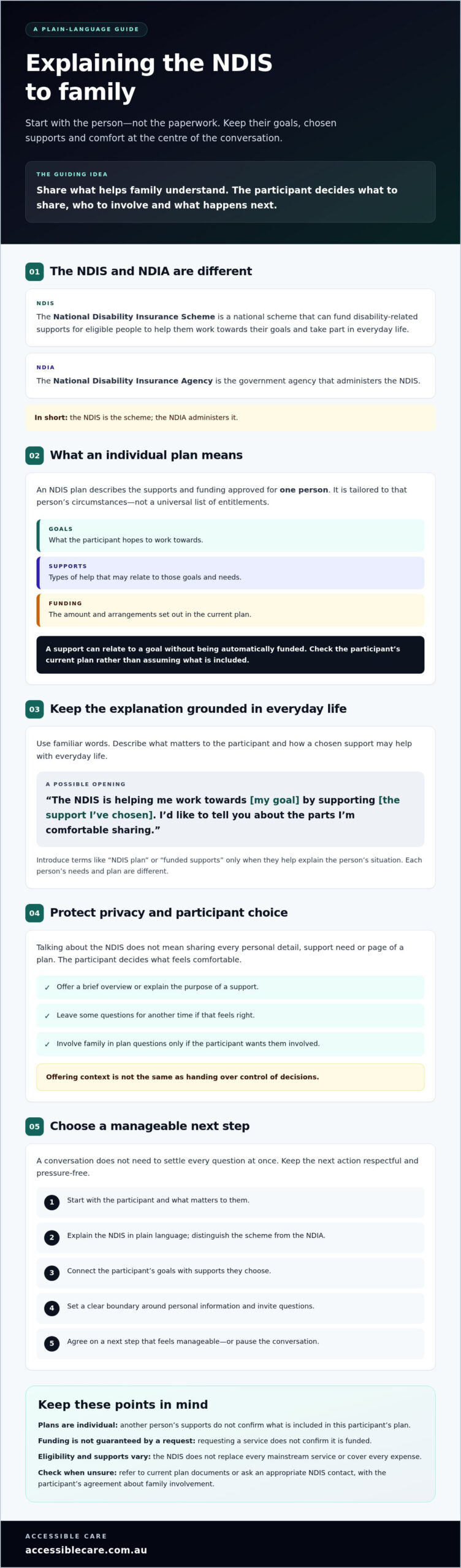
The National Disability Insurance Scheme (NDIS) is the scheme itself. The National Disability Insurance Agency (NDIA) is the government agency that administers it. For a broader background, read this overview of the National Disability Insurance Scheme (NDIS). For an everyday-language explanation, see this simple guide to the NDIS.
What does the NDIS do?
The NDIS may fund disability-related supports connected to a participant’s needs and goals. It doesn’t replace every mainstream service or cover every expense. Eligibility is assessed, and participants don’t all receive the same supports or funding. What’s included depends on the individual and their plan, so check the plan rather than assuming a particular support is available.
A simple way to introduce the NDIS
When explaining the NDIS to family, use familiar words first. The participant could adapt this opening: “The NDIS is helping me work towards [my goal] by supporting [the support I’ve chosen]. I’d like to tell you about the parts I’m comfortable sharing.” This gives family useful context without turning the conversation into a review of every plan detail.
Once the idea is clear, introduce terms like “NDIS plan” or “funded supports” only if they help explain the person’s situation. Plain language makes space for questions while keeping the participant’s goals and choices at the centre.
What Family Should Understand About an NDIS Plan
A useful distinction can prevent confusion: the NDIS is the scheme, while a participant’s plan describes the supports and funding approved for that individual. General information about the scheme doesn’t confirm what’s included in a particular person’s plan.
An NDIS plan is tailored to one person’s circumstances, not a universal list of entitlements for everyone with disability. A family member may have heard that someone else receives a particular support. That doesn’t mean it’s included in this participant’s plan or would suit their goals.
How to describe goals and supports
Invite the participant to describe their goals in their own words. They may want to communicate more confidently, manage daily activities with greater independence or take part in community life. These examples can help make a plan easier to understand, but each person’s needs and priorities differ. The participant chooses which goals or details to share.
Keep these three ideas separate when discussing an NDIS plan:
- Goals: what the participant hopes to work towards.
- Supports: types of help that may relate to those goals and needs.
- Funding: the amount and arrangements set out in the participant’s current plan.
A support can relate to a goal without being automatically funded. Plans and circumstances vary, so avoid promising a particular service, amount of funding or outcome.
What family should not assume about funding
Requesting a service doesn’t confirm that it’s funded in the plan. Check the participant’s current plan documents before relying on an interpretation. If anything is unclear, ask an appropriate NDIS contact. The participant decides whether they want family involved in that check.
The official NDIS booklets and factsheets can help families understand scheme information in accessible formats. Accessible Care is a registered NDIS provider offering support work and therapeutic and nursing supports in Melbourne and Adelaide. Check directly whether a particular support is currently available in your area. Explore NDIS support services to learn more.
NDIS Misunderstandings: Respect Privacy and Participant Choice
Talking about the NDIS doesn’t mean sharing every personal detail, support need or page of a plan. The participant decides what feels comfortable. They could explain the purpose of a support without sharing private documents, or offer a brief overview and leave some questions for another time.
Family members may ask questions because they care or because the scheme is unfamiliar. A simple explanation can help, while the participant remains in charge of what they share and how they want to be involved. Offering context is not the same as handing over control of decisions.
Does family automatically make decisions for an NDIS participant?
Don’t assume a relative can access someone’s NDIS information or make decisions on their behalf simply because they’re family. Information-sharing and decision-making arrangements depend on the participant’s circumstances and any formal arrangements in place. If this matters, check current NDIA guidance or ask the NDIA how consent or nominee arrangements apply. The participant can say who they’d like involved and what information they’re comfortable sharing.
How to respond to common assumptions
One common misunderstanding is that everyone who accesses the NDIS receives the same supports. You can explain that individual circumstances and plans differ. If a relative asks whether a particular support is funded, avoid guessing. Check the current plan information or confirm the question with an appropriate NDIS contact. The official How the NDIS works resource explains the scheme in general, but won’t confirm what’s in one person’s plan.
If the conversation becomes stressful or someone dismisses the participant’s choices, it’s okay to pause. Try a calm boundary such as: “I know you want to understand. I’m not ready to discuss that detail, but I can share what I’m comfortable with.” Or, “Let’s check the plan before we assume that support is included.”
When explaining the NDIS to family, aim for understanding, not agreement on every detail. The participant can continue the conversation, share more later or keep some information private. Respectful questions and careful checking can make room for family support without putting pressure on the person at the centre.
How to Explain NDIS to Family: Step-by-Step Guide
You don’t need a perfect speech or a long meeting. A short, calm conversation may be enough. These five steps can help you explain the NDIS while keeping your goals and boundaries clear.
- Choose a moment. Pick a time and place where you feel comfortable. If talking face to face feels difficult, write a note or send a message instead.
- Set a goal. Decide what you’d like your family to understand. You might want them to know what a support helps you work towards, or simply why the NDIS matters to you.
- Explain what you choose. Use everyday language and share only what you’re comfortable discussing. You don’t have to disclose a diagnosis or show plan documents.
- Invite questions. Listen first. Questions about how the scheme works may differ from personal questions about your disability or plan. Answer what you want and leave the rest.
- Agree on a next step. You could write down questions to check, continue the conversation another day or decide that no further discussion is needed right now.
A sample script you can adapt
Change these words to sound like you. The placeholders let you choose what to share and what kind of response would help:
“I wanted to talk about the NDIS because I’d like you to understand how I’m working towards [my goal]. My plan includes [one or two supports I’m comfortable discussing], which relate to [what I want to do or practise]. I’m happy to talk about [a topic I’m comfortable sharing], but I’d prefer to keep [a personal detail or document] private. What would help me most is [listening, encouragement or another kind of involvement].”
You can shorten the conversation, send the script as a note or ask someone you trust to sit with you. You don’t have to have another person present.
When family members have questions
Listen, then decide which questions you want to answer. If you’re unsure about a plan or scheme detail, write it down and check current information rather than guessing. Personal questions can wait, or you can say, “I’m not ready to discuss that.” If you’d like a trusted supporter or professional to join a future conversation, that’s your choice.
Explaining the NDIS to family may take more than one conversation. If you’re exploring support options, you can learn about NDIS support services and decide whether you’d like to make an enquiry.
Next Steps After Explaining the NDIS to Family
You don’t need to solve every question or make a decision straight away. Choose one manageable next step that feels useful to the participant. That could mean writing down a question, checking a relevant part of the current plan or letting the conversation settle before deciding what happens next.
The participant decides whether family will be involved further. They might share more information later, ask a relative to help with a specific task or keep future plan discussions private. A useful next step respects that choice rather than creating pressure to share more.
Choosing the right support for a follow-up conversation
For questions about NDIS rules or how a plan works, check current information with an appropriate NDIS contact. A provider can explain its own services, but it can’t determine every plan decision or confirm that a support is funded for a particular participant. Keeping these roles clear helps family members find the right information.
If the participant wants to discuss support needs with someone, they can choose whether to include a trusted person or professional. Their preferences should guide who is involved. There’s no need to arrange another conversation unless it would help.
Finding local support in Melbourne or Adelaide
Accessible Care is a registered NDIS provider serving Melbourne and Adelaide. Its supports include support work, speech therapy, occupational therapy, positive behaviour support and community nursing. The support that may be relevant depends on the participant’s goals and circumstances. Availability can vary by location and support type, so confirm what’s currently offered before making plans.
If you’re discussing support alongside how to explain the NDIS to family, keep the conversation centred on what the participant wants to work towards. For example, they may want to ask about speech therapy in relation to a communication goal, or support work in relation to everyday activities. A provider can describe its services. Questions about plan rules or funding should be checked with an appropriate NDIS contact.
There’s no obligation to take another step now. If the participant would like to explore whether Accessible Care’s supports may suit their needs, they can contact Accessible Care to discuss support options and confirm current availability in Melbourne or Adelaide.
Keep the Conversation Grounded in Their Choices
Explaining the NDIS to family doesn’t mean sharing every detail or answering every question at once. Focus on what the participant wants family to understand, what they’re comfortable sharing and whether they want further involvement. One small next step, or choosing to pause, can be enough.
If you’re considering how to explain NDIS to family, let the participant’s goals and preferences guide the conversation. Check plan-specific questions against current information rather than making assumptions, and give everyone time to understand.
Accessible Care is a registered NDIS provider serving Melbourne and Adelaide. Its listed supports include support work and therapeutic services such as speech therapy and occupational therapy. Current availability can depend on location and support type. You can talk with Accessible Care about support options to learn more.
There’s no single right way to have this conversation. Take it at a comfortable pace and keep the participant’s voice at the centre.
Frequently Asked Questions
How do I explain the NDIS to someone who has never heard of it?
Describe it as a national scheme that can fund disability-related supports for eligible people to work towards their goals. You could say, “The NDIS helps some people with disability access supports that relate to their needs and plans.” Then give an example that fits your situation, such as support with communication or daily activities. Explain that each person’s plan is different and people don’t all receive the same supports.
What is the best way to tell my family I have NDIS support?
Start with what you want them to understand and share only what feels comfortable. For example: “I receive NDIS support to help me work towards [my goal]. I’d like you to understand [the detail I choose to share].” You can explain one relevant support without discussing your diagnosis or showing plan documents. If the conversation feels daunting, write a note or ask a trusted person to be with you.
Can my family access my NDIS plan or speak to the NDIA for me?
Being a family member doesn’t automatically mean someone can access your NDIS information or speak for you. Information sharing may depend on your consent and any formal arrangements that apply to your circumstances. If you want a relative involved, check the current NDIA process for authorising someone to act or communicate on your behalf. You can clarify what information you’re comfortable sharing without giving them access to your whole plan.
What should I tell my family about what the NDIS funds?
Explain that the NDIS may fund disability-related supports connected to an eligible participant’s needs and goals, but requesting a service doesn’t mean it’s automatically funded. What applies depends on the person’s circumstances and current plan. You could describe the general purpose of a support you use, then check your plan documents if family asks whether it’s included. For questions about plan rules or funding, confirm details with an appropriate NDIS contact.
What if my family does not understand or agree with my NDIS supports?
You can explain what a support means to you, but you don’t have to convince everyone or share more than you wish. Connect it to a goal in your own words, such as building communication skills or getting support with daily activities. If the conversation becomes upsetting, pause and return to it later, or not at all. When explaining the NDIS to family, keeping your choices central matters more than reaching immediate agreement.
Do I have to tell my family everything about my NDIS plan?
No. Explaining that you receive NDIS support doesn’t require you to share every personal detail or plan document. You can decide what to tell each person and set a boundary if a question feels too private. For instance, you might explain that a support relates to one of your goals without describing your diagnosis or funding details. If you’re unsure about information-sharing arrangements, check current NDIA guidance for your circumstances.
How can I explain the NDIS to a child or younger family member?
Use short, familiar words and answer what the child asks. You could say, “The NDIS helps me get some support with things I want to do.” If useful, give a simple example, such as practising communication or getting help with an everyday activity. Reassure them that they can ask questions while keeping details appropriate to their age and your privacy. You don’t need to explain plan categories or funding rules.

