


You’re sitting in a quiet room, clutching a folder of reports that detail your child’s every struggle, yet the person across the desk seems to be looking right through you. It’s a heavy feeling when the support your child needs is dismissed because it doesn’t fit a specific box or a piece of “NDIS-speak” jargon. We understand how exhausting it is to feel like you’re constantly fighting a system that should be helping you. You know your child better than anyone else. It’s deeply frustrating when their daily life isn’t reflected in the funding they receive.
Learning how to advocate for your child in NDIS meetings is the most powerful way to bridge the gap between their needs and the “reasonable and necessary” framework. This 2026 guide is designed to give you the confidence to lead these conversations and ensure your child receives the support they deserve. You’ll gain a clear understanding of the recent legislative changes, including the new 90-day claiming rules and the shift toward “new framework planning.” We’ll show you how to gather the right evidence from therapists to ensure your child’s plan creates a genuine path toward independence and a brighter future.
Key Takeaways
- Understand why your perspective as a parent is the most vital evidence in any planning meeting to ensure your child’s lived reality is heard.
- Learn how to advocate for your child in ndis by translating daily milestones into the “functional impact” language that planners use to determine funding.
- Discover how clinical reports, such as a Functional Capacity Assessment, serve as the essential currency for securing “reasonable and necessary” supports.
- Gain practical strategies for preparing a clear narrative of your child’s needs and choosing the right professional partners to support you in negotiations.
- Find out how to navigate the 2026 plan review process and monitor fund utilization to protect your child’s access to long-term care.
Understanding Advocacy: Why Your Voice is the Most Powerful Tool
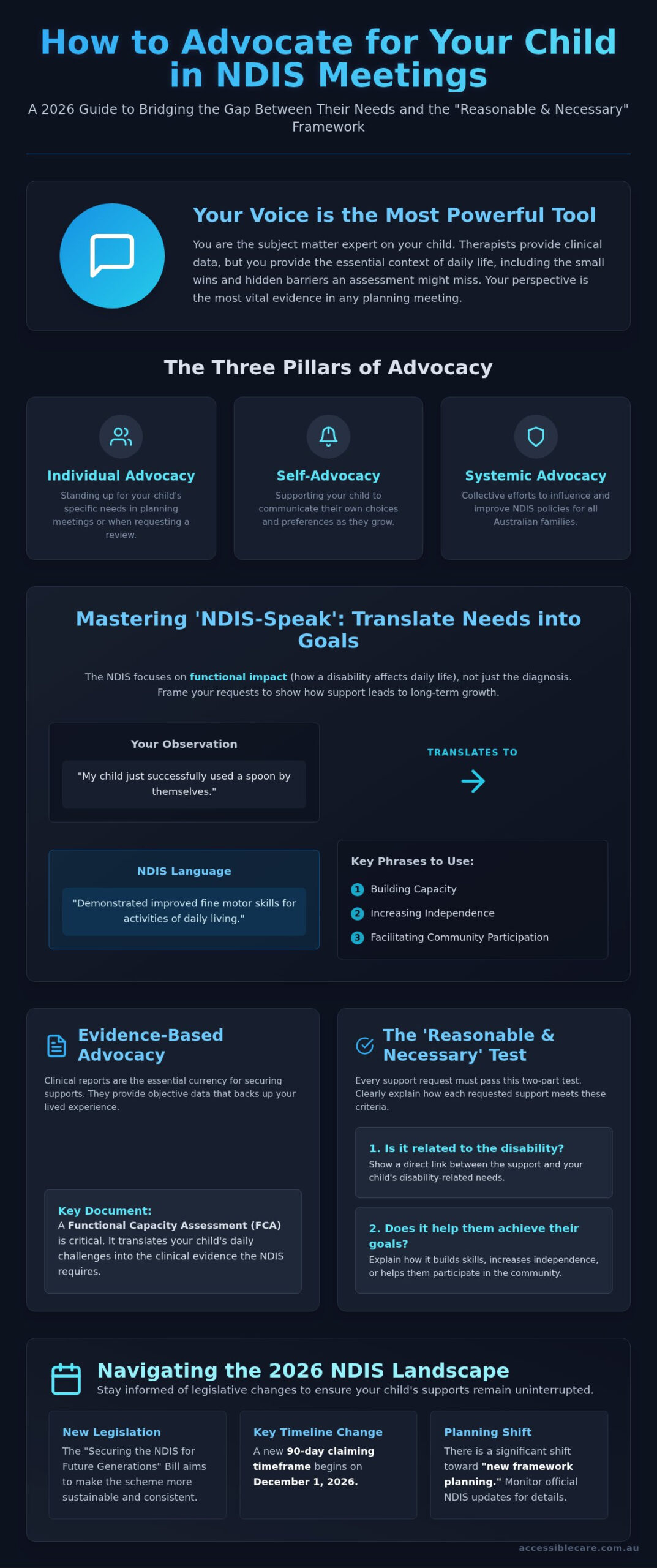
Advocacy is often misunderstood as a combative process. In reality, it’s a bridge. It is the gentle yet firm act of ensuring your child’s unique needs, challenges, and dreams are accurately represented to those who make funding decisions. When you learn how to advocate for your child in ndis, you aren’t just asking for a budget. You’re building a case for their autonomy and long-term wellbeing. Your voice ensures that the person behind the paperwork is seen as a human being with potential, not just a list of deficits.
Advocacy takes several forms, and understanding which one you’re using helps clarify your goal:
- Individual advocacy: This is you standing up for your child’s specific needs in a planning meeting or when requesting a review.
- Self-advocacy: This involves supporting your child to communicate their own choices and preferences as they grow.
- Systemic advocacy: This is the collective effort to influence the National Disability Insurance Scheme (NDIS) to improve policies for all Australian families.
You are the subject matter expert on your child. While therapists provide clinical data, you provide the context of daily life. You see the small wins and the hidden barriers that a thirty-minute assessment might miss. Every request you make should be framed through the “reasonable and necessary” lens. This means showing how a support is directly related to your child’s disability and how it helps them participate in the community or build essential skills. Our teams in Melbourne and Adelaide often see how powerful a parent’s voice can be when it’s backed by this deep, personal knowledge.
The Heart of Advocacy: Autonomy and Self-Determination
Effective advocacy focuses on where your child is going, not just where they are now. We move away from listing what they can’t do and start highlighting their future goals. This shift fosters a sense of agency for both you and your child. Instead of simply asking for help, you’re asserting a need for support based on your child’s right to live an ordinary life. It’s about empowering them to have a say in their own care. This transition from passive recipient to active participant is the foundation of self-determination.
Navigating the NDIS Landscape in 2026
The rules changed significantly on August 20, 2026, when the “Securing the NDIS for Future Generations” Bill received Royal Assent. These reforms aim to make the scheme more sustainable and consistent. Staying informed is your best defense against confusion. If you’re feeling overwhelmed by the changes, it’s helpful to revisit the basics of what is the NDIS to ground yourself in the scheme’s core principles. Reliable information is key. Use official updates to stay ahead of new requirements, such as the 90-day claiming timeframe that begins on December 1, 2026. Understanding how to advocate for your child in ndis means knowing these timelines so your child’s supports remain uninterrupted.
Mastering ‘NDIS-Speak’: Translating Needs into Goals
Planners and parents often look at the same child but describe them differently. You see a toddler who just successfully used a spoon; a planner sees “improved fine motor skills for activities of daily living.” Mastering this “NDIS-speak” is an essential step in learning how to advocate for your child in ndis. It requires moving past the clinical diagnosis to focus on functional impact. While a diagnosis tells the NDIA what your child has, functional impact tells them how it affects their life.
The agency focuses on the “how” rather than the “what.” A diagnosis of a specific condition is rarely enough on its own to secure funding. You must explain how that condition impacts your child’s ability to perform tasks independently. Does their sensory processing disorder make it difficult to attend a local birthday party? Does their physical disability mean they need help dressing every morning? By focusing on these daily hurdles, you make the need for support undeniable. This aligns your requests with the “reasonable and necessary” criteria discussed earlier.
Use verbs that resonate with the scheme’s objectives. Focus your requests on “building capacity,” “increasing independence,” and “facilitating community participation.” These words signal that the support will lead to long-term growth rather than just maintaining the status quo. Our multidisciplinary team in Melbourne and Adelaide can help you translate these daily challenges into the clinical evidence planners require through our paediatric NDIS support services.
Drafting Effective Goal Statements
Transforming a milestone into a goal is a skill. For example, “I want my child to talk” is a milestone. An NDIS goal might be: “Improving communication skills to facilitate social inclusion and reduce frustration during peer interactions.” This helps the planner link the request to the “Improved Daily Living” or “Social and Community Participation” categories. When Preparing for your NDIS planning meeting, try to group your child’s needs into these broad life domains to ensure every request has a clear purpose.
The Power of the ‘Parent Statement’
Your Carer Statement is often the most emotional part of the application, but it must also be strategic. While it’s natural to want to share your child’s “best-day” wins, advocacy requires you to be honest about the “worst-day scenarios.” If the planner only hears about the progress, they may not understand the level of support required to sustain it. Understanding how to advocate for your child in ndis involves being brave enough to share the full reality of your daily life. Describe the impact on your family unit and the physical and emotional energy required for daily care. Balancing a positive outlook for their future with the reality of their current needs creates a compelling case for support.
Evidence-Based Advocacy: Using Clinical Reports to Your Advantage
If a parent’s story is the heart of an application, then clinical reports are the backbone. In the world of funding, evidence is the primary currency. Planners are required to follow the NDIS Act, which mandates that all supports must be evidence-based. This is why knowing how to advocate for your child in ndis involves more than just sharing your experiences; it requires presenting a unified front of professional data. When your Speech Pathologist, OT, and Psychologist all highlight the same functional barriers, it creates a powerful, undeniable narrative for the planner.
A Functional Capacity Assessment (FCA) is perhaps the most vital tool in your advocacy toolkit. This comprehensive report, usually completed by an Occupational Therapist, looks at how your child functions across all areas of life. It bridges the gap between a medical diagnosis and the practical support needed for daily tasks. Briefing your therapists before they write these reports is essential. Ask them to focus on how their specific therapy helps your child reach the goals you’ve set, ensuring every recommendation is backed by clinical observation.
What Makes a ‘Strong’ NDIS Report?
A “good” report isn’t just a list of what your child did in therapy. It must be a strategic document. Strong reports include clear, unambiguous recommendations for specific hours of therapy. If a report simply says “more therapy is needed,” a planner might only allocate the bare minimum. Instead, ensure your speech pathology reports specifically advocate for tools like AAC systems or social skills groups if those are your child’s goals.
Another critical element is the mention of “functional decline.” Therapists should explain what’ll happen if the support isn’t provided. Will your child lose the skills they’ve worked so hard to gain? Highlighting this risk helps the NDIA see that the funding isn’t just an “extra” but a necessity for maintaining your child’s current level of independence. This proactive framing is a key part of how to advocate for your child in ndis successfully.
Organizing Your Evidence Folder
Managing reports from multiple specialists can feel like a full-time job. We recommend creating an “Advocacy Toolkit,” either as a physical binder or a secure digital folder. This makes it easy to share the right document the moment a planner asks for it. Timing is everything. Request your updated reports at least eight to ten weeks before your plan’s renewal date. This gives your therapists enough time to write a high-quality document and allows you to review it for any gaps. If you notice a specific need isn’t covered, you still have time to ask for an addendum before the meeting.
The Planning Meeting: Strategies for Successful Negotiation
The planning meeting is the moment your preparation transforms into action. It’s the most direct opportunity to apply what you’ve learned about how to advocate for your child in ndis. Start the session with a clear elevator pitch. This is a concise, two-minute summary of your child’s current situation and their primary goal for the year. It sets a focused tone for the entire conversation. If you feel overwhelmed, remember that you don’t have to face this alone. Bringing a trusted partner, a friend, or a professional advocate provides emotional support and ensures important details aren’t missed.
Negotiation often involves disagreements. If a planner says “no” to a specific support, try not to take it personally. Instead, ask for the specific reason. You might say, “Could you help me understand why this request doesn’t meet the reasonable and necessary criteria?” This keeps the conversation professional and focused on the legislation rather than personal opinions. Before the meeting ends, ask to review the draft goals and support categories. Ensuring these are accurate before you sign off prevents administrative headaches later.
Our dedicated team at Accessible Care is here to support families in Melbourne and Adelaide through every step of this journey. If you need clinical evidence to strengthen your case, explore our NDIS support services.
Step-by-Step Meeting Preparation
Look back at your child’s previous plan. Identify exactly which supports helped them reach their milestones and where the gaps were. Divide your new requests into “must-haves” and “nice-to-haves.” This gives you room to negotiate without compromising on essential care. Practicing your Carer Impact statement aloud can also help you deliver it with confidence. When you’ve rehearsed the words, you’re less likely to be thrown off by the pressure of the room.
Managing the Emotional Toll of Planning
Feeling vulnerable during these discussions is completely normal. These meetings require you to discuss your child’s challenges in detail, which can be draining. If you feel yourself getting upset or confused, use the “Take a Breath” technique. Simply say, “I need a moment to process that information before we continue.” A professional planner will respect this need for space. Finally, always schedule a post-meeting debrief. Whether it’s a coffee with a friend or a chat with a therapist, self-care is a vital part of staying strong for your child. Understanding how to advocate for your child in ndis is a marathon, not a sprint.
Ongoing Advocacy: Managing Your Plan and Seeking Reviews
Advocacy doesn’t end when the planning meeting concludes. It’s an ongoing commitment to your child’s growth. Once the plan is active, you transition into a manager of supports. Monitoring how funds are utilized is a practical part of how to advocate for your child in ndis. If funds are sitting idle, it might suggest to a planner that the support isn’t needed. Conversely, if you’re running out of funds too quickly, it’s clear evidence that the current plan is insufficient. Keeping a simple log of therapy sessions and support hours helps you stay on top of these trends.
Building a collaborative relationship with your Local Area Coordinator (LAC) or NDIS Planner is equally important. Think of them as partners in your child’s journey. Instead of a purely transactional approach, try to share regular updates on wins and challenges. This “soft advocacy” builds trust, making it easier to have honest conversations when adjustments are needed. For families requiring high intensity supports, this relationship is vital for ensuring complex care needs are consistently met.
When to Request a Plan Review
Sometimes, despite your best efforts, a plan simply doesn’t meet your child’s needs. You have two main pathways. An Internal Review is for when you believe the original decision was wrong based on the evidence provided. A Change of Circumstances is for when your child’s life has shifted significantly, such as a new diagnosis or a change in family support. Remember, you generally have 90 days from the date of the decision to request an Internal Review. Red flags like a sudden decline in functional skills or safety concerns should trigger an immediate request for a reassessment. Don’t wait for a scheduled review if your child’s wellbeing is at risk.
Partnering with Your Support Team
Your therapists are your strongest allies in plan implementation. They act as secondary advocates by documenting progress and identifying emerging needs. At Accessible Care, our multidisciplinary teams in Melbourne and Adelaide work together to ensure your child’s plan is working as intended. By coordinating Speech Therapy, OT, and Positive Behaviour Support, we provide the comprehensive data needed to defend your child’s funding. Learning how to advocate for your child in ndis is easier when you have a team that listens to your concerns. If you’re feeling lost in the process, reach out to us for professional guidance. We’re here to help you navigate the system with confidence and compassion.
Empowering Your Child’s Journey Toward Independence
Securing the right support for your child is a journey that requires patience, preparation, and a deep understanding of how to advocate for your child in ndis. By mastering the language of functional impact and gathering clinical evidence from trusted specialists, you transform from a concerned parent into a powerful navigator of the system. Your insights as a caregiver are the most valuable evidence a planner can receive. You don’t have to walk this path alone; having a dedicated team by your side ensures your child’s needs are always the priority.
At Accessible Care, we’re proud to be a registered NDIS provider with a heart for families in Melbourne and Adelaide. Our experienced paediatric Occupational Therapists and Speech Pathologists provide the evidence-based reports and compassionate care your child needs to thrive. We believe in a person-centric approach that honors your child’s autonomy while empowering you with the tools for successful advocacy. Partner with Accessible Care for compassionate, expert NDIS support in Melbourne and Adelaide and let’s build a brighter, more inclusive future together. You’re doing an incredible job for your child, and we’re here to support you every step of the way.
Frequently Asked Questions
Can I be my child’s official NDIS advocate?
You are already your child’s most important natural advocate. While the NDIS recognizes you as a “child representative,” you can also engage independent advocacy organizations if you feel overwhelmed. These professionals support you during meetings or with complex appeals. Our team in Melbourne and Adelaide often works alongside parents to provide the clinical evidence needed for these discussions. It’s about ensuring your child’s voice is heard at every stage of the planning process.
What should I do if the NDIS rejects a specific therapy request?
If a request is rejected, your first step is to ask for a written explanation of the decision. This allows you to see which “reasonable and necessary” criteria the NDIA believes weren’t met. You can then gather more specific evidence to address those gaps. If you still disagree, you have 90 days to request an internal review of the decision. This is a formal process where a different staff member looks at your case again.
How do I explain my child’s disability without sounding ‘negative’?
It’s a delicate balance between being positive and being realistic. Instead of focusing on “negatives,” talk about “support needs” and “functional impact.” You’re describing the reality of their daily life to ensure they get the right help. When learning how to advocate for your child in ndis, frame the challenges as barriers to their independence. Showing that a specific support will help them participate in the community keeps the conversation focused on their future growth.
Do I need a lawyer to advocate for my child in the NDIS?
You don’t need a lawyer for standard planning meetings or internal reviews. Advocacy is mostly about clear communication and strong clinical evidence. Most families find that working with their therapists or a professional advocate is sufficient for navigating the scheme. Legal representation is generally only considered if a case goes to the Administrative Appeals Tribunal (AAT). Our focus is on providing the therapeutic data that makes the need for support clear from the start.
What is the difference between a Carer Statement and a therapist report?
These two documents work together to tell the full story. A Carer Statement describes the lived experience of your family and the daily support your child requires. It’s the “heart” of the evidence. A therapist report, like those from our Speech Pathologists or OTs, provides the “clinical backbone.” It uses standardized assessments to prove that the supports you’re requesting are evidence-based. Both are essential for a successful and fair planning outcome.
How often should I update my child’s functional capacity evidence?
It’s best to have fresh evidence every 12 to 24 months or whenever there is a significant change in your child’s life. Regular updates ensure that the funding stays aligned with their current development. If your child is approaching a major transition, such as starting school, an updated Functional Capacity Assessment is vital. This proactive approach is a key part of how to advocate for your child in ndis effectively. It ensures no gaps in their care.
Can a Support Coordinator help me with advocacy?
A Support Coordinator is a wonderful ally who helps you understand and implement your child’s plan. They can help you prepare for meetings and connect you with the right therapists. While they aren’t “legal” advocates, they play a huge role in systemic advocacy by ensuring all your child’s providers are working toward the same goals. They help translate your child’s needs into the language planners understand, making the whole process feel much more manageable.
What happens if I run out of funding before my child’s plan ends?
If your child’s funding is running low, contact your LAC or Planner immediately. You may need to submit a “Change of Circumstances” form if the original plan didn’t provide enough support for your child’s needs. This is why monitoring your fund utilization is so important. We can help by providing a letter of support that explains why the funding was used faster than expected and what clinical risks exist if the therapy stops.

