


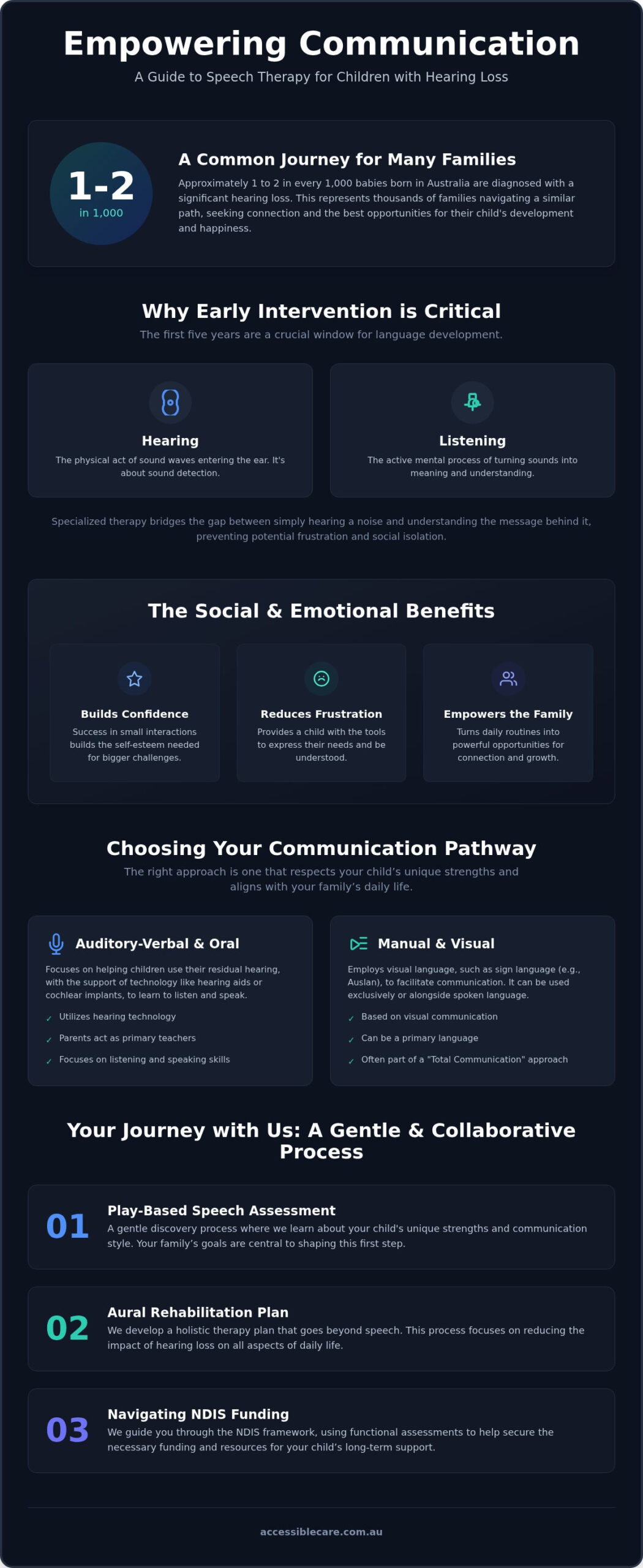
Did you know that approximately 1 to 2 in every 1,000 babies born in Australia are diagnosed with a significant hearing loss? It’s a statistic that represents thousands of families who are likely feeling the same mix of love and uncertainty that you’re experiencing right now. You might worry about your child feeling socially isolated or struggle to decide whether signing or speaking is the right path forward. Managing the complexities of NDIS funding can also feel like an exhausting hurdle when you just want to focus on your child’s growth and happiness.
We believe every child deserves the chance to be heard and understood. This article will show you how specialized speech therapy for hearing impaired children can empower your little one to communicate confidently and thrive. You’ll discover a clear roadmap for their development and gain the confidence to choose a therapy approach that respects your family’s values and your child’s autonomy. We’ll also walk you through the practical steps to access NDIS-funded support, ensuring you have the resources needed to help your child reach their full potential. Together, we can find the right tools to bridge the gap between silence and connection.
Key Takeaways
- Understand how specialized speech therapy for hearing impaired children serves as a vital bridge to social connection and emotional growth.
- Explore various communication pathways, such as oral and manual methods, to find the approach that best fits your child’s unique personality and family lifestyle.
- Learn what to expect during a play-based speech assessment and how your family’s goals shape this gentle discovery process.
- Navigate the NDIS framework with confidence by understanding how functional assessments help secure the necessary funding for your child’s support.
- Discover the benefits of a nurturing, person-centric partnership that prioritizes your child’s autonomy and long-term success in Melbourne or Adelaide.
The Vital Role of Speech Therapy for Hearing Impaired Children
Hearing a diagnosis of hearing loss for your child can feel overwhelming. It’s often a time of deep reflection and, sometimes, worry about the future. However, speech therapy for hearing impaired children is about much more than just managing sound levels or practicing pronunciation. It’s a compassionate pathway toward connection. It’s about ensuring your child doesn’t just “hear” but truly engages with the world. By focusing on communication autonomy, we help your child find their unique voice, whether that’s through spoken words, signs, or a combination of both.
This journey is part of a broader process known as Aural rehabilitation. This process focuses on reducing the impact of hearing loss on daily life. We view therapy as a partnership where your child’s self-determination is at the center of every session. Our goal is to provide comfort and peace of mind as you navigate these early steps together.
How Hearing Loss Impacts Early Communication
The first five years of life are often called the ‘critical window’ for language development. During this time, the brain is incredibly receptive to new patterns and sounds. Hearing loss can make it difficult for a child to access these patterns naturally. Effective speech therapy for hearing impaired children helps bridge the gap between simple sound detection and meaningful conversation. It’s helpful to understand the difference between hearing and listening. Hearing is the physical act of sound waves entering the ear; listening is the active mental process of turning those sounds into meaning. Without support, a child might hear a noise but struggle to understand the message behind it. Additionally, some children may experience Auditory Processing Disorder (APD), which is a condition where the brain and ears don’t fully coordinate, making it hard to interpret what is heard.
The Emotional and Social Benefits of Early Intervention
When a child struggles to be understood, it often leads to frustration and withdrawal. Early intervention through speech pathology provides the tools to bridge this gap. By starting early, we can help prevent the social isolation that sometimes occurs in school settings.
- Building Confidence: Success in small interactions builds the self-esteem needed for bigger challenges.
- Reducing Frustration: Giving a child a way to express their needs reduces the emotional strain that comes from being misunderstood.
- Empowering the Family: We help you become your child’s primary communication partner, turning daily routines into opportunities for connection.
You are not alone in this. We are here to listen to your goals and support your child’s right to a full, expressive life. By focusing on customized care, we ensure the therapy process feels like a supportive partnership rather than a clinical transaction.
Core Approaches in Pediatric Speech Pathology for Hearing Loss
Choosing a communication pathway for your child is a deeply personal decision. It can often feel like a high-pressure choice, but it’s important to remember that there is no single “best” method. The right approach is the one that respects your child’s unique strengths and aligns with your family’s daily life. Effective speech therapy for hearing impaired children is flexible; it evolves as your child grows and discovers their own preferences. Whether you choose a path focused on spoken language, visual signs, or a combination of both, our role is to provide the professional guidance and emotional support you need to feel confident in that choice.
Auditory-Verbal and Oral Communication
Auditory-Verbal Therapy (AVT) is an evidence-based approach that focuses on helping children use their residual hearing. By utilizing technology like hearing aids or cochlear implants, children learn to listen and speak. In these sessions, the Speech Language Pathologist (SLP) acts as a coach for the parents. We teach you specific strategies to use at home, turning everyday moments into powerful listening opportunities.
It’s helpful to address a common misconception: technology alone is not a “quick fix.” While a cochlear implant provides access to sound, the brain must learn how to process that information. Therapy adapts significantly depending on the device. For example, children with hearing aids may focus on clarifying amplified sounds, while those with cochlear implants often require more intensive support to interpret the new electrical signals their brain is receiving. Consistent, compassionate therapy ensures these devices become effective tools for connection.
Visual Supports and Alternative Communication (AAC)
For many children, visual tools provide a vital bridge to language and understanding. Augmentative or Alternative Communication (AAC) can include anything from simple picture boards to sophisticated speech-generating tablets. These tools don’t replace speech; they support it. Using Auslan (Australian Sign Language) or Key Word Sign can actually boost cognitive development by giving a child a way to express complex thoughts before their spoken language is fully established.
Many families find success with a “Total Communication” approach. This philosophy encourages using every tool available-signs, gestures, speech, and technology-to ensure the child is understood. This method prioritizes the child’s autonomy and reduces the frustration of being unable to communicate. If you’re feeling uncertain about which method to choose, our team can help you explore these options in a supportive and non-judgmental environment tailored to your family’s needs.
What to Expect During a Pediatric Speech Assessment
Walking into a clinic for the first time can feel daunting for both you and your little one. We want you to know that an assessment isn’t a high-stakes “test” where your child must perform perfectly. Instead, think of it as a gentle, play-based discovery process. Our clinicians use toys, games, and engaging activities to see how your child interacts and communicates in a natural environment. This relaxed setting helps us understand their true abilities while ensuring they feel safe and supported throughout the session.
The heart of this process is the initial interview with you. You are the expert on your child’s history, personality, and daily challenges. We’ll spend time listening to your journey so far and discussing the specific communication goals you have for your family. This partnership ensures that speech therapy for hearing impaired children is tailored to your real-world needs rather than just clinical milestones.
While we prioritize play, we also use standardized tools to gather clear data. These assessments help us measure receptive language (how your child understands what others say) and expressive language (how they use signs, sounds, or words to share their thoughts). A holistic assessment looks at the whole child; we look for their unique interests and strengths, like a love for building blocks or a talent for storytelling, to build a therapy plan that truly resonates with them.
Setting Family-Centered Goals
Success looks different for every family. We work closely with you to identify functional goals that will make a tangible difference in your daily life. For some, success might be your child confidently ordering their own juice at a local cafe. For others, it might be the ability to play cooperatively with siblings or follow simple instructions at school. We review these goals regularly to celebrate every small victory and pivot our strategies as your child’s needs evolve.
The Multidisciplinary Advantage: Speech and OT
Communication doesn’t happen in a vacuum. It’s often influenced by how a child processes the world around them. This is why paediatric occupational therapy is frequently recommended alongside speech support. Children with hearing impairment often have unique sensory processing needs; they might be extra sensitive to certain textures or struggle with balance and coordination. By having a multidisciplinary team, we gain a complete picture of your child’s development, ensuring that speech therapy for hearing impaired children is supported by a strong foundation of physical and sensory well-being.
Navigating NDIS Funding for Hearing Impairment Support
Accessing the right support shouldn’t feel like a battle. For many families, hearing loss is recognized by the NDIS as a condition that meets eligibility requirements under ‘List A’ or ‘List B’. This means the system acknowledges the permanent nature of the impairment and the need for early intervention. However, simply having a diagnosis isn’t always enough to secure the specific budget you need for speech therapy for hearing impaired children. The focus of the NDIS is on how a condition impacts a person’s life, not just the medical label itself.
This is where a Functional Capacity Assessment becomes essential. This assessment doesn’t just look at the clinical level of hearing loss; it looks at how that loss affects your child’s ability to communicate, learn, and socialize in their everyday world. By documenting these real-world impacts, we can help you build a compelling case for the funding your child deserves. It’s about showing the NDIA exactly what your child needs to thrive at home and in the community.
Preparing for Your NDIS Planning Meeting
Start gathering reports from your audiologist, speech pathologist, and occupational therapist as early as possible. These documents should focus on “reasonable and necessary” supports that foster your child’s independence and community participation. The NDIA is responsible for approving individualized therapy budgets for 2026 based on the evidence provided in these reports. It’s helpful to remember that children under 9 typically enter through the early childhood pathway, which focuses on early intervention to reduce the need for long-term support. Our team can help you identify the best way to present this evidence to ensure your child’s voice is heard.
Managing Your Child’s NDIS Plan
Once your plan is approved, you have choices in how to manage the funds: self-managed, plan-managed, or NDIA-managed. Each option offers different levels of control and administrative support. Choosing a registered NDIS provider in Melbourne or Adelaide ensures your child receives care that meets high quality and safety standards. One of the greatest benefits of a well-structured plan is flexibility. You can often use your budget across a range of services, including speech, OT, and community nursing, to provide a holistic support system. This multidisciplinary synergy ensures that physical, sensory, and communication goals are all working together. If you’re ready to start this journey, you can connect with our compassionate team today to discuss how we can support your family’s unique goals.
Accessible Care in Melbourne and Adelaide
Finding a supportive partner for your family’s journey shouldn’t be another source of stress. At Accessible Care, we serve as a nurturing bridge for families across Victoria and South Australia. We understand that your child’s needs are unique, and we honor your role as their most important advocate. Our local teams in Melbourne and Adelaide are dedicated to providing a space where you feel heard, respected, and empowered. We believe that effective speech therapy for hearing impaired children begins with a foundation of attentive listening; we prioritize your perspective to ensure every therapy plan reflects your family’s heart and your child’s personal agency.
Our approach is centered on the principles of autonomy and self-determination. We don’t just provide a service; we build a partnership that celebrates your child’s growth. Whether we are meeting in one of our local clinics or providing support through community nursing, our goal is to provide comfort and peace of mind. We work alongside you to ensure your child has the tools to navigate their world with confidence and joy.
Our Speech Pathology Services
Our team consists of experienced Speech Language Pathologists (SLPs) who specialize in pediatric communication and neurological support. We know that hearing loss affects every child differently, so we avoid “one-size-fits-all” solutions. Our holistic approach integrates your family’s specific goals into every session, ensuring therapy feels relevant and meaningful. Because we offer both speech and occupational therapy, we can coordinate care seamlessly to support your child’s sensory and communication needs simultaneously. We focus on building consistent, reliable care that fosters a long-term bond with your child, creating a safe environment for them to explore their unique voice.
Getting Started with Accessible Care
We’ve designed our intake process to be simple and low-pressure. We know you already have a lot on your plate, so we strive to make the first steps as easy as possible. When you reach out, our first priority is to listen to your story and understand your child’s strengths. From there, we help you navigate the often-confusing NDIS paperwork and funding requirements. Our team is well-versed in the Australian NDIS framework, and we can guide you through the evidence needed for planning meetings so you can focus on what truly matters: your child’s development.
You don’t have to navigate this path alone. If you’re looking for a team that values connection as much as clinical expertise, we’re here to help. Contact our compassionate team in Melbourne or Adelaide today to book an initial consultation and discover how we can support your child’s communication journey.
Empowering Your Child’s Communication Journey
Your child’s ability to connect with the world is a journey worth every step. We have explored how individualized speech therapy for hearing impaired children provides more than just sound; it offers a vital pathway to autonomy and self-expression. From choosing the right communication method to navigating NDIS funding with a functional capacity assessment, you now have a roadmap to move forward with confidence. You don’t have to walk this path alone.
As a Registered NDIS Provider, Accessible Care is here to support you in Melbourne and Adelaide. Our experienced SLPs and holistic multidisciplinary care teams prioritize listening to your family’s unique goals above all else. We believe in your child’s potential and are ready to help them thrive within a supportive, nurturing partnership. We are dedicated to providing the peace of mind you deserve while helping your little one reach their full potential.
Book a Compassionate Speech Therapy Consultation today and let’s work together to help your child find their voice. You are doing an incredible job for your family, and the right support is just a conversation away.
Frequently Asked Questions
Can speech therapy help if my child already has a cochlear implant?
Yes, speech therapy is essential after receiving a cochlear implant. While the device provides access to sound, your child’s brain must learn to interpret these new electrical signals. Our clinicians focus on auditory habilitation, helping your child develop listening skills and spoken language. We work closely with you to turn daily routines into opportunities for sound discovery. This ensures the technology becomes a functional tool for meaningful connection and communication autonomy.
How often should a child with hearing impairment attend speech therapy?
The frequency of sessions depends on your child’s specific needs, age, and communication goals. Many families find that weekly or fortnightly sessions provide the right balance of professional support and home practice. Consistency is key during the critical window of early development. We regularly review progress to ensure the schedule remains effective. Our goal is to empower you with strategies so that therapy continues naturally throughout your child’s day to day life.
Does NDIS cover the full cost of speech pathology for hearing loss?
The NDIS usually covers the cost of speech pathology if it’s deemed reasonable and necessary for your child’s goals. Funding is typically allocated under the Capacity Building category of your plan. While the NDIS is a primary source of support, some families also access Medicare rebates like the Chronic Disease Management plan for up to five sessions. We help you understand these options to ensure your child receives consistent speech therapy for hearing impaired children without unnecessary financial stress.
What is the difference between a speech pathologist and a speech therapist?
In Australia, these terms are often used interchangeably, but Speech Pathologist is the formal professional title. Practitioners must be university trained and often belong to Speech Pathology Australia. The term pathology reflects their expertise in diagnosing and treating communication and swallowing disorders. Regardless of the label, our focus remains on providing compassionate, evidence based care that respects your child’s unique voice and supports their journey toward confident communication and social connection.
Can my child learn to speak if they use sign language as their primary communication?
Absolutely. Using sign language like Auslan or Key Word Sign doesn’t prevent a child from learning to speak. In fact, visual supports often reduce frustration and provide a bridge to spoken language. This Total Communication approach ensures your child has a way to express complex thoughts while their speech develops. We prioritize your child’s autonomy, helping them use every tool available to connect with others and share their perspective with the world.
How do I know if my child needs an Occupational Therapist as well as a Speech Pathologist?
You might consider occupational therapy if your child struggles with sensory processing, balance, or fine motor skills. Many children with hearing loss experience the world differently and may feel overwhelmed by certain textures or environments. An OT helps with self regulation and daily living skills, creating a strong foundation for communication. At Accessible Care, our multidisciplinary team provides a holistic assessment to see if a combined approach would best support your child’s overall development.
What should I bring to my child’s first speech therapy assessment?
Please bring any recent reports from your audiologist, pediatrician, or previous therapists. It’s also helpful to have your child’s most recent hearing test results and their NDIS plan if they have one. Think about your family’s main goals and any specific challenges you face at home. If your child has a favorite toy or book, feel free to bring it along. This helps us create a gentle, play based environment where they feel comfortable.
Is speech therapy effective for older children with hearing loss, or is it only for toddlers?
Speech therapy is highly effective for older children and teenagers as well. While early intervention is vital, older children often benefit from support with social communication, academic language, and self advocacy. As they grow, their goals might shift toward navigating high school or building deeper friendships. We adapt our speech therapy for hearing impaired children to be age appropriate, ensuring it remains engaging and respects their increasing independence and evolving personal interests.

