


Imagine waking up every morning with the heavy weight of worry about a wound that just won’t heal. You might be constantly checking for signs of infection or wondering if you’ll end up back in the hospital. It’s a stressful cycle that can make you feel like you’ve lost control over your own life. Accessing complex wound management ndis funding shouldn’t be another source of stress. You deserve care that respects your autonomy while providing the clinical expertise needed to keep you safe and comfortable in your own home.
It’s frustrating when you aren’t sure if the NDIS or Medicare is responsible for your dressings, or when finding a reliable community nurse feels impossible. We understand these challenges and believe that clinical care should be a partnership, not a transaction. This guide will show you how to access professional, NDIS-funded support that focuses on your unique health goals. We’ll explain how to navigate the system in Melbourne and Adelaide, the benefits of in-home nursing, and the steps to achieving stable wound healing so you can get back to living your life on your own terms.
Key Takeaways
- Learn to distinguish between Medicare’s acute medical care and NDIS disability-related health supports to ensure you access the right clinical funding.
- Discover how to secure complex wound management ndis funding within your Core Supports or Capacity Building budgets to maintain your health at home.
- Understand the vital role of professional nursing in managing high-risk pressure injuries and leg ulcers through specialised clinical techniques.
- Find out how a holistic assessment and a personalised Wound Management Plan can reduce pain while supporting your long-term independence.
- Explore the benefits of receiving compassionate, expert community nursing in the comfort of your own home in Melbourne or Adelaide.
Understanding Complex Wound Management in the NDIS Context
Finding your way through the clinical side of the NDIS can feel overwhelming, but understanding the basics helps you take control of your health journey. At its heart, complex wound management is about more than just changing a bandage. It’s a specialised form of clinical care designed for wounds that are slow to heal or pose a significant risk to your overall wellbeing. By accessing the right support, you can prevent secondary complications and stay focused on your personal goals.
What Makes a Wound ‘Complex’?
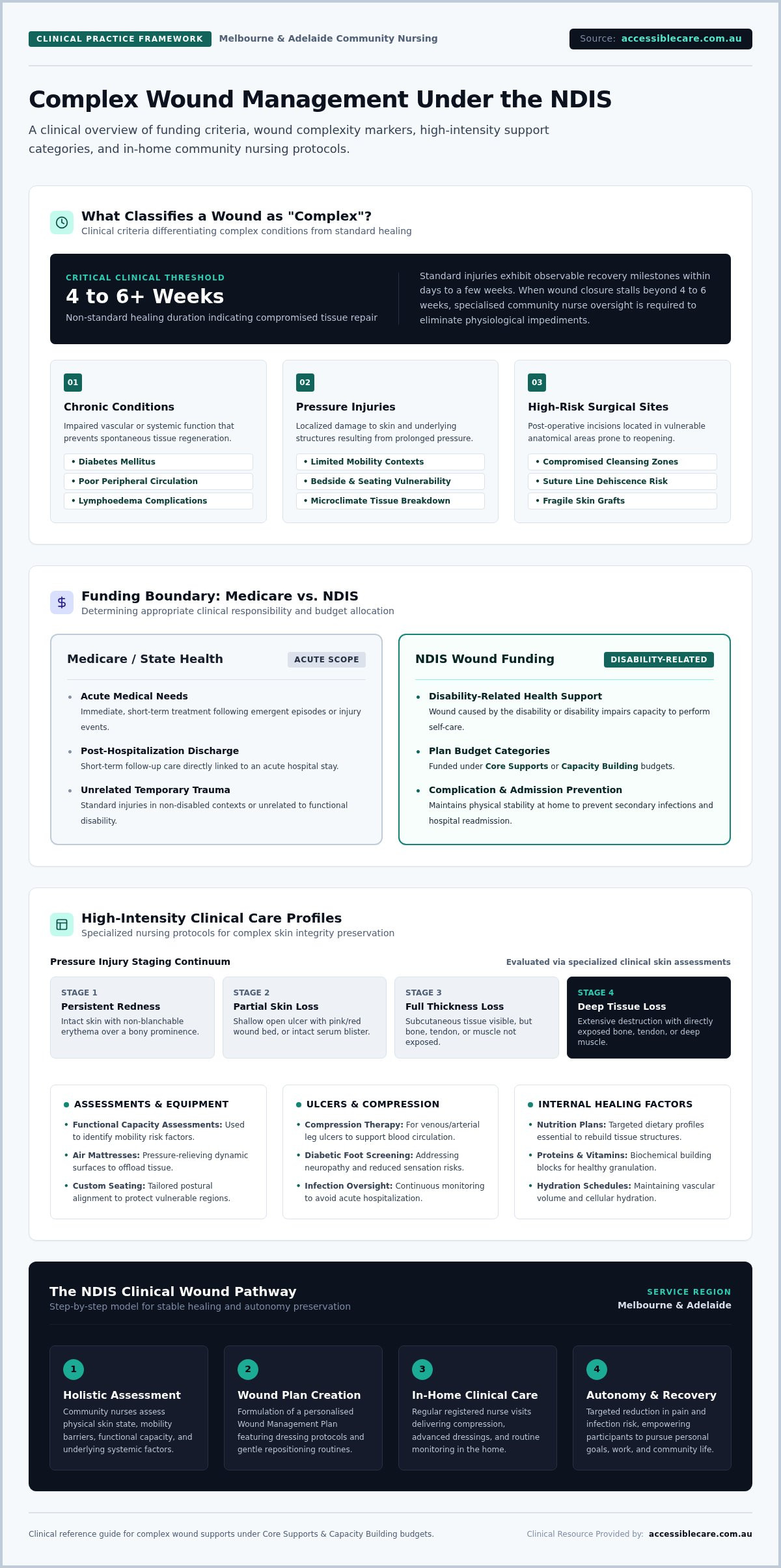
A wound is generally classified as complex when it doesn’t follow the standard wound healing process. For most people, a typical injury shows clear signs of recovery within a few weeks. However, a complex wound might persist for longer than four to six weeks. These situations often require the expert eye of a community nurse to manage factors that stall healing. Common examples include:
- Chronic conditions: Wounds influenced by diabetes, poor circulation, or lymphoedema.
- Pressure injuries: Often referred to as bedsores, these are common for individuals with limited mobility.
- High-risk surgical sites: Wounds in locations that are difficult to keep clean or are prone to opening.
The NDIS vs. Health System: Who Pays for What?
One of the most frequent questions we hear is whether Medicare or the NDIS is responsible for clinical care. The answer depends on why the care is needed. Medicare and the state health systems handle acute medical needs. This includes emergency treatment or immediate follow-up care after a hospital stay. If you have a temporary injury unrelated to your disability, the health system usually takes the lead.
However, complex wound management ndis funding applies when the need is a “disability-related health support.” If your disability is the reason you have the wound, or if it makes managing the wound yourself impossible, the NDIS is there to help. This funding ensures you receive professional nursing care in your own home, which is essential for maintaining your autonomy. It bridges the gap between hospital care and daily living, providing a safety net that keeps you out of the clinical environment and active in your community.
The role of the NDIS is to fund nursing care that prevents secondary complications like severe infections or hospitalisations. When your clinical needs are met consistently, you have the physical stability required to pursue your broader goals. Whether that’s returning to work, engaging in social activities, or simply enjoying your home life, proper wound care is a foundation for independence.
Types of Wounds Requiring High Intensity NDIS Support
Certain wounds need a higher level of clinical oversight. In the NDIS framework, these are often part of high intensity supports. This classification ensures that individuals with high-risk wounds receive care from qualified professionals who understand the complexities of skin integrity. When you’re dealing with complex wound management ndis plans, having a nurse who can identify subtle changes in your skin can make all the difference in your recovery journey.
Pressure Injury Management and Prevention
Pressure injuries occur when skin and underlying tissue are damaged by prolonged pressure. It’s vital to catch these early. Nurses use a staging system to assess the depth of the damage. For example, a Stage 1 injury might just be persistent redness, while Stage 4 involves deep tissue loss. To prevent these from worsening, Functional Capacity Assessments are often used to recommend specialised pressure-relieving equipment, like air mattresses or custom seating. Nurses also help create gentle repositioning schedules that fit into your daily routine, protecting your skin while respecting your comfort and dignity.
Chronic Ulcers and Diabetic Wound Care
Leg ulcers, whether venous or arterial, often require long-term care and compression therapy to manage swelling and promote blood flow. These wounds can be painful and slow to heal. Similarly, diabetic foot ulcers carry a high risk of infection. Because diabetes can affect sensation, you might not even feel a small injury until it becomes serious. Regular clinical monitoring is the best way to prevent hospitalisation and keep your health stable. Our team focuses on managing these risks with a gentle, professional touch that prioritises your peace of mind.
Healing also comes from the inside out. A good care plan includes a focus on nutrition and hydration, as your body needs specific vitamins and proteins to rebuild tissue. If you’re managing complex surgical wounds or skin grafts, specialised dressing techniques are used to ensure the site remains sterile and undisturbed. Nurses carefully manage exudate, the fluid that drains from a wound, to protect the surrounding healthy skin from breakdown. If you’re feeling unsure about your current care plan, our community nursing team is here to help you find a path toward better healing.
Funding Complex Wound Care in Your NDIS Plan
Securing the right funding for your clinical needs is a vital step toward reclaiming your independence. Within the NDIS framework, complex wound management ndis supports are typically funded under “Core Supports.” Specifically, you’ll find them in the “Assistance with Daily Life” category, often listed as “High Intensity Daily Personal Activities.” This budget allows a registered nurse to visit you in the comfort of your home in Melbourne or Adelaide, ensuring your care fits into your schedule rather than a hospital’s timetable.
Your Support Coordinator plays a central role here. They help you understand how your budget is structured and can assist in finding a nursing team that matches your values. While Core Supports pay for the actual nursing hours, you might also see “Capacity Building” funds used for specialised assessments. This multidisciplinary approach ensures that every part of your wellbeing is considered, from the clinical dressing to the equipment that supports your mobility.
Required Clinical Evidence for Funding
The NDIS requires clear evidence to include clinical nursing in your plan. To prepare for a plan review, you’ll need a formal Wound Management Plan (WMP) developed by a Registered Nurse or your GP. This document acts as a roadmap for your care. It should clearly state the frequency of dressing changes and the specific clinical risks you face, such as a high risk of infection or previous hospitalisations.
When applying for complex wound management ndis funding, it’s powerful to link your clinical needs to your personal goals. For example, instead of just listing “nursing care,” your plan could state that you need this support to remain healthy enough to attend your weekly community group or to live independently at home. This person-centric approach helps the NDIS see that wound care isn’t just a medical task; it’s a tool for living the life you choose.
High Intensity Support Skill Descriptors
The NDIS Quality and Safeguards Commission sets high standards for complex care, known as Skill Descriptors. These rules are in place to protect you. They ensure that whoever provides your care has the specific expertise required for high-risk situations. Because complex wounds carry a higher chance of complications, a Registered Nurse (RN) is usually required to perform the initial assessment and oversee the ongoing management.
An RN doesn’t just change a bandage. They monitor the healing process, watch for subtle signs of deterioration, and adjust your treatment as your skin improves. This level of professional oversight gives you and your family peace of mind. You can find more detail on how these standards apply to your care in our NDIS High Intensity Supports Guide. By choosing a provider that adheres to these descriptors, you’re choosing a partner committed to your safety and autonomy.
What to Expect from a Clinical Community Nursing Team
Inviting a clinical team into your private space is an act of trust. We honour that trust by ensuring our community nursing services feel like a supportive partnership rather than a clinical intrusion. When you begin your journey with complex wound management ndis support, the focus is always on your comfort, your goals, and your dignity. By looking at the whole person, we ensure your clinical care supports your lifestyle, not the other way around.
The In-Home Assessment Process
Our relationship begins with a holistic assessment. This isn’t just about looking at a wound; it’s about looking at you. We review your medical history and listen to your NDIS goals to understand how your health impacts your daily life. A nurse will also look at your home environment in Melbourne or Adelaide to identify factors that might help or hinder your recovery. For example, we might look at hygiene or how easily you can move around to reach necessary supplies.
Because we believe in a multidisciplinary approach, our nurses often collaborate with other therapists. An Occupational Therapist might suggest equipment to reduce pressure, while a Speech Pathologist could help with nutrition if swallowing is a concern. This team effort ensures every part of your Wound Management Plan (WMP) is working toward your independence and long-term health.
Ongoing Care and Monitoring
Once your plan is in place, regular home visits become a steady part of your routine. These visits are gentle, professional, and respectful of your time. During a typical visit, your nurse will clean the area, apply fresh dressings, and carefully monitor for any signs of progress or concern. They use their clinical expertise to adjust the treatment as the wound moves through different healing stages, ensuring the most effective products are always being used.
Education is a core part of what we do. We don’t just provide care; we empower you and your family with the knowledge to manage skin health between visits. We’ll teach you what to watch for, such as:
- Increased redness or warmth around the site.
- New or unusual pain and discomfort during movement.
- Changes in the colour or odour of wound fluid.
- A general feeling of being unwell, tired, or having a fever.
Catching these signs early can prevent a trip to the hospital. Our goal is to provide clinical excellence that keeps you safe and stable at home. If you’re ready to experience a more person-centric approach to clinical support, you can enquire about our community nursing services to see how we can help you thrive.
Compassionate Complex Care with Accessible Care
At Accessible Care, we believe that your health journey should be guided by your own choices, values, and aspirations. Our approach to complex wound management ndis services is rooted in a deep respect for your autonomy. We don’t just see a clinical task to be completed; we see a person who deserves to live with dignity, comfort, and peace of mind. By prioritising your perspective through attentive listening, we transform clinical support into a true partnership that helps you stay in the home you love. You’re the director of your own life, and we’re here to provide the expert support you need to thrive.
Healing is rarely a solo effort. It requires a holistic view of your wellbeing. That’s why we seamlessly integrate our nursing expertise with other essential services, such as Occupational Therapy. While our nurses focus on the clinical healing of the wound, our OTs work alongside them to assess your environment and suggest equipment or modifications that prevent further injury. This multidisciplinary approach ensures that every aspect of your life, from the way you sit to the way you move, is actively supporting your recovery. We listen first and treat second, ensuring our clinical solutions fit your unique lifestyle and personal goals.
Our Nursing Expertise in Melbourne and Adelaide
Our team consists of highly qualified Registered Nurses (RNs) who are deeply experienced in NDIS high-intensity protocols. Based locally in Melbourne and Adelaide, our staff understand the specific needs of participants in our community and are committed to delivering the highest standards of care. We focus on building long-term, trusting relationships because we know that clinical care is most effective when you feel safe, heard, and understood. You aren’t just a patient; you’re a valued individual who deserves a caregiver who is both technically expert and genuinely compassionate. This combination of warmth and professionalism is what defines our service.
How to Get Started with Accessible Care
Beginning your care with us is designed to be a simple and gentle process. Whether you’re referring yourself or a loved one, we guide you through every step with clarity and empathy. We’ll work closely with you and your Support Coordinator to ensure your nursing care is correctly structured and fully funded through your NDIS plan. This takes the confusion out of the paperwork and ensures you receive the consistent support you need. Our goal is to make accessing high-quality clinical care as easy as possible so you can focus on what matters most: your health, your happiness, and your independence.
If you’re ready for a care partner who values your voice and respects your agency, contact Accessible Care for a compassionate consultation today. We’re here to listen, to understand, and to support you in achieving your health goals at home.
Reclaiming Your Independence at Home
Managing a non-healing wound is a journey that requires both clinical expertise and emotional support. You now understand how to navigate the complex wound management ndis framework, from identifying high-intensity needs to securing the right clinical evidence for your plan. By choosing professional in-home nursing, you’re not just treating a physical condition; you’re protecting your autonomy and preventing unnecessary hospital stays.
As a Registered NDIS Provider, Accessible Care offers an integrated multidisciplinary approach that brings together experienced Registered Nurses and therapists to support your unique goals. We’re here to listen to your concerns and provide the gentle, professional care you deserve in the comfort of your home. Ready to take the first step toward stable healing?
Book a Compassionate Consultation with our Nursing Team today to see how we can support your health and independence. You don’t have to face this challenge alone. We’re ready to walk this path with you, ensuring you feel safe, heard, and empowered every step of the way.
Frequently Asked Questions
Can the NDIS pay for my wound dressings and bandages?
Yes, the NDIS can fund the cost of dressings and bandages if they’re directly related to your disability health needs. These are usually funded under your Core Supports budget. It’s important to have a Registered Nurse document the specific type and quantity of consumables you need. This evidence helps ensure your plan includes enough funding to cover these ongoing costs so you aren’t left out of pocket for essential clinical supplies.
Do I need a Registered Nurse for NDIS complex wound management?
Yes, a Registered Nurse (RN) is typically required to oversee complex wound management ndis supports. While a support worker might assist with basic tasks, only an RN has the clinical training to assess the wound, monitor for infection, and adjust the Wound Management Plan. Their expertise is vital for high-risk situations, ensuring your care meets the NDIS Quality and Safeguards Commission standards while prioritising your safety and long-term healing at home.
Is complex wound care considered a High Intensity Support?
Yes, complex wound care is classified as a High Intensity Daily Personal Activity under the NDIS. This means the support requires specialised clinical skills and oversight due to the high risk of complications. Because these wounds often involve deep tissue damage or underlying health conditions, the NDIS mandates that providers follow specific High Intensity Support Skill Descriptors. This ensures you receive a high standard of clinical care from qualified nursing professionals who understand your needs.
How do I add nursing care to my NDIS plan during a review?
To add nursing care, you should provide clinical evidence from your GP or a Registered Nurse during your plan review. This documentation must explain why the care is a “disability-related health support” rather than an acute medical need. Be sure to link the nursing support to your personal goals, such as maintaining your health to participate in community activities. Your Support Coordinator can help you present this evidence to the NDIA for approval.
Can Accessible Care provide nursing in both Melbourne and Adelaide?
Yes, Accessible Care offers expert community nursing services across both Melbourne and Adelaide. Our local teams are experienced in delivering high-intensity clinical care in the comfort of your own home. We focus on building trusting relationships with participants and their families, ensuring that your clinical needs are met with a compassionate and professional touch. We also offer integrated supports like Occupational Therapy to help you maintain your independence in these specific regions.
What is the difference between complex and simple wound care in the NDIS?
Simple wound care generally involves minor cuts or abrasions that heal quickly and don’t require clinical oversight. In contrast, complex wound management ndis care involves wounds that are chronic, high-risk, or slow to heal, such as Stage 3 or 4 pressure injuries. These require a formal Wound Management Plan and regular monitoring by a Registered Nurse. This distinction is important because complex care requires higher funding levels and specific clinical expertise to prevent serious health complications.
Does NDIS cover wound care for people living in aged care facilities?
Generally, the NDIS doesn’t cover clinical wound care for participants living in residential aged care facilities. In these settings, the facility is responsible for providing all nursing and medical care as part of their service agreement. However, if you’re a younger person in residential aged care, you might have specific disability-related health supports funded. It’s best to check your individual plan or speak with your Support Coordinator to clarify your specific funding boundaries and care arrangements.
How often will a nurse visit for complex wound management?
The frequency of nursing visits depends entirely on your specific clinical needs and the Wound Management Plan developed by your Registered Nurse. Some participants might require daily dressing changes to manage high levels of fluid or infection risk. Others might only need a visit once or twice a week as the wound begins to heal. Your nurse will regularly review your progress and adjust the schedule to ensure you receive the right level of support for your recovery.

