


What if the most important part of an NDIS interview isn’t checking a resume, but finding someone who truly hears your voice? Inviting a new person into your home is a deeply personal decision, and it’s common to feel a mix of hope and hesitation. You deserve to feel safe, respected, and entirely in control of who walks through your front door. Learning how to interview a support worker is about more than just verifying skills; it’s about building a partnership based on mutual regard and shared goals.
We understand that navigating NDIS compliance while trying to find a genuine connection can feel overwhelming. You aren’t just looking for a service provider; you’re looking for a reliable long-term partner who honours your autonomy. This guide will provide you with the tools to conduct meaningful interviews that prioritise your comfort and self-determination. We will walk through the essential questions to ask, how to verify safety standards in Australia, and how to identify a worker who aligns with your unique lifestyle. By the end, you will have the confidence to choose a support partner who helps you live life exactly the way you choose.
Key Takeaways
- Learn how to define your “must-haves” to ensure your support worker aligns with your personal values and lifestyle.
- Discover how to interview a support worker using scenario-based questions that reveal their character and commitment to your self-determination.
- Understand the essential compliance steps, including NDIS Worker Screening Checks, to ensure your safety and peace of mind.
- Master the process of conducting a trial shift to see firsthand how a potential partner respects your home and supports your daily routines.
- Find out how partnering with a registered provider can simplify your search by connecting you with pre-vetted, compassionate professionals in Melbourne and Adelaide.
Why the Interview is Your Key to Autonomy
The interview process is often viewed as a hurdle or a chore, but it’s actually your most powerful tool for self-determination. When you learn how to interview a support worker, you’re taking the lead in designing your own daily life. It’s the moment where you transition from being a recipient of care to being the director of your own support team. A resume can tell you if someone has a First Aid certificate; it cannot tell you if they’ll respect your need for quiet in the morning or if they share your sense of humour. Finding a “good life fit” is far more valuable than finding someone who looks perfect on paper. You are the expert. Trust your instincts.
Moving away from clinical assessments toward human connection allows you to find a partner, not just a provider. In the past, support was often something “done to” a person. Today, the focus has shifted. You deserve to lead the conversation. This shift empowers you to prioritise your values over a worker’s technical list of past jobs. If the connection feels right, the rest usually falls into place.
Defining Person-Centered Support
Person-centered support means that the assistance you receive is built entirely around your preferences, goals, and lifestyle. This first conversation sets the tone for your entire future relationship. If a worker listens more than they talk during the interview, it’s a strong sign they value your perspective. Person-centered care is the cornerstone of NDIS success because it ensures that support facilitates your life rather than dictating it. It’s about honouring your voice in every small detail of your day.
The Role of Choice and Control
One of the fundamental pillars of the National Disability Insurance Scheme (NDIS) is the right to choice and control. Interviewing potential workers is how you exercise these NDIS rights in a practical, everyday way. You are the absolute expert on your own life and needs. No amount of clinical training replaces your lived experience. Watch for red flags during the chat. If a worker speaks to your family member instead of you, or assumes they know what’s best without asking, they may not respect your autonomy in the long run. Choosing someone who aligns with your values ensures that your support feels like a genuine partnership.
Preparing Your Interview Framework
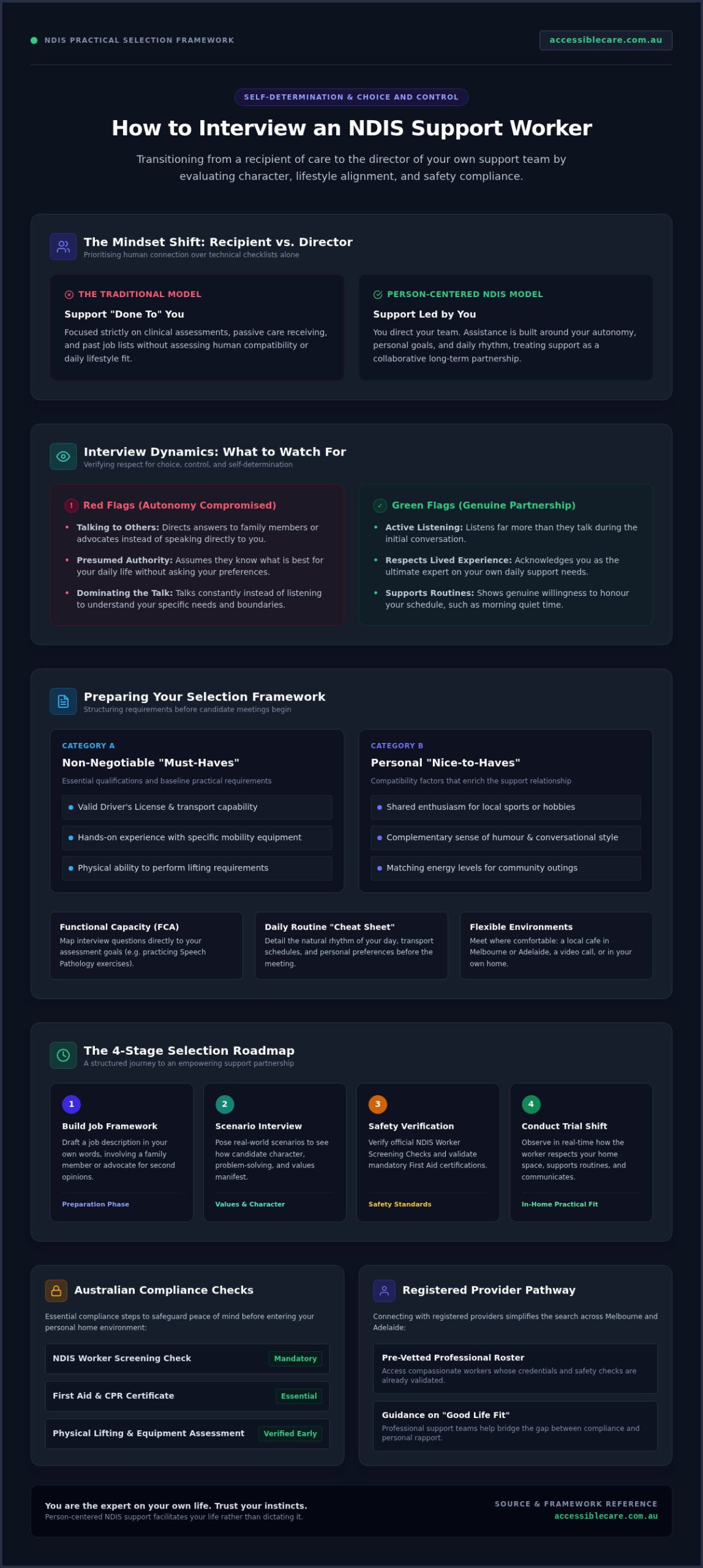
Thinking about how to interview a support worker starts long before the person arrives. Preparation is the bridge between a generic service and a meaningful partnership that truly honours your lifestyle. The first step is defining what “good support” looks like for you personally. Start by separating your non-negotiable “must-haves” from your “nice-to-haves.” A must-have might be a valid driver’s license or specific experience with mobility equipment. A nice-to-haves could be a shared interest in local sports or a similar sense of humour. Being clear about these boundaries helps you stay focused on your priorities during the meeting.
Mapping Support to Your Goals
Your support worker is an active partner in your progress. Your Functional Capacity Assessment (FCA) provides a clear roadmap of the areas where you need the most assistance. Use this document to guide your questions. For example, if your goals involve improving communication, you might ask how they can help you practice your Speech Pathology exercises. Defining a “Job Description” in your own words allows you to move beyond generic tasks and focus on the specific ways a worker can support your independence.
Logistics and Practical Prep
Creating a comfortable environment is essential for a productive conversation. You don’t have to meet at home if that feels too personal for a first encounter. A local cafe in Melbourne or Adelaide, or even a video call, can be just as effective. Before the meeting, prepare a “cheat sheet” of your daily routine. This helps the candidate understand the rhythm of your life, from transport needs to specific care requirements. If you’re feeling unsure about where to start, you can always reach out to a professional team for guidance on finding the right fit for your needs.
If you feel more confident with a second opinion, involve a family member or an advocate in the preparation. They can help you spot details you might miss while you focus on the personal connection. Practicalities like lifting requirements or specific transport needs should be discussed early. This ensures the worker is physically capable and willing to perform the necessary tasks. By building this framework, you ensure the interview is a structured, empowering experience that leads to a successful long-term partnership.
Questions That Reveal Character and Values
Technical skills can be taught, but character is inherent. While a worker’s qualifications are important for safety, their values determine how they’ll treat you on a Tuesday morning when things aren’t going to plan. When you’re learning how to interview a support worker, the goal is to look beyond the certificate and uncover the person behind the professional. You want to find someone whose motivation for this work aligns with your need for respect and partnership. Asking the right questions helps you distinguish between someone looking for a job and someone looking to make a meaningful difference in your life.
The Power of Scenario Questions
Scenario-based questions are your best tool for seeing a candidate’s empathy in action. Instead of asking if they are patient, ask: “What would you do if we were out in the community and I became frustrated or overwhelmed?” Their answer will reveal if they prioritise your dignity or if they focus on controlling the situation. If your needs involve High Intensity Supports, you might ask how they handle complex clinical tasks under pressure while still keeping you at the centre of the process. Seek examples of when they’ve advocated for a client’s rights in the past. This shows they understand that their role is to support your voice, not replace it.
Assessing Values Alignment
A support worker enters your private sanctuary, so it’s vital they respect your home and your boundaries. Ask about their philosophy of disability support to see if they view you as an equal partner. You can also gauge their reliability by asking about their approach to punctuality and how they manage professional boundaries. Don’t be afraid to ask about their hobbies or interests; finding common ground, like a love for gardening or local Melbourne cafes, can make the daily support feel more natural and less clinical. A strong values-match is the single most reliable predictor of long-term retention and a harmonious support relationship. When your values align, the support feels less like a transaction and more like a genuine connection that honours your life.
Trial Shifts and Compliance Checks
Safety is the foundation of every successful support relationship. Once you’ve found a candidate whose values align with yours, the next step is ensuring they meet the professional standards required to keep you safe and supported. This phase isn’t just about ticking boxes; it’s about building a layer of trust that allows you to relax in your own home. When you’re refining your process for how to interview a support worker, the transition from conversation to verification is where your peace of mind is truly secured. You deserve to know that the person entering your life is as reliable as they are compassionate.
Mandatory Compliance Checklist
In Australia, the NDIS Worker Screening Check is the gold standard for safety. Whether you are in Melbourne or Adelaide, this check is more comprehensive than a standard police check. It’s a national requirement that ensures workers don’t have a history that poses a risk to participants. Always verify their status through the NDIS commission portal before they begin. You should also ask to see current First Aid and CPR certifications. When conducting reference checks, look for deeper insights. Ask previous employers how the worker responded when a participant’s autonomy was challenged. Their past behaviour is often the best indicator of how they’ll respect your choices in the future.
Structuring a Trial Shift
A trial shift is your opportunity to see a worker’s character in action. It’s one thing to talk about person-centered care; it’s another to see it practiced in your kitchen or during a community outing. It’s a legal and ethical requirement in Australia to pay for trial shifts. This ensures the relationship starts on a professional footing of mutual respect. During the shift, pay close attention to their “unspoken” skills. Do they wait for your direction before acting? Do they respect the boundaries of your home? Do they listen more than they speak? These small cues tell you everything you need to know about their respect for your autonomy.
After the trial, take a moment to reflect. If you have an advocate or family member present, ask for their perspective, but remember that your voice is the most important. If the fit doesn’t feel right, it’s okay to keep looking. If you’d prefer to skip the stress of background checks, you can access our pre-vetted support worker services to find a partner who is already fully compliant and ready to help. Setting clear expectations for the first 90 days helps both you and the worker settle into a rhythm. This “settling-in” period is the time to fine-tune your routines and ensure the partnership is helping you achieve the goals you’ve set for your life.
How Accessible Care Supports Your Selection Journey
Finding the right person to support you in your home is a deeply personal journey. While learning how to interview a support worker gives you the power to choose, the process can sometimes feel overwhelming. You don’t have to walk this path alone. Accessible Care acts as your partner, helping you find professionals who aren’t just qualified, but who truly align with your values and lifestyle. We focus on taking the stress out of the search so you can focus on building a meaningful connection. Our goal is to ensure you feel confident and safe every time someone walks through your door.
By choosing a registered provider, you gain the peace of mind that comes with pre-vetted staff. We handle the rigorous compliance checks, including NDIS Worker Screening and reference verification, before you even meet a candidate. This allows you to simplify the steps of how to interview a support worker by focusing entirely on the “life fit” and personal chemistry. We provide dedicated support across Melbourne and Adelaide, ensuring that local help is always within reach when you need it most. Our presence in these communities means we understand the local landscape and can respond quickly to your changing needs.
A Holistic Approach to Support
Our multidisciplinary team provides a level of care that goes beyond basic assistance. We believe that support work should be an extension of your therapeutic goals. Our Occupational Therapists and Speech Pathologists collaborate closely with our support workers to ensure your daily routines reflect your progress. This integration means your worker isn’t just helping with tasks; they’re helping you practice the skills that lead to greater independence. We honour your autonomy by listening first. Our promise is to always prioritise your perspective, ensuring that every support plan is as unique as you are. This gentle, person-centered approach is at the heart of everything we do.
Getting Started Today
Navigating complex care or high-intensity support needs requires a partner who understands the nuances of the NDIS. We are here to facilitate your choices, not direct them. If you’re ready to find a support partner who respects your home and your goals, we invite you to take the first step. You can request a meet-and-greet with our team to discuss your needs in a relaxed, low-pressure environment. This ensures you have the final say in who joins your support circle. Whether you are seeking help with daily activities or more complex nursing care, we are here to walk beside you. Contact Accessible Care to find your support match.
Taking the Next Step Toward Empowered Support
Finding the right person to enter your home is one of the most significant decisions you’ll make. By mastering how to interview a support worker, you’ve moved from being a passive recipient of care to an empowered director of your own life. Remember that a successful partnership is built on shared values and a deep respect for your autonomy. Whether you’re defining goals through a framework or observing character during a trial shift; every step brings you closer to a life of greater independence and peace of mind.
You don’t have to navigate these choices alone. As a registered NDIS provider with an experienced multidisciplinary team, we’re here to ensure you find a worker who truly aligns with your vision. We proudly serve the Melbourne and Adelaide communities; bridging the gap between clinical excellence and compassionate daily support. Partner with Accessible Care for compassionate, professional support work that puts you first. You deserve support that honours your journey and celebrates your choices every single day.
Frequently Asked Questions
When you’re learning how to interview a support worker, what are the most important questions to ask?
The most important questions are those that reveal a candidate’s values and respect for your autonomy. Focus on scenario-based queries, such as asking how they handle communication barriers or what they do if a plan changes last minute. Ask about their motivation for disability support to see if they view the relationship as a partnership. These answers help you determine if they’ll honour your choices and align with your lifestyle over the long term.
Do I have to pay a support worker for an interview?
You don’t usually pay for a standard initial conversation or meet-and-greet. However, you must pay for any trial shifts where the worker performs actual support tasks or provides care. Under Australian law and NDIS guidelines, any time spent delivering services is considered work and must be compensated. Being clear about this from the start shows respect for the worker’s professional time and sets a positive, fair tone for your future partnership.
What background checks are mandatory for NDIS support workers in Australia?
The NDIS Worker Screening Check is the primary mandatory requirement for staff working with registered providers. This check is more rigorous than a standard police check and is designed specifically for the disability sector. You should also verify their current First Aid and CPR certifications. If you’re partnering with Accessible Care in Melbourne or Adelaide, we handle these compliance checks for you; ensuring every worker who enters your home meets the highest safety standards.
How do I know if a support worker is the right fit for my child?
Look for a worker who naturally engages with your child on their level and shows genuine patience. Observe how they react to your child’s specific communication style or sensory needs during a first meeting. It’s also vital to see if they’re willing to collaborate with your child’s paediatric Occupational Therapist or Speech Pathologist. A good fit will prioritise your child’s comfort while actively supporting the therapeutic goals you’ve set as a family.
Can I ask a support worker about their vaccination status in 2026?
Yes, you can ask about vaccination status as part of your process for how to interview a support worker. While specific mandates can vary, you have the right to request information that impacts the health and safety of your home environment. Most professionals understand that participants may have complex health needs or vulnerabilities. Openly discussing health protocols helps ensure everyone feels safe and respected; allowing you to build a relationship based on transparency and trust.
What should I do if the interview feels awkward or uncomfortable?
Trust your instincts if a conversation feels wrong or uncomfortable. You aren’t obligated to hire someone just because you’ve interviewed them. It’s perfectly okay to end the meeting politely and let them know you’re still speaking with other candidates. Your home is a private, sacred space; you deserve to feel completely at ease with the people you invite inside. If the connection isn’t there, it’s better to keep looking for a partner who truly fits.
How many support workers should I interview before choosing one?
There isn’t a set number, but interviewing three to five candidates often provides a helpful range of perspectives. This allows you to compare different personalities and approaches to care without feeling overwhelmed by the process. Taking your time ensures you don’t feel rushed into a decision that affects your daily life. The goal is to find a reliable long-term partner who aligns with your values; so it’s worth waiting for the right connection.
What is the difference between a support worker and a carer?
A support worker is a paid professional who provides specific assistance to help you achieve your NDIS goals and maintain your independence. The term “carer” often refers to informal, unpaid support provided by family members or friends. Support work is framed around your autonomy and professional boundaries; whereas a carer relationship is often based on personal ties. Choosing a professional support worker allows you to direct your own care while maintaining the unique nature of your family relationships.

