


Coping with a new disability diagnosis starts with giving yourself and your child time to take in the news. In most cases, a diagnosis isn’t an emergency, so you can pause, ask questions and focus on what your child needs now rather than trying to solve everything at once.
A diagnosis can bring grief, uncertainty or relief, and feelings may shift from day to day. There’s no single right way to respond. Accepting a changed reality doesn’t mean giving up on your child’s hopes or future.
This guide offers practical ways to support your child while processing your own emotions. You’ll learn how to make room for grief, find support, understand your child’s needs and rethink expectations as you move forward together.
Key Takeaways
- Give yourself and your child space to process the diagnosis, and remember that emotions can change over time.
- Review the assessment report to understand your child’s strengths, needs and recommended supports.
- Revisit future expectations gradually, making room for goals that reflect your child’s interests and abilities.
- Build a support approach around your child’s needs, including therapy or NDIS support where it’s relevant.
1. Grief and emotional adjustment after acquiring a disability
A new diagnosis can bring grief, stress, relief or uncertainty, sometimes all in one day. There’s no fixed path to acceptance. One common model describes four stages: shock, denial, anger or depression, and adjustment or acceptance. These are broad responses, not a timetable everyone follows. In this model, shock may last a few hours or longer, while denial may continue for three weeks to two months. Your emotions may move between stages or not fit them at all.
In Australia, the Disability Discrimination Act 1992, No. 135, 1992 is an important reference for disability rights, according to the Australian Government. At work or in education, you can raise adjustments that address a specific barrier. For example, ask to discuss flexible hours, written instructions, a quieter study or work area, or changes to how tasks are organised. Describe what makes the task difficult and what adjustment could help you participate.
To explore financial and practical support, consider Medicare, Centrelink, state and territory services, and private health insurance. Each has different purposes: Medicare may contribute to eligible therapy, government services may offer relevant support, and private cover depends on the policy. Eligible Australians can receive up to 10 Medicare-rebated therapy sessions under Better Access to Mental Health for ADHD, according to the Australian Government Department of Health and Aged Care.
When telling family, friends or an employer, make one clear request. You might say, “I’m still processing the diagnosis. Could you listen without trying to solve everything?” At work, share only what’s needed to explain an adjustment. A trusted person can help you plan the conversation or attend a meeting.
If you feel overwhelmed, contact a mental health professional or speak with a GP about support options. Incorporating comprehensive wellness support, such as services from Westridge Holistic medicine, can also assist in maintaining overall physical and emotional health during times of high stress. Journalling can help you track emotions, stress triggers and questions for your next appointment. Try one small step each day, such as noting what helped you rest or complete a task. Over time, these observations can help you build routines and move forward at a manageable pace.
2. How do I cope with my child’s new diagnosis?
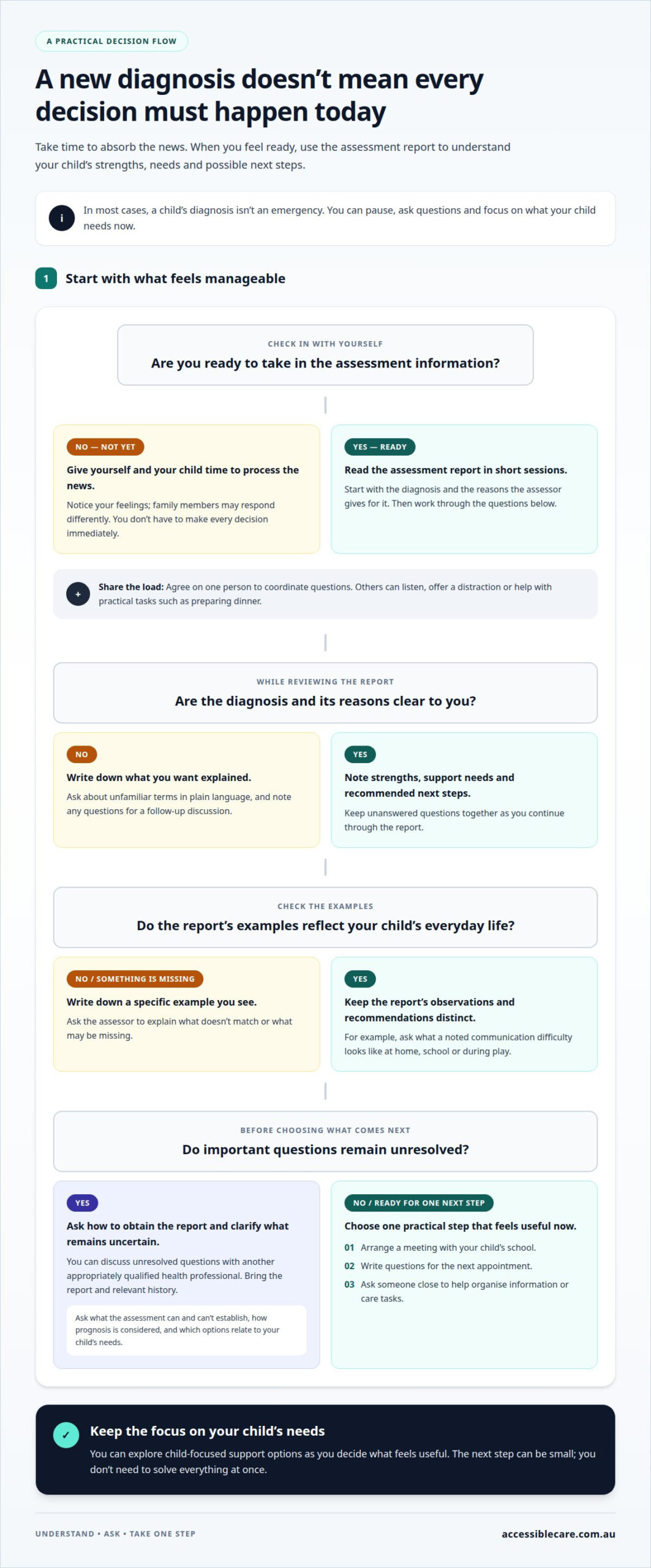
After a diagnosis, you don’t have to make every decision immediately. In most cases, a child’s diagnosis isn’t an emergency, so take time to absorb the information and notice your feelings. Family members may respond differently. Agree on one person to coordinate questions, while others offer a listening ear, a distraction or practical help, such as preparing dinner.
When you feel ready, read the assessment report in short sessions. Start with the diagnosis and the reasons the assessor gives for it. Then note your child’s strengths, support needs, recommended next steps and unanswered questions. For example, if the report mentions difficulty communicating needs, ask what that looks like at home, school or during play. Keep your questions together for a follow-up discussion.
Pay attention to the report’s wording. Separate observations about your child from recommendations, and ask for unfamiliar terms to be explained in plain language. Check whether the examples reflect your child’s everyday life, not just one appointment. If something seems missing or doesn’t match what you see, write down a specific example and ask the assessor to explain.
To seek a second opinion, ask the clinician who assessed your child how to obtain the report and which questions remain unresolved. You can discuss them with another appropriately qualified health professional, bringing the report and relevant history. Ask what the assessment can and can’t establish, how prognosis is considered, and which treatment or support options relate to your child’s needs.
Going through a new diagnosis can make future decisions feel urgent. Try choosing one practical next step, such as arranging a meeting with your child’s school or writing down questions for the next appointment. You can also ask someone close to help organise information or care tasks. If you want support centred on your child’s needs, explore child-focused support options as you decide what feels useful.
3. Reframing expectations about the future
A diagnosis can change how you picture your child’s future, but it doesn’t define every possibility. Rather than deciding now what adulthood will look like, focus on the next meaningful goal. Your child might practise asking for help, joining a playground game or choosing clothes independently. These steps make progress visible without treating one developmental pathway as the only measure of success.
Use your child’s interests to shape goals. If they love cooking, learning might involve following a simple recipe, communicating a choice or helping set the table. A therapist can help identify practical skills to develop around that interest. Notice what supports participation, then adjust the goal as your child’s abilities and preferences change.
School is another place to make future hopes practical. Talk with your child’s teacher about what helps them take part in classroom routines, friendships and learning. For example, a visual schedule may help a student prepare for transitions, while extra time to express an answer may support communication. Review what’s working with the school team and adapt the approach together.
Frame expectations as flexible goals, not fixed deadlines. You could write down what your child enjoys, what they’re practising and what support makes a difference. Review your notes before planning a new activity or school transition. This keeps decisions connected to your child’s experiences, not assumptions about what they should achieve by a particular age.
Independence can also mean having choice and influence, not doing every task alone. Offer two genuine options, such as choosing between activities or deciding which task to try first. Recognise the decision and effort, even if an adult still provides support. Small, person-centred choices help your child practise self-direction while keeping their needs and comfort in view.
4. Accepting a changed reality
Acceptance doesn’t mean liking every change or giving up on your child’s future. It can mean responding to today’s needs while leaving room for new possibilities. For example, if a family outing now needs quieter breaks, plan them without treating them as a failure. Adjusting one routine can make daily life more manageable.
Start with one part of the day that feels difficult. If getting ready for school brings tension, notice which step causes the most stress. You might prepare clothes the night before or use a simple visual routine. Try the change and observe whether it helps your child feel more settled. Keep what works and adapt what doesn’t.
A changed reality can also affect how you see yourself as a parent. You may miss the future you pictured while learning new ways to understand your child’s needs. Make room for both feelings. A short journal entry after a challenging day can help you name what felt hard, what went well and what support might help next time.
When you’re unsure how to navigate a new need, bring a clear example to a health professional. Explain what happened, what your child needed and what you tried. For instance, describe a transition that led to distress and what helped your child recover. Specific observations make it easier to discuss practical strategies and choose a useful next step.
Finding a rhythm may take repeated adjustments. Choose a small goal for the coming week, such as making one morning routine calmer or giving your child more choice during an activity. Notice effort rather than comparing your family with others. If you’d value support to work through daily challenges, explore personalised support options that respect your child’s needs and your family’s priorities.
Accessible Care
Accessible Care can support your family as you turn a new diagnosis into practical next steps. Its NDIS Support Services and therapies can help address goals related to communication, everyday activities and behaviour, guided by your child’s needs and priorities.
Consider support when your child needs help communicating, participating in daily routines or developing skills for greater independence. Speech Therapy, Occupational Therapy and Positive Behaviour Support may each address different goals. The right focus depends on what matters in your child’s everyday life.
Support can also change as your child grows or circumstances shift. You can discuss the challenges your family is facing and the outcomes you want to work towards. For a calm conversation about possible support, contact Accessible Care.
Take the next step at your family’s pace
You don’t need to map out your child’s whole future today. Choose one question or everyday challenge you’d like help with, then use it to guide your next conversation. A clear starting point can make coping with a new disability diagnosis feel more manageable and keep your child’s preferences at the centre.
Accessible Care offers NDIS Support Services, Speech Therapy and Occupational Therapy. These supports may be relevant when you’re looking for help with your child’s goals, communication or participation in daily activities. Share what matters to your family and discuss what kind of support may fit.
When you’re ready to explore a next step, contact Accessible Care. Each conversation can begin with what your child needs now, while leaving space for goals to change over time. You and your child can keep building a future shaped by their strengths, choices and own pace.
Frequently Asked Questions
How do I cope with my child’s new diagnosis?
Start with one manageable task, such as telling your child’s teacher what helps during transitions. Coping with a new disability diagnosis can feel less overwhelming when you focus on what would make this week easier, rather than planning every future step. You might also ask a trusted person to handle a practical task, giving you more time to listen to your child and notice their response.
Stage 3: What Can I Do With A Diagnosis?
In the four-stage model, the third stage is anger or depression. If these feelings arise, identify what’s triggering them and choose a safe way to express them, such as writing privately or talking with someone you trust. For a practical next step, record one concern and one question for an upcoming appointment. A stage label isn’t a requirement or a measure of how well you’re adjusting.
What Causes Mental Distress After Becoming Disabled?
Mental distress can follow changes to routines, roles, relationships or a person’s sense of control. For example, needing help with a task that was once independent may bring frustration or worry. Social barriers can add strain when activities become harder to access. Naming the specific pressure, such as fatigue during outings or uncertainty about work, can help you explain what support would make daily life more manageable.
What happens when you have an incorrect, or incomplete diagnosis?
An unclear assessment may leave important needs or next steps unanswered. Ask the assessing clinician to explain the evidence, clarify any uncertainty and outline whether further assessment is appropriate. For NDIS access, unclear or incomplete disability evidence can prompt the NDIA to ask further questions, which may delay access or lead to a funding application being refused. Keep copies of reports and follow-up correspondence together.
What should I do now?
Choose one immediate action based on what feels most pressing: write down questions, arrange a follow-up discussion or let your child’s school know about a relevant support need. Keep the task specific. For instance, ask for a meeting to discuss how your child manages classroom transitions. Once the conversation is underway, use what you learn to choose another step rather than trying to organise everything at once.
Why is this important?
Understanding a diagnosis can help you describe your child’s needs clearly and make decisions that reflect their everyday life. It can also help the adults around your child respond more consistently. For example, sharing a useful communication approach with a teacher and caregiver may reduce confusion across settings. The aim isn’t to make the diagnosis your child’s whole identity, but to use helpful information to support participation and choice.

