

A disability-friendly outing is about more than getting through the door. Finding inclusive community activities in Melbourne can start with creative groups, social programs and events that share practical accessibility information. Melbourne Museum also runs low-sensory sessions on the first Saturday of each month.
Finding an activity that feels comfortable and suits your interests can take time. Information about access, quiet spaces and available support can help you decide whether an event is right for you.
This guide explores inclusive community participation across Melbourne and regional Victoria, from arts and performance groups to social and skill-building programs. You’ll also find ideas for disability-friendly events and festivals, and ways support work and other NDIS supports can make participation more accessible and self-directed.
Key Takeaways
- Use Melbourne’s access information to plan community outings around transport, mobility access and practical facilities.
- Explore creative groups and workshops as welcoming ways to make, learn and connect with others.
- Look for social and skill-building programs that match your interests and the kind of participation you want.
- Consider accessibility details when choosing events, and remember that ordinary entry fees, memberships and basic equipment are usually not covered by the NDIS.
1. Community participation across Melbourne and regional Victoria
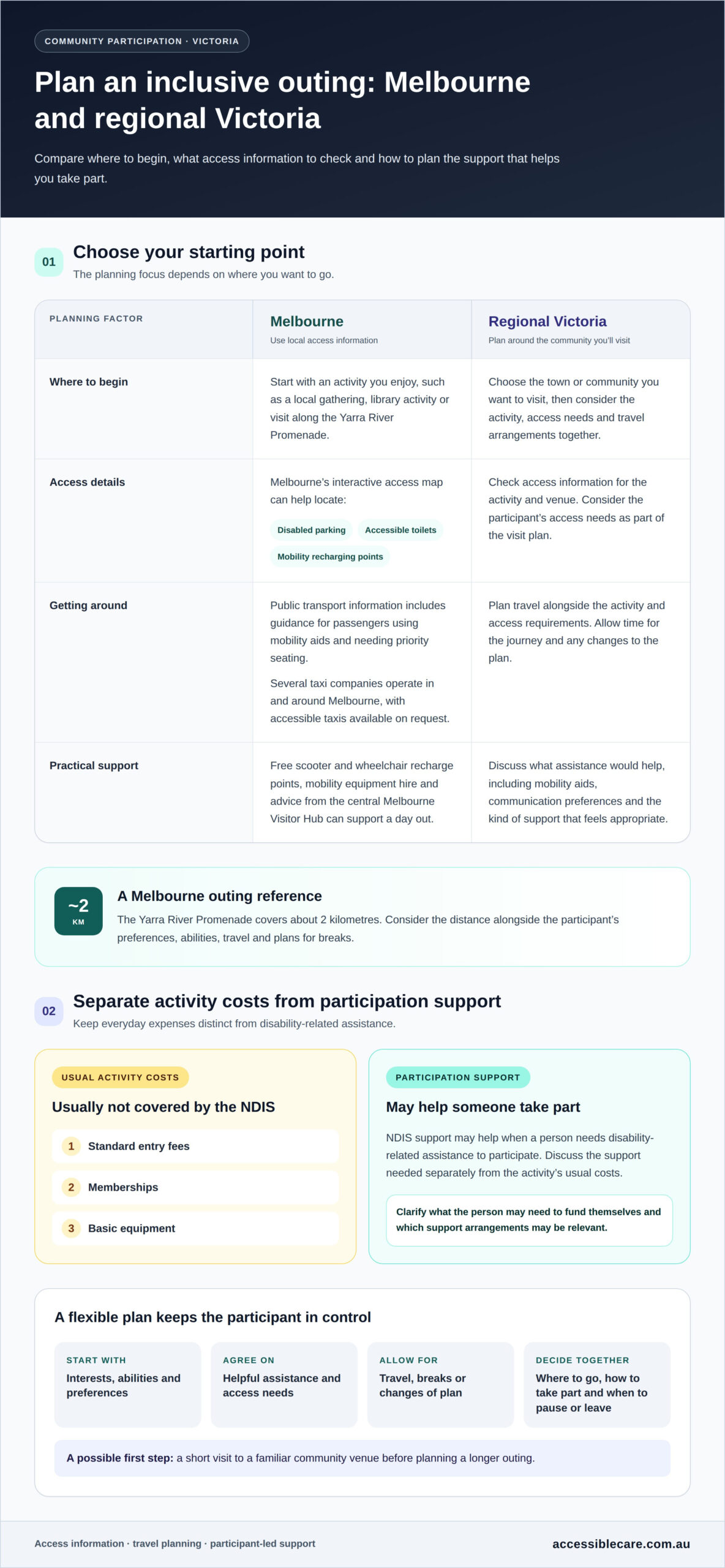
Finding inclusive community activities in Melbourne can start with what you enjoy and the support that helps you take part. Options might include a local gathering, a library activity or a visit along the Yarra River Promenade, which covers about 2 kilometres. In regional Victoria, begin with the town or community you want to visit, then consider the activity, access needs and travel arrangements together.
Melbourne’s interactive access map helps visitors find disabled parking, accessible toilets and mobility recharging points. Free recharge points for electric scooters and wheelchairs, along with mobility equipment hire, can support a day out. Public transport information includes guidance for passengers using mobility aids and needing priority seating. Several taxi companies operate in and around Melbourne and provide accessible taxis on request. The central Melbourne Visitor Hub also offers advice and tips for visitors.
NDIS support may help someone participate when they need disability-related assistance. However, the NDIS usually doesn’t cover everyday costs such as standard entry fees, memberships or basic equipment. Separate the activity’s usual costs from the support needed to participate. This can help clarify what a person may need to fund themselves and which support arrangements may be relevant. While this guide highlights Victorian opportunities, similar principles apply nationwide; for example, partnering with an individualised NDIS provider Adelaide can help participants tailor support for accessing local events and social groups.
A flexible outing at the participant’s pace starts with their interests, abilities and preferences. Choose an activity, agree on what assistance would help, and allow time for travel, breaks or changes of plan. Discuss support needs before setting out, including mobility aids, communication preferences and the kind of assistance that feels appropriate. A short visit to a familiar community venue can be a useful first step before planning a longer outing. The person should remain involved in decisions about where to go, how to participate and when to pause or leave.
2. Creative arts and performance groups
Creative groups offer a relaxed way to explore art, meet people and share interests. Melbourne examples include Art Connection at Coburg Library, listed for Tomorrow at 2:00 PM, with three more sessions. Create & Connect – A Social Painting Experience is listed at Preston Library for Thu, Dec 3, at 10:30 AM. The Little Wish Lantern workshop is listed in Carlton for Sun, Dec 6, at 11:00 AM.
Library sessions and workshops offer a shared activity and an easy conversation starter. When considering inclusive disability social groups, think about what participation means to you: making art together, watching a performance or simply spending time with others. Supported group sessions can make participation easier when assistance is helpful. Agreeing on support needs and preferred ways to participate keeps the activity focused on each person.
Are there free or low-cost inclusive community activities in Melbourne? Library art sessions are worth exploring, but an event name alone doesn’t tell you whether it’s free. What inclusive community activities are available in Melbourne? Examples include lantern-making, social painting and regular art sessions. Which Melbourne community centres offer inclusive programs? The examples name Coburg Library and Preston Library, both of which offer listed creative activities.
For children and families, Storytime with special guest Guide Dogs Australia is listed at Camberwell Library for Fri, Dec 4, at 11:00 AM. It offers a specific library event to consider alongside creative workshops. To find culturally diverse and multilingual activities, search local event listings using terms for languages, cultural communities and preferred art forms. Add a suburb or venue, such as Carlton or a local library, to narrow the results.
Starting a local activity group can begin with a shared interest, such as painting or craft. Choose a familiar venue, invite people who are interested, and discuss access and support needs before the first session. Melbourne social groups and events can grow around what members enjoy, with activities paced to suit those attending.
3. Social and skill-building programs
Social programs can create a shared reason to meet people and try new experiences. One listed example is Growing Inclusion: Connecting People, Place and Possibility at Kevin Heinze GROW in Doncaster, on Fri, Dec 4, at 11:00 AM. Its title points to connection and participation, making it a useful starting point for exploring community programs. Check event details for the format, access information and how to take part.
Daytime activities may suit people who prefer a morning or midday outing. The Doncaster event’s 11:00 AM start gives a concrete example to consider when planning travel, energy and other daily commitments. A participant can decide what they hope to practise, such as greeting someone, joining a conversation or becoming familiar with a venue. Keeping one personal goal in mind can make the experience feel purposeful without turning it into a test.
Board games offer a straightforward way to socialise through a shared activity. A group might choose a familiar game, explain the rules aloud and take turns at a comfortable pace. These small steps create natural opportunities to practise communication, decision-making and cooperation. Participants can also agree on adaptations, such as larger pieces or shorter rounds, if they would make the game more enjoyable.
When exploring a social program, start with its purpose and setting. Consider whether the time, location and group format suit the participant’s interests and support needs. For a first visit, plan the journey, identify a quiet place to take a break and decide how long to stay. Afterward, note what felt engaging and what might change next time. These practical reflections can help someone choose between a structured program, a board game group or another community experience, while keeping their preferences at the centre.
4. Disability-friendly activities and festivals
Where can you find accessible events and activities in Melbourne? What’s On Melbourne listings can include details about mobility access, supports for blind or low-vision visitors, and quiet spaces. Melbourne Museum also runs low-sensory sessions on the first Saturday of each month. This information can help you match an event to your interests and access preferences before planning an outing.
Consider community celebrations alongside regular cultural activities. Reclaim & Celebrate: IDPWD 2026 is listed at Melbourne Multicultural Hub for Thu, Dec 3, at 12:00 PM. An International Day of People with Disability event is listed at Roxburgh Park Recreation Centre for Thu, Dec 3, at 12:30 PM. Another celebration is listed at Eclipse Cinema in Collingwood at 12:00 PM that day. These distinct venues and start times offer different settings for taking part.
Melbourne’s listings also feature activities beyond indoor events. A disabled snorkelling experience is listed at Ricketts Point Marine Sanctuary in Beaumaris for Sat, Jan 16, at 1:00 PM. The Melbourne Fringe Festival is listed as a disability-friendly event in Australia. For a quieter cultural outing, the recurring low-sensory sessions at Melbourne Museum provide a predictable date pattern. Consider the event format, location and accessibility details together when deciding what suits you.
For festivals and public gatherings, accessibility involves both the venue and the experience. Event organisers should choose wheelchair-accessible venues and arrange support for participants who use mobility aids or need assistance. As a visitor, use event listings to consider the features that matter to you, such as mobility access, low-sensory options or supports for blind and low-vision visitors. Start with a named event: compare its listed setting and supports with your interests, then plan transport and timing around its location. This can make your search more focused and help you choose an event in Melbourne.
Accessible Care: Community Nursing
Accessible Care’s Community Nursing may be relevant when health-related needs are part of planning community participation. It can complement NDIS Support Services when you’re considering what support may help you take part in activities you choose.
Start by describing the activity you’re interested in and the support you’d like to discuss. For example, you might be planning to attend a local group or festival and want to talk through health-related needs as part of that plan. Accessible Care also offers Speech Therapy and Occupational Therapy, which may be relevant if communication or everyday participation goals are part of your support needs.
Support should reflect your preferences and goals. Contact Accessible Care to discuss the support you may need to participate in your community.
Choose a next step that feels right for you
As you continue finding inclusive community activities in Melbourne, let your interests guide your next step. You might choose an event to explore, make a plan with someone you trust or consider what support would help you participate comfortably. Your preferences and goals can guide that conversation.
Accessible Care offers NDIS Support Services, Speech Therapy and Occupational Therapy. These supports may be relevant when you’re working towards participation goals or considering communication and everyday activity needs. Start the conversation with what matters to you and what you’d like to do next.
Contact Accessible Care to explore options and discuss support that aligns with your goals. A small, considered next step can open the door to experiences and connections that matter to you.
Frequently Asked Questions
What inclusive activities are available for people with disability in Melbourne?
Options include creative workshops, social gatherings, low-sensory museum sessions and community events. To narrow them down, start with an activity you enjoy, then consider the setting and support that would make participation comfortable. Someone who enjoys hands-on activities might look for an art session, while a quieter cultural outing may suit someone who prefers a lower-sensory environment.
What inclusive sports and recreation programs are available in Melbourne?
A listed recreation option is a disabled snorkelling experience at Ricketts Point Marine Sanctuary in Beaumaris. Recreation can also include outdoor outings or movement-based activities, depending on personal interests and support needs. Look for listings that describe the activity format and access arrangements, then consider whether the location and level of participation suit you. A single event listing is different from an ongoing program.
Are there LGBTQIA+ inclusive community groups and events in Melbourne?
To find relevant Melbourne groups and events, search local event calendars using terms such as LGBTQIA+, queer community, arts, social group or an activity you enjoy. Read each event description for its intended audience, format and accessibility details. If you’re looking for a recurring group, focus on listings that describe regular meetings rather than one-off celebrations, so you can find something suited to your interests.
What accessibility features should I check before attending a Melbourne event?
Look for practical details that matter to you, such as venue access, accessible toilets, seating, quiet spaces and information for blind or low-vision visitors. Consider the whole visit, from entry and moving around the venue to finding a place to take a break. A listing that mentions one accessibility feature may not describe every part of the experience, so use the available details to decide what matters most for your plans.
How do I join an inclusive community group or activity in Melbourne?
Start with an interest, such as painting, board games or outdoor recreation, then choose a listing that suits your preferred setting and pace. Check whether it describes a single session or an ongoing group, and follow the event’s participation or registration instructions. Before attending, plan your transport and decide what support, breaks or communication arrangements would help you participate comfortably.
Which Melbourne websites list accessible and inclusive local events?
What’s On Melbourne is a useful place to look because its listings can include accessibility details. Melbourne Museum’s event information is another place to explore for low-sensory sessions. Search by activity, suburb or access feature to make your results more relevant. Event listings vary in detail, so focus on the information that helps you plan your visit and participation.

