


Trust grows through consistent actions, not one perfect conversation. If you’re learning how to build rapport with a support worker, start by sharing your preferences and boundaries, listening openly, and making decisions together about routines that matter to you. Respect, empathy and following through can help the relationship feel safer over time.
It’s understandable if opening up to someone new takes time. You don’t need to force a connection or share more than you’re comfortable with. A good working relationship respects your pace and your right to make decisions about your support.
Knowing how to build rapport with a support worker also means noticing what helps you communicate comfortably and allowing trust to develop gradually. This article offers practical ways to build trust, communicate clearly and recognise when the relationship is working well. You’ll also find guidance on raising concerns respectfully and agreeing on expectations, so your support can feel personal, consistent and centred on you.
Key Takeaways
- Agree on communication preferences, routines and boundaries early, then adjust as you learn what feels comfortable.
- Notice whether you feel heard, respected and at ease, and raise concerns before they grow.
- Listen without rushing to respond, acknowledge feelings and make space for the person’s choices.
- Build trust through consistency: set clear expectations, follow through on agreed tasks and respect privacy.
1. How can I build a good working relationship?
At your first meeting, discuss what support looks like in daily life. Share your routines, priorities, interests and the tasks where you want assistance or greater independence. For example, explain whether you’d prefer to plan meals together or choose them yourself. Mention what helps you feel comfortable, including your need for privacy and personal space, and explain how you’d like the worker to enter your home.
Describe your communication preferences, goals and boundaries in practical terms. You might say, “Please give me time to answer,” or “I’d prefer a text if plans change.” Agree on a goal, such as practising a bus route, and clarify the worker’s role. If hearing, language or sensory preferences affect conversation, explain what helps, such as written prompts or a quieter setting.
Adapt your approach as you get to know each other. Face the speaker and use a calm voice; comfortable eye contact can help if it suits you. Remember that body language and eye contact mean different things to different people. Put distractions aside, listen carefully, ask for clarification and summarise key points: “So we’ll leave after breakfast.”
Agree how you’ll communicate between sessions, including the preferred method and what to do if plans change. For example, decide whether schedule updates should come by text or phone. Clear expectations help you both coordinate and avoid last-minute confusion.
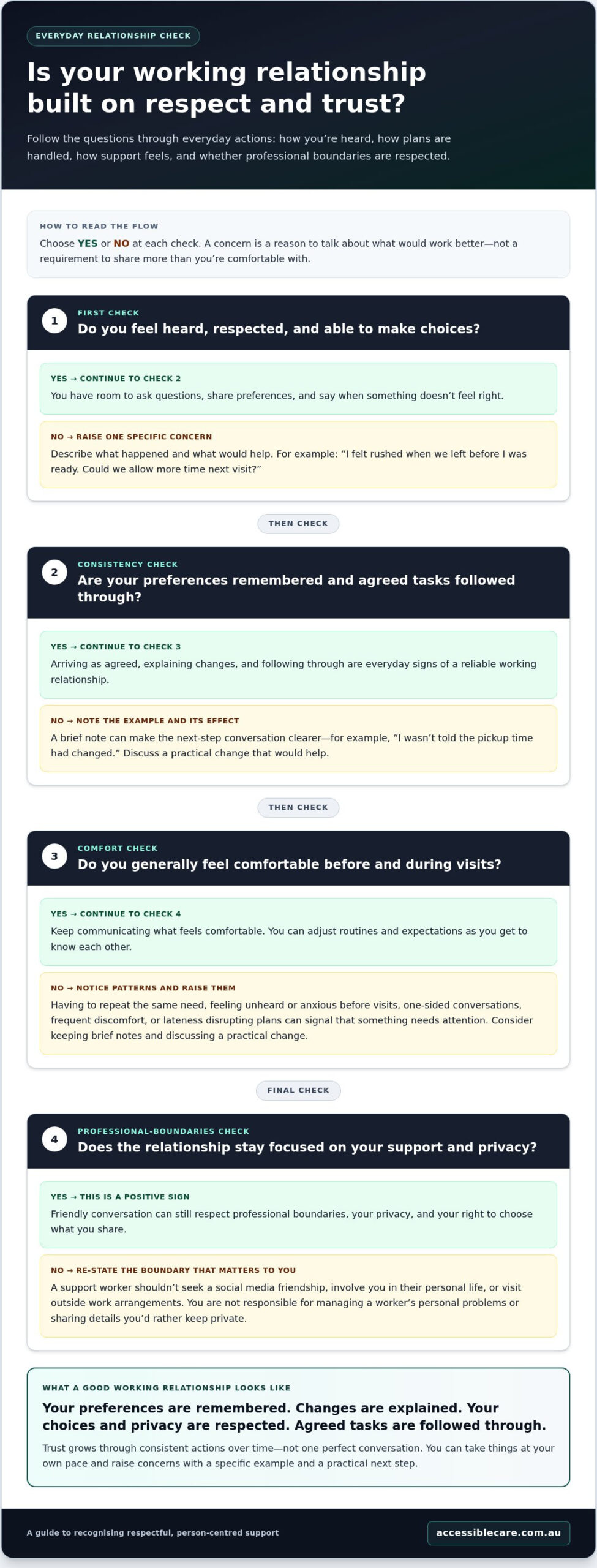
Give feedback early, calmly and with a specific example. Try, “I felt rushed when we left before I was ready. Could we allow more time next visit?” Explain what would work better and invite a solution you can agree on. Focusing on the action and next step gives the support worker clear feedback to act on.
Agree session days, times, between-session communication and change steps. Remembering preferences, adapting to feedback and communication style, and completing agreed tasks show it works; rapport requires action. Calm speech, supportive expressions, eye contact and comfortable topics can build rapport with someone unapproachable.
2. Recognising signs of a good working relationship
A successful working relationship shows in everyday actions, not just friendly conversation. Notice whether the worker remembers your preferences, arrives as agreed, explains changes and follows through on tasks. You should have room to make choices, ask questions and say when something doesn’t feel right. For example, if you prefer to plan an outing before leaving home, the worker respects that routine and adapts when you give feedback.
Your comfort matters too. Having to repeat the same need, feeling unheard or feeling anxious before visits can signal that something needs attention. So can one-sided conversations, frequent discomfort, unmet needs or lateness that disrupts your plans. Consider keeping brief notes about what happened and how it affected you. A specific example, such as “I wasn’t told the pickup time had changed,” can make a conversation about next steps clearer.
Genuine relationships still have professional boundaries. A support worker shouldn’t seek a social media friendship, involve you in their personal life or visit outside work arrangements. These boundaries keep the relationship focused on your support and protect your privacy. Friendly conversation is welcome, but you’re not responsible for managing a worker’s personal problems or sharing details you’d rather keep private.
A trauma-informed approach means paying attention to safety, choice and control in everyday interactions. A worker can explain what will happen before starting a task, ask permission before discussing a sensitive subject and accept “not now” without pressure. Predictable plans and respectful choices can make support feel more manageable. If concerns continue, discuss a practical change, such as explaining each step before assistance begins. A person-centred approach to support can help keep your preferences central while building a respectful working relationship.
3. Empathy, respect and active listening
Active listening means giving someone your attention and responding to what they actually say. Put distractions aside, let the person finish, then reflect their meaning: “You’d like to try the activity, but need a quieter space.” This gives them a chance to correct a misunderstanding and helps you build mutual understanding instead of making assumptions about what they need.
Empathy doesn’t mean agreeing with every view or trying to solve every feeling. Acknowledge what the person shares without pity or shifting the focus to your own experiences. For example, “That sounds frustrating” recognises the feeling, while “You should be grateful” dismisses it. If you’re unsure what would help, ask, “Would you like me to listen, or talk through some options?”
Respect includes recognising that each person has their own values, culture, identity and preferred language. Use the name and words they ask you to use, and don’t treat one person’s experience as representative of a whole community. If someone seems hesitant, pause and give them space instead of pressing for details. A calm tone and open posture can make conversation feel less demanding.
A support worker can respect a client’s privacy, culture and independence by asking before entering private spaces, discussing sensitive topics or sharing personal information. They can ask which cultural practices or language preferences matter, explain choices clearly and let the person decide wherever possible.
Empathy also shows in how a worker handles disagreement. They can ask, “Have I understood you correctly?” and summarise the person’s point before responding. If a task feels uncomfortable, the worker should listen to the concern and discuss another approach. This treats the person as a partner in their support, not simply someone receiving instructions.
These habits take practice. If a conversation feels difficult, return to one useful step: listen fully, reflect what you heard and ask what the person wants next.
4. Building trust with a support worker
Trust develops through a pattern of honest, dependable actions. Notice whether a worker keeps agreed arrangements, tells you when plans change and avoids making promises they can’t keep. If they say they’ll bring information to your next session, following through matters more than offering reassuring words. Trust can take time; practical consistency gives you real examples to consider.
For an NDIS support relationship, the NDIS Code of Conduct sets important expectations. These include respecting privacy, acting honestly, protecting people from foreseeable harm and providing only supports within a worker’s training and qualifications. You can discuss what these standards mean in your everyday support, such as keeping personal information private and explaining a task before starting.
Asking questions can clarify uncertainty before it becomes a conflict. Try, “What will happen if our plans change?” or “Can you explain why this task is part of my support?” A worker should respond respectfully and be realistic about what they can do. You can also agree how to record or discuss progress, changes and follow-up actions.
If you feel uncomfortable, identify the specific action and its impact, then explain what needs to change. For example: “I wasn’t comfortable when you entered without knocking. Please knock and wait for me to answer.” If speaking alone feels difficult, ask a trusted family member or representative to support the conversation. If the concern continues, raise it through the appropriate service complaint process.
Choosing a support worker starts with identifying what matters to you, such as communication style, routines and support goals. Discuss your preferences and ask about a change if the relationship isn’t working. Explain what isn’t meeting your needs and what would work better. A different match may help if trust or comfort remains difficult despite clear communication.
For support focused on your choices and goals, explore NDIS support options.
Accessible Care: NDIS Support Services
Accessible Care provides NDIS support services for people seeking support shaped around their needs and goals. Its support work can help put practical assistance in place. Speech Therapy, Occupational Therapy and Positive Behaviour Support are also available to support people working towards goals that align with these services.
Support should respect your choices and help you build independence. Discuss the assistance that suits your routines, what you want to work towards and how you prefer to communicate. This puts your priorities at the centre of the conversation from the beginning.
If you’d like to explore support options with Accessible Care, visit accessiblecare.com.au.
Take the next step at your pace
A trusting support relationship can grow through small, honest conversations. As you consider how to build rapport with a support worker, choose one priority for a future conversation, such as feeling more confident expressing your choices or working towards a personal goal. You don’t need to have every detail worked out before taking that step.
Accessible Care provides NDIS Support Services, Speech Therapy and Occupational Therapy. If you’re seeking support that aligns with these services, discuss how it could fit your goals and preferences. Start with what matters to you and the kind of support that feels right.
Contact Accessible Care today to discuss your support needs. Your voice can guide what comes next.
Frequently Asked Questions
How can I build a good working relationship?
Build rapport collaboratively by agreeing on what a useful support session looks like. Before a regular activity, choose a shared aim, such as preparing for an appointment or practising a new route. Afterwards, briefly discuss what helped and what you’d change next time. This practical review turns everyday support into a partnership and gives you both a clear way to adjust.
How can I work effectively with the person I am supporting?
Start with the person’s priorities, not your assumptions about what they need. For example, if they want to make their own breakfast, ask which parts they’d like to do independently and where assistance would help. Explain options plainly, allow time for decisions and keep your role clear. Working effectively means supporting the person’s choices, rather than taking over a task for convenience.
What is rapport?
Rapport is a comfortable connection that helps two people communicate and cooperate. In support, it can show in conversations where both people feel able to speak honestly, ask questions and understand each other’s point of view. It doesn’t require matching personalities or constant conversation. A quiet, respectful interaction can build connection just as well as sharing interests.
What are the signs of a good support worker relationship?
A good relationship allows you to disagree without fearing that your concerns will be ignored. You can ask why a task is being done, request a pause or say an approach isn’t working. The worker responds respectfully and discusses a practical adjustment. You should also understand what’s been agreed for the session, rather than feeling uncertain about the plan or your role.

