

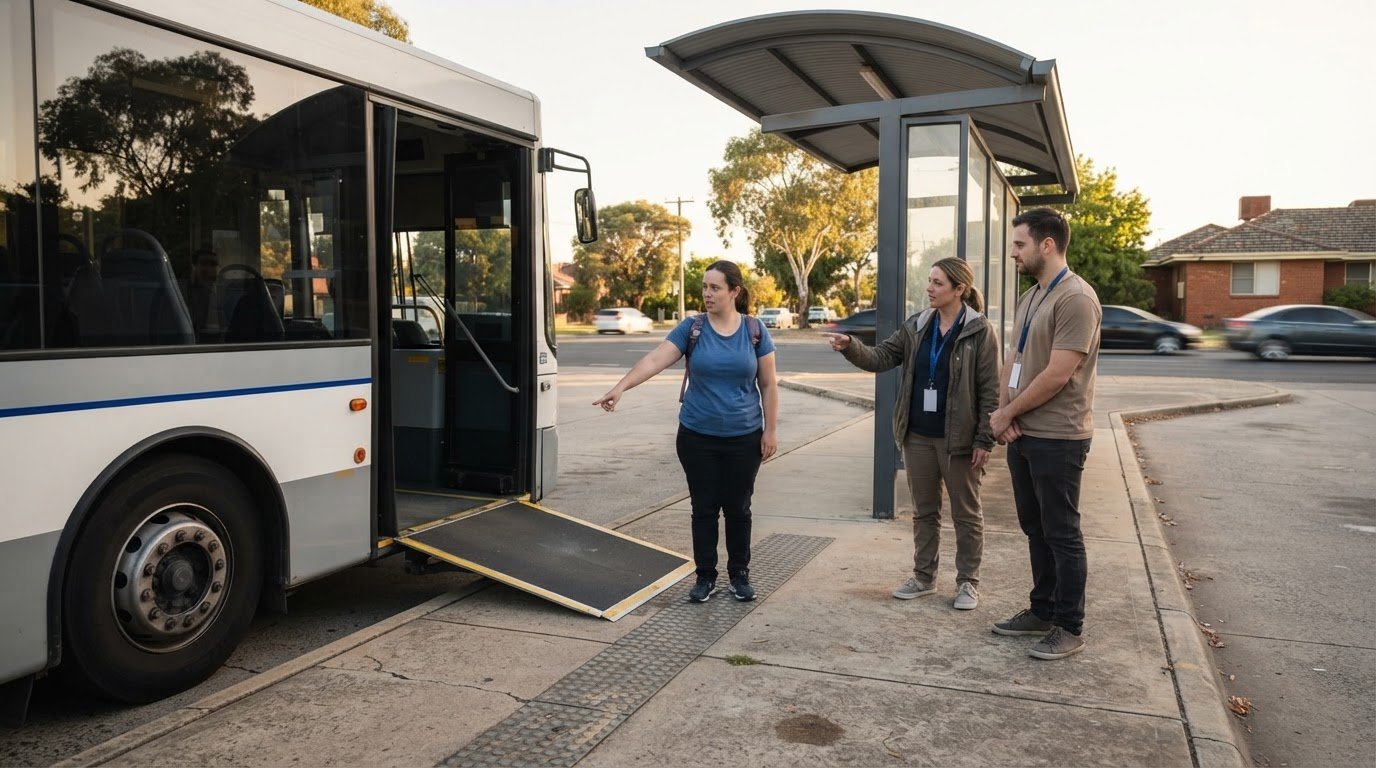
The Mable-versus-Like Family comparison comes down to how support is arranged: Mable lets eligible NDIS participants choose an independent worker, while an agency model handles rostering, cover and administration. Since 1 July 2026, online platform providers in Australia have been required to register. The best fit depends on how much choice and coordination you want, and the level of support you need.
It’s understandable to focus on costs when considering a change, but the working arrangement matters too. Learn what to compare before switching, including fees, worker selection, continuity of support and the responsibilities involved in engaging a worker. We’ll also explain how plan management affects provider choice, so you can make a considered decision that suits your preferences and day-to-day needs.
Key Takeaways
- Compare more than headline costs: consider how fees, coordination and continuity of support fit your needs.
- Understand the difference between choosing an independent worker and having an agency manage rostering and cover.
- Clarify the employment or contracting responsibilities involved before changing how support is arranged.
- Use the comparison to identify the support model that best matches your preferences, plan management and day-to-day needs.
Factors to compare before switching providers
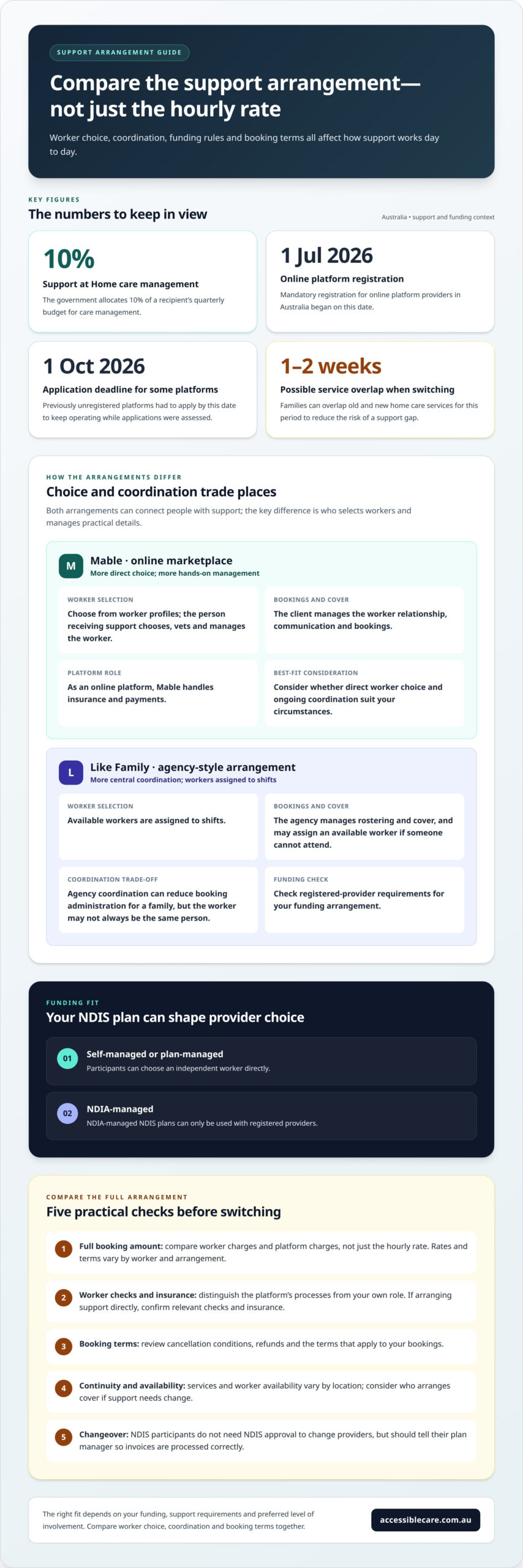
Before changing platforms, compare who selects workers, manages bookings and responds when support needs change. An independent arrangement offers choice, while an agency model can take on more coordination. A Mable vs Like Family comparison should start with your funding, support requirements and preferred level of involvement.
When comparing worker checks, distinguish the platform’s processes from your own role. Mable operates as an online marketplace, where people receiving support choose, vet and manage workers. Like Family follows an agency model, assigning available workers to shifts. If you arrange support directly, confirm the relevant checks and insurance.
For protection, online platforms such as Mable handle insurance and payments. Like Family’s agency model handles rostering, cover and administration. Before committing, compare each arrangement’s safety processes and booking terms, including cancellations and refunds. Your Mable vs Like Family decision also depends on the terms that apply to your bookings.
Costs can include worker charges and platform charges, so compare the full booking amount rather than just the hourly rate. Rates and terms vary by worker and arrangement. Review the charges for the support you need, along with cancellation conditions, before deciding.
For NDIS funding, self-managed and plan-managed participants can choose an independent worker directly. NDIA-managed NDIS plans can only be used with registered providers. Under Support at Home in Australia, 10% of a recipient’s quarterly budget is allocated by the government for care management, according to Australian Department of Health, Disability and Ageing.
| Option | Worker choice | Coordination | Funding consideration |
|---|---|---|---|
| Mable | Choose from worker profiles | Client manages the worker | Marketplace arrangement |
| Like Family | Workers assigned to shifts | Agency manages rostering and cover | Check registered-provider requirements |
Both can connect people with support, but services and worker availability vary by location across Australia. Hireup is another marketplace alternative. Mandatory registration for online platform providers began on 1 July 2026. Previously unregistered platforms had to apply by 1 October 2026 to keep operating while their applications are assessed. Compare worker choice, coordination and funding fit, then choose the arrangement that best reflects your needs and how much you prefer to manage.
What is Mable and how does it work in Australia?
Mable is an online support marketplace in Australia that connects people seeking assistance with independent workers. Rather than having an agency assign each shift, the person receiving support chooses a worker. This model may suit people who want more say in who supports them and how the arrangement works.
For NDIS participants, plan management affects how they can use the platform. Self-managed and plan-managed participants can choose an independent worker directly. NDIA-managed plans can only be used with registered providers. This distinction matters because your funding arrangement can determine whether a marketplace option fits.
A typical arrangement involves three practical steps:
- Browse worker profiles and consider who may suit the support needed.
- Choose an independent worker and agree on the support arrangement.
- Manage the worker relationship, including ongoing communication and bookings.
This approach offers choice, along with responsibility. The person receiving support, or someone helping them, selects and manages the worker. If support is arranged directly with an independent worker, confirm the relevant checks and insurance. Mable handles insurance and payments as an online platform, but the person receiving support still chooses, vets and manages their worker.
That balance is central to understanding Mable. Someone who values a familiar worker and direct involvement may appreciate the choice. Someone who needs an agency to coordinate rostering and cover may prefer a different arrangement. For example, a family arranging regular community support should consider who will manage bookings and respond if the usual worker cannot attend.
Before choosing, review the worker profiles available for your needs and consider how much coordination you can manage. Match the arrangement to your NDIS funding type and support requirements too. Mable provides a marketplace model, not a hands-off agency arrangement. The practical fit depends on whether choosing and managing a worker directly suits your circumstances.
Self-funded aged care support in Australia is available regardless of a person’s age or eligibility for government funding. NDIS participants do not need NDIS approval to change providers, but should tell their plan manager so invoices are processed correctly.
When switching home care providers in Australia, families can overlap the old and new services for one or two weeks to reduce the risk of a gap in support.
What is Like Family and how does it work in Australia?
Like Family is compared here as an agency-style support arrangement in Australia. In an agency-style arrangement, coordination of bookings and worker cover may be handled centrally rather than by the person receiving support. This changes who coordinates the practical details, while the person still needs to communicate their support needs and preferences.
A simple example shows the difference. If a regular worker cannot attend a scheduled shift, an agency manages rostering and may assign an available worker. In a marketplace arrangement, organising a replacement is largely the user’s responsibility. Agency coordination can reduce the booking administration a family handles, but the assigned worker may not always be the same person.
The arrangement generally works through a few connected tasks:
- The person or family explains the support required and relevant preferences.
- The agency manages the roster and assigns available workers to shifts.
- Support is delivered, with administration handled through the agency arrangement.
These distinctions matter when support needs regular coordination. For example, a family managing several shifts may value having rostering handled centrally. Someone who wants to select and manage an independent worker directly may prefer a marketplace model. The key difference is not simply the platform name, but who manages worker selection, shift arrangements and cover.
For an NDIS participant, the funding arrangement and required supports remain important. The agency model describes how workers are assigned and administration is managed; on its own, it does not determine which supports suit a person. Consider whether you value agency-managed coordination or direct control over choosing an independent worker. Then compare the arrangement with your support needs, preferences and plan management. Like Family’s agency-style approach may suit people who want rostering and administration managed, while direct worker choice may suit those seeking a more hands-on role.
How do Mable and Like Family compare for finding support workers?
Mable and Like Family use different approaches to matching people with support workers. Mable is an online marketplace where the person receiving support chooses, vets and manages an independent worker. Like Family follows an agency model, assigning available workers to shifts. The difference lies in how much choice and coordination rests with the person, family or agency.
On a marketplace such as Mable, Hireup or Support Network, a person can look for a worker who suits their support needs and preferences. The platform handles insurance and payments, while the person receiving support takes an active role in selecting and managing the worker. This can offer direct choice, but also means more responsibility for coordinating the arrangement.
An agency-style arrangement may involve central coordination of rostering and cover, with available workers assigned to shifts. This may suit someone who prefers an agency to organise bookings. The trade-off is less direct control over which worker is assigned to a particular shift.
Consider the practical difference. Someone who values choosing a particular independent worker may prefer a marketplace. A family arranging several shifts may value agency-managed rostering and cover. If a regular worker is unavailable, finding a replacement in a marketplace arrangement is largely the user’s responsibility. An agency manages rostering and assigns available workers, although the assigned worker may vary.
Compare the models against the support relationship you want, not just the platform name. Consider whether direct worker selection or central coordination matters more, and how much booking management feels manageable. The right model should fit the person’s preferences and support routine, including how continuity is handled when workers are unavailable.
- Marketplace: greater direct involvement in choosing and managing an independent worker.
- Agency: rostering, cover and administration handled centrally, with workers assigned to shifts.
If you’re considering support options beyond a platform, explore ways to discuss your support needs.
An agency may suit people needing complex support or round-the-clock cover that one worker cannot provide. Consider agency coordination alongside your preference for choosing a worker directly, particularly when deciding whether one worker can meet the person’s support needs.
Accessible Care
Accessible Care can support you when choosing a platform is only one part of planning suitable NDIS support. Its NDIS Support Services and support work can address practical support needs, while Speech Therapy, Occupational Therapy and Positive Behaviour Support offer other forms of assistance. The right support depends on the person’s goals and circumstances.
If you’re weighing independent workers against agency coordination, consider what support you need alongside that decision. Accessible Care can discuss its services in relation to your needs, helping you consider an arrangement that respects your preferences and daily routines.
Contact Accessible Care to discuss your support needs.
Choose support that fits your next step
The Mable vs Like Family decision can be a starting point, not the whole plan. Consider what you want daily life to look like, which goals matter most and what kind of support will help you work towards them. Those priorities can guide conversations about NDIS support and the right mix of practical or therapeutic assistance.
Accessible Care offers NDIS Support Services, Speech Therapy and Occupational Therapy. If you’re ready to discuss how support could align with your needs and goals, contact Accessible Care. You can take the next step at your own pace, with your preferences at the centre.
Frequently Asked Questions
How do Mable and Like Family screen and verify support workers?
On Mable, the person receiving support chooses and vets the independent worker and should confirm relevant checks. Like Family assigns available workers to shifts; a specific screening process is not described.
What insurance and safety protections do Mable and Like Family provide?
Mable handles insurance and payments, but people arranging support directly should confirm the worker’s insurance and relevant checks. Like Family handles agency coordination; its specific insurance and safety protections are not described.

